



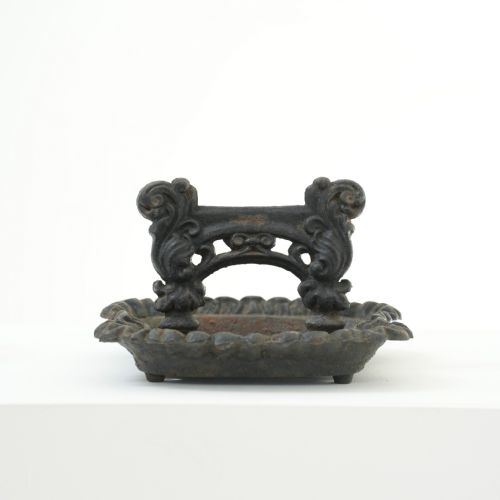


Antique Boot Scrapers
A boot scraper is an iron blade set between uprights at a doorway, there so mud could be scraped off footwear before anyone stepped indoors.

What Are Boot Scrapers?
They came into common domestic use in Britain across the 18th and 19th centuries, when unpaved and dung-fouled streets meant footwear had to be cleaned before crossing a threshold. Some were set into or beside the doorstep, others made free-standing, and iron founders turned them out alongside their other architectural castings.
Cast iron dominates. Of 72 titles on Sellingantiques, 52 name the metal and 45 of those say cast iron; the single brass example in the samples is the one exception on record. The form you'll meet again and again is a lyre-, harp- or oval-framed scraper of British domestic type, listed plainly as a Victorian cast iron boot scraper. Hand-forged wrought examples, often called estate-made, are a small minority.
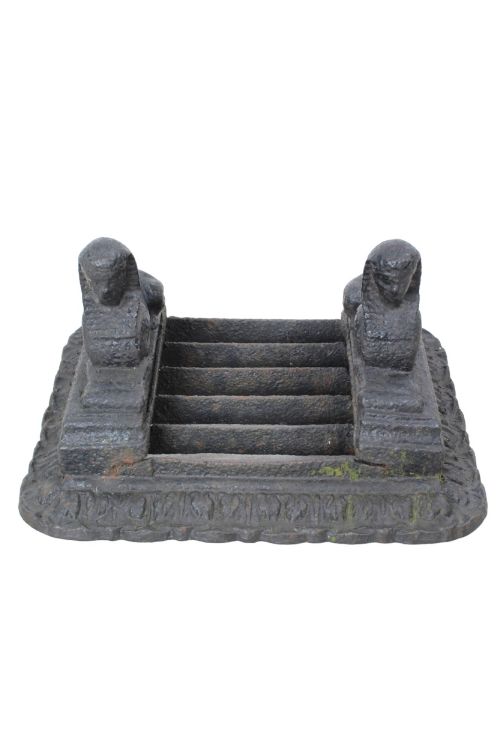
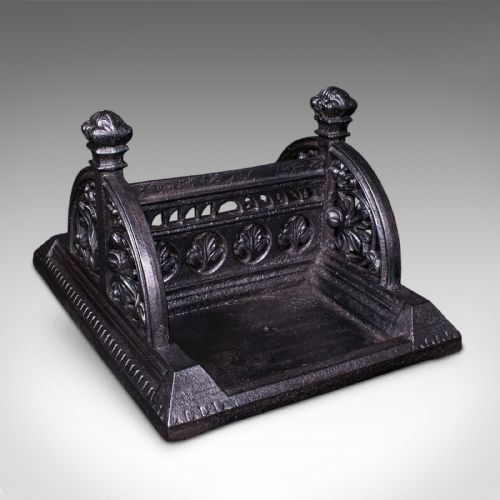
Around a sixth of the category is figural or revival work: a dachshund, a lion, a unicorn, a sphinx, a pair of Edwardian dogs, and one pair modelled as a recumbent lion and unicorn together. Named decorative styles appear only in single figures, with Egyptian Revival twice, Gothic Revival twice and an Aesthetic period piece once. Another group is described by setting rather than pattern, five titles saying country house and five saying townhouse.
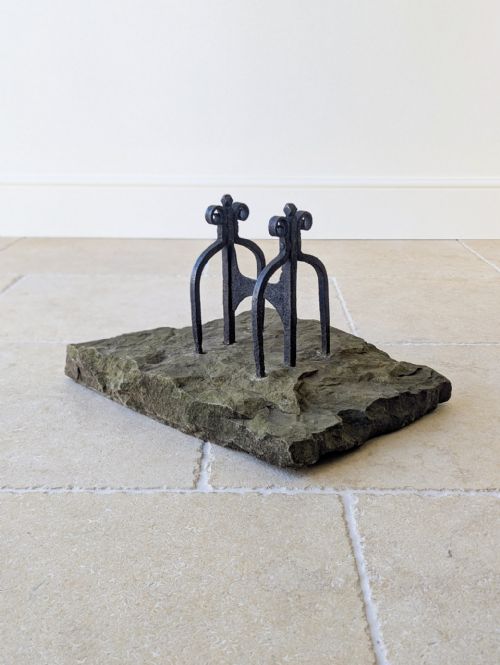
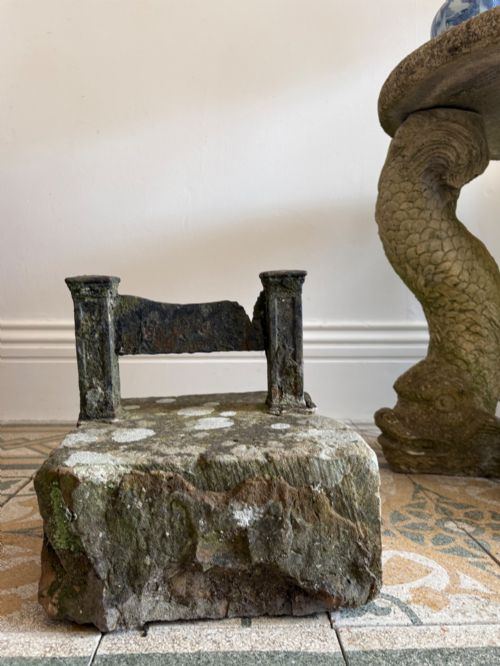
Dating is mostly by reign rather than by year. The dealers' own date fields cluster Victorian, then Regency and Georgian, and run from 1800 to 1930, but only 20 of 72 listings commit to a clean year. Two titles reach back past that on style alone, one claiming the 18th century and one circa 1750. Three scrapers have survived still bedded in their original stone, described as a hewn block, Yorkstone and Bath stone.
Where Value Sits
Modelling does most of the work. The lions, unicorns, sphinxes and dogs, along with the Gothic and Egyptian Revival patterns, sit in the upper half of the sampled range, while the undecorated cast-iron single with no attribution clusters at the bottom. That gap is about what the founder put into the pattern, not about the metal.
Number and mass come next. Pairs are unusual at 8 of 72 titles, and they sit well above plain singles, to the point that one dealer thought it worth putting the word One in the title of a single. Size counts too: large appears in 10 titles, and the heavier mounted townhouse and country-house scrapers hold the top of the range with the figural pairs.
Two smaller things lift a price. A scraper still set in its original hewn block or stone slab sits above the same casting on its own, and an earlier reign label helps, with Georgian and Regency examples averaging higher than the Victorian majority. Where a foundry is named or a pattern attributed, those listings sit above anonymous equivalents of the same form.
Retail Price Guide 2026
Typical UK retail prices for boot scrapers, calculated from the Sellingantiques database of over a million retail prices indexed since 2003. This retail price guide relies exclusively on Sellingantiques data; no external sources or auction records are used, so the figures do not describe the wider market.
The earliest attributions on Sellingantiques are two scrapers dated on style alone, one to the 18th century and one to about 1750.
The Antique Boot Scrapers Glossary
- Boot scraper
- An iron blade held in a frame, set at a doorway for scraping mud from footwear. Some listings spell it footscraper, and several dealers use shoe pull for the doorway type.
- Cast iron
- Iron poured into a mould, so frame and ornament come out in one decorative piece. It is the term used in 45 of the 72 titles.
- Wrought or hand-forged iron
- Iron worked hot at the anvil rather than cast. Usually plainer than the cast frames, and often described as estate-made.
- Lyre or harp form
- The commonest decorative frame shape, two curving uprights flanking the blade. Oval frames turn up throughout as well.
- One-sided
- A scraper with a blade on one edge only, as against a double or through-mounted type.
- Inset to stone
- The scraper still bedded in the block it was set into, Yorkstone or Bath stone in these samples.
Frequently Asked Questions
How often do boot scrapers come up for sale?
Only about eight a year come to market on Sellingantiques. They are spread across 43 dealers who have listed one at some point, so almost nobody carries them as a line.
That also means the category turns over slowly, and a particular pattern may not reappear for a long while.
What are most antique boot scrapers made of?
Iron, almost without exception. Of 72 titles, 52 name the metal and 45 of those specify cast iron.
A smaller group is wrought or hand-forged, plainer in shape and often described as estate-made. One brass scraper appears in the samples, and it is the only one on record.
Are boot scrapers usually sold in pairs?
Singles dominate. Pairs account for 8 of the 72 titles, and one dealer went so far as to write One into the title of a single scraper to make the point.
Where pairs do appear they sit well above plain singles in the range, including one modelled as a recumbent lion and a unicorn.
What period do most boot scrapers date from?
The dealers' own date fields cluster Victorian, with Regency and Georgian behind it and a further group recorded only as 19th century.
Only 20 of 72 listings give a clean year, and those run from 1800 to 1930. Two titles claim earlier, one the 18th century and one circa 1750.
Do figural boot scrapers exist?
Yes, though the zoo is small. A dachshund, a lion, a unicorn, a sphinx and a pair of Edwardian dogs all appear in the samples.
Named decorative styles are just as thin on the ground: Egyptian Revival twice, Gothic Revival twice, Aesthetic period once. These figural and revival castings sit in the upper half of the range.
What size are antique boot scrapers?
Sizes are rarely stated. Where a dimension is given at all it runs around 33cm to 44cm, and those are the only stated measurements in the samples.
The word large appears in 10 titles, usually on the mounted townhouse and country-house scrapers, and those heavier pieces sit above the unqualified ones.