
Antique Plant Stands
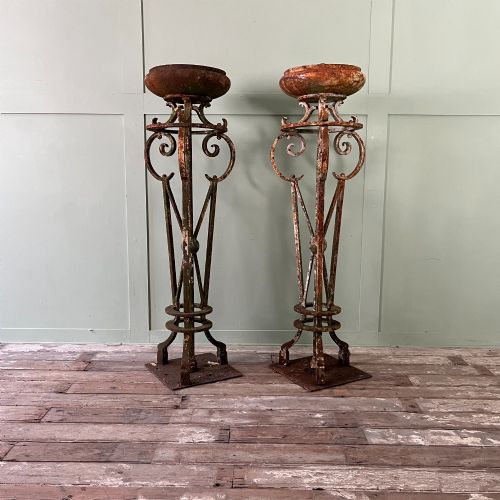
A free-standing support made to lift a plant, pot, bust or candelabrum to eye or table height, in wood indoors and in iron or wirework under conservatory glass.
Antique Plant Stands
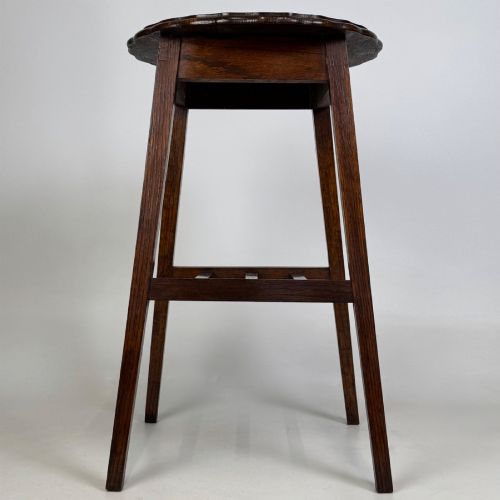
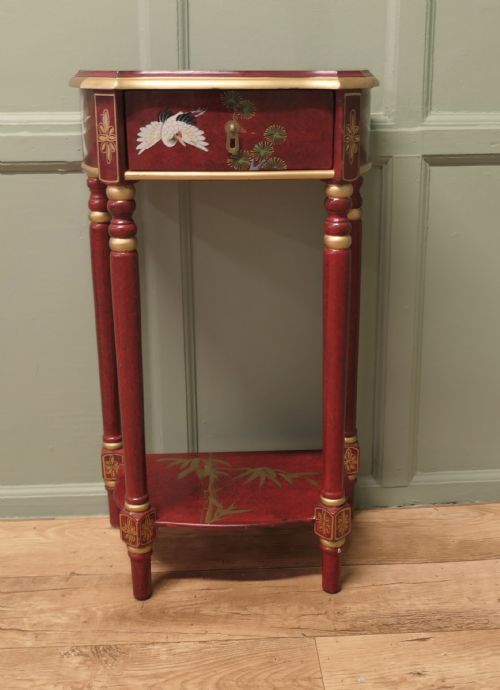
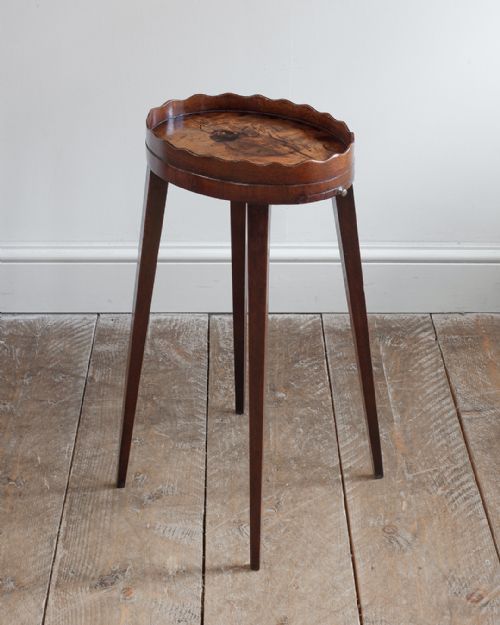
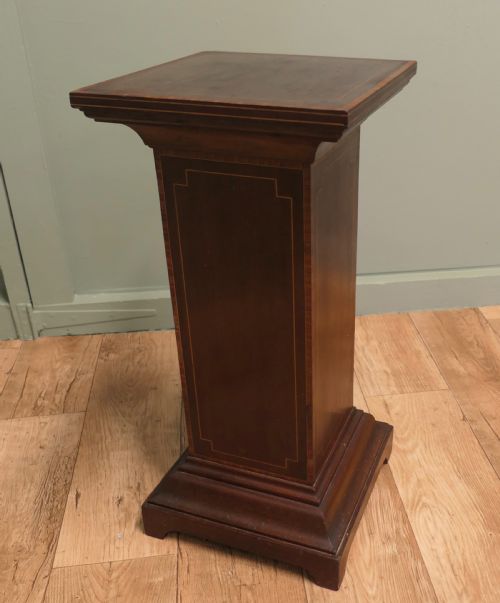
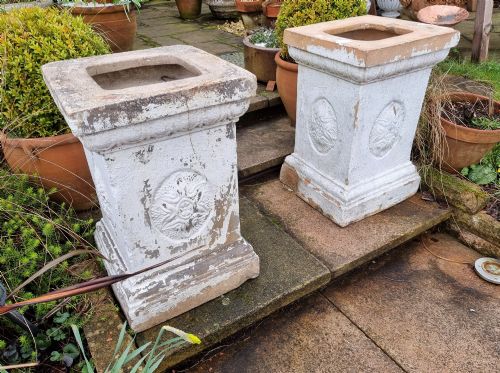
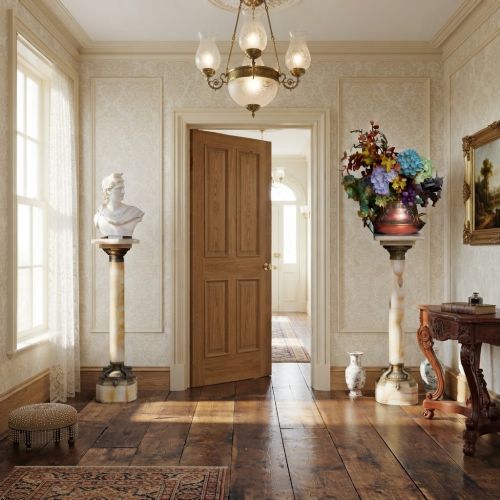
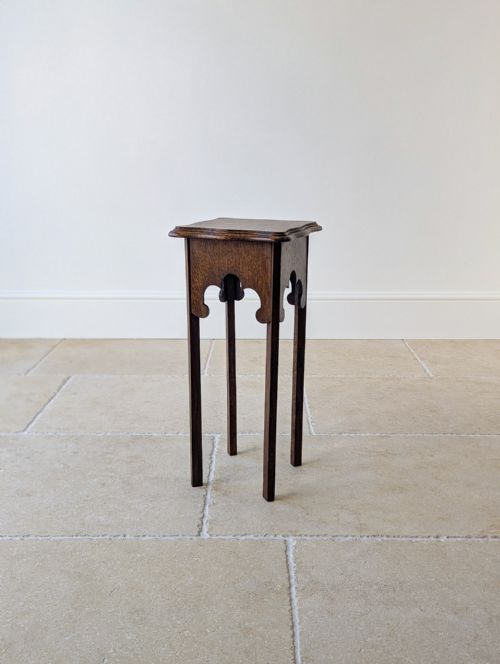
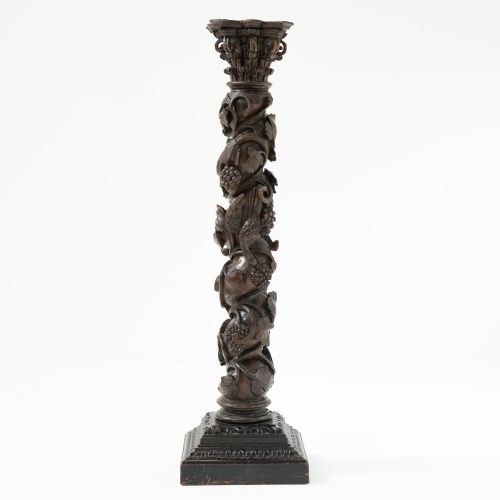
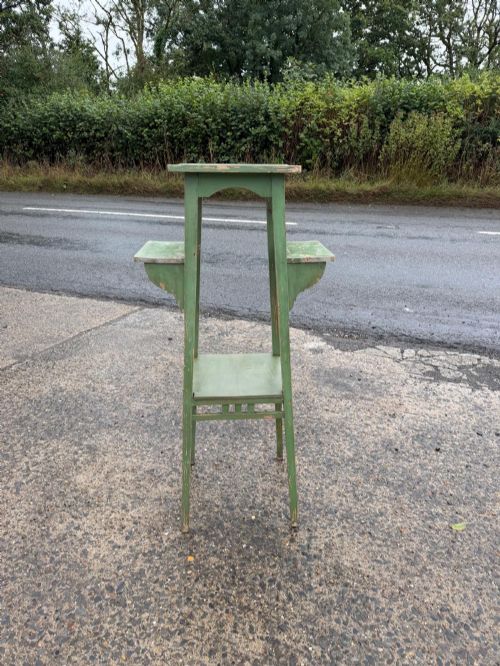
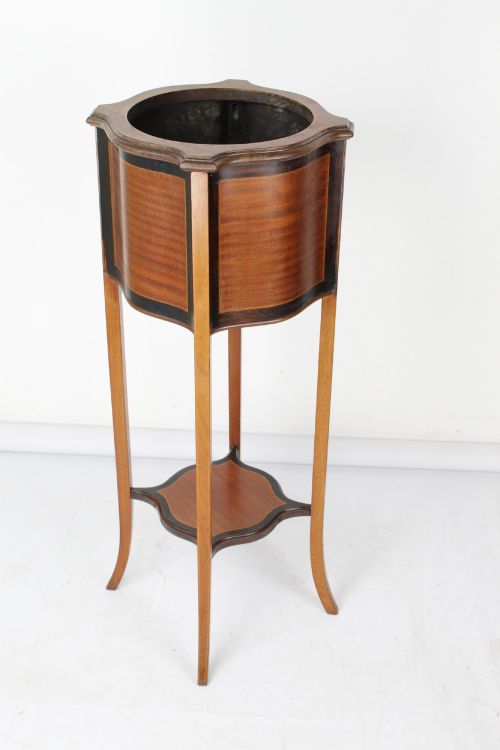
The heading covers several forms at once. Turned or carved wooden columns of the torchère type, jardinière stands with metal or marble-lined tops, coopered barrel planters, tiered wirework and wrought-iron conservatory stands, and stone or marble pedestals all sit under it. Mahogany dominates the wooden end, with oak, walnut and Chinese hardwood behind it.
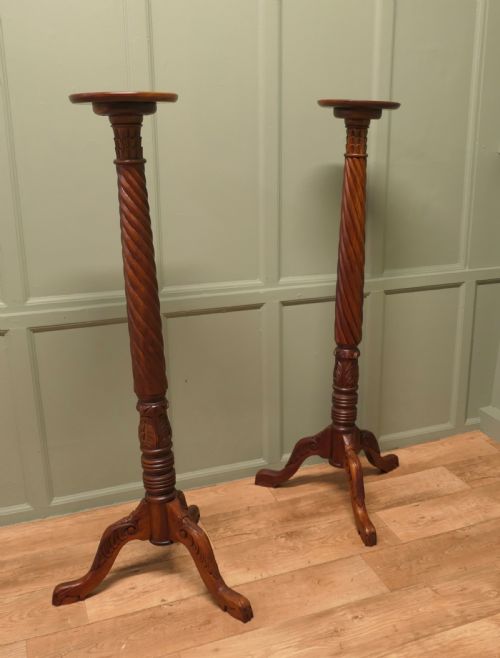
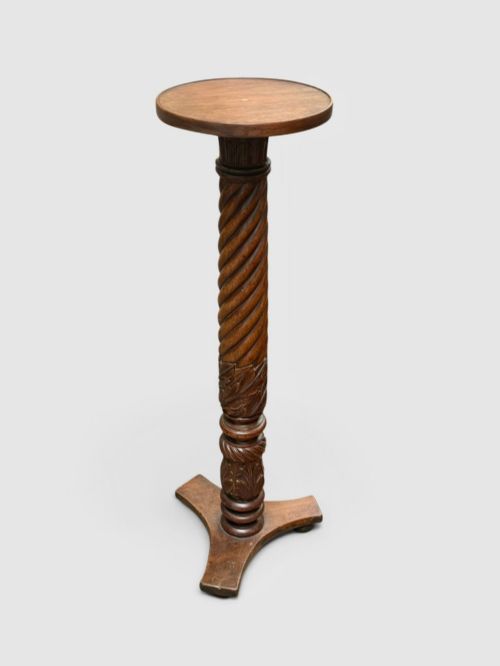
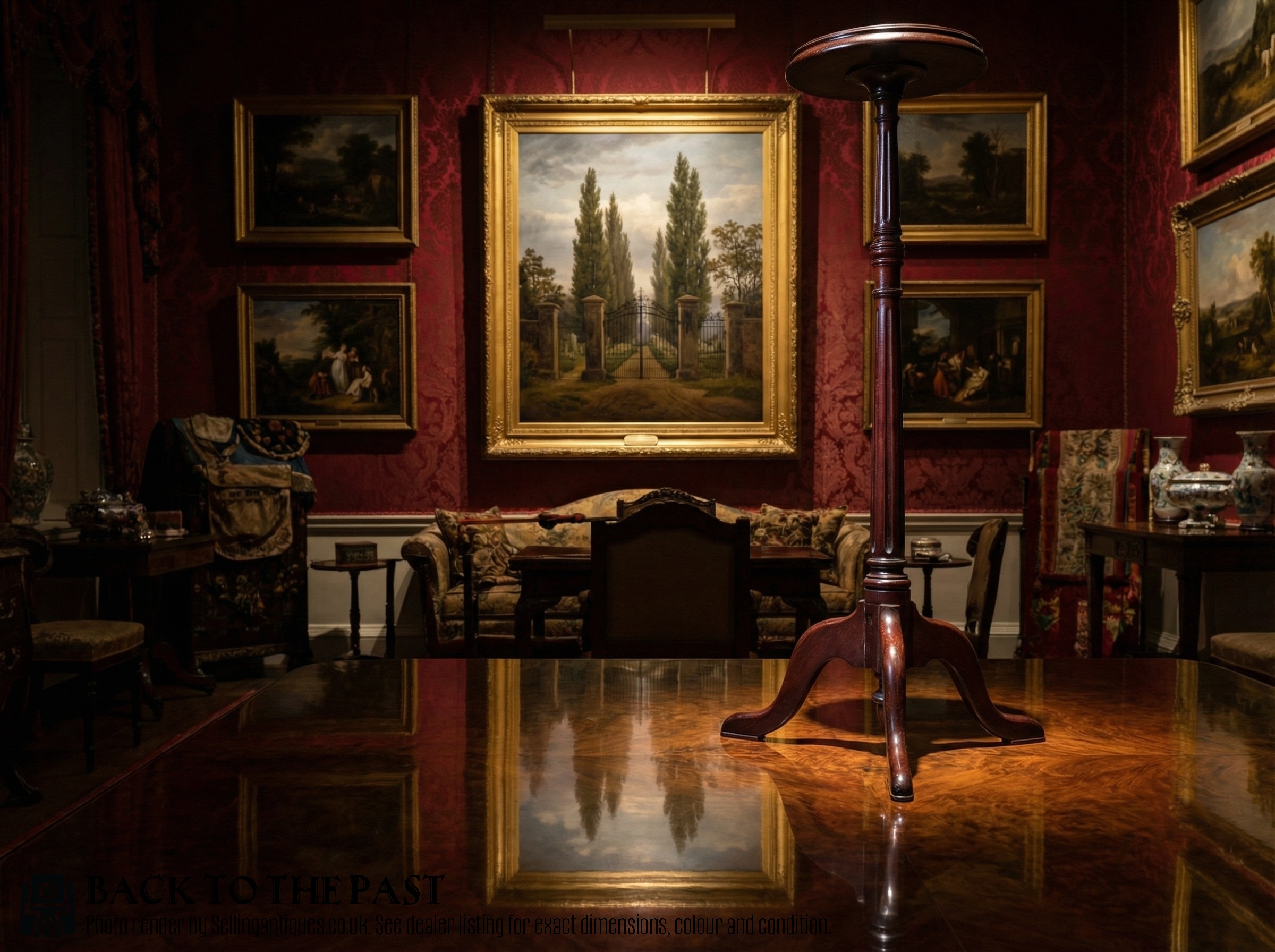
The form a buyer meets most often is a single tall turned or carved mahogany column on a tripod or platform base. Mahogany appears in 168 titles; torchère and torchiere together in 96. Victorian and Edwardian versions of that one shape are the most repeated listing on Sellingantiques, often with carving or inlay.
Stands like these became a distinct furniture form in the 18th century, when the tall torchère carried a candelabrum. The plant stand proper spread through the 19th century with the fashion for indoor and conservatory planting. Dealer dates here run from 1750 to 1950, with a late-Victorian to Edwardian core and 18th-century pieces present only as isolated examples.
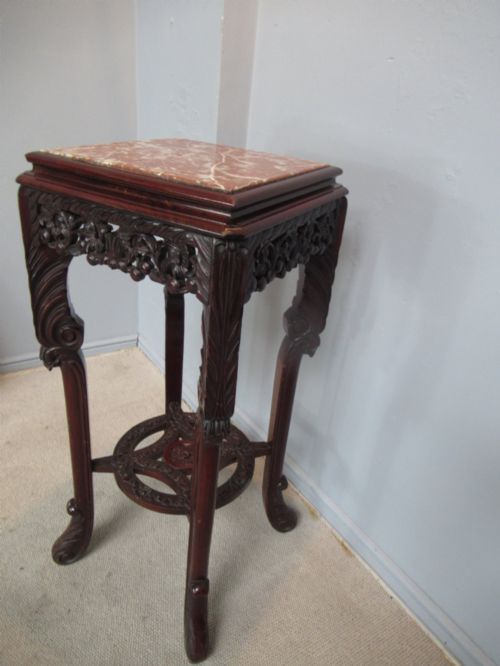
Naming is unsettled, so the same object is sold under two or three names. "Torchere or plant stand", "jardiniere / plant stand" and "plant/lamp table" all turn up, and jardinière appears in a further 20 titles truncated to "jardini". Chinese and Oriental stands are a real sub-population, 44 titles mentioning Chinese, several with rouge or variegated marble insets.
Where The Range Splits
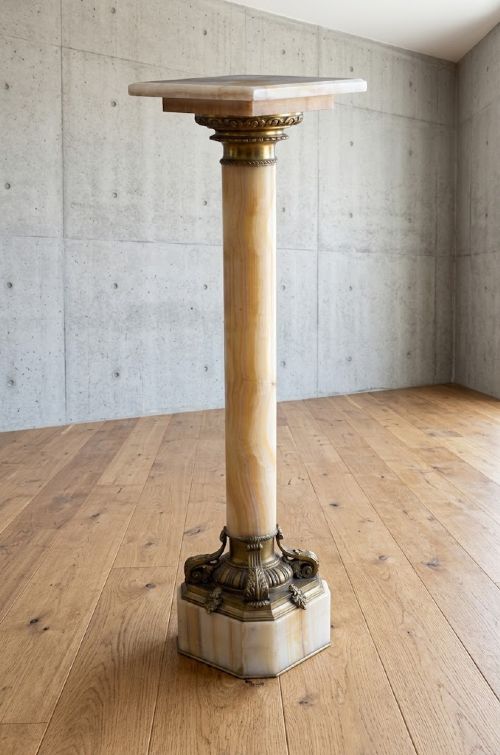
Pairs do more than anything else to separate the top from the bottom. The word appears in 80 titles and clusters in the upper reaches: paired marble, onyx and bronze columns, ormolu-mounted pedestals, matched Georgian stands. Plain single wooden stands populate the lower bands.
Material and decoration pull in the same direction. Marble, onyx, bronze and ormolu carry the upper end; plain oak, walnut and mahogany the lower. Carving turns up in 64 titles and inlay in 38, and marquetry, kingwood and ormolu-mounted jardinières sit well above their plain equivalents.
Period labels and scale add the rest. Georgian, George II and III and Regency descriptions cluster higher than the generic Edwardian stand, of which there are many. Height counts too: "tall", "large proportions" and "monumental" appear at the upper end, with recorded sizes running to a 160cm wirework stand.
Antique Plant Stands Retail Price Guide 2026
Typical UK retail prices for plant stands, calculated from the Sellingantiques database of over a million retail prices indexed since 2003. This retail price guide relies exclusively on Sellingantiques data; no external sources or auction records are used, so the figures do not describe the wider market.
About sixty-three plant stands are listed on Sellingantiques each year, and 182 dealers have offered one - close to a stand apiece.
The Antique Plant Stands Glossary
- Torchère (also torchiere)
- A tall slender stand on a small foot, first made for a candelabrum and now sold interchangeably as a plant or bust stand. Both spellings appear in quantity, 96 titles between them.
- Jardinière
- Either a plant container or the stand made to hold one. It runs through 88 titles, sometimes accented, sometimes cut short to "jardini".
- Pedestal
- A block or column-form support for a bust, urn or plant. Singular in 58 titles, plural in 13, and the form most often found in marble, onyx or scagliola.
- Marble top / marble inset
- A stone slab or let-in panel forming the platform. Marble is mentioned in 65 titles, 29 of them specifying a marble top, and it is the usual finish on the Chinese hardwood stands.
- Liner / zinc tray
- The removable metal insert that takes the pot. Sample titles record metal liners and original zinc trays on jardinière and planter stands.
- Huanghuali / hongmu / padouk
- Named Chinese hardwoods recorded on the Oriental stands in this archive, timbers rarely specified elsewhere on the miscellaneous shelves.
Antique Plant Stands: Frequently Asked Questions
What is the difference between a torchère and a plant stand?
Historically the torchère was the tall slender stand made to carry a candelabrum, standing on a small tripod or platform foot. The plant stand came later, with the 19th-century fashion for indoor planting.
In practice the two words are used for the same object. Dual titles such as "torchere or plant stand" are common, and 96 titles use one spelling of torchère or the other.
Which wood turns up most often?
Mahogany, by a distance. It appears in 168 titles, most of them the tall turned or carved column on a tripod base.
Oak accounts for 43, walnut 26, and Chinese or Oriental hardwood makes up much of the remainder. Barley-twist stems show up on oak and fruitwood examples.
How old are the stands listed?
Dealer-entered dates run from 1750 to 1950, and 230 of 588 listings carry a clean year rather than a period word.
The decade tags cluster tightly around 1900, and "19th Century" is the single largest bucket at 129. One sampled outlier sits earlier than the stated floor: a William and Mary walnut tripod candle stand given as circa 1690.
Are wirework conservatory stands common?
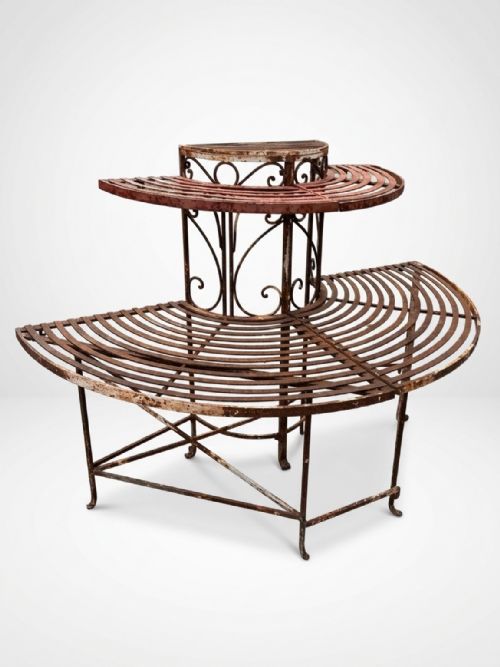
They are a small but persistent thread rather than a main branch. Fourteen titles mention wirework, alongside 29 for iron and 15 for wrought iron.
Recorded examples include a revolving stand, one dated as early as circa 1820, and sizes up to 160cm. Tiered forms run to four tiers, some demi-lune.
Do these stands carry maker's marks?
A scan of the dealer descriptions for maker names returned nothing at all, so no firm can be treated as typical of the category.
What the listings do carry is period, material and form: Victorian, Edwardian, mahogany, marble-topped, coopered oak. That is the language the archive works in.
What unusual pieces appear in this category?
Odd one-offs surface among the columns and pedestals. A plaster botanical model of a sunflower, an antler torchère, and a cast-iron birdcage on a stand have all been listed.
Others include a pair of carved wood pedestals with a secret compartment and an elephant-seat pair carved with body and tusks.
Around 63 plant stands are listed on Sellingantiques in a year, from 182 different dealers, so almost everybody carries one and nobody specialises.