




Antique Canterburys
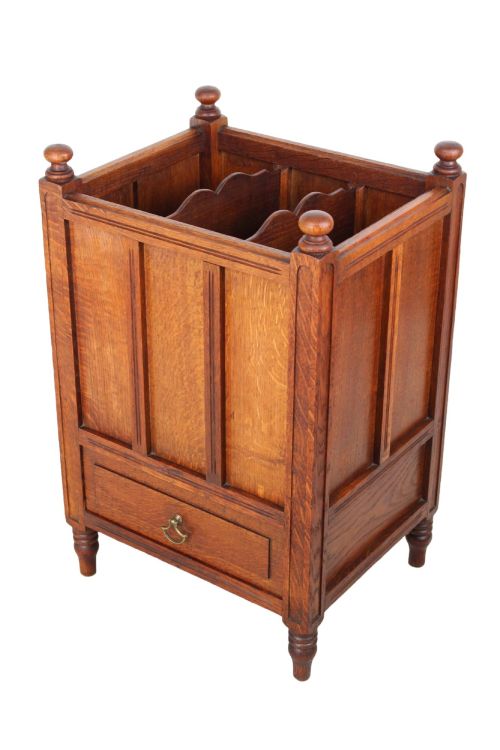
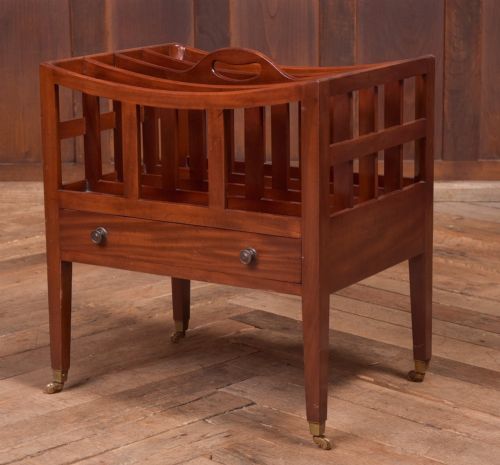
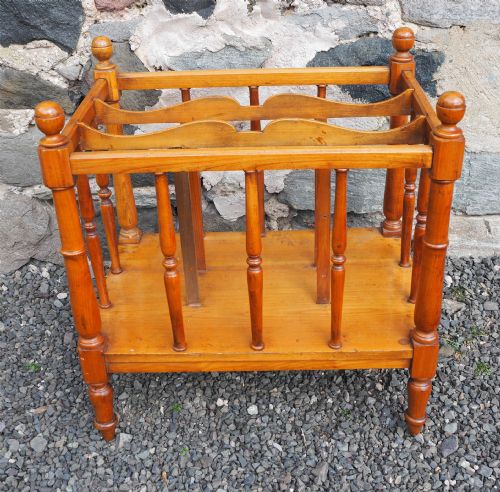
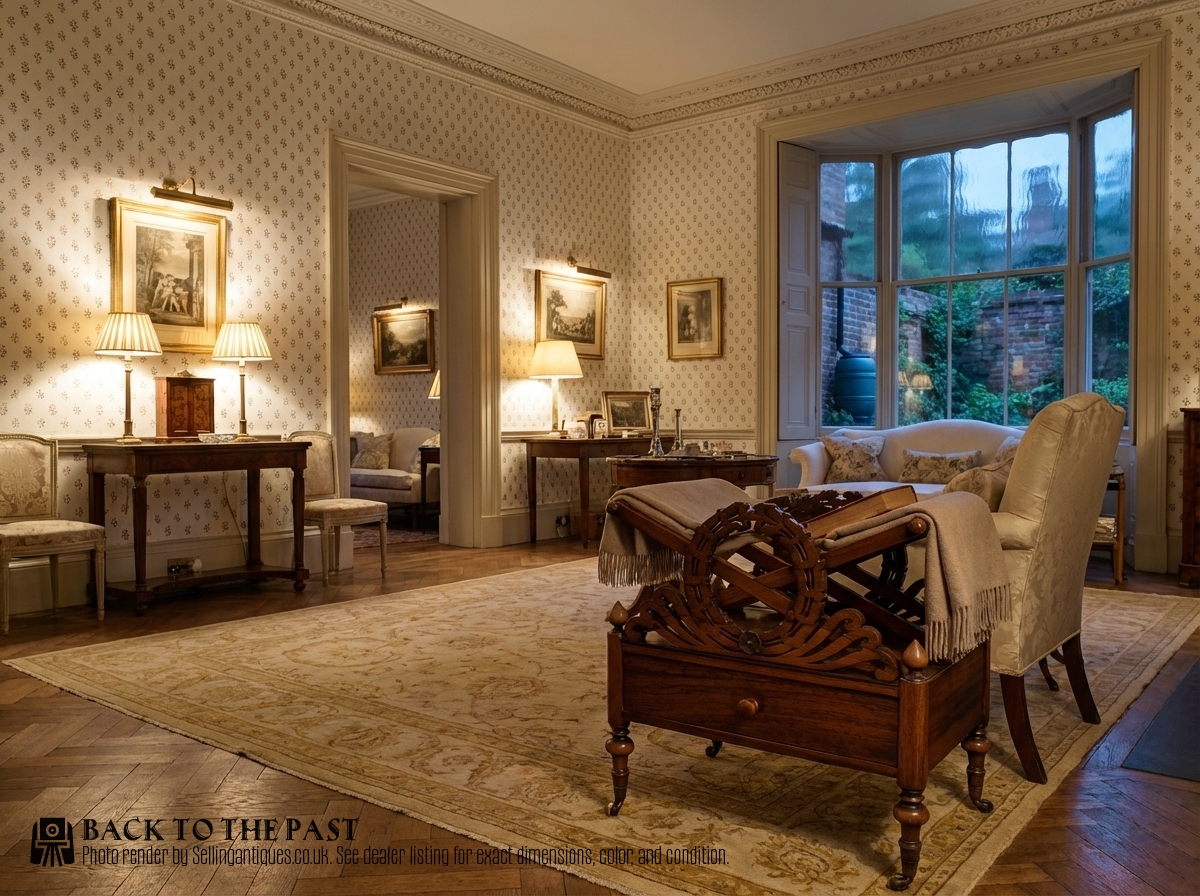
A canterbury is a low open stand on legs or castors, divided into slatted compartments, made to hold sheet music, folios or newspapers beside a piano or chair.
What Is A Canterbury?
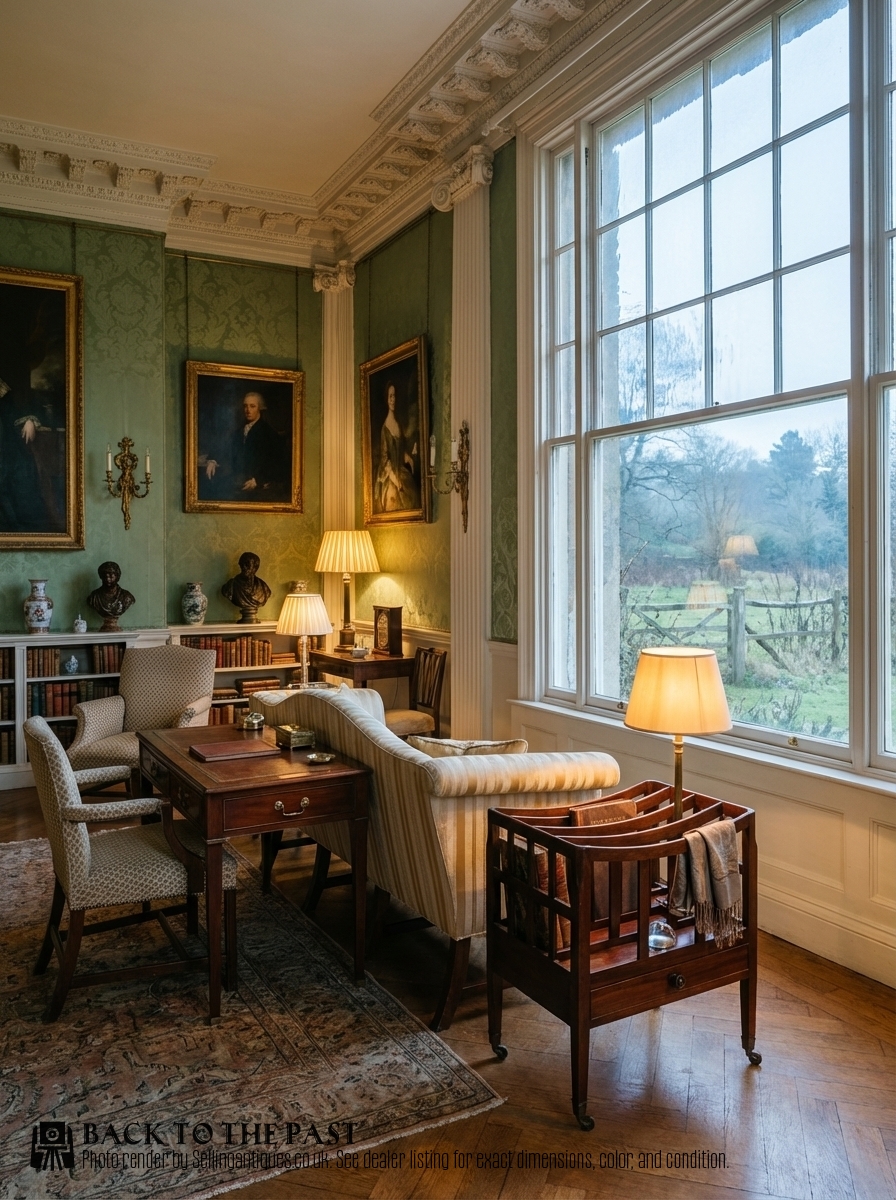
The form began in England in the later 18th century as a partitioned stand for sheet music and bound folios, kept beside a piano or in a library. Through the 19th century the same shape was put to work holding newspapers and periodicals, which is why so many now carry the words magazine rack in their titles.
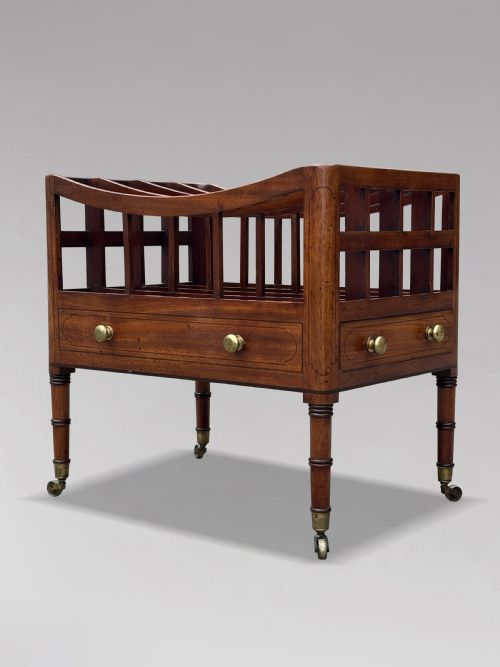
The version you'll meet most often is a 19th-century timber canterbury with short turned legs, castors and often a drawer beneath. Mahogany leads the titles at 28 of 78, with walnut and rosewood next. Victorian and Regency between them account for the bulk of the period labels.
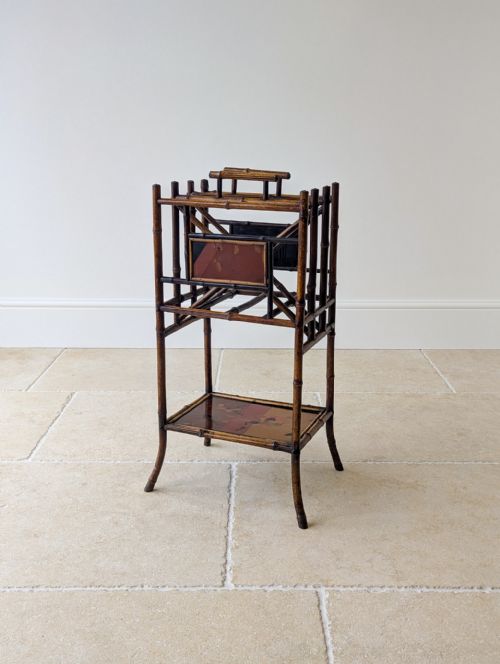
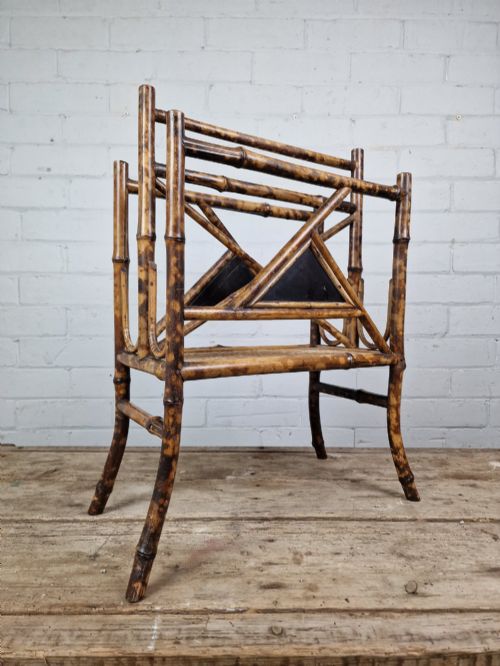
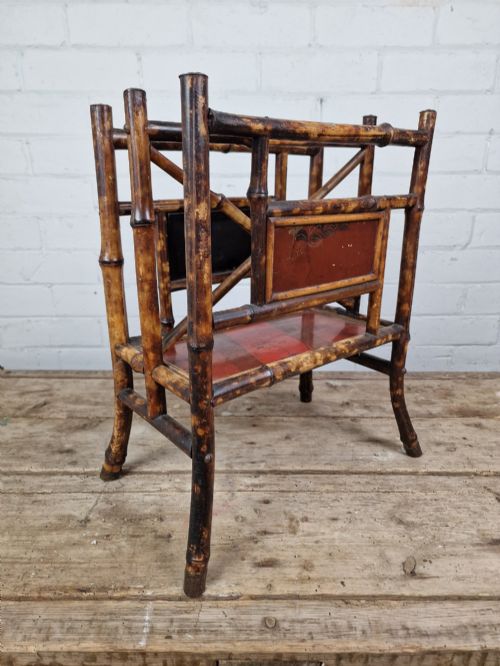
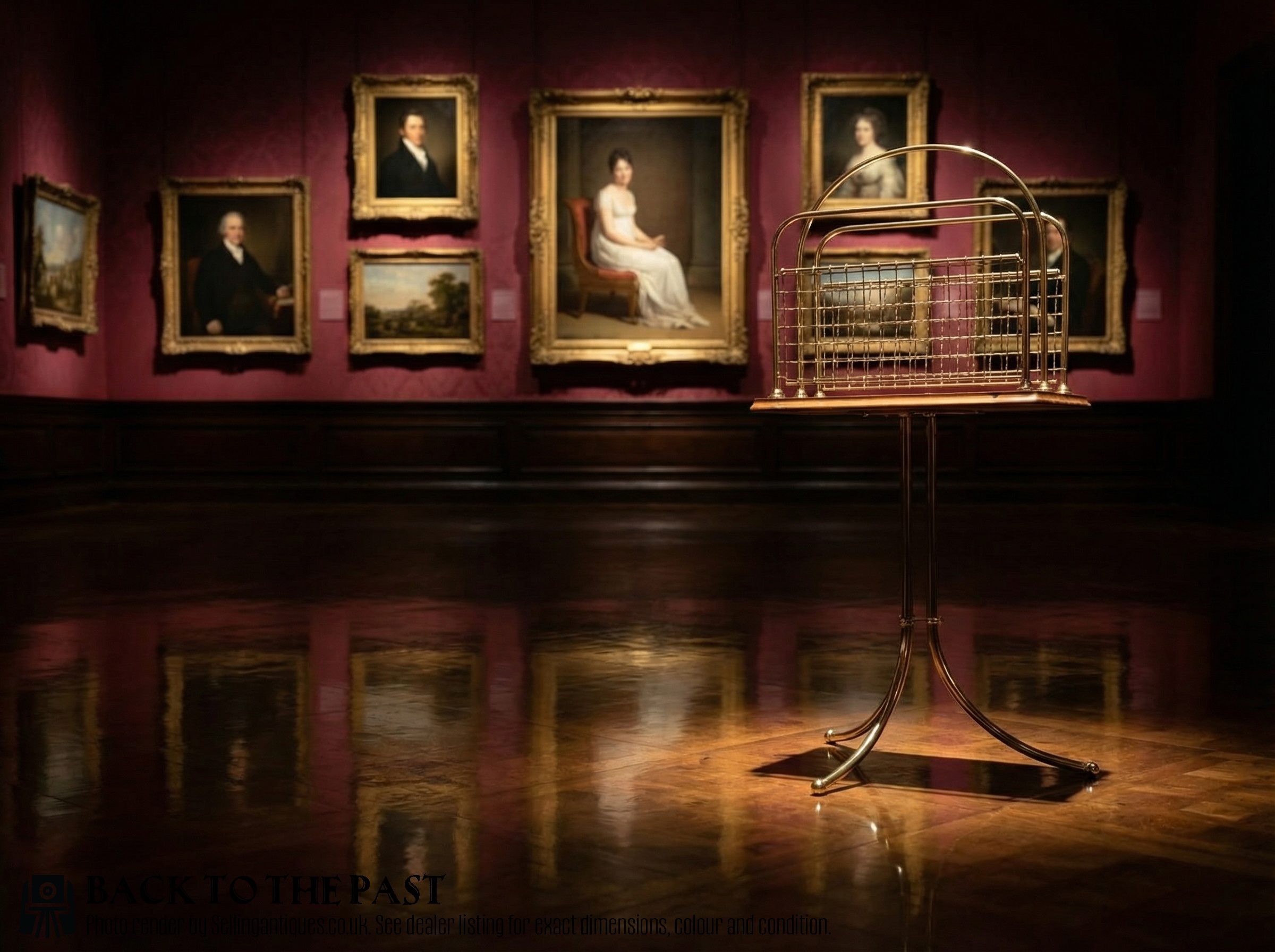
Beyond that core sit four smaller groups. Music canterburys, sold specifically as sheet-music stands, appear in eight titles. Brass and copper newspaper stands, some revolving, run through the archive and are rising in current stock. Bamboo canterburys form a small consistent thread, several of Aesthetic Movement date. Folio stands, deeper and larger, are a handful clustered at the top of the range.
Dating is loose. Only 24 of the 78 listings give a clean year, and those spread from 1790 to 1930; the rest use era labels. Titles and dated fields sometimes disagree in kind rather than fact, so a Regency title may sit under a Georgian date. Read the era label as dealer shorthand.
What Sets Them Apart
Timber does most of the work. Figured walnut and rosewood sit toward the top of the range, particularly where they carry inlaid fretwork or marquetry. Oak and bamboo sit toward the bottom. Burr walnut is named repeatedly on the higher-priced Victorian examples.
Scale pushes hard in the same direction. Descriptions like grand scale, substantial proportions and oversized country house proportions cluster near the top, and the folio stands that carry them are the largest things in the category. Small and miniature examples sit at the other end, though a miniature Regency rosewood canterbury is unusual enough to be its own case.
Period and extras finish the picture. Georgian and Regency titles gather in the upper half, Edwardian and later ones lower down. Drawers, carved and pierced work, inlay and an unusual form all lift a piece above the plain turned-leg standard.
Retail Price Guide 2026
Typical UK retail prices for canterburys, calculated from the Sellingantiques database of over a million retail prices indexed since 2003. This retail price guide relies exclusively on Sellingantiques data; no external sources or auction records are used, so the figures do not describe the wider market.
The earliest dated canterbury on Sellingantiques is a Georgian oak example given as 1790.
The Antique Canterburys Glossary
- Canterbury
- A low partitioned stand on legs or castors, made for sheet music, folios or newspapers. The name covers everything from small music stands to grand folio stands.
- Magazine rack
- The trade's working name for the same object, and 17 titles use both words together. A third of all titles here call the piece a rack of some kind.
- Folio stand
- The larger, deeper-divided relation, made for unbound prints and folios. Four sampled titles use the term, and they sit at the top of the range.
- Two tier / two section
- Title shorthand for the number of levels or compartments a stand carries.
- Bobbin turned
- Legs or spindles turned as a row of beads, cited on one small two-section example.
- Revolving
- On a rotating base or column, seen on brass and oak examples in this archive.
Frequently Asked Questions
What is a canterbury used for?
Originally sheet music and bound folios, kept low beside a piano or in a library. The divisions hold loose paper upright without creasing it.
By the Victorian period the same form was holding newspapers and periodicals, and that is how it is usually described now.
Why are so many called magazine racks?
Because it's the trade's working name for the object. The word magazine appears in 27 of 78 titles, rack in 22, and the compound magazine rack in 17.
Only eight titles use the word music. The two names describe the same piece of furniture.
Which woods turn up most?
Mahogany leads, appearing in 28 of 78 titles. Walnut follows with 13 and rosewood with 10.
Oak, bamboo and satinwood appear in smaller numbers, and there is a separate group in brass and copper.
How common are canterburys on Sellingantiques?
Around three are listed a year, so they arrive in ones and twos rather than in a steady run.
Even so, 53 different dealers have handled one at some point. It's a piece most dealers meet once rather than stock.
Are bamboo canterburys part of the category?
Yes, and they form a small consistent thread rather than a one-off. Five turn up in the samples, including one described as tiger bamboo.
Two of them are given as Aesthetic Movement, the later 19th-century taste that accounts for the group.
Do canterburys carry maker's names?
Not in this archive. A scan of the descriptions returned no cabinetmaker or retailer appearing across the category.
Descriptions lean instead on timber, period and form: rosewood, Regency, two tier, with drawer.