





Antique Bells
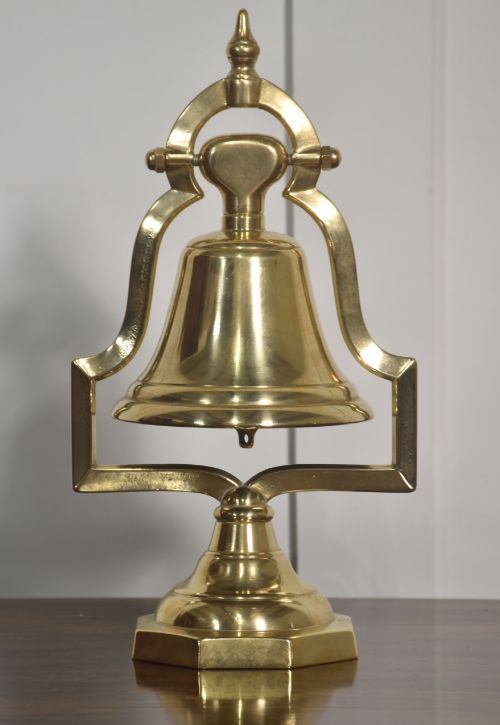
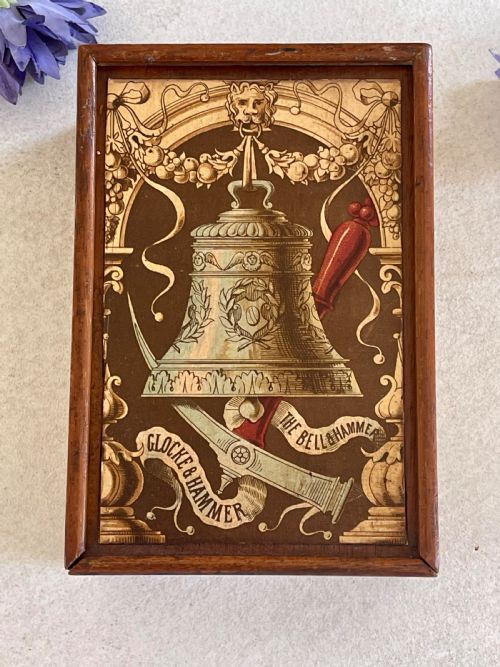
Small brass bells for a shop counter or a desk, the fixed bell systems of a Victorian house, and gongs on oak frames for calling a household to dinner.
What Are Antique Bells?
The heading covers several things at once, but brass dominates: it appears in about a third of all titles, with bronze a distant second and oak or mahogany used for the cases and frames. The form you're most likely to meet is a small cast brass counter, desk or table bell of the later 19th century, dated by dealers to roughly 1860 to 1900.
Around a quarter of the category is those counter and desk bells, sprung or tapped, sold for shops and reception desks. Beehive bodies turned in ringed tiers turn up throughout, as do figural versions in the shape of cats, horses, an owl, a tortoise, an elephant and a cherub.
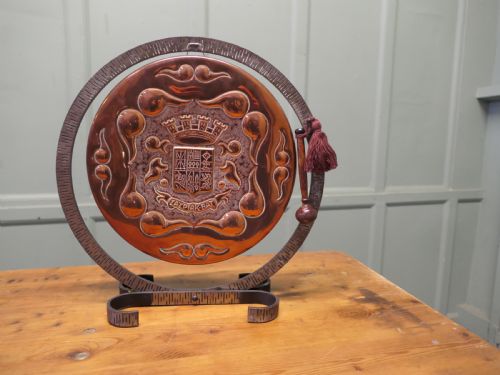
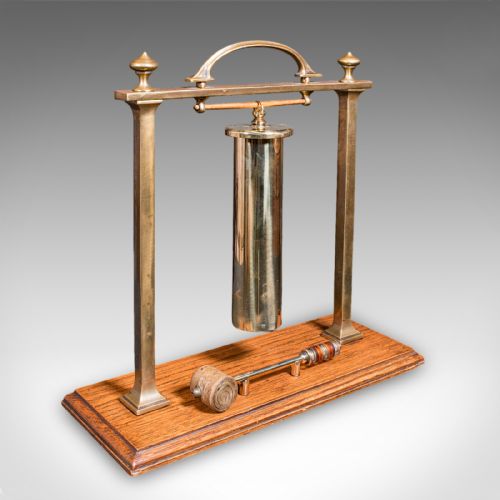
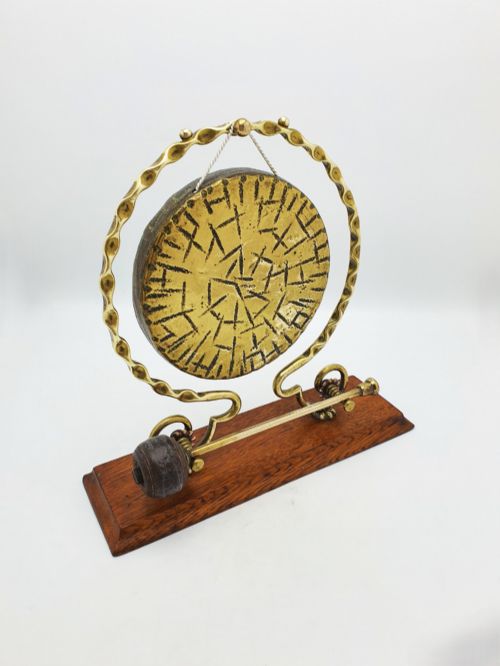
The rest divides between fixed domestic fittings and gongs. Servants' bell boxes, butler's boards and indicators in mahogany cases account for about one in six, though they sit more in the Sellingantiques archive than in current stock. Door bell pulls, pushes with porcelain presses and turn-handle ringers make up roughly one in ten, and dinner gongs on oak frames another tenth, with bamboo, Burmese, Chinese and Japanese examples among them.
A further slice is here on shape or wording rather than function: glass display and taxidermy domes, bell weights sold with balance scales, bell inkwells and bells-in-sight music boxes. Dating runs 1700 to 1940, though Victorian and a plain "19th Century" together carry a large share of everything, so many pieces are placed in a century rather than a year.
What Sets Them Apart
Novelty does most of the work at the top. A plain brass counter bell is the base of the category; the figural and mechanical ones sit well above it, and the tortoise form alone turns up four times. Cats and mice, owls, an elephant, cherubs, horses and a cold-painted bronze pig are the recurring examples.
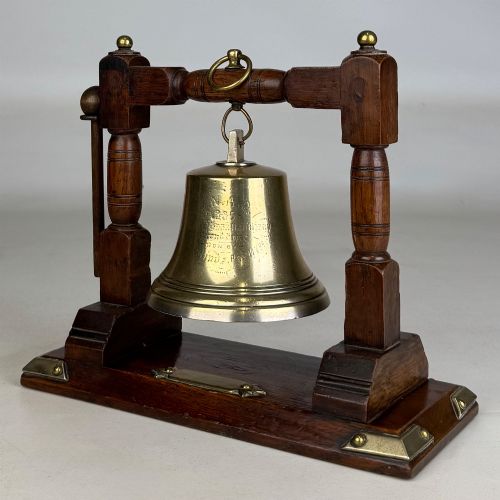
After that it's scale. A single bell box is a mid-range object, while sets of five, seven, ten, twelve and fifteen servants' bells still on their original boards with lever and pulley mechanism run to the top, as do large country house butler's boards. Size counts on its own too: "large" appears in around one title in eleven, and the big hand bells, framed bells and oak gongs sit high.
Two smaller things lift a piece. Cased and framed work in mahogany or carved oak runs above uncased or plainly mounted bells. So does anything that names itself, a struck date, a registration, a house name plate or a ship's name, and non-European work such as a Burmese kyeezee, a Chinese carved gong or a Hindu temple bell clusters in the upper half.
Retail Price Guide 2026
Typical UK retail prices for bells, calculated from the Sellingantiques database of over a million retail prices indexed since 2003. This retail price guide relies exclusively on Sellingantiques data; no external sources or auction records are used, so the figures do not describe the wider market.
Figural counter bells recur on Sellingantiques - tortoises, owls, an elephant, cherubs, horses, a cold-painted pig - and the tortoise form alone turns up four times.
The Antique Bells Glossary
- Counter bell
- Small sprung or tapped bell made for a shop counter or reception desk. The same object is listed as a desk, table or courtesy bell.
- Bell box
- Cased unit in mahogany or oak holding the bell and its indicator for a servant call, one box to a room.
- Bell board
- Panel of bells or swinging flags showing which room has rung. Also listed as an indicator, or as a butler's bell board.
- Bell push
- Fixed door fitting, commonly brass with a porcelain or ceramic press. A bell pull works the same job through wire and cranks, using a handle, tassel or embroidered strip; a ringer is a lever or turn-handle worked by hand.
- Beehive bell
- Counter bell with a domed body turned in ringed tiers, like a straw skep.
- Dinner gong
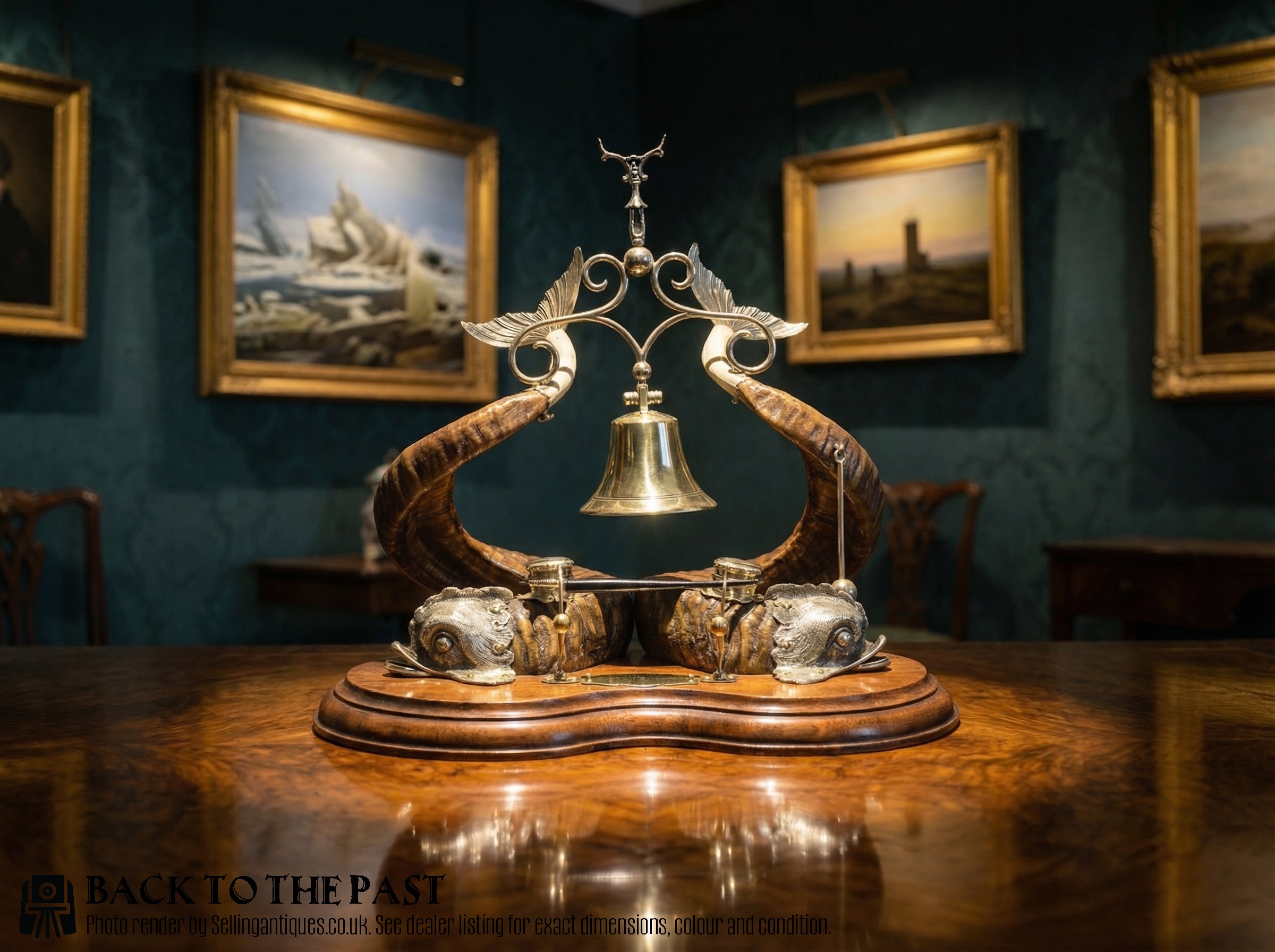
- Suspended disc or tube on a frame, struck with a beater. Tubular bells are the version using a set of hanging metal tubes struck in sequence.
Frequently Asked Questions
What is the most common type of antique bell?
The small cast brass counter, desk or table bell. Brass runs through about a third of all titles, and "Victorian brass" is the single most common phrase in the category.
Counter appears in around thirty titles, desk in twenty-six and table in fifteen, with dates clustering between about 1860 and 1900.
How old are these pieces?
The dated field runs 1700 to 1940, and 107 of 253 listings carry a clean year rather than a period label. Nothing in the archive is dated after 1940.
Victorian is the largest single period term, followed by a plain "19th Century". Where dealers commit to a decade, the 1900s, 1890s and 1880s lead, with Edwardian, the 1920s and the 1910s behind them.
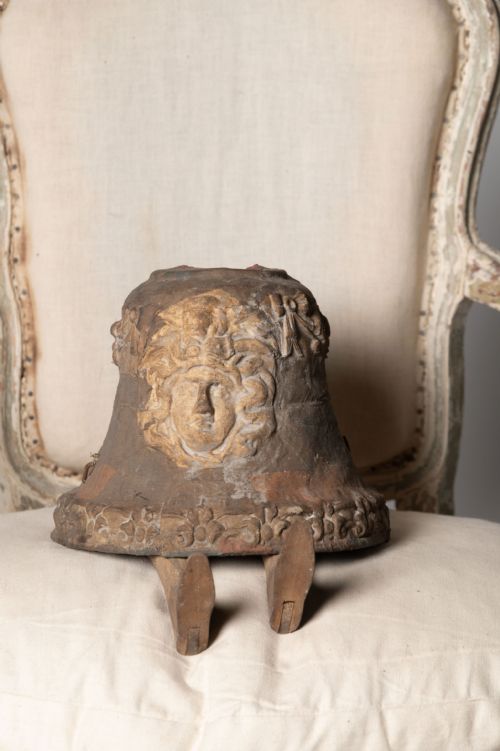
The earliest dated objects are a handful: a bronze mortar given as circa 1700, a 17th-century carved fruitwood hand bell, a cast church bell of 1754 and an English bronze bell placed in the reign of Anne.
Why are glass domes listed under bells?
They are bell jars by shape rather than bells by function. Blown glass domes over taxidermy, a clock or an ornament, sometimes called showcase domes.
Glass appears in sixteen titles and dome in sixteen, and domes form almost a fifth of what is currently on offer on Sellingantiques.
Do servants' bells come as complete sets?
They do, both singly and in numbers. Sets of five, seven, ten, twelve and fifteen are recorded, the largest still on its original board with its lever and pulley mechanism.
Single bell boxes in mahogany or oak are the more usual arrival. Boards and indicators together make up about one in six of the category, weighted towards the archive rather than current stock.
Are gongs part of this category?
Yes, and they're the largest share of what is currently listed. Dinner and table gongs account for roughly one in ten of everything, with oak appearing in seventeen titles.
Oak-framed and carved frames are the common British form. Bamboo examples turn up, as do Burmese, Chinese and Japanese gongs, and a Burmese kyeezee.
How often do antique bells come up for sale?
Eighty-six dealers have listed in this category, and roughly twenty-three pieces come to market in a year.
That works out at one or two apiece over the life of the archive, so few dealers handle them regularly.