
Antique Trays
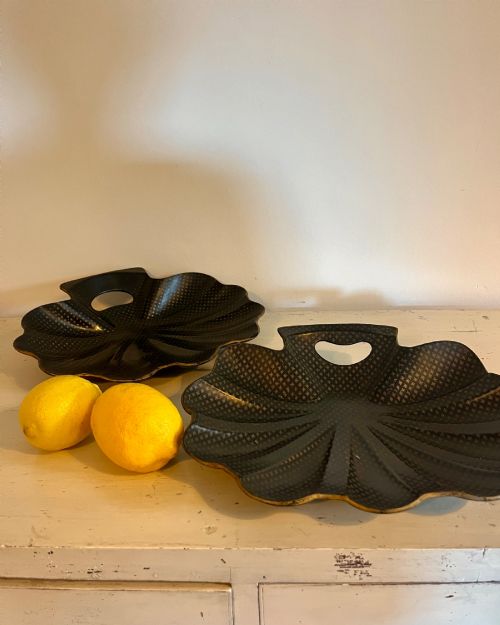
A tray is a flat carrying surface with a raised rim, and in this category it's mostly English serving furniture: deep-sided wooden trays made to be set down on their own stands.

Antique Trays
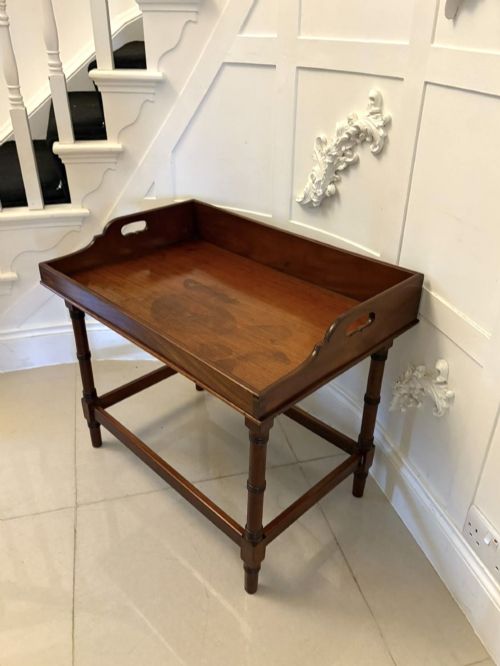
The form you'll meet most often is the mahogany butler's tray on a folding stand. Mahogany appears in 536 of the titles and "stand" in 494, and butler's trays account for a large slice of that. The tray has raised or hinged sides so a servant could carry a full load and put the whole thing down without needing a sideboard, which is why the eighteenth century took to it.
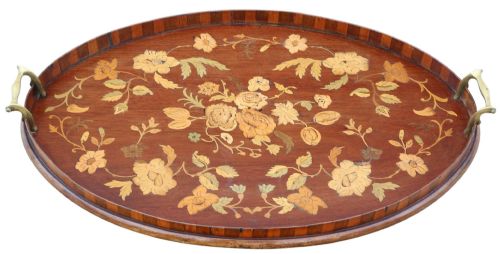
Oval and inlaid are the commonest qualifiers after the timber, and the wooden trays run from small folding examples up to large George III oval trays with hinged drop sides. Oak turns up in 166 titles, walnut in 37. Roughly half the archive sits in this branch.
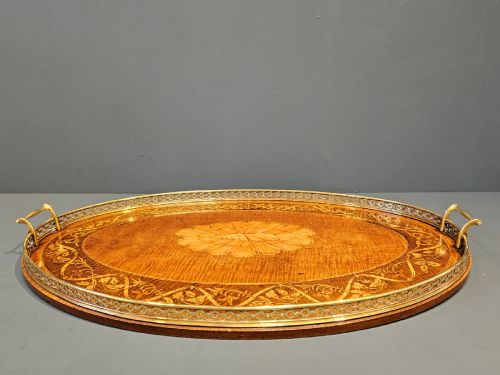
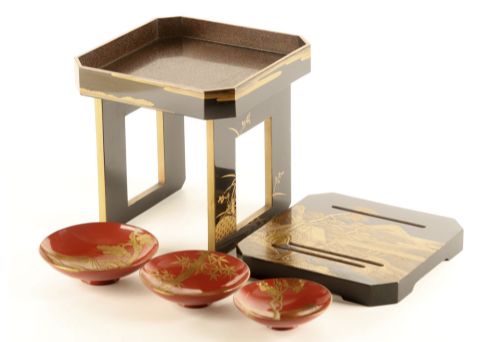
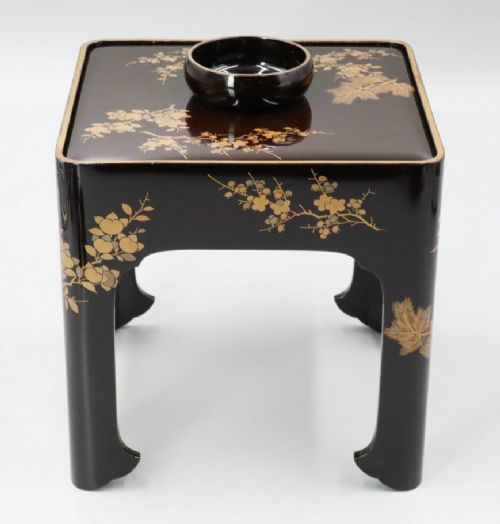
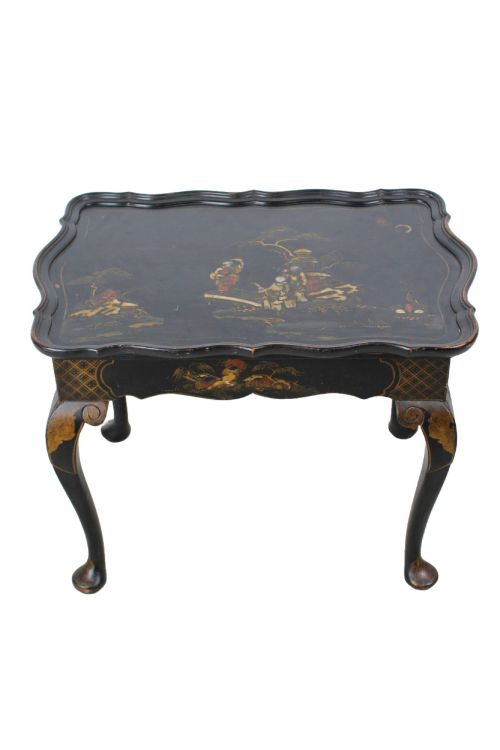
The rest divides into a few clear seams. Papier-mâché, japanned and lacquer trays make up about one in twelve, including Regency gilt, chinoiserie and Japanese export work. Painted metal toleware is a smaller steady stream. Oak or mahogany galleried drinks trays with silver-plate mounts hold around a twentieth of the listings, and small cutlery, tea, pen and crumb trays are a persistent minority.
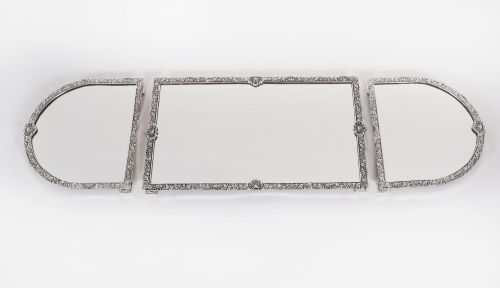
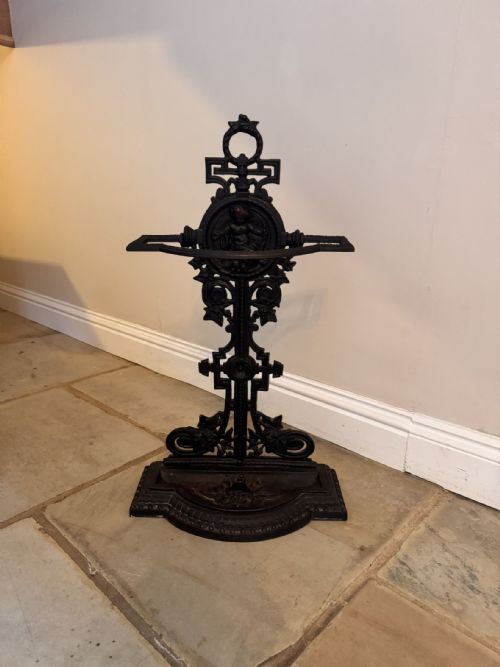
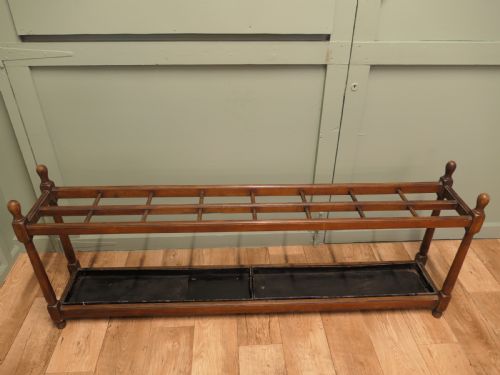
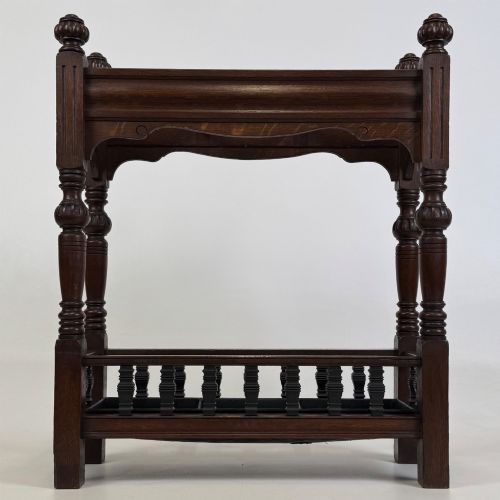
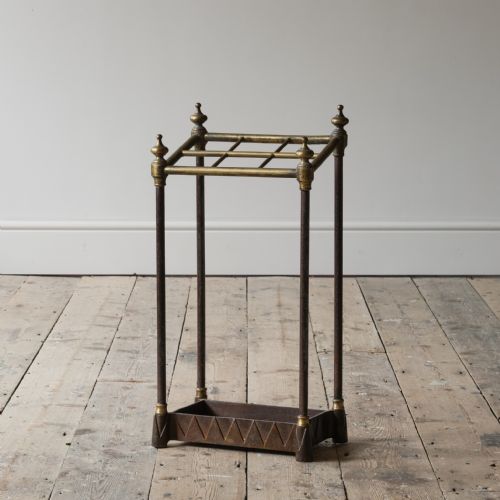
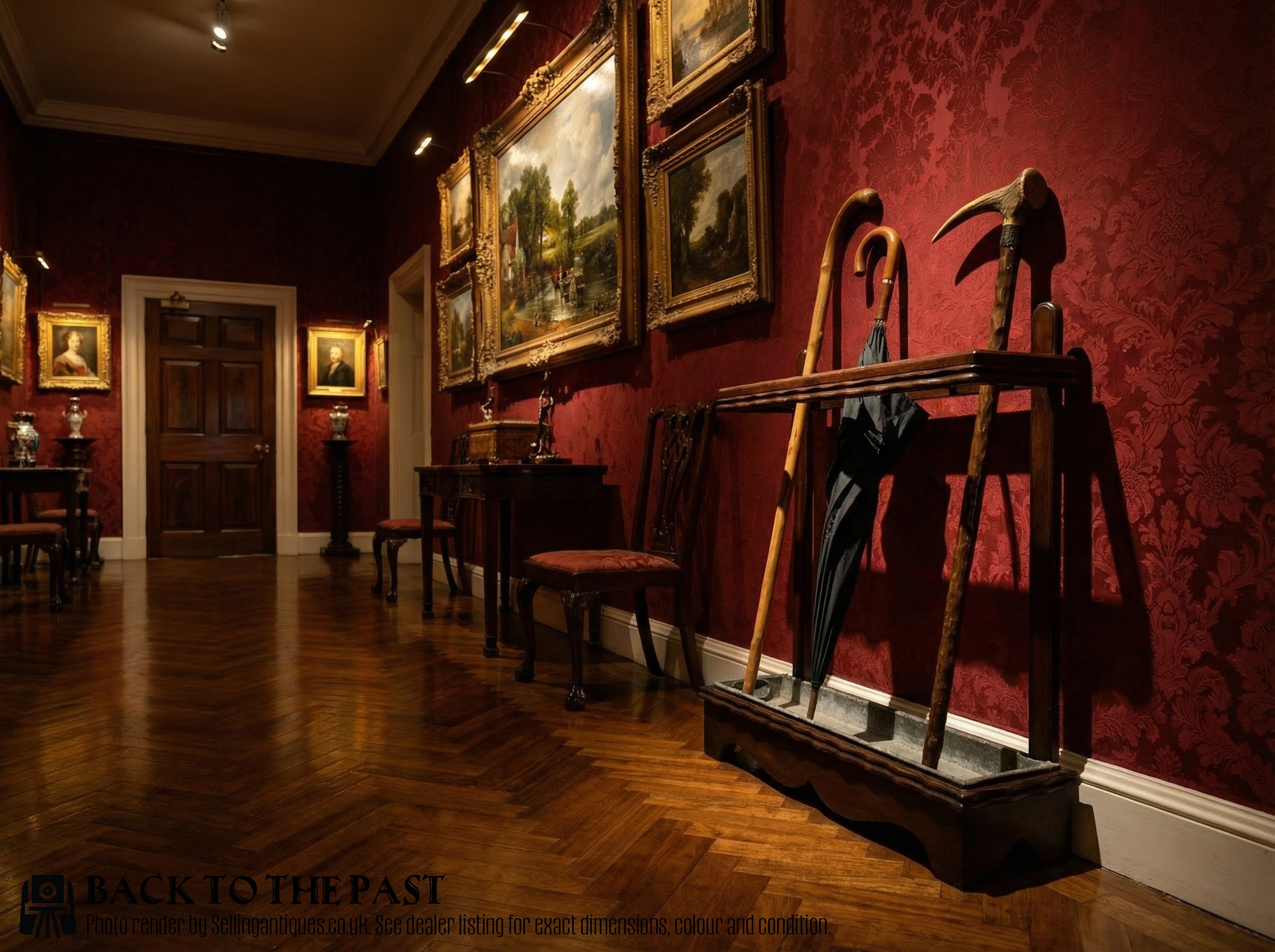
Dates are worth reading carefully. Of 1,724 listings, 661 carry a clean year, spanning 1750 to 1940; the rest are given as period labels, and the biggest single bucket is a flat "19th Century", which is a hundred-year window. Twentieth-century decades are well represented, and those pieces tend to be Art Deco or Arts and Crafts rather than wooden butler's trays. Stick and umbrella stands with drip trays are swept in by the heading too, and they're a large part of current stock.
Where The Range Splits
Tray and stand together is the first divide. Sampled titles separate "on original stand", "on later stand", "on associated stand" and "on modern stand", and the distinction is made case by case rather than as a rule of the category. A tray that has kept the frame it was made for sits above one that has been paired up later.
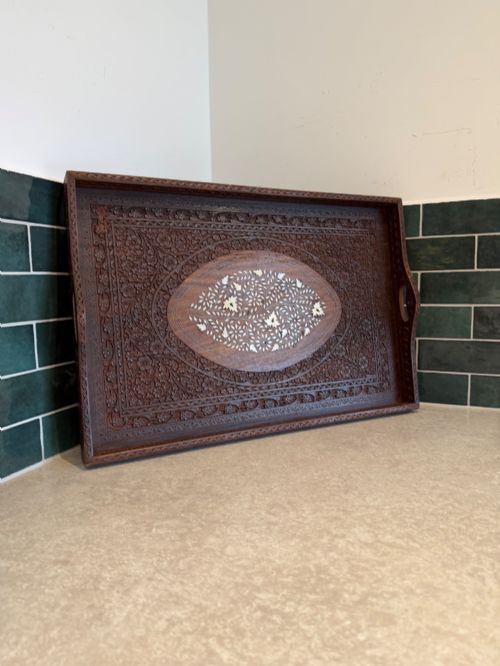
Then timber and decoration. Plain oak and pine cutlery trays are the reliable bottom of the range, while satinwood, rosewood, burr yew, brass-bound and marquetry-inlaid mahogany examples sit at the other end. Inlay features in 146 titles, carving in 39. Size pulls the same way: large papier-mâché and toleware trays cluster high.
Attribution and number finish the job. The named papier-mâché workshops and Pontypool toleware sit well above unattributed equivalents, and sets beat singles by a clear margin. Graduated sets of three and four, nested Japanese lacquer sets of five and near pairs of butler's trays each turn up only once or twice, and each lands near the top.
Antique Trays Retail Price Guide 2026
Typical UK retail prices for trays, calculated from the Sellingantiques database of over a million retail prices indexed since 2003. This retail price guide relies exclusively on Sellingantiques data; no external sources or auction records are used, so the figures do not describe the wider market.
19th Century is the period label used most for trays on Sellingantiques, with 1900s next and Victorian third.
Henry Clay·Jennens & Bettridge
The Antique Trays Glossary
- Butler's tray
- A deep tray with raised or hinged sides, made to be set on its own stand. Used in 317 titles.
- On stand
- Sold with the folding X-frame or turned base it sits on. "Later stand" or "associated stand" flags a frame that isn't original to the tray.
- Drop sides
- Hinged flaps that lower flat, so the tray doubles as a table top. Also described as folding sides.
- Galleried
- A raised pierced or railed rim round the edge of the tray. Fifty-five titles use it, often oak with silver-plate mounts.
- Papier-mâché
- Moulded, lacquered paper pulp, commonly black and gilt. Appears across nearly 150 titles in one spelling or another.
- Waiter
- An older word for a small tray, still used in several titles.
Antique Trays: Frequently Asked Questions
What is a butler's tray on stand?
It's a deep tray with raised or hinged sides, sitting on a folding X-frame or turned base made to take it. The point was to set a full tray down anywhere in the room.
On Sellingantiques the pairing dominates the category: mahogany runs through 536 titles and "stand" through 494.
Which wood is most common?
Mahogany, by a wide margin. Oak comes next, with walnut a good way behind, and Georgian mahogany appears as a phrase in its own right across dozens of titles.
At the upper end of the range you'll also see satinwood, rosewood, burr yew and brass-bound mahogany, usually with inlay or marquetry.
Are papier-mâché trays part of this category?
Yes, and they're the second-largest branch, around one in twelve listings. Regency gilt decoration, chinoiserie and Japanese export lacquer all appear, along with graduated sets.
They're also the only branch where workshop names survive in dealer copy with any regularity.
How old are the trays listed?
The dated field runs from 1750 to 1940. Two George III butler's trays dated 1750 are the earliest in the sample, and the latest cluster sits in the 1930s among Art Deco mirrored and geometric drinks trays.
Only 661 of 1,724 listings carry a clean year. The others use period labels, and "19th Century" is the single biggest of those.
Why do umbrella stands appear under trays?
Because their titles name the drip tray, the removable metal pan that sits in the base. The heading sweeps them in.
Stick and umbrella stands, many of them cast iron, are minor in the sold archive but a large part of what's currently listed.
What are toleware trays?
Painted and varnished sheet metal, often japanned. Fifty-two titles use the word, with "tôle peinte" turning up as well.
Pontypool is named only a couple of times across the whole sample, so the great majority of toleware here is described without a place of origin.