
Antique Jardinieres
A jardiniere is a container for indoor plants, or the stand made to raise one to eye level, a form that took shape in 18th-century France and spread as heated rooms and conservatories made indoor planting fashionable.
Antique Jardinieres
Two things sit under the one heading: the vessel that holds a pot or liner, and the stand that lifts it. The stand dominates. Of 406 listings, 162 titles contain "stand", 84 contain "planter", and 44 use the phrase "plant stand" outright. Dealers hedge with slashes, writing jardiniere/planter, jardiniere/wine cooler, jardiniere/side table for the same object, so the word in a title doesn't settle which you're looking at.
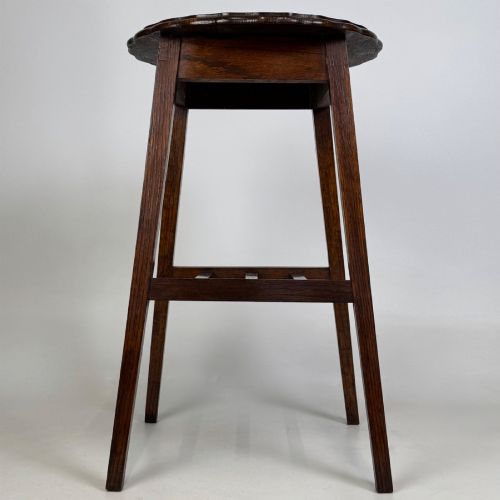
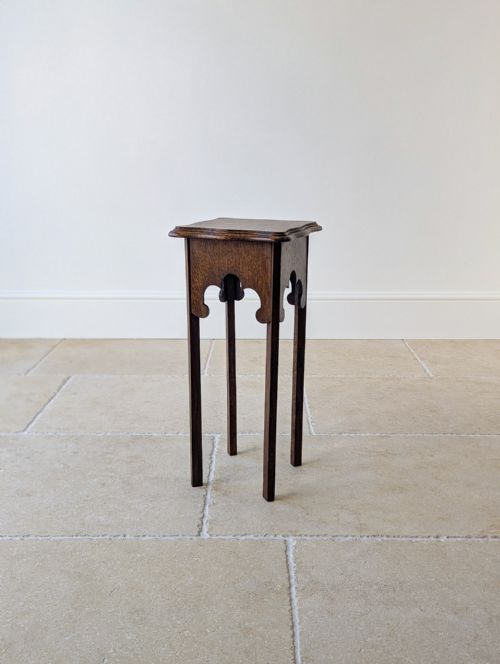
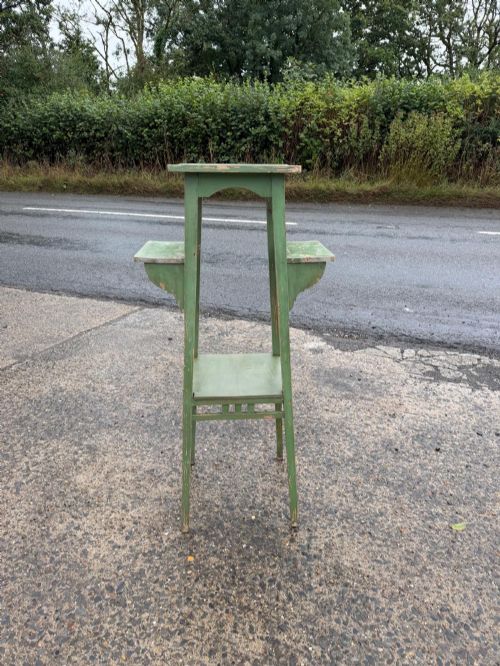
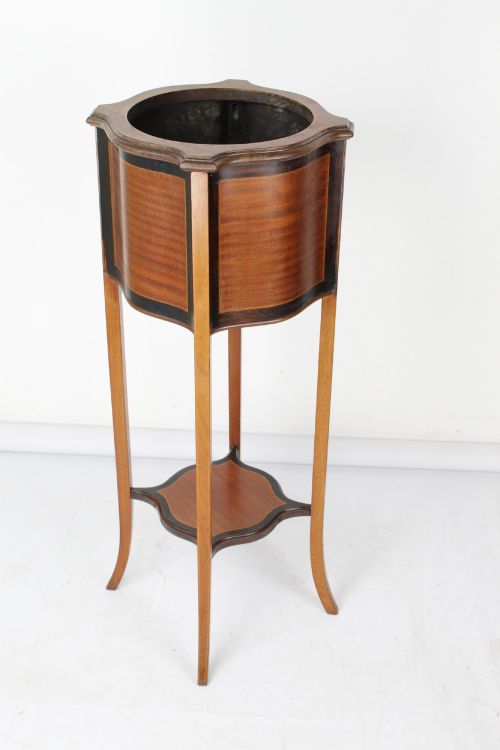
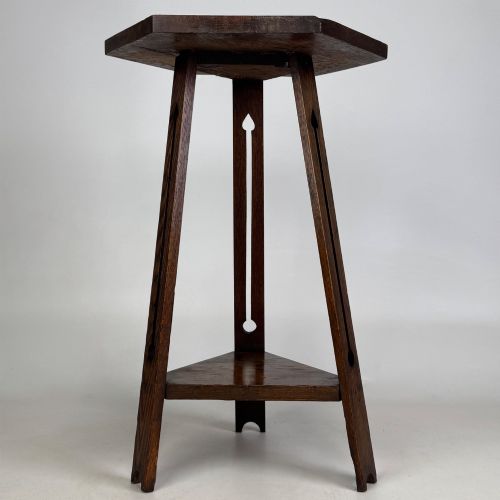
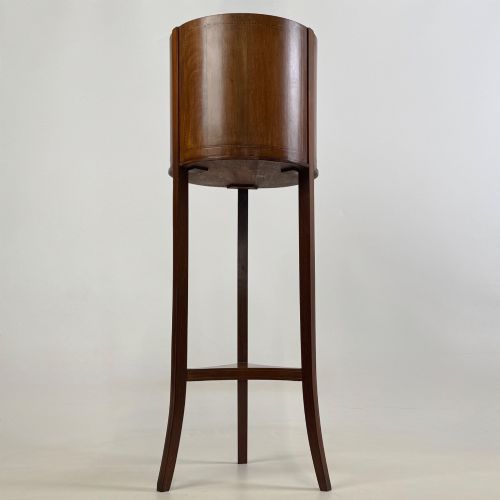
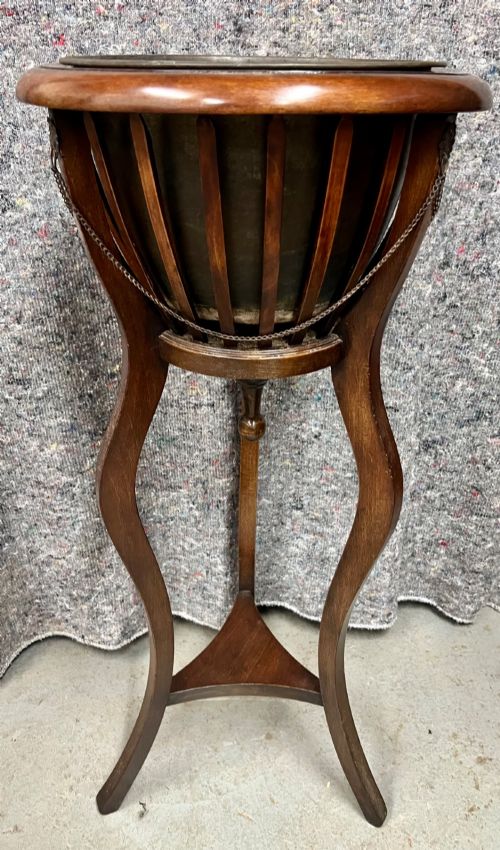
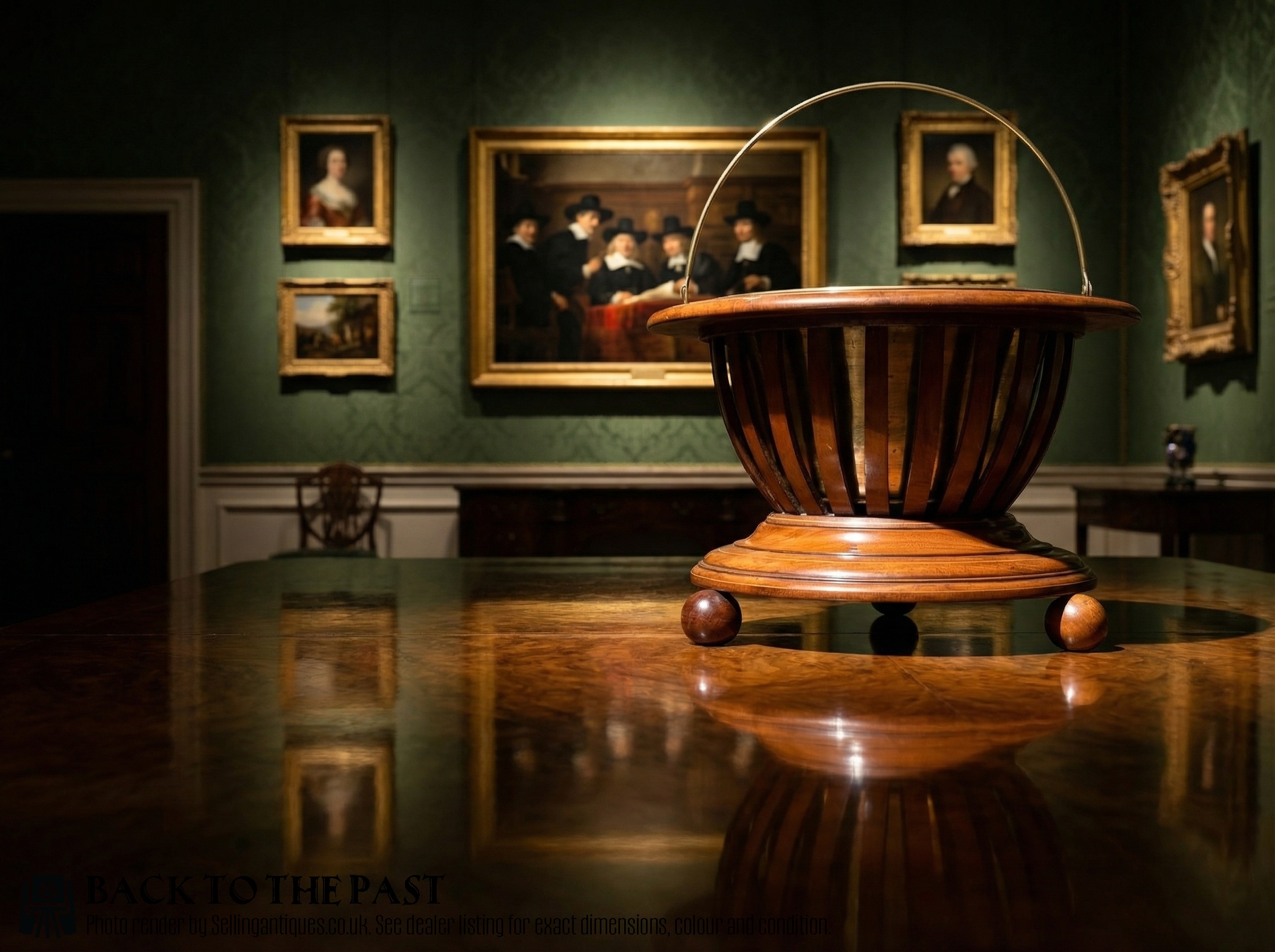
The piece you're most likely to meet is a wooden stand or small square-topped table in mahogany, English, late Victorian or Edwardian. Mahogany leads the timbers at 82 titles; Edwardian is the leading style label at 45, with "Edwardian mahogany" alone in 17. Plain versions sit at the bottom of the range, inlaid and marquetry versions well above.
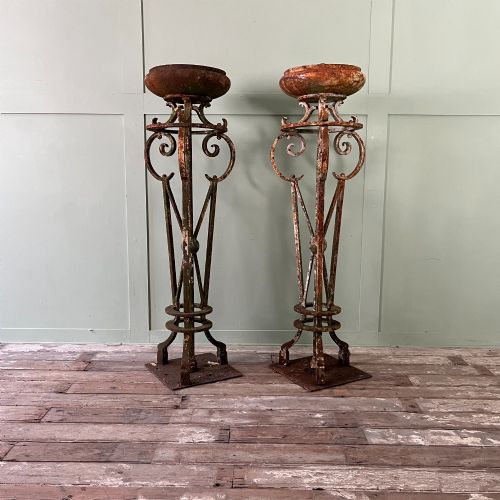
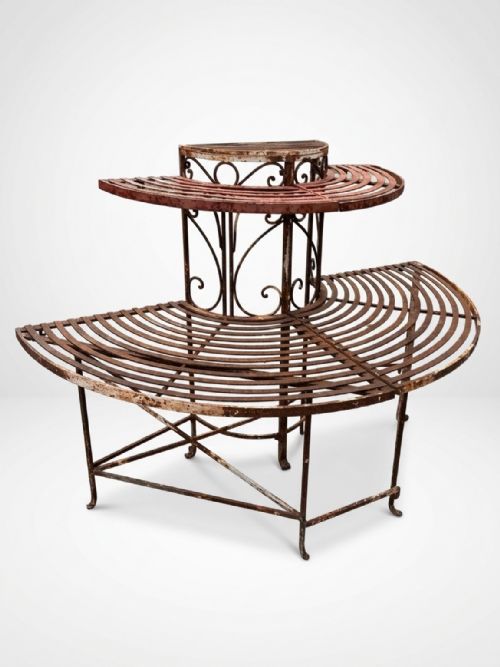
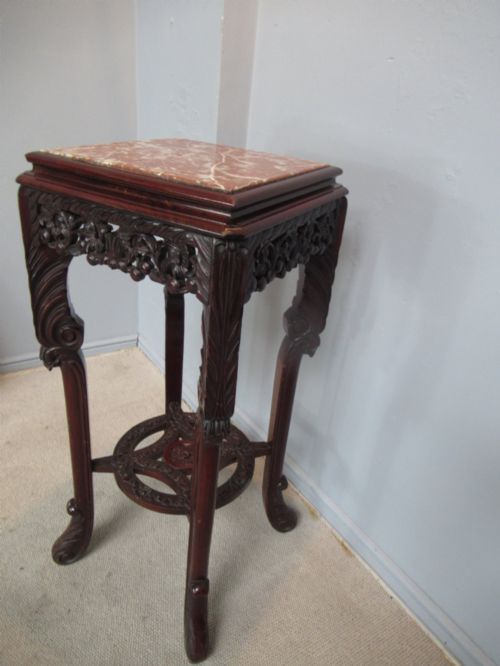
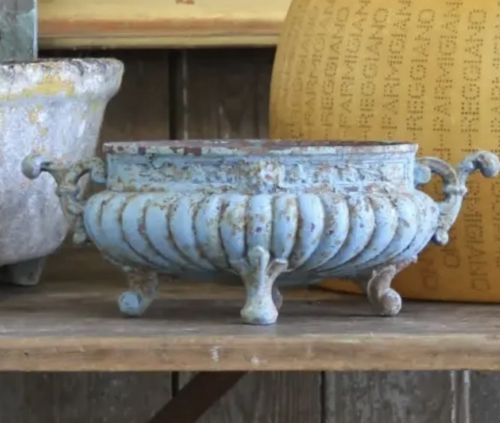
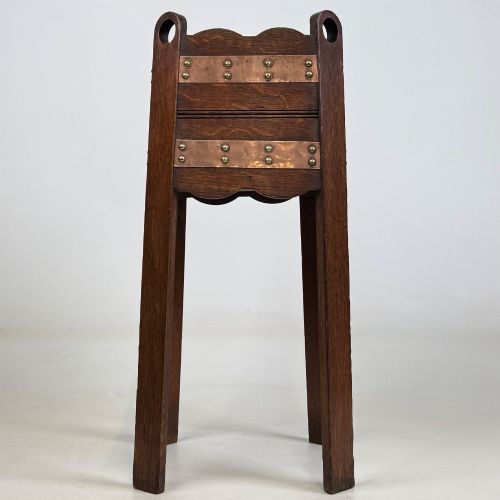
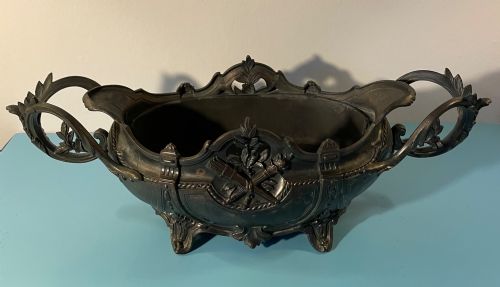
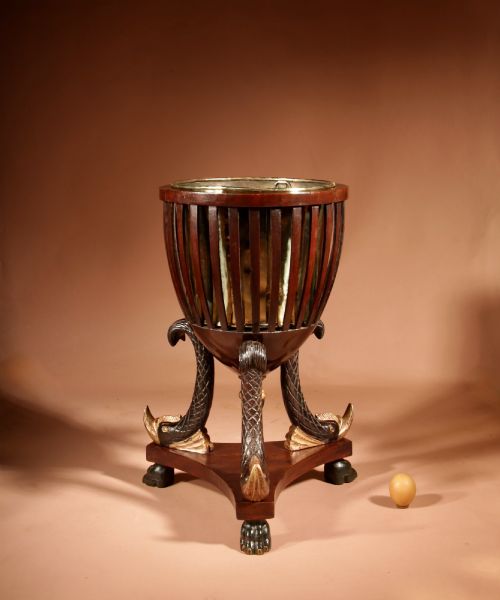
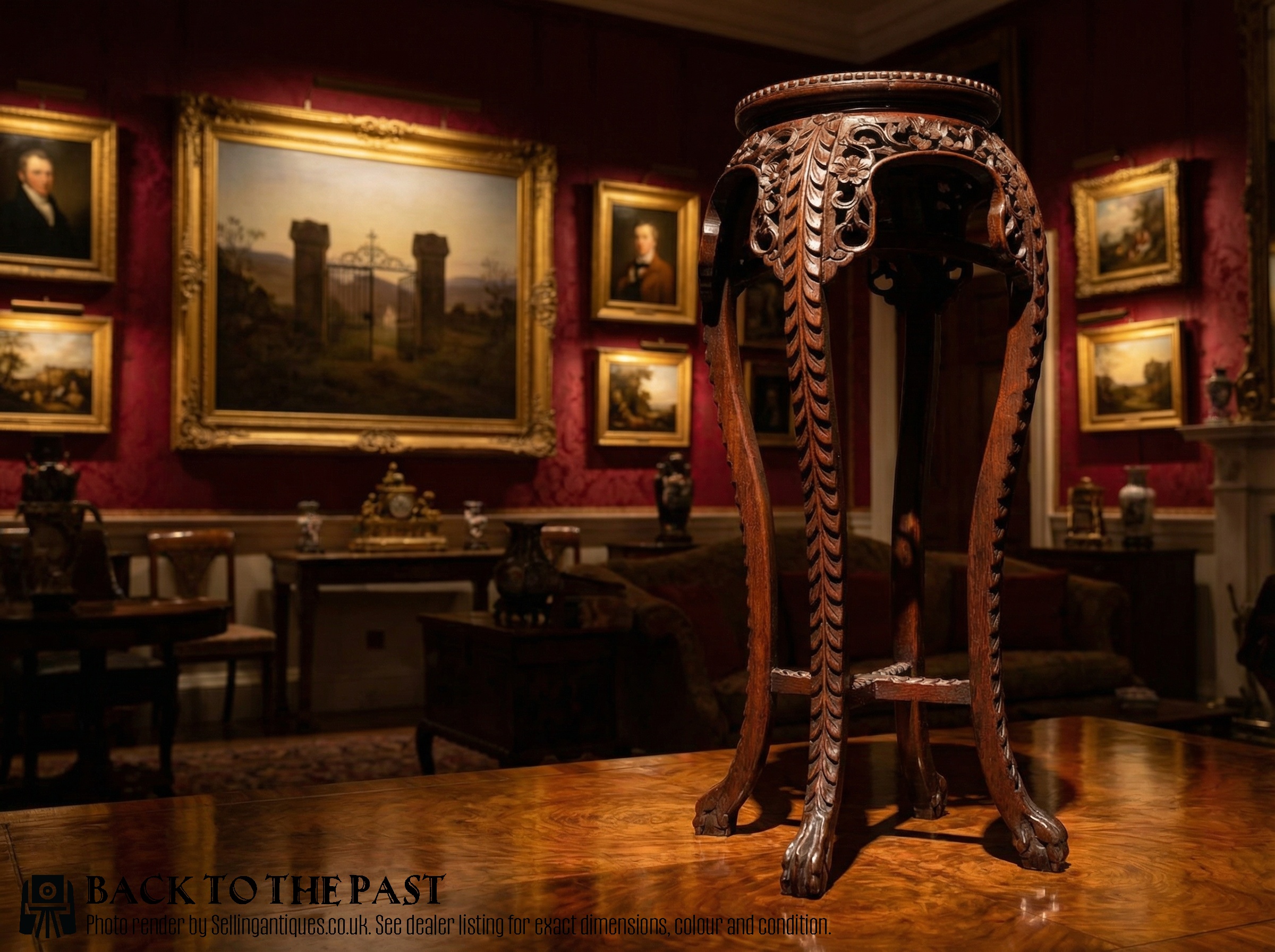
Four other groups turn up throughout. Coopered and brass-bound buckets, wine coolers, cellarettes, peat buckets and tea stoves, repurposed and sold as jardinieres, make up around a sixth. Chinese and other Oriental carved hardwood stands, often marble-topped, account for roughly one in eight. French ormolu- and porcelain-mounted table jardinieres cluster at the top. Metal, ceramic and stone vessels, from wirework and toleware to majolica and alabaster, are a persistent minority rather than the norm.
Dating is broad more often than precise. The dated field runs 1750 to 1960, but "19th Century" is the single largest label at 89 listings, with Victorian at 51 and Edwardian at 43, so nearly half the archive is placed only by reign or century. Where decades are given they bunch in the 1880s through the 1910s. Around 40 come to market a year on Sellingantiques, listed by 134 different dealers.
What Sets Them Apart
Applied decoration does most of the work. The upper reaches are held by French pieces with gilded metal mounts and porcelain plaques, ormolu appearing in 20 titles and porcelain in 12, with kingwood carcasses beneath. Below that sit boulle and marquetry table jardinieres, and at the very top, grand Regency marble and wrought-iron cisterns and urns.
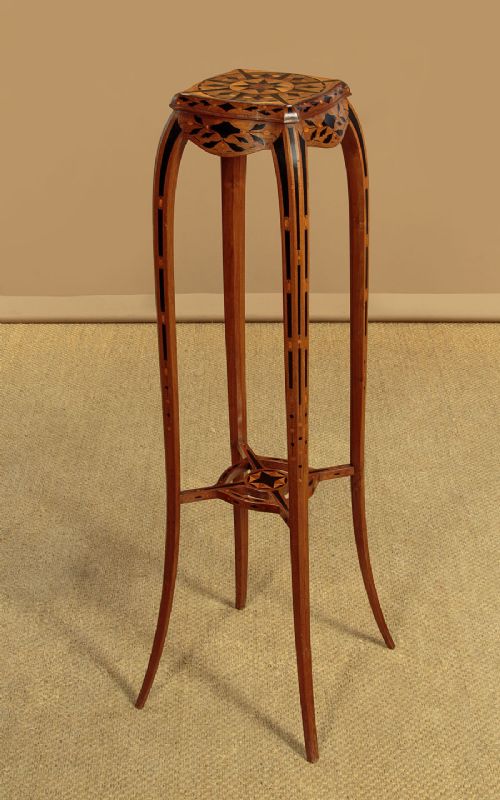
Timber and surface work separate one mahogany stand from the next. Plain oak and pine sit low, including simple coopered stands. Kingwood, burr walnut, satinwood, tulipwood and rosewood sit high. Inlay and carving lift a piece the same way: 37 titles say inlaid, 39 carved, 13 marquetry, while an undecorated Edwardian mahogany plant stand sits at the bottom.
Two plainer factors move the range. Pairs recur near the top, appearing in 31 titles, and scale tells the same story: "large", "tall", "grand scale" and "larger scale" attach to the upper part, while small and miniature examples sit low.
Antique Jardinieres Retail Price Guide 2026
Typical UK retail prices for jardinieres, calculated from the Sellingantiques database of over a million retail prices indexed since 2003. This retail price guide relies exclusively on Sellingantiques data; no external sources or auction records are used, so the figures do not describe the wider market.
The top sale of the last year on Sellingantiques was a large pair of 19th century neoclassical jardiniere statue stands, marquetry pedestal tables, in December 2025.
The Antique Jardinieres Glossary
- Jardiniere
- A container for plants, or the stand that raises one. Titles use it both ways, and you'll see it spelled jardinière or jardinere.
- Planter
- Used interchangeably with jardiniere in 84 titles, usually for the vessel rather than the stand it sits on.
- Liner
- The removable metal insert that holds the soil or water, named in a few titles as "with liner" or "original liner".
- Coopered
- Built from staves and hoops like a barrel. Eleven titles, usually oak or mahogany with brass bands round them.
- Ormolu mounted
- Fitted with gilded metal mounts. Ormolu appears in 20 titles, 17 of them as this phrase, almost always on French pieces.
- Torchere
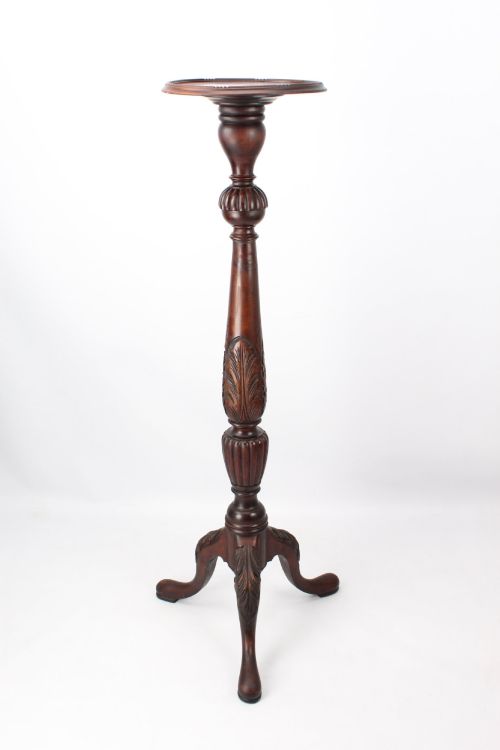
- A tall pedestal stand for a light, bust or plant. Fourteen titles, often paired with jardiniere stand in the same heading.
Antique Jardinieres: Frequently Asked Questions
Is a jardiniere a pot or a stand?
Both, under this heading. The vessel and the stand made to raise it are listed the same way, and dealers write jardiniere/planter or jardiniere/plant stand when a piece answers to either.
The stand is the commoner form. 162 of 406 titles contain "stand" of some kind, against 84 containing "planter".
What are most antique jardinieres made from?
Wood, more than anything else. Mahogany leads at 82 titles, with oak next at 29, and kingwood, rosewood, walnut and satinwood on the more decorated pieces.
Metal, ceramic and stone vessels are a steady presence rather than the bulk: brass, cast and wrought iron, wirework, toleware, majolica, faience, marble and alabaster all appear.
Why are wine coolers listed as jardinieres?
Because the shapes convert. A coopered brass-bound bucket built as a wine cooler, cellarette, peat bucket or tea stove takes a plant liner without alteration, and dealers list it under both names.
It's a sizeable strand of the category. Cooler appears in 28 titles, wine cooler in 25, alongside log baskets, a knitting basket and a waste paper bin.
How old are they usually?
The dated field spans 1750 to 1960, with 171 listings carrying a clean year. The earliest are a pair of George II mahogany pieces dated 1750 and 1760; the latest is a tobacco pedestal of 1960.
Decades, where given, cluster in the late Victorian and Edwardian years, thinning through the 1920s. Pre-1800 pieces amount to a handful of titles.
What makes Chinese jardiniere stands recognisable?
Carved hardwood and a marble top. Chinese appears in 32 titles and oriental in 14, with padouk, hongmu and Qing Dynasty named among them.
Marble turns up in 21 titles and "marble top" in 10, several of those two-tier or described as fish-bowl stands. Japanese Meiji, Anglo-Indian and Indian pieces sit in the same part of the archive.
Which jardinieres sit at the top of the range?
French mounted work. Kingwood, boulle and marquetry table jardinieres with gilded metal mounts and porcelain plaques hold the far end.
Above even those come grand Regency marble and wrought-iron cisterns and urns. Pairs and large scale push prices up across every branch.