



Antique Towel Rails
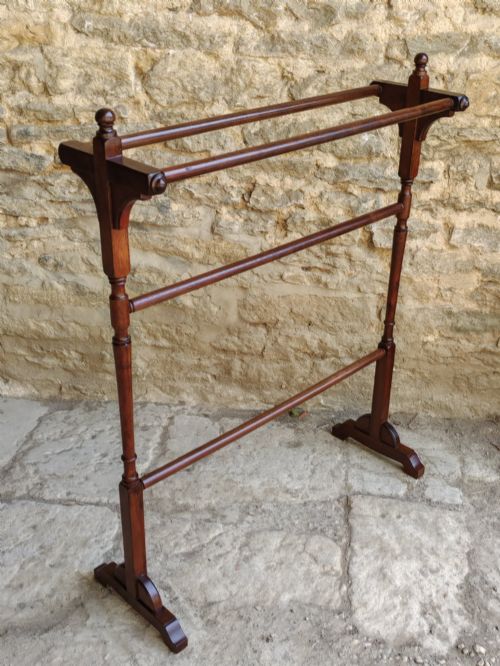
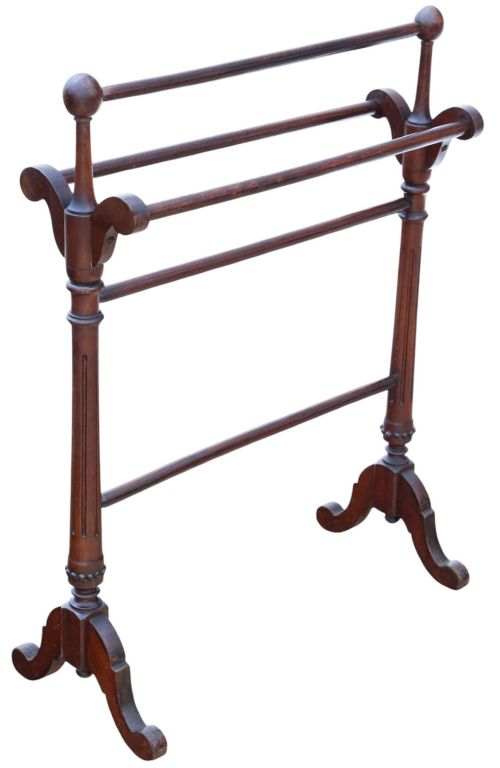
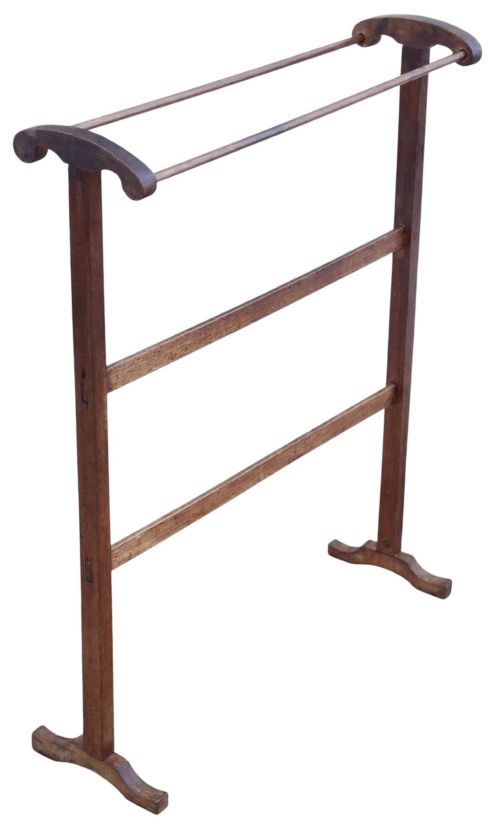
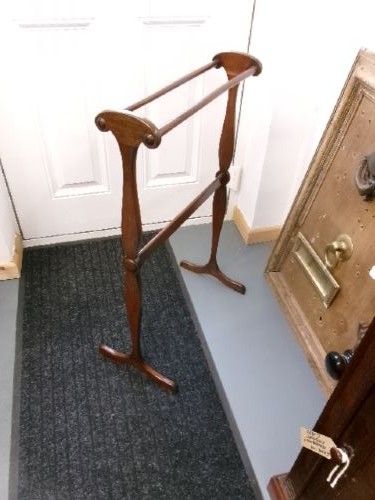
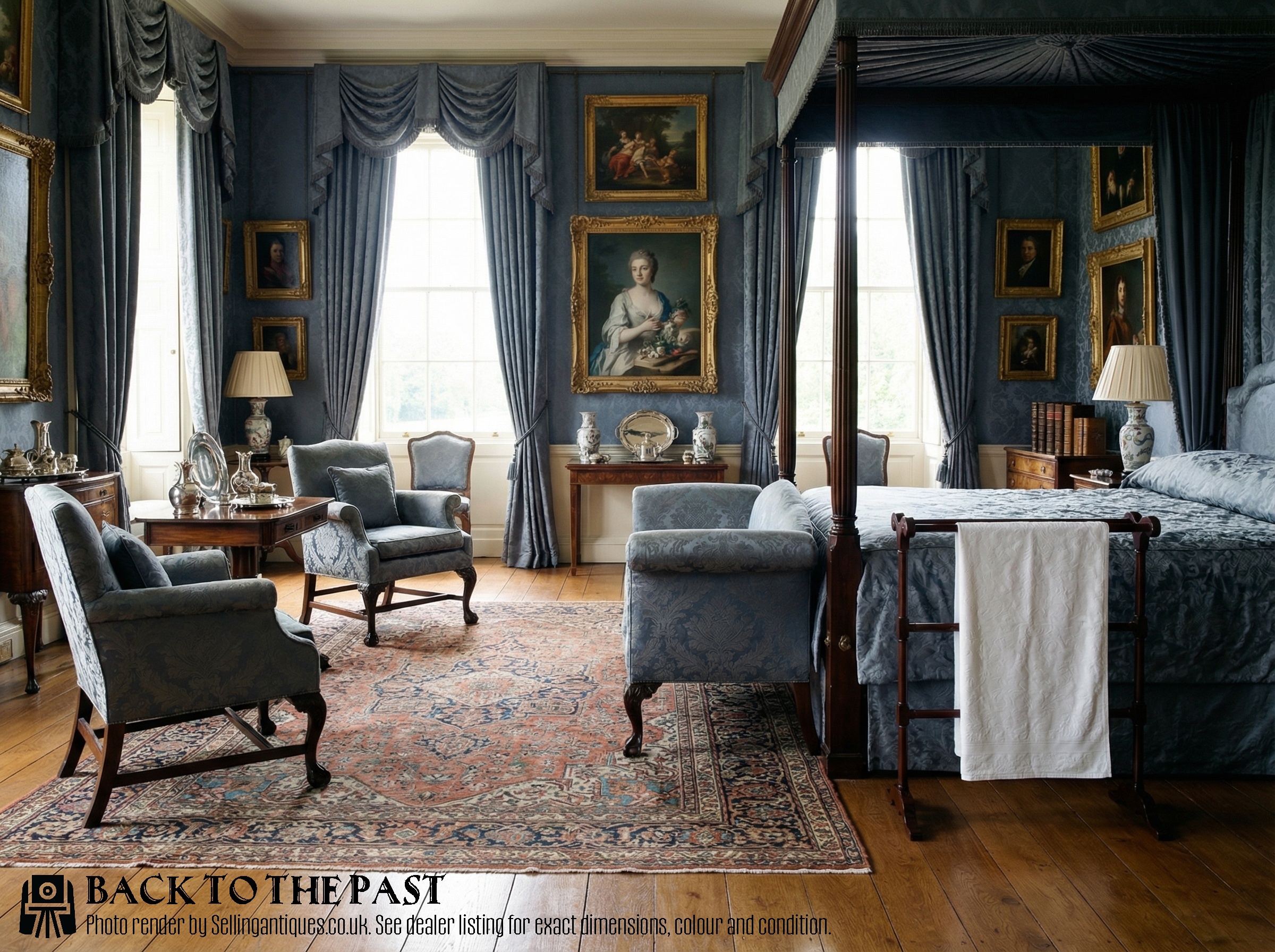
A wooden frame of horizontal bars between two end supports, made to stand in a bedroom or bathroom and hold linen while it dried.
Antique Towel Rails
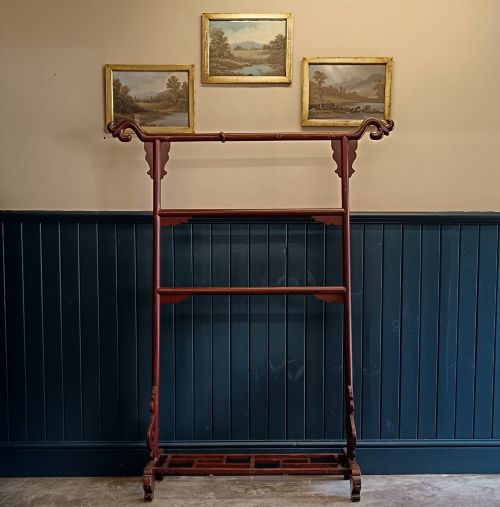
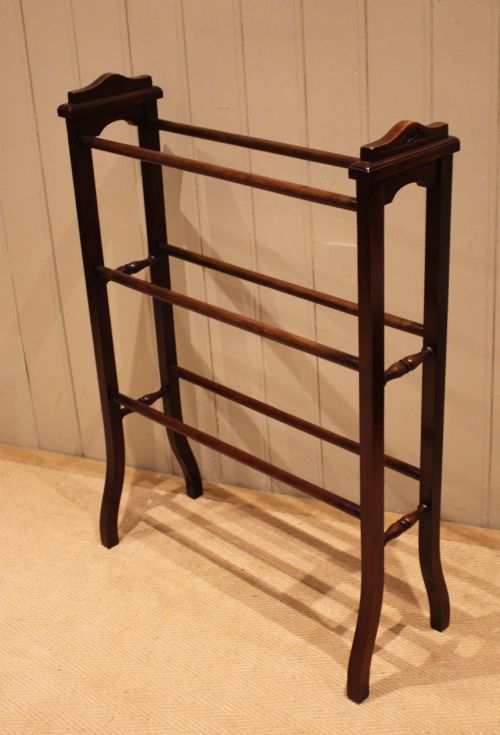
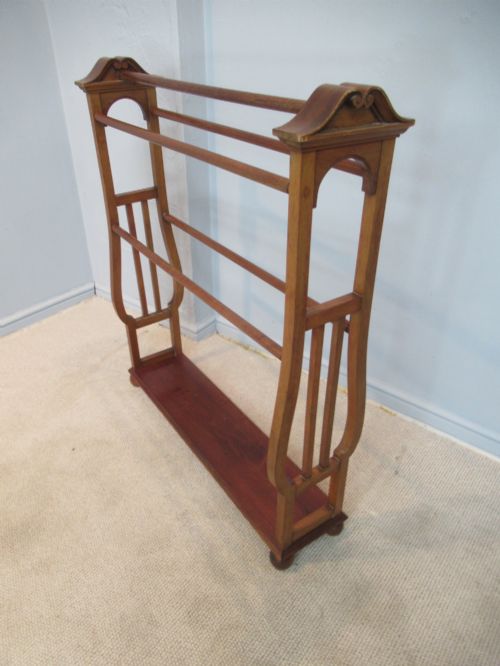
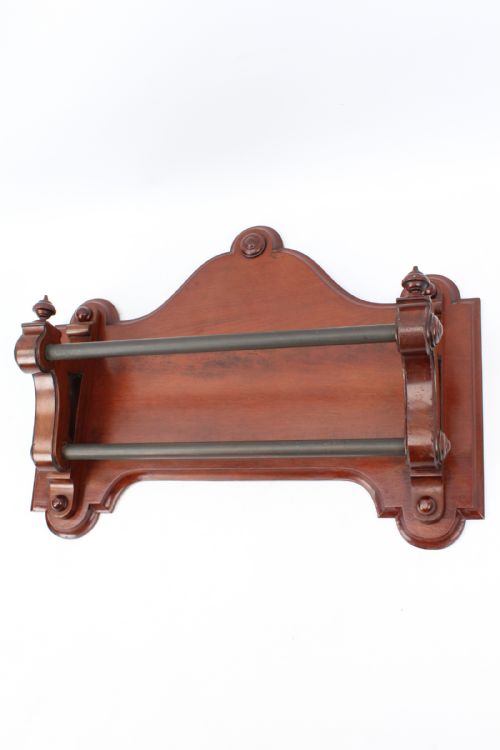
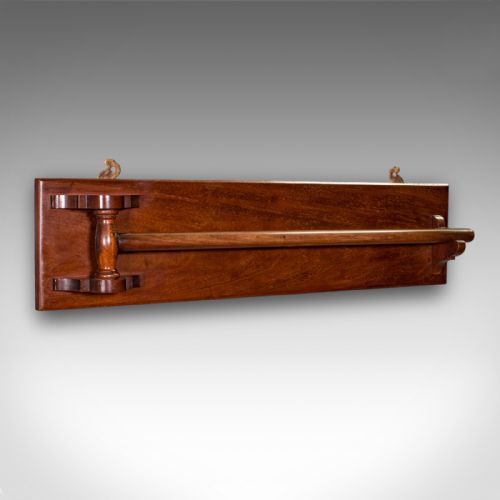
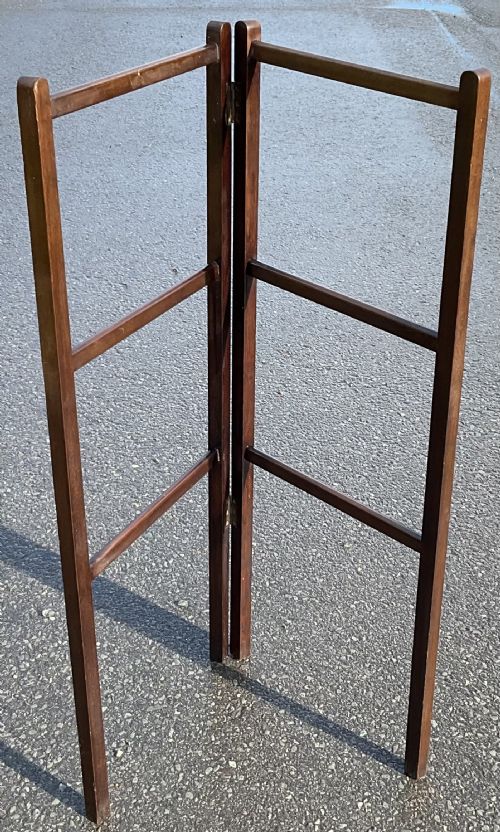
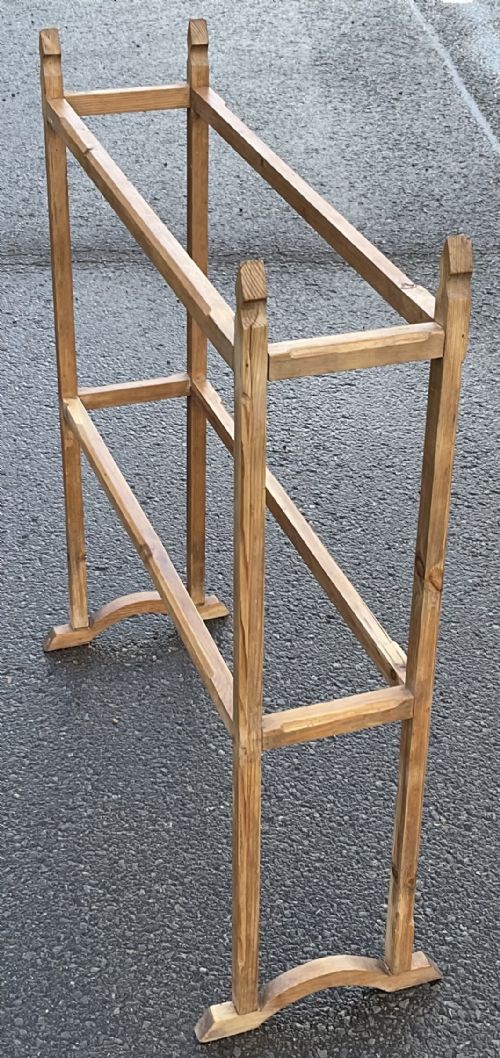
Two turned or squared uprights carrying three to six horizontal bars, standing on feet. Some are hinged so the frame folds flat or swings open gate-fashion. A handful were made to fix to the wall instead. The form belongs to the age of the jug and basin, and carried on as fitted bathrooms spread.
Mahogany is named in nearly two-thirds of titles on Sellingantiques, and Victorian in over a third. Put together, the plain Victorian mahogany standing rail is what you meet by default, and dozens of listings say nothing more than wood and reign. Edwardian mahogany makes up a further slice of the same plain type.
Around a fifth of titles name another timber: walnut, oak and pine most often, then ash, elm, beech, satin birch, satinwood, cherry and pitch pine. Roughly one in ten carries a decorative label instead, from barley twist and faux bamboo to Art Nouveau, Arts and Crafts, Gothic Revival and marquetry inlay. Brass, copper, chromed steel and glass rails with chrome mountings make up a thin margin.
The dealers' own dates run from 1800 to 1920. The biggest single bucket is the vague "19th Century", so treat that in a title as a hundred-year range rather than a date. Where a decade is given it tends to fall late, clustering in the 1900s, 1880s and 1910s. Titles also blur the form with neighbouring objects, so clothes horse, clothes stand, quilt rail and drying rack all turn up over the same thing.
Where The Range Sits
Timber does much of the work. Figured walnut, satinwood and satin birch sit at the upper end, while pine and plain oak account for several of the lowest-priced entries. Scottish examples recur in satin birch, stained pine and country-house pine, and they cluster in the lower half.
After wood comes decoration and scale. Inlay, marquetry, barley twist, faux bamboo and the named design movements all appear among the dearer titles, and Art Nouveau and Arts and Crafts pieces hold the top of the range alongside large Regency and Victorian stands. Words like large and country house recur through the upper half; small and narrow sit low down.
Complexity of the frame counts too. Double, two-fold, three-fold, two-section, cheval and gate-action rails generally rise above the plain single fixed frame, as do the brass, copper, chromed and glass-railed examples. Age on its own does not lift a rail: the earliest pieces are not the highest-priced.
Antique Towel Rails Retail Price Guide 2026
Typical UK retail prices for towel rails, calculated from the Sellingantiques database of over a million retail prices indexed since 2003. This retail price guide relies exclusively on Sellingantiques data; no external sources or auction records are used, so the figures do not describe the wider market.
About thirty-one towel rails are listed on Sellingantiques each year, and seventy-seven dealers have listed one.
The Antique Towel Rails Glossary
- Towel rail stand
- Wording for the free-standing form rather than a wall-mounted one. "Stand" turns up in a good many titles.
- Bar count
- Titles often use the number of rails as the main descriptor, so 5 bar, 6 bar, four rails and five bar all do duty for a fuller description.
- Folding
- Hinged so the frame closes flat or opens out. A recurring term, with two-fold and three-fold variants written out in full.
- Gate action
- A hinge arrangement that lets one section swing out like a gate. It appears once across the whole run.
- Barley twist
- Spiral-turned uprights or legs, named in several titles and sitting toward the top of the range.
- Faux bamboo
- Wood, often beech, turned and finished to imitate bamboo joints. Four or five instances across the archive, French, beech and English.
Antique Towel Rails: Frequently Asked Questions
What wood are they usually made from?
Mahogany, more often than anything else. It is named in nearly two-thirds of the 317 titles listed on Sellingantiques, which makes the wood almost part of the object's name.
Around a fifth name something else. Walnut, oak and pine lead, with ash, elm, beech, satin birch, satinwood, cherry, pitch pine and Oregon pine turning up in smaller numbers.
How old are antique towel rails?
The dealers' dated field runs from 1800 to 1920. Earliest sampled pieces are described as George III mahogany folding rails of around 1800; the latest are brass and chrome-mounted glass rails of the 1920s.
The largest group is simply labelled "19th Century", so a great many are placed within a century rather than a decade. Where decades are given they lean late, with the 1900s, 1880s and 1910s the fullest.
Regency accounts for a small number, and a few titles claim Georgian or George III.
Are folding towel rails common?
They are a distinct named type but a minority of listings, and mahogany folding rails a smaller group again.
The wording varies: hinged, fold up, fold out, two-fold, three-fold, double folding and gate action all describe the same idea of a frame that closes or swings.
Do any carry a maker's name?
No. Across all 317 listings on Sellingantiques, not one maker's name surfaced from the dealer copy, and titles never mention stamps or labels.
So these are described by wood, period and form rather than by workshop.
What sits at the top of the range?
Not the oldest pieces. Large Regency and Victorian stands hold the upper end, along with decorated Art Nouveau and Arts and Crafts examples.
Figured walnut, satinwood and satin birch also sit high, as do inlaid and marquetry frames, and the brass, copper, chromed steel and glass rails.
How many come up for sale?
Seventy-seven different dealers have listed towel rails on Sellingantiques, but only about thirty-one come to market in a year.
That works out at well under one per dealer. Genuine pairs are unusual, with only three sampled listings offering two rails together, all well up the range.