Antique Plate Racks
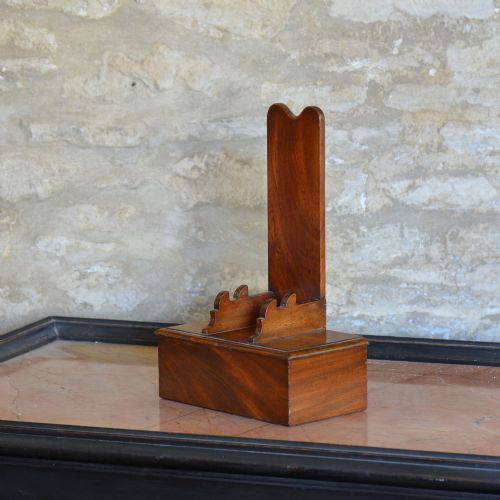
A wooden frame of slats or spindles made to hold plates on edge, either hung on a kitchen wall to drain the washing-up or standing on a dresser to show pottery off.

What Are Antique Plate Racks?
Racks for standing plates upright became a standard fitting of the English kitchen from the 18th century. They did two jobs: displaying pottery on a dresser top, and letting washed plates drain beside the sink. The joinery stayed plain, and the same form carried on well into the 20th century.
What you'll meet on Sellingantiques is vernacular English work in oak or pine. Oak runs through eleven of thirty-eight titles and pine through nine, so between them they take just over half the category. Mahogany is a distant third, mostly in plate stands and hanging shelves rather than wall racks.
Two named strands recur. The oak delft dresser rack turns up in six separate titles, a shallow hanging frame for pottery plates. Pine gives the working end: plate drying racks and country kitchen racks. Painted pine is a real strand too, with four titles reading Georgian painted pine and one described simply as original paint. Georgian is the commonest period word in the category, though the dated field spreads from 1750 to 1930 and most of the dating is broad rather than exact.
A fifth of listings under this heading are not tableware racks. Nickel-plated coat and umbrella racks, a plated letter rack, mirrored portmanteaus with original plate and a half-plate camera all carry the words plate or rack in another sense. The category is small: seventeen dealers have listed in it, and only about three examples come to market in a year.
Where The Range Sits
Timber sorts the field first. Oak delft racks and the mahogany plate stands and hanging shelves cluster in the upper part of the range, while bare pine racks sit lower. That gap holds even when the form and the size are much the same.
Surface and scale then move things. A rack described as having original paint sits above otherwise comparable painted pine, and painted pine sits above stripped. Large appears in several titles, a large 18th century oak rack, a large pine drying rack, a large 19th century drying rack, and those sit above the smaller ones.
How a rack is named counts for something. A title that gives the form, delft dresser rack, reads above a plain "Plate Rack" or "19th Century Plate Rack", and 18th century or Georgian wording pushes upward through the middle and upper bands. Worth knowing that the top of the range is held not by a plate rack at all but by the incidental non-rack listings; the racks themselves gather in the lower and middle bands.
Retail Price Guide 2026
Typical UK retail prices for plate racks, calculated from the Sellingantiques database of over a million retail prices indexed since 2003. This retail price guide relies exclusively on Sellingantiques data; no external sources or auction records are used, so the figures do not describe the wider market.
19th Century is the period label used most on Sellingantiques for plate racks, with Georgian next and 18th Century third.
The Antique Plate Racks Glossary
- Plate rack
- A slatted frame holding plates upright, hung on a wall or set on a dresser top.
- Delft rack
- A shallow hanging rack for displaying pottery plates. Six titles here pair the term with oak.
- Plate drying rack
- A kitchen rack fixed over or beside a sink so washed plates drain.
- Dresser rack
- The upper open shelved section made to sit on a dresser base.
- Original paint
- Surviving early paint rather than a later repaint. Used in one title, against four that read painted pine.
- Plated
- Metal coated in nickel or silver, a different sense of the word entirely, and the reason coat racks and letter racks appear under this heading.
Frequently Asked Questions
What wood are they usually made from?
Oak and pine, between them just over half the titles in the category. Oak carries eleven of thirty-eight, pine nine.
Mahogany comes third and turns up mainly in plate stands and hanging shelves rather than wall-hung racks.
How old are these racks?
The dated field runs from 1750 to 1930, with thirteen listings carrying a clean year. A single oak rack dated 1750 is the earliest.
Much of the dating is broad. Nine listings say 19th century and five say 18th century, and Georgian appears as a style label in seven.
The later end is thin: two 1930s, one 1920s, and five sitting at 1900.
Why do coat racks appear in this category?
A fifth of listings under the heading are not tableware racks. They are pieces whose titles carry plate or rack in another sense.
That means nickel-plated umbrella and coat racks, a plated letter rack, mirrored portmanteaus described as having original plate, oak barrels and a half-plate camera.
What is a delft rack?
A shallow hanging rack made for showing pottery plates on edge, rather than for draining them.
It's the one named sub-type that recurs here, appearing in six separate titles, each time in oak and often described as a delft dresser plate rack.
Are painted plate racks common?
Painted pine is a genuine strand rather than an oddity. Four titles read Georgian antique painted pine plate rack, and one is described simply as original paint.
The original-paint example sits near the top of the wooden pieces, above comparable painted pine racks.
Do continental plate racks turn up?
Once, against an otherwise English run. It was a painted pine unit combining spice drawers, a plate rack and hooks.
Everything else in the category reads as vernacular English joinery.