




Antique Samplers
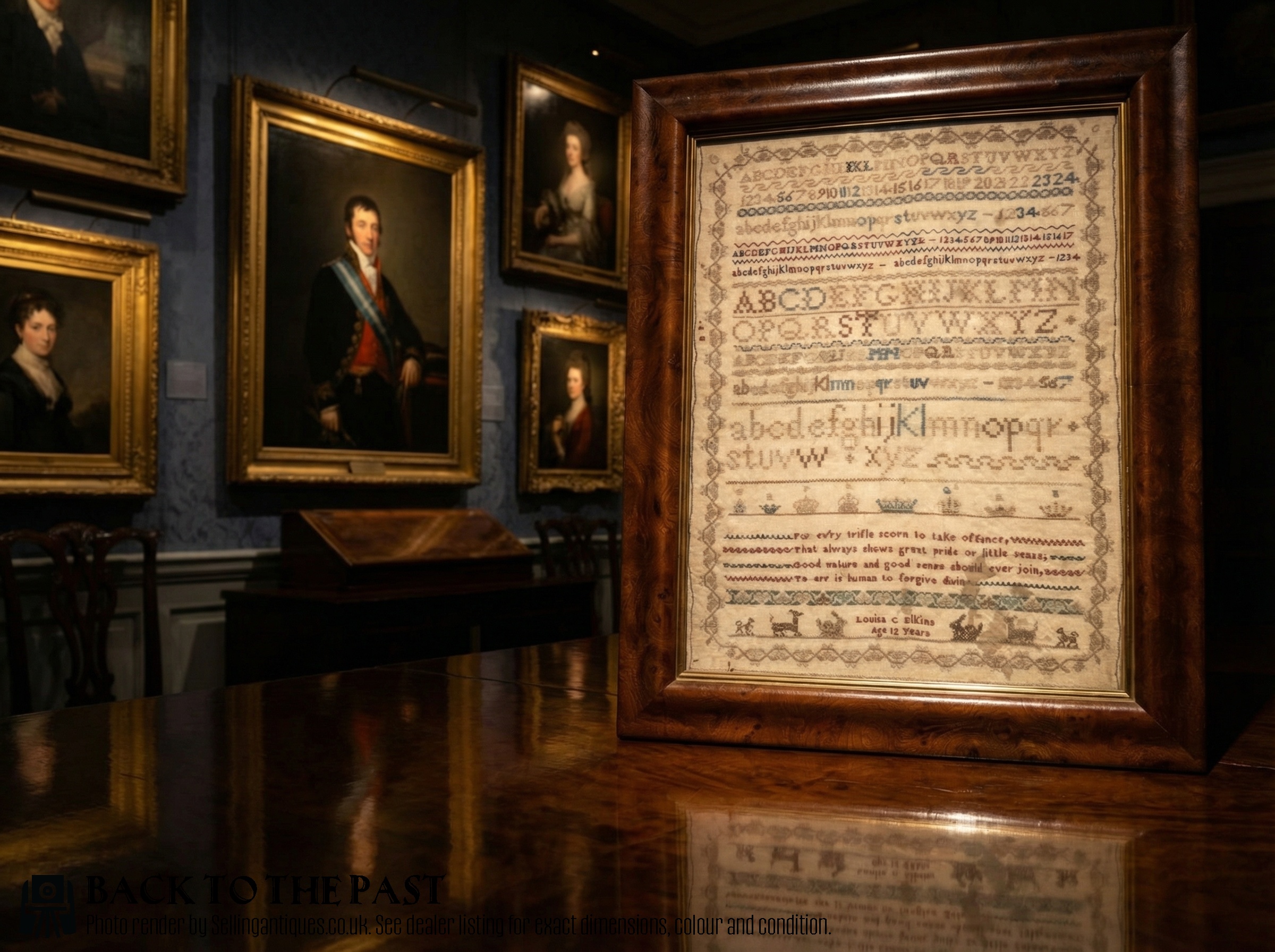
A framed panel of schoolgirl needlework, worked in silk or wool on linen, stitched to show that a child had learned her letters, her numbers and her needle.
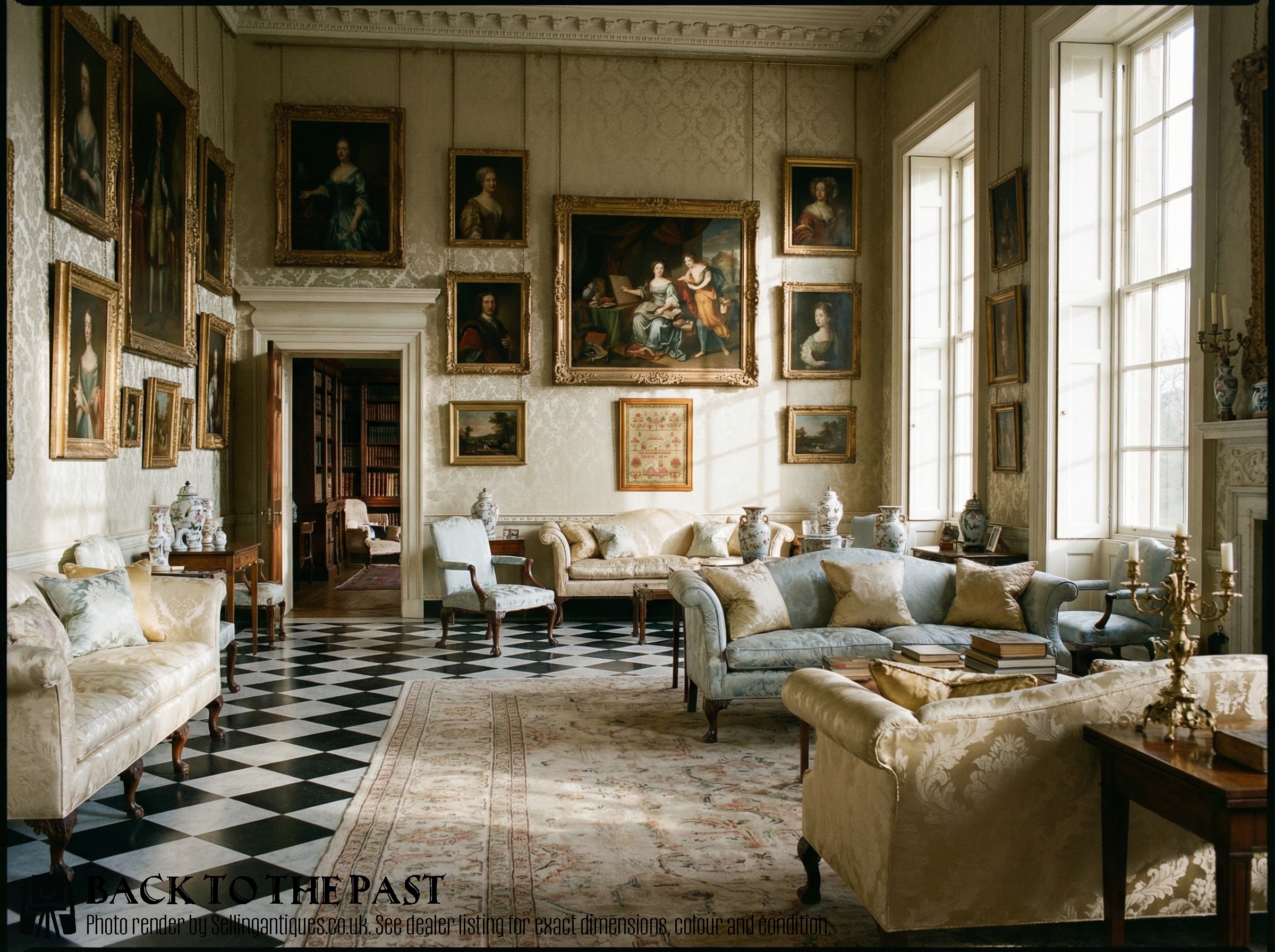
Antique Samplers
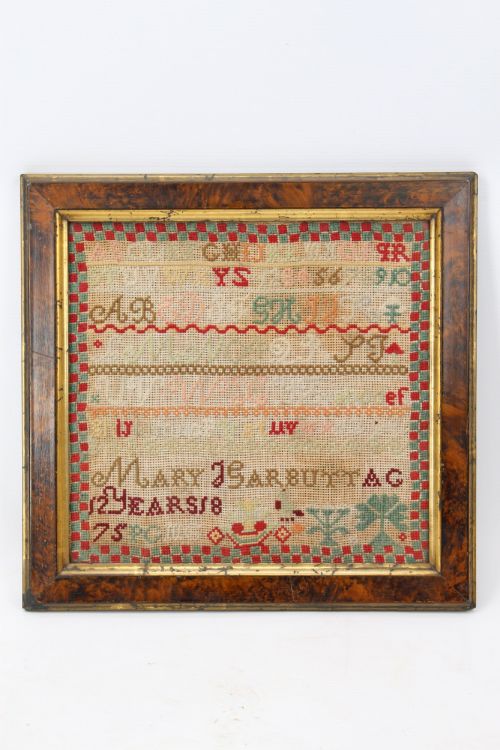
Samplers began as a stitcher's own record of stitches and patterns. By the seventeenth and eighteenth centuries they were part of a girl's education: a worked panel showing letters, numbers, verses and needle skills, signed and dated by the child, then framed and kept.
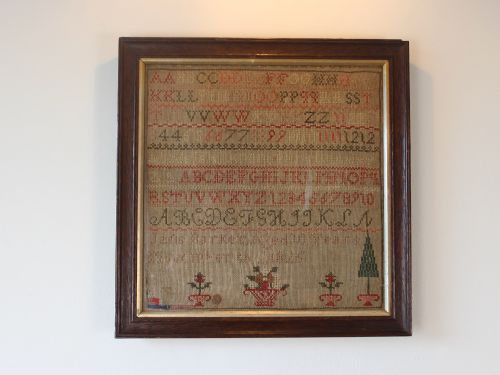
What you'll most often meet on Sellingantiques is a single framed sampler carrying a girl's forename and a date, from the earlier nineteenth century. The word "needlework" appears in 73 of the titles and "dated" in 34, and 89 listings sit under a dealer period of 19th Century against 52 Georgian and 27 Victorian. Titles are often just a name and a year, because that is what the cloth says.
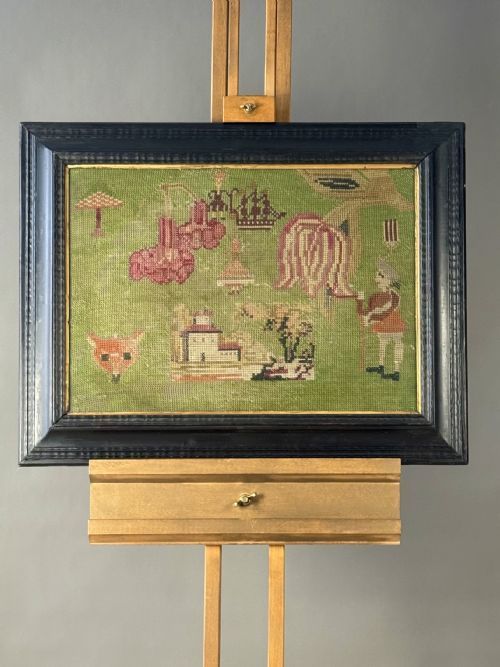
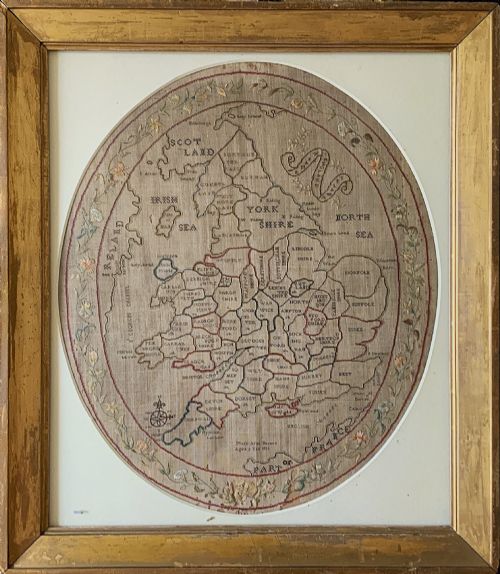
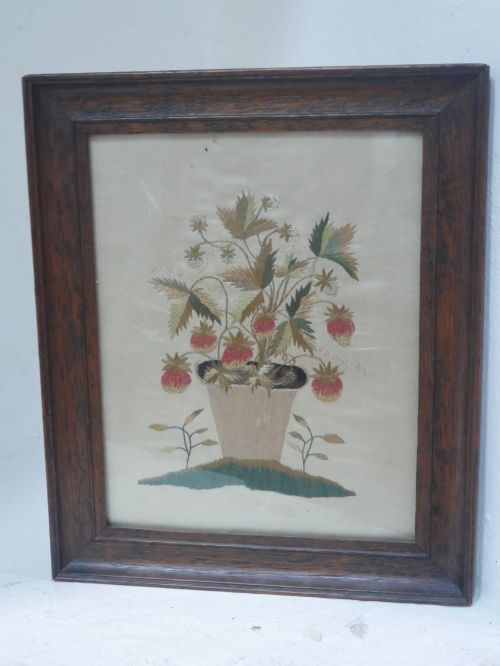
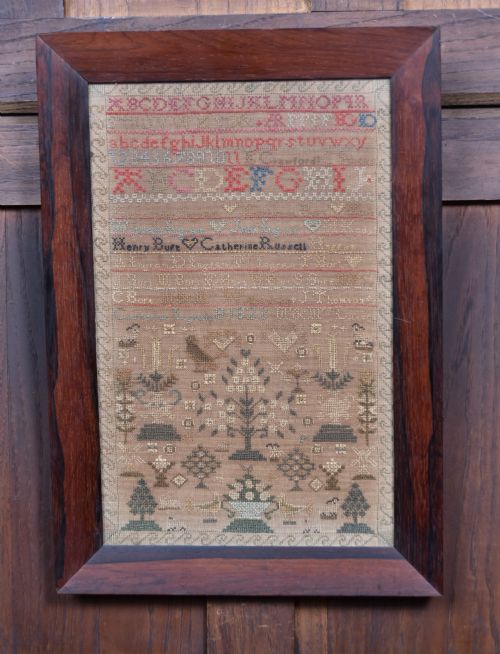
The largest branch is alphabets, verses and texts: worked alphabets and numerals, the Lord's Prayer, the Commandments, moral verses on education and duty. Map samplers form a distinct strand of sixteen titles, mostly England and Wales with two of Europe, dated examples running from 1780 through to about 1840. Pictorial pieces built around houses, animals, Adam and Eve or the Tree of Life make up a substantial minority, and roughly one in ten listings is woolwork, needlepoint, gros point, petit point or Berlin work rather than silk on linen.
Period labels need reading with care. Only 59 of 266 listings carry a clean year, and the labels overlap: pieces titled with an 1830s date sit under Georgian, and one called Georgian has a date field of 1915. The date in the title, or the one stitched into the cloth, is the better guide. The archive runs from a band sampler catalogued as late 17th or early 18th century up to a George V Jubilee piece of 1930.
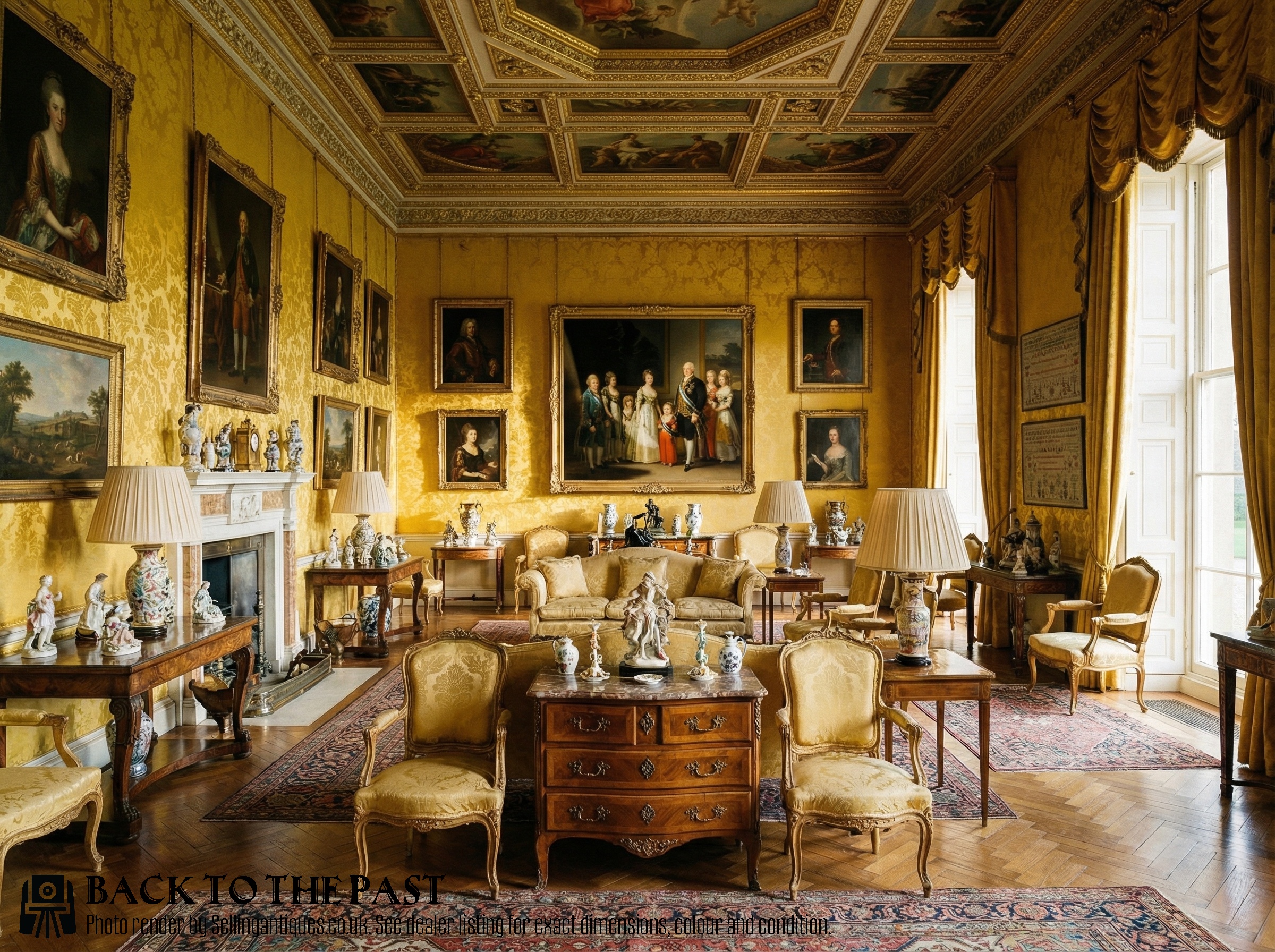
Top Of The Range
Information does most of the work. A plain "Antique Sampler" with no name sits at the bottom, while a full signature with a worked date and an age beside it puts a piece well above that. Twenty-six titles carry the word "aged", with ages of 8 through to 18 appearing, and forenames stand in for maker names throughout: Mary in 22 titles, Ann in 17.
A named school lifts a sampler strongly. Nine titles name one, and the school-attributed pieces cluster at the very top: three from Ackworth Quaker School dated 1806, 1806 and 1822, plus Cobham School, Oswestry National School, a central girls' school in Scarborough and Miss Pope's School at Staines. Regional attribution is scarcer, with four Welsh pieces, two Scottish, and a single Italian and single French example as the only non-British work.
After that it's subject, age and presentation. Maps, a leopard, a pocket watch, Solomon's temple and Adam and Eve recur among the higher-placed listings, and early dates do the same, with the 1726, 1729, 1742 and 1753 pieces all above the middle. Scale counts, and so do groups: eleven titles are plural, covering pairs by sisters, sets of three and a pair of friendship samplers. Frames get named too, maple, oak, rosewood, mahogany, walnut and burr walnut, and an original frame is worth more to a listing than a modern one.
Antique Samplers Retail Price Guide 2026
Typical UK retail prices for samplers, calculated from the Sellingantiques database of over a million retail prices indexed since 2003. This retail price guide relies exclusively on Sellingantiques data; no external sources or auction records are used, so the figures do not describe the wider market.
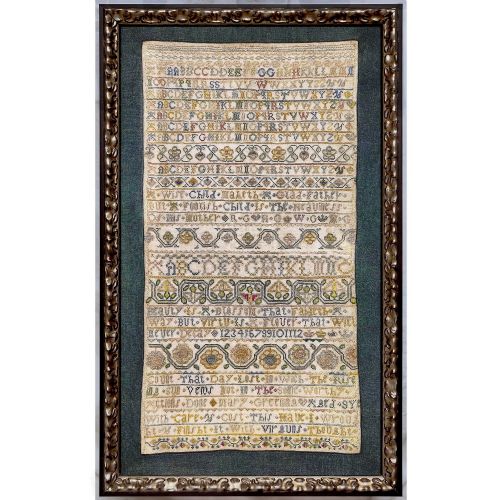
The oldest to pass through Sellingantiques is a band sampler catalogued as late 17th or early 18th century.
The Antique Samplers Glossary
- Sampler
- A worked panel of needlework, typically signed and dated by the girl who stitched it, and almost always sold framed.
- Aged
- The stitcher's own age worked into the cloth beside her name. It turns up in about one title in eleven.
- Alphabet sampler
- One whose main content is a worked alphabet, often several, with numerals alongside.
- Map sampler
- A stitched map, most often England and Wales, sometimes Europe or a single county. Sixteen titles here.
- Band sampler
- An early form worked in horizontal bands of pattern rather than as a picture. Only a couple appear in this archive.
- Genealogical sampler
- One recording a family's names and dates instead of an alphabet or verse. A Welsh example of about 1910 is one of the later pieces here.
Antique Samplers: Frequently Asked Questions
Why do sampler titles use girls' names?
Because the girl signed her work. Samplers were a school exercise, and the stitcher put her name and usually a year into the cloth, so the dealer's title has nothing else to use.
The same handful of forenames keeps coming round. Mary appears in 22 titles, Ann in 17, Sarah in 9 and Elizabeth in 8.
Are any samplers by known makers?
No. The only names on these pieces are the schoolgirls who stitched them, and they aren't makers in the workshop sense.
Where an attribution goes beyond a forename it's usually a school. Nine titles name one, among them Ackworth Quaker School, Cobham School and Oswestry National School.
How old are most samplers on Sellingantiques?
The nineteenth century dominates. Eighty-nine listings carry a dealer period of 19th Century, with 52 Georgian, 27 Victorian and 19 given as 18th Century.
The range is wider than that at both ends. A band sampler catalogued as late 17th or early 18th century sits at one extreme, and a George V Jubilee sampler of 1930 at the other.
What subjects turn up besides alphabets?
Maps are the biggest alternative, sixteen titles, mostly England and Wales with two of Europe. Dated examples run from 1780 and 1783 through to around 1840.
Pictorial work covers houses, animals, Adam and Eve, the Tree of Life and royal motifs. One-offs include a leopard, a pocket watch, Solomon's temple, a darning sampler and a French lace sampler.
Do samplers come in pairs or sets?
More often than you'd expect. Eleven titles are plural, covering pairs stitched by sisters, two family groups of three, and a pair of friendship samplers.
Groups sit in the upper half of the range. Scale works the same way, with "large" appearing in eleven titles.
Is everything framed?
Almost. Framed samplers are the norm, and "framed" or "frame" appears in 34 titles between them, with maple, oak, rosewood, mahogany, walnut and burr walnut all named.
A minority are unframed or mounted in something else. One Regency mahogany pole screen has a sampler set into it.