
Antique Hat Stands
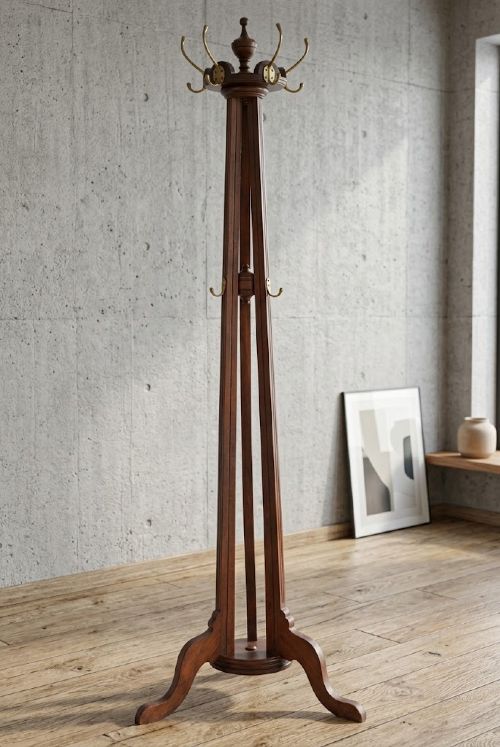
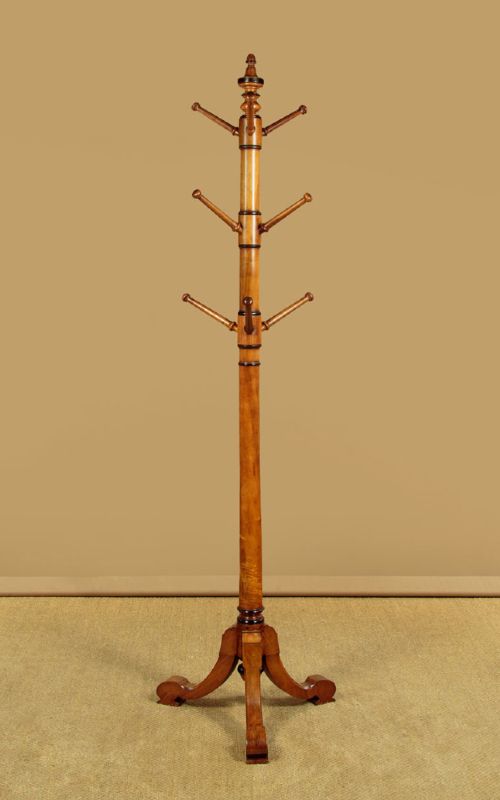
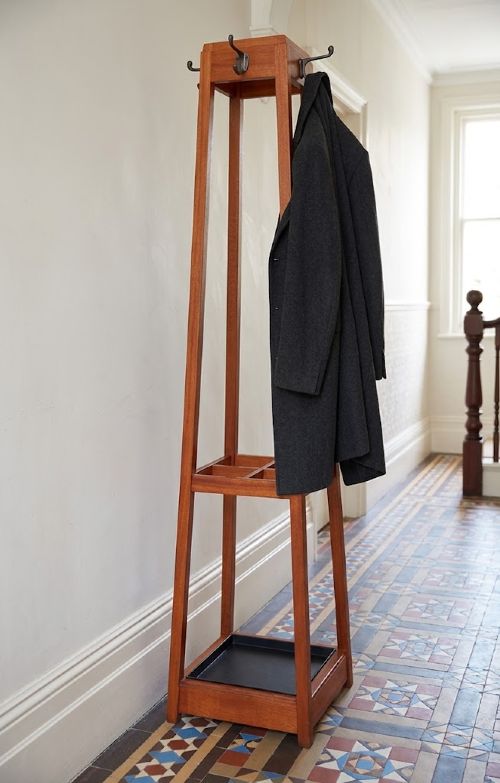
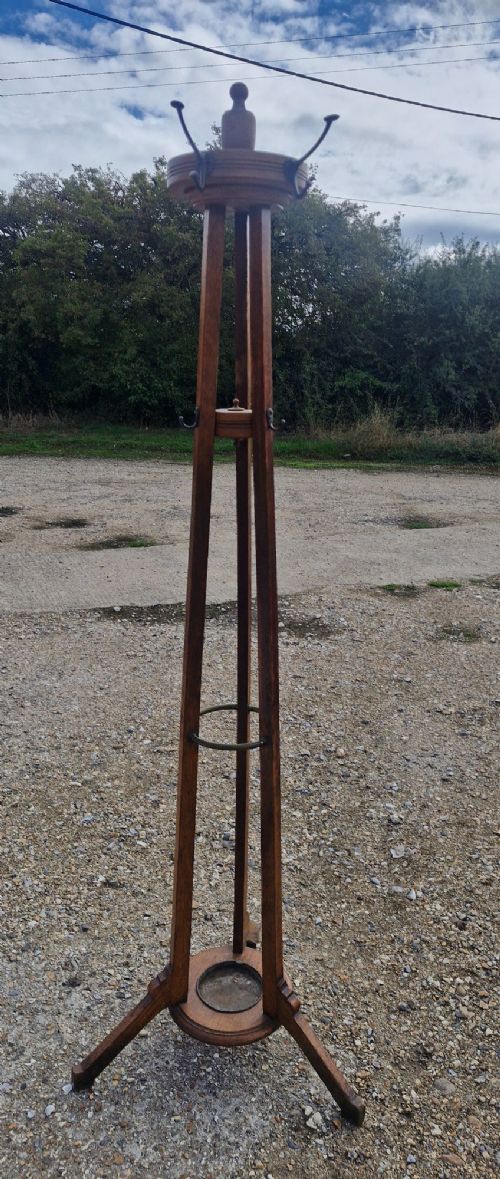
Most pieces under this heading are hall furniture: floor-standing hat and coat stands, hall stands and wall racks made to hold hats, coats, sticks and umbrellas by the front door.
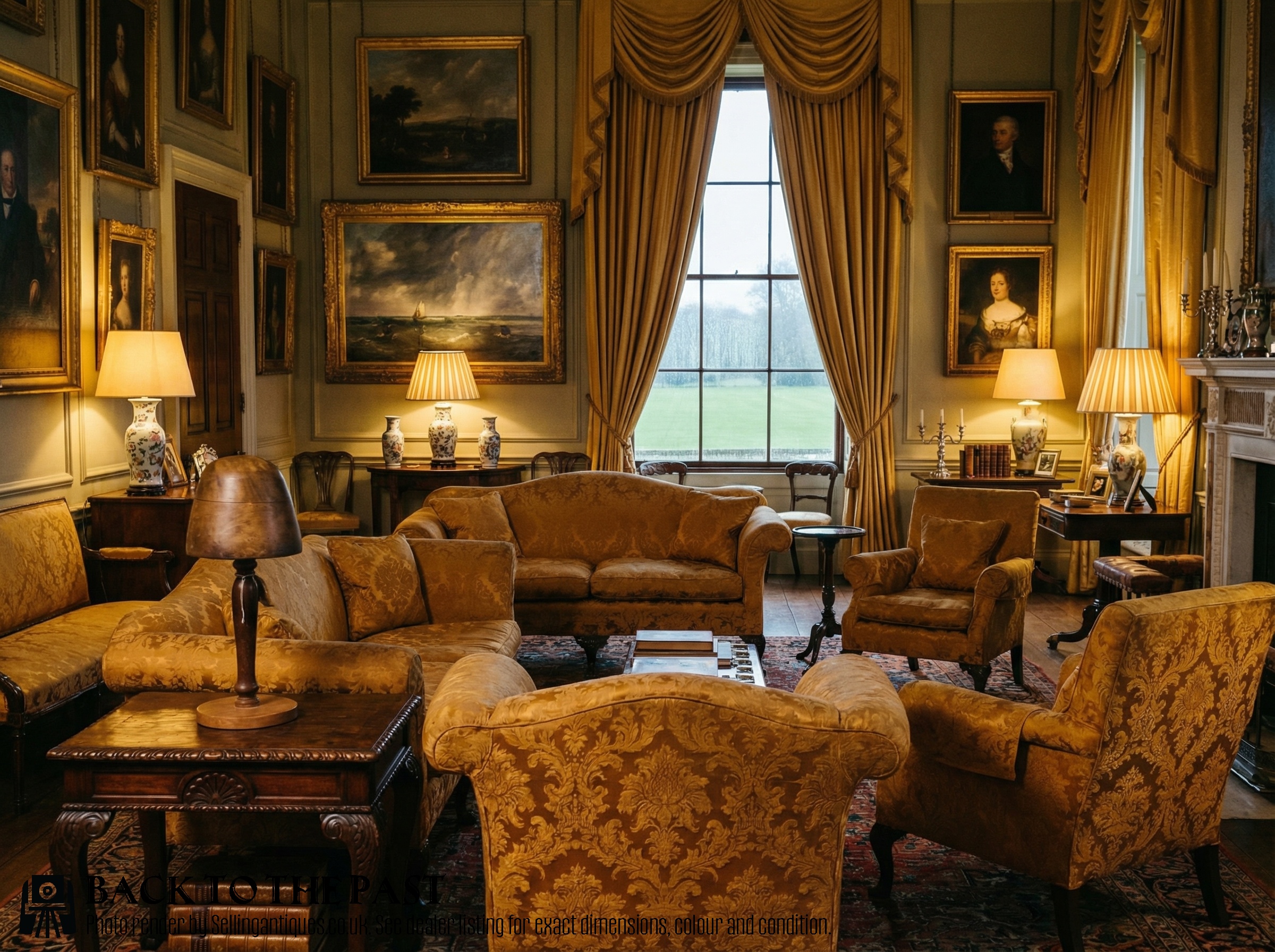
Antique Hat Stands
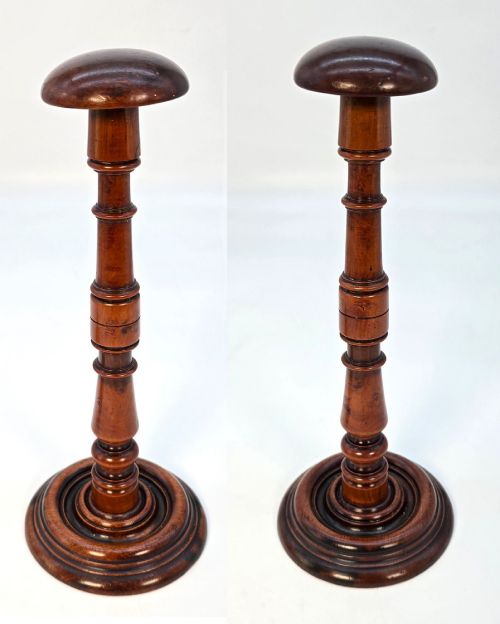
Two traditions sit side by side. Small table-top pieces came from wigmakers, hatters and milliners, who needed head-shapes for making, storing and showing headwear. The larger floor stands arrived as domestic entrance halls became formalised, gathering hats, coats, sticks and umbrellas onto one frame.
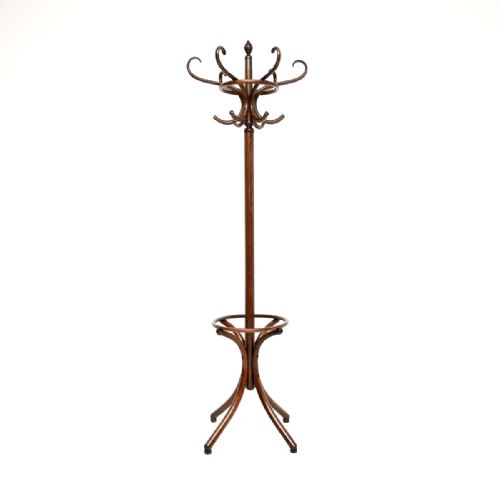
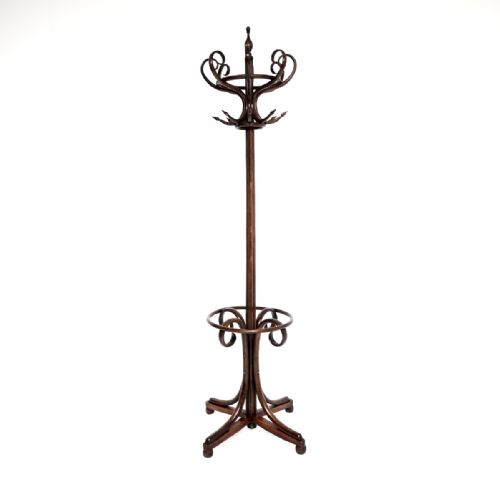
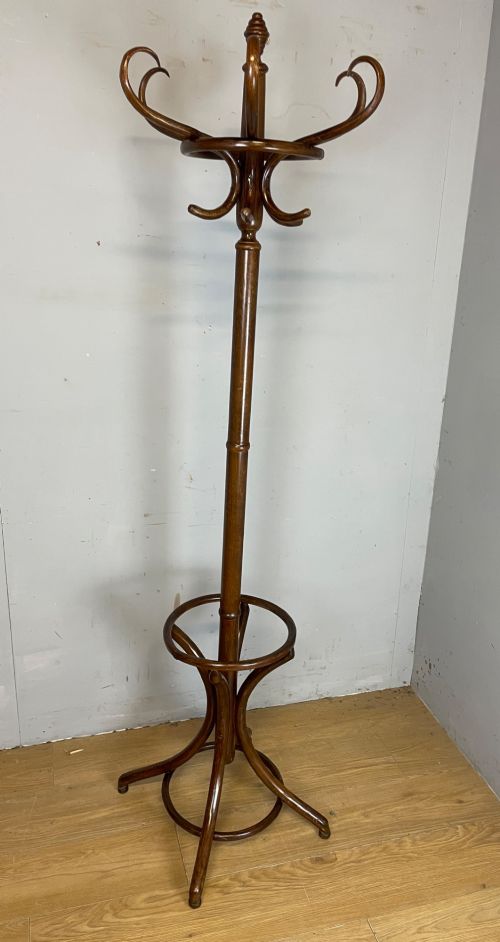
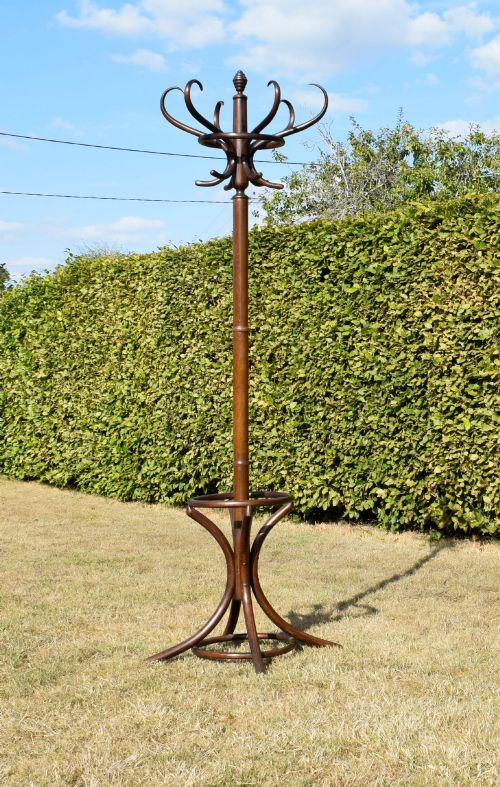
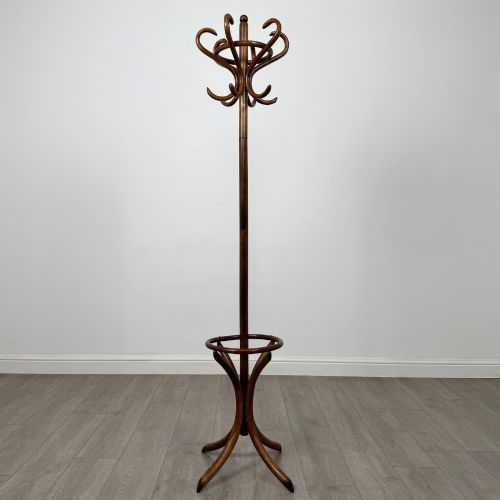
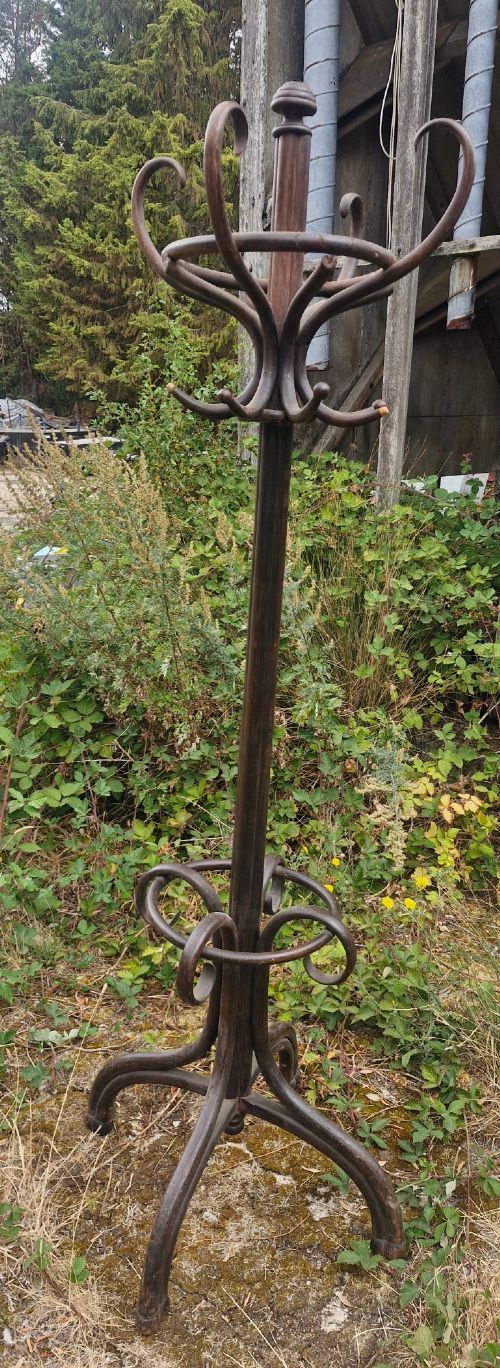
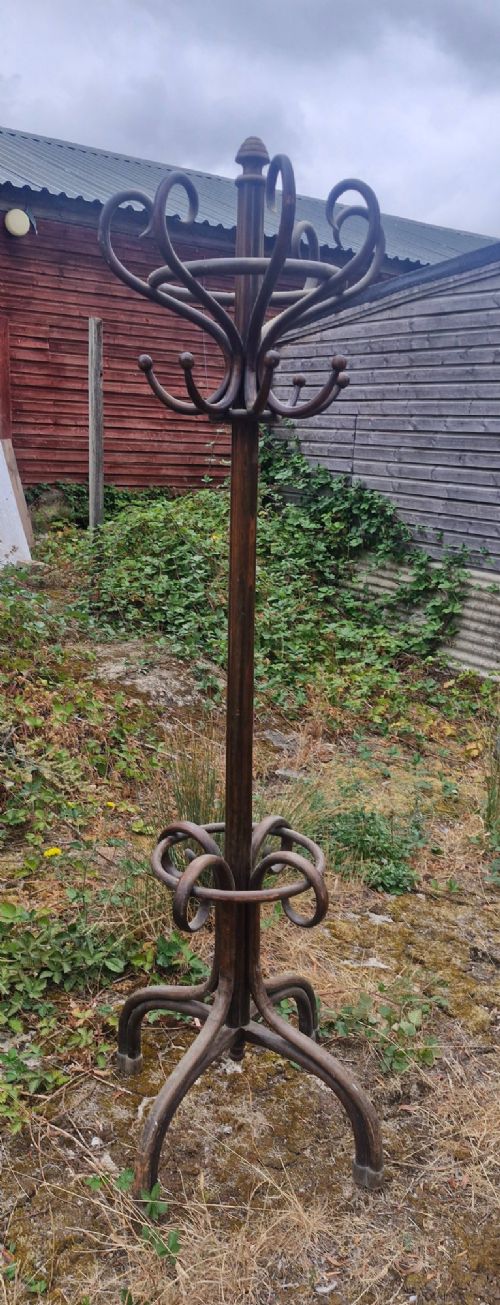
The bentwood hat and coat stand dominates. Steam-bent beech appears in 51 of 164 titles on Sellingantiques, usually a turned floor stand with hooks, sold as a hat and coat stand. Demi lune, half round, half depth, revolving and eight-branch versions all recur, and dates cluster around 1890 to 1930.
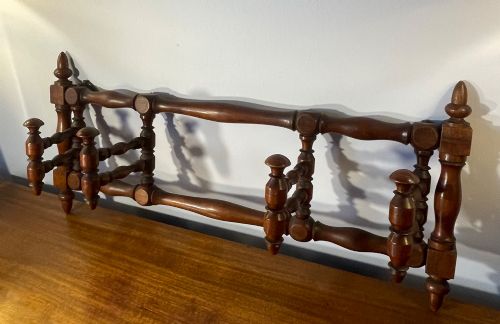
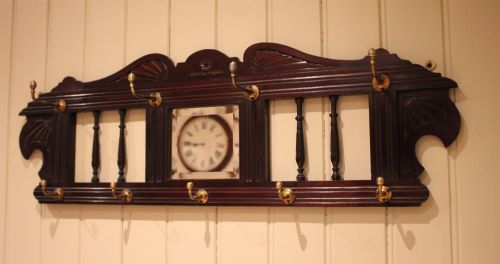
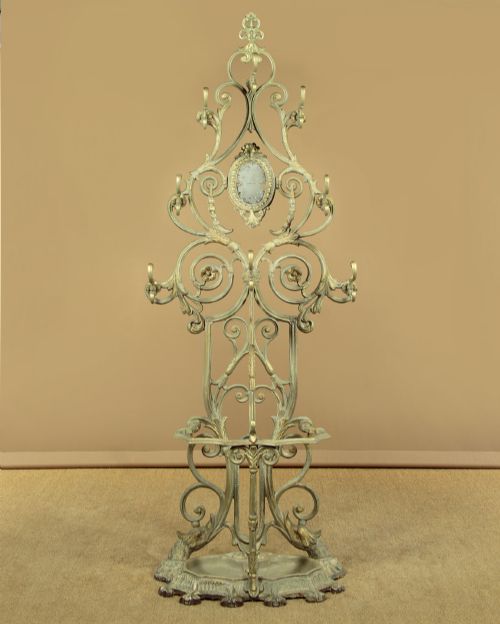
After bentwood come hall stands and wall-mounted racks, some mirrored, some cast iron, some described as portmanteaux. Milliners' blocks, hat sizers and shop display stands form a smaller group, and wig stands a smaller one again. Combined stick, umbrella and glove stands turn up throughout.
Dating runs from 1800 to 1940, with 90 listings carrying a clean year. The 1920s is the largest single bucket, ahead of Victorian, Edwardian and 1900s pieces. Georgian and Regency examples are present but few, and those tend to be wig stands and mahogany hall stands rather than bentwood. France is the most frequent named origin after England, supplying mirrored portmanteaux, fruitwood blocks and cast iron hall stands.
Where The Range Widens
Scale carries a lot of the difference. Titles at the upper end read six feet tall, five feet long, large or substantial, and those are the mahogany and walnut hall stands. Table-top blocks and single turned pillar stands sit at the bottom, and beech bentwood fills the broad middle.
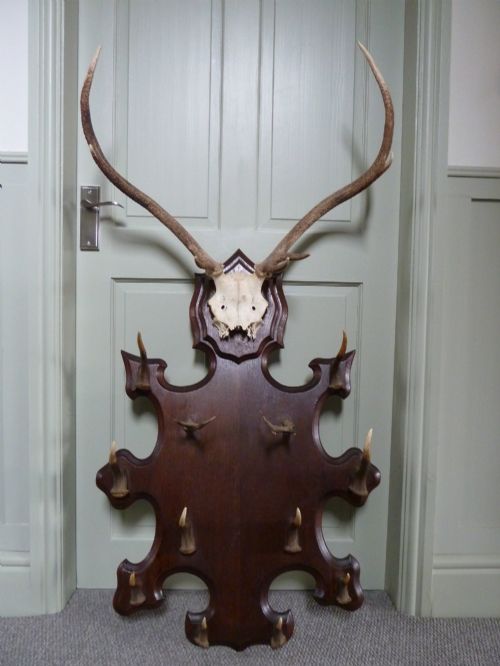
Material and carving separate the rest. Mahogany, walnut and cast iron list above plain beech, and the naturalistic strand sits higher again: Black Forest carving, antler and stag's horn stands, a carved goat's head rack, an owl with glass eyes. One antler stand sits at the very top of the range.
Two smaller things lift a piece. Fittings such as mirrors, brass or copper mounts, drip trays and revolving tops recur in the dearer titles. Multiples do the same work for small items, with sets of four and six milliners' stands, pairs of golden oak wig stands and pairs of hat blocks all listing above singles.
Antique Hat Stands Retail Price Guide 2026
Typical UK retail prices for hat stands, calculated from the Sellingantiques database of over a million retail prices indexed since 2003. This retail price guide relies exclusively on Sellingantiques data; no external sources or auction records are used, so the figures do not describe the wider market.
The most expensive hat stand ever sold on Sellingantiques was a Victorian cast iron coat, hat and umbrella stand, in October 2020.
Thonet
The Antique Hat Stands Glossary
- Bentwood
- Beech steam-bent into curves, the commonest construction in this category and the basis of the standard tall hooked stand.
- Hall stand
- A large hall-placed frame for hats and coats, often taking sticks too, sometimes fitted with a mirror or a drip tray.
- Demi lune
- Also given as half round or half depth. A stand flattened on one side so it sits against a wall rather than free in the room.
- Revolving
- A stand with a rotating hooked top section; it appears on several of the bentwood examples.
- Hat block
- A solid wooden head-form used by milliners for shaping a hat, sold as singles, pairs and sets.
- Marotte
- A painted display head used by milliners for showing hats. A hat sizer or stretcher, by contrast, is an adjustable device for enlarging a crown.
Antique Hat Stands: Frequently Asked Questions
Are these mostly small stands for a single hat?
No. Half of all titles carry the word coat, and 26 carry hall, so the bulk of the category is full-size hall furniture standing on the floor.
The small pieces do exist as a distinct group: milliners' blocks, wig stands, and brass or wooden shop stands made to carry one hat.
What is bentwood and why is it so common?
Bentwood is beech steamed and bent into curves. It made a tall multi-hook stand cheap enough for wide use from the later 19th century.
On Sellingantiques it accounts for 51 of 164 titles, more than oak, mahogany and brass combined. Dates on these cluster between about 1890 and 1930.
Which woods and materials turn up?
Beech leads by a distance, then oak, mahogany and brass. Cast iron, chrome, antler and horn appear in smaller numbers.
Yew shows up once, on a pair of wig stands given as English circa 1730, and nowhere else in the evidence.
How old are the earliest pieces?
The dated field runs from 1800 to 1940. The oldest object cited by any title is that pair of yew wig stands at circa 1730.
A Chinese Canton enamel hat stand given as circa 1800, Qing dynasty, is the earliest dated piece in the samples and the only Chinese enamel one recorded.
Do unusual or novelty forms appear?
They do, in a small naturalistic strand: eleven-point antler, stag's horn hall stands, cow horn stick stands, a Black Forest chamois goat's head and an owl with glass eyes.
The oddest single form recorded is a late 19th-century French ebonised stand made as three crossed halberds. Faux bamboo appears on French folding stands and nowhere else.
How often do these come up for sale?
Around nine a year are listed on Sellingantiques, so it is a thin category by volume.
Spread across it are 69 different dealers, which tells you most handle one and move on rather than stocking them steadily.