
Antique Tea Tables
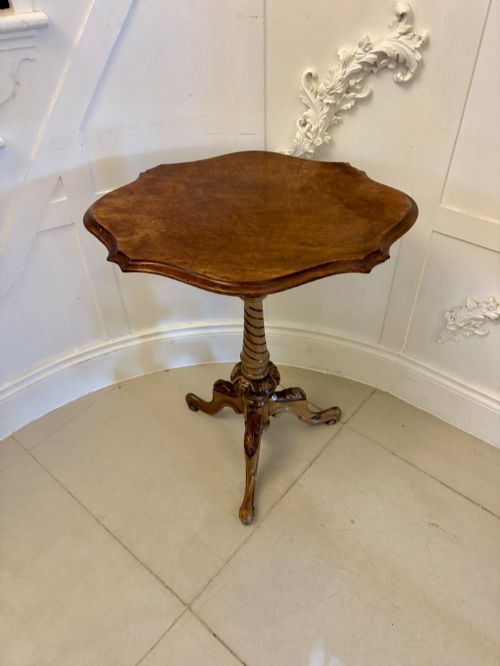
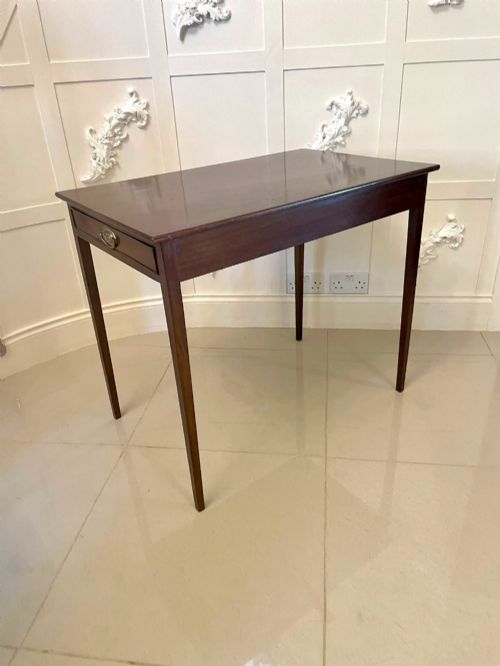
A small table made to carry the tea things, from Georgian fold-over tops on swing legs to tilting tripods that stood flat against the wall when the pot was cleared.
Antique Tea Tables
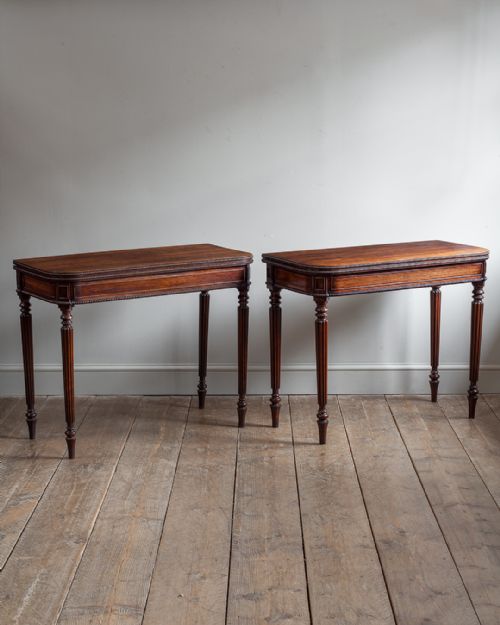
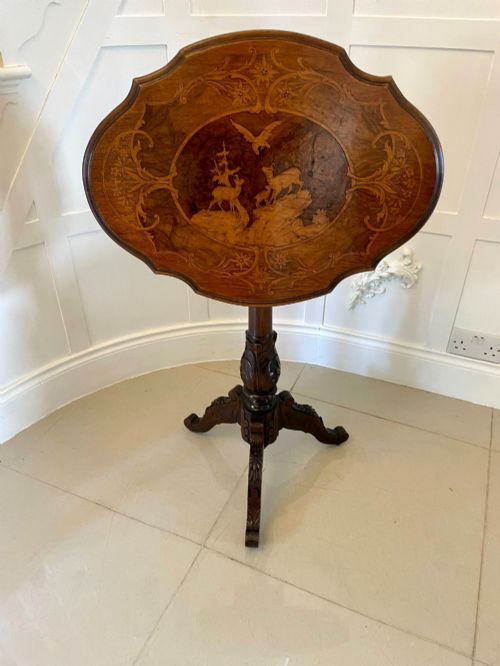
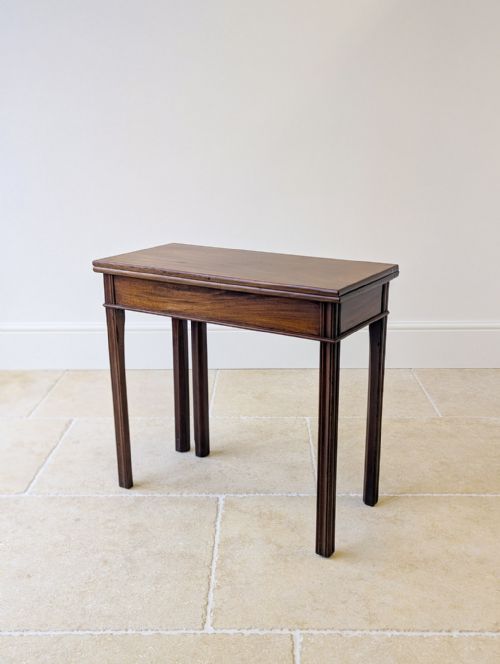
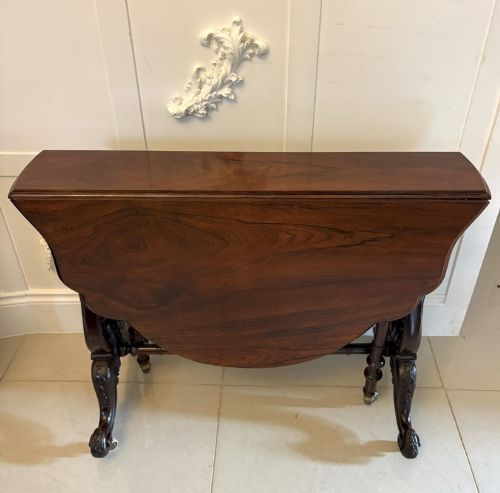
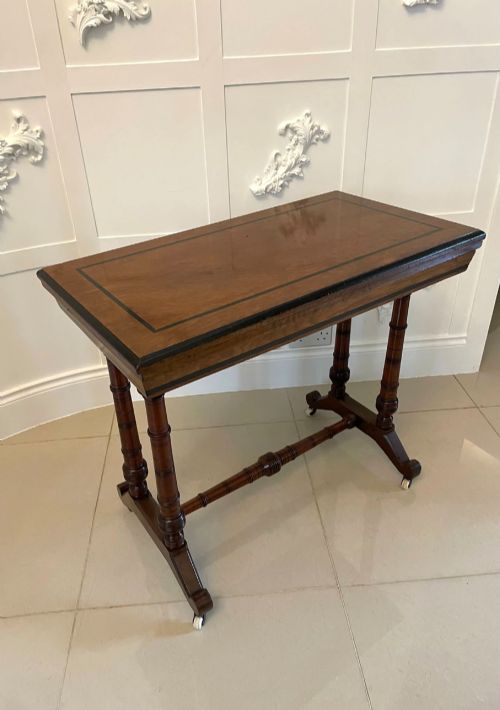
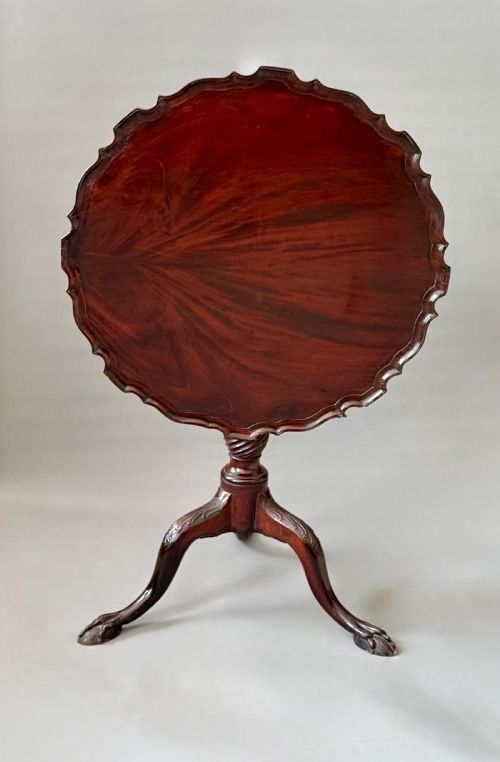
Tea tables appeared in Britain in the early 18th century, when tea drinking moved into the domestic room and needed a portable surface for pot, cups and kettle. Two answers to the same problem run through the category: a hinged fold-over top that opens to double the surface, and a tilting top on a tripod pillar that tips vertical and stands aside.
Mahogany is named in 1,147 titles, close to half the category, with walnut, rosewood, oak and satinwood behind it. The form you are most likely to meet on Sellingantiques is a Georgian or Regency mahogany fold-over table, rectangular, serpentine or demi-lune, on square or turned legs or a pedestal. George III appears in 223 titles.
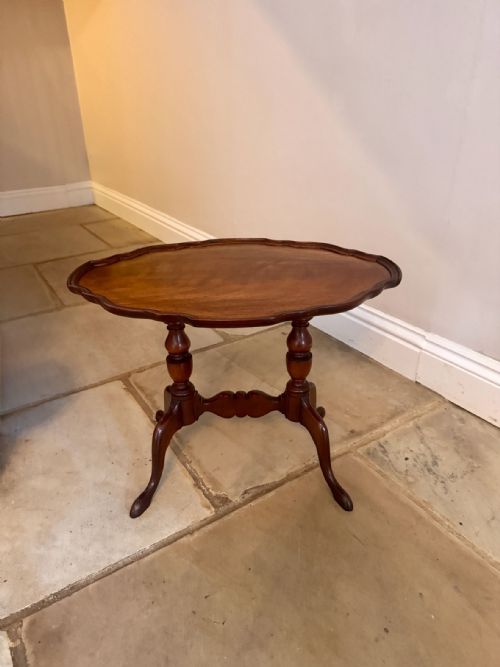
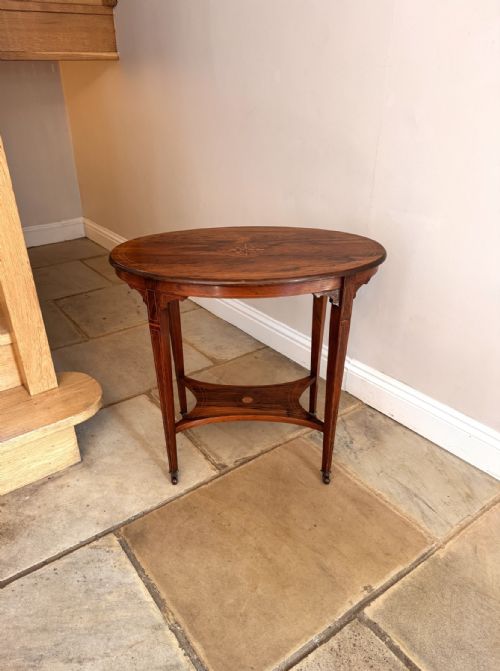
The heading gathers several strands. Fold-over tea and card tables are the largest, roughly a third of listings. Tripod and tilt-top tables account for about one in eight. Occasional, lamp, wine, centre and console tables form a broad overlapping quarter, with Sutherland and Pembroke drop-leaf tables a smaller steady strand and low coffee tables and Indian, Chinese and French examples making up around a tenth.
Titles are cheerfully double-jobbing: the same table is offered as tea, card, side, console, games, lamp or supper, often four or five at once. Dates are frequently a style bracket rather than a year. Only 732 of 2,458 listings carry a clean year, and those run from 1735 to 1940, so read "Georgian" as a look as much as a decade.
What Sets Them Apart
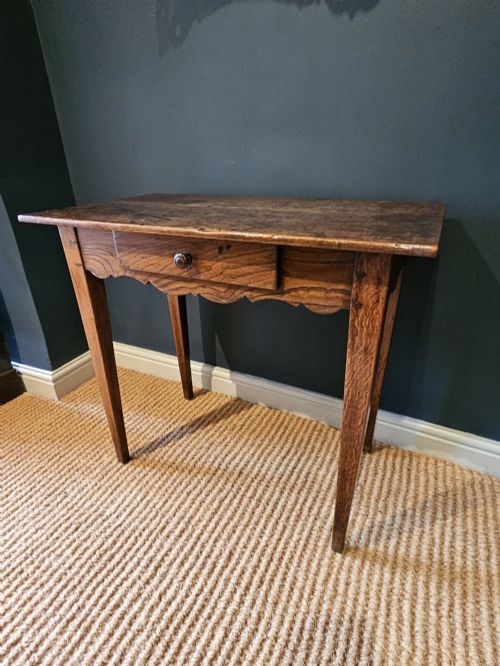
Timber does most of the work. Titles that name Cuban, Spanish or Honduras mahogany, plum pudding or flame figure, burr walnut, burr yew, amboyna, padouk or satinwood sit high in the range. Plain mahogany and oak sit at the lower end, doing the same job with less to look at.
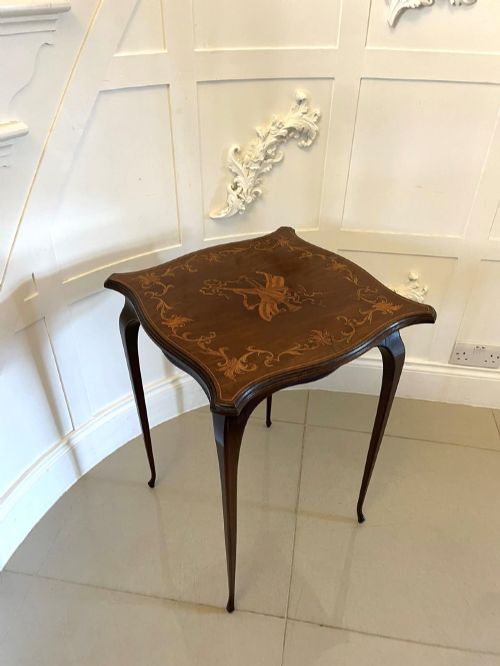
Period depth pulls the same way. George II and early George III tables cluster in the upper half of the sampled range, while Edwardian and 1920s to 1930s pieces gather at the bottom. Decorative work compounds it: inlay appears in 237 titles, carving in 96, marquetry in 52, and brass-inlaid and painted satinwood examples turn up well up the range.
Two other things lift a table. Pairs are a genuine sub-market, with 70 titles offering two or more, and paired card, console and tea tables occupy much of the top. So does mechanism. Triple tops, trifold actions, revolving tops, swing drawers and birdcages recur among the higher-priced titles, against plain fixed tops lower down.
Antique Tea Tables Retail Price Guide 2026
Typical UK retail prices for tea tables, calculated from the Sellingantiques database of over a million retail prices indexed since 2003. This retail price guide relies exclusively on Sellingantiques data; no external sources or auction records are used, so the figures do not describe the wider market.
Mahogany is named in nearly half of all tea table titles on Sellingantiques. Walnut, rosewood, oak and satinwood trail well behind.

Gillows of Lancaster·Liberty & Co
The Antique Tea Tables Glossary
- Fold-over top
- A hinged top that opens out to double the surface, usually carried on a swinging leg or gate. Also written foldover or turnover.
- Tilt-top
- A top hinged to the pedestal so it can be tipped vertical and set against a wall. Snap-top means the same thing.
- Demi-lune
- Half-round in plan, the folded shape of many card and tea tables. It appears in 101 titles.
- Tripod
- A central pillar rising from three splayed legs, the standard support under round tops in this category.
- Birdcage
- A small boxed cage of pillars between top and pedestal, letting the top both tilt and revolve.
- Sutherland table
- A narrow drop-leaf occasional table with two deep flaps on gatelegs, named in 67 titles.
Antique Tea Tables: Frequently Asked Questions
Why are tea and card tables sold together?
They share a body. A hinged fold-over top on a swing leg suits cards as readily as a tea tray, and dealers describe the same table both ways.
Card appears in 404 titles, fold in 185, games in 118. Many listings run tea, card and console together in a single line.
What wood are most of them?
Mahogany, by a distance. It is named in 1,147 titles, very nearly half the category.
Walnut follows at 296, then rosewood at 214, oak at 86 and satinwood at 70. Burr walnut alone accounts for 118 titles.
How old is a Georgian tea table likely to be?
Less precisely dated than the word suggests. Georgian, 19th Century and 18th Century are the three largest date buckets on Sellingantiques, and none of them is a year.
Where listings do carry a clean year, and 732 of 2,458 do, the span runs from 1735 to 1940. Regency, Victorian and Edwardian tags follow the big three, alongside decade labels like 1900s, 1880s and 1920s.
Are non-British tea tables common?
They form a persistent minority rather than a footnote. Indian titles number 57, Chinese 54 and French 53.
Among them turn up Hoshiarpur bone-inlaid work, Anglo-Indian padouk, Moorish and Japanese cloisonné pieces, Swedish alder root and Danish burr walnut.
Do these tables come in pairs?
Yes, and pairs matter. Seventy titles offer two or more, and paired card, console and tea tables take up much of the top of the range.
Nests of three or four are the other multiple, recurring at the lower end in mahogany, burr walnut and Chinese hardwood.
What unusual forms turn up in this category?
Plenty, though only once or twice each. A Manx table, a tea caddy table, a kettle stand, a violin table and a credence table have all passed through.
Also a coaching table, a penwork table, an ink-work table and a Berber folding tray stand. Around 273 tables are listed a year, and 321 different dealers have handled them.