



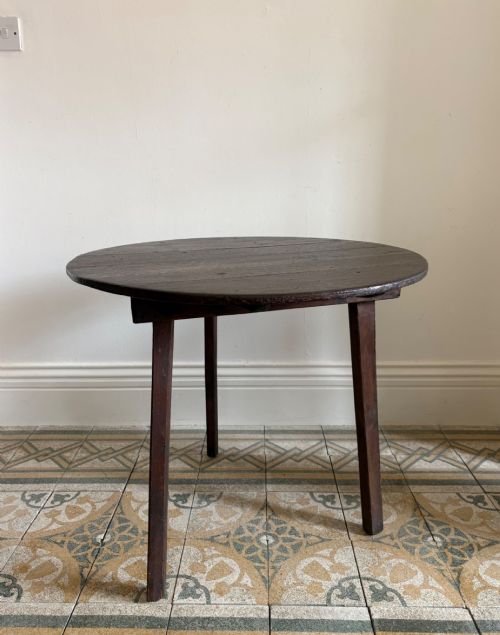
Antique Cricket Tables
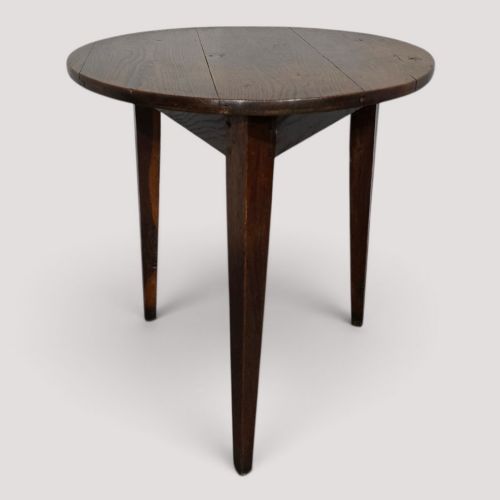
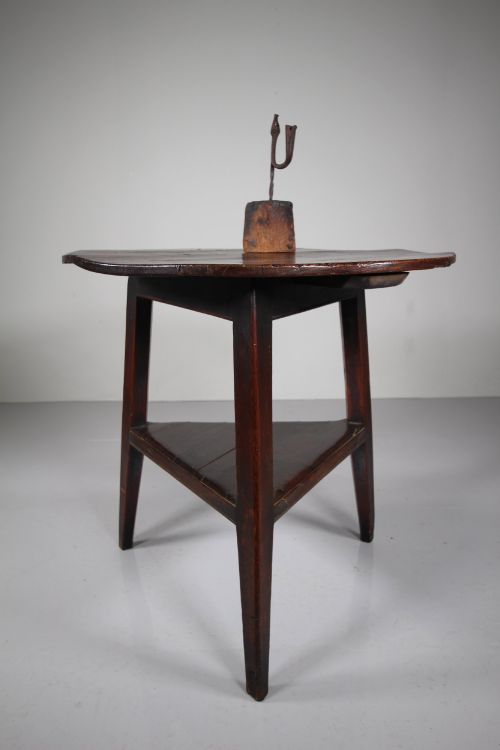
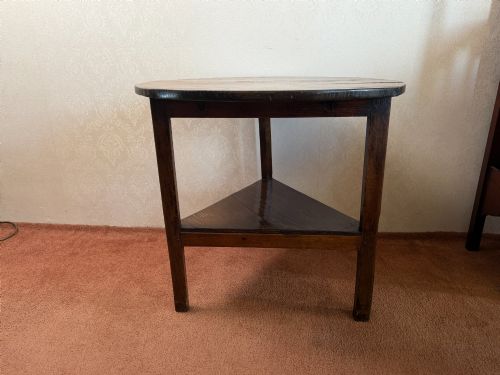
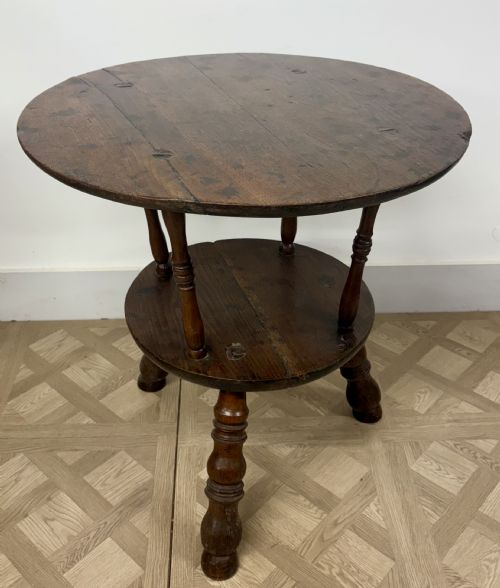
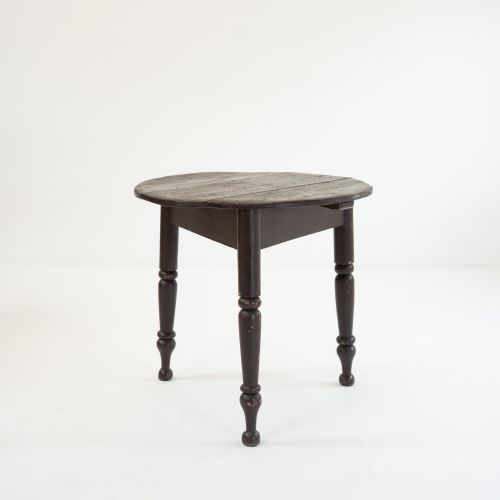
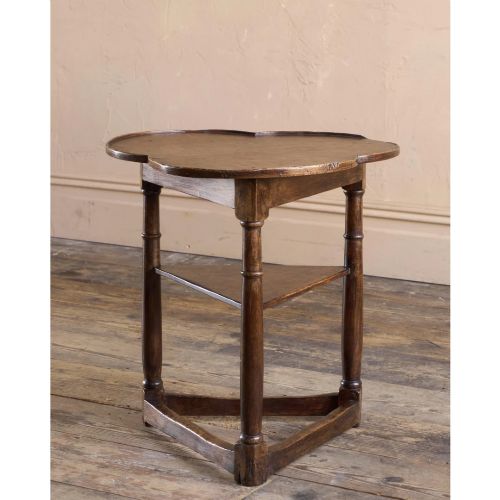
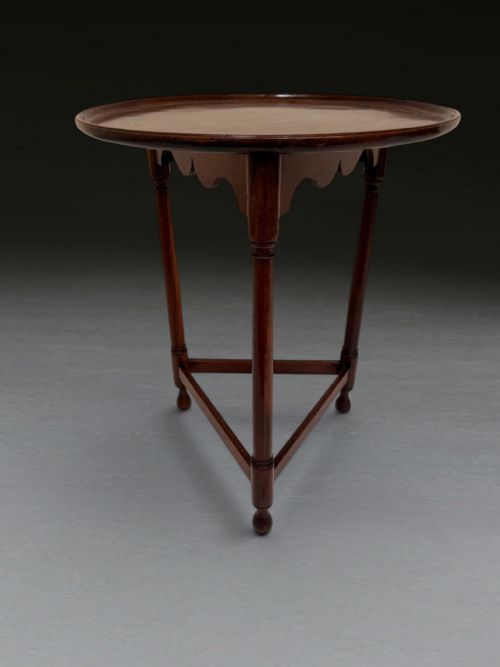
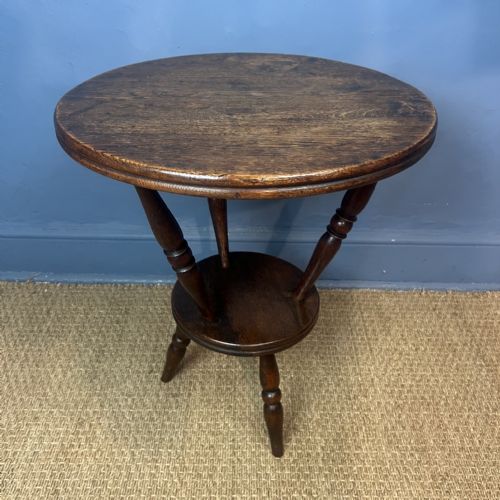
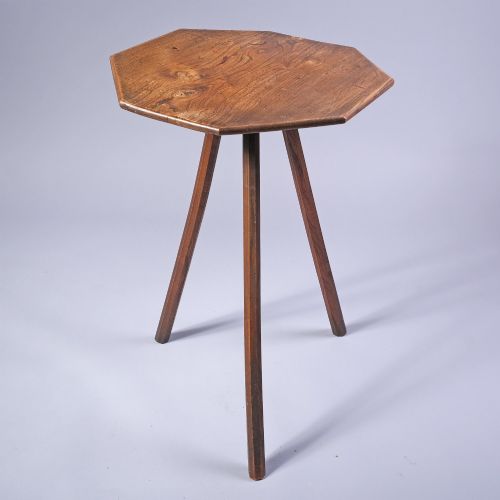
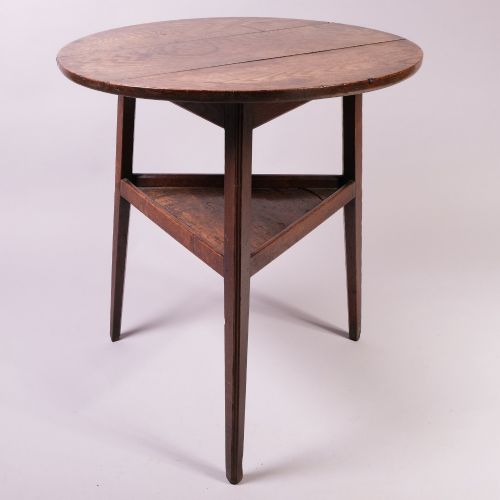
A cricket table is a small country table on three legs with a round plank top, made in solid native timber for farmhouses, taverns and dairies where floors were rarely level.
Antique Cricket Tables
Three legs, a round top cut from jointed solid boards, and native timber left scrubbed, painted or waxed rather than veneered. The third leg sits steady on flagged and earth floors, which is why the form was made from the 17th century onward. The name itself is a collectors' term, not a period one.
The table you'll meet on Sellingantiques is plain and round-topped in oak or pine, dated to the 19th or 18th century, and titled with little more than timber, region and period. Oak runs to 170 titles and pine to 129, and between them they account for well over half of everything listed. Elm follows, then ash, sycamore, walnut, fruitwood, yew and chestnut thinning out behind.
Region does the work a maker's name usually does. Wales is the most-named place of origin, in 102 titles, with Welsh oak and Welsh pine both recurring and sub-labels such as Snowdonia and Monmouthshire appearing in individual descriptions. English is next. West Country, Westmorland, Irish, Scottish and Dutch examples turn up singly. No maker is attributed on 438 sold listings, and the one named retail strand is early 20th century, where Heals appears in eight titles, several of them noted as labelled.
Alongside the mainstream sit two smaller groups. Painted and scrubbed pine is a strand of its own, with original paint and bleached tops used as selling points. Primitive and naive pieces form a small distinct group, sometimes labelled rustic, dairy or chopping block. Seventeenth-century oak is scarce, with ten listings carrying that period, and the early 20th century, including Arts and Crafts and coffee-table forms, is present but thin.
Where The Range Splits
Date and timber pull hardest. Seventeenth-century oak and early 18th-century oak sit at the top, while Victorian and Edwardian examples sit at the bottom, and plain pine clusters low simply because there is so much of it. Figure lifts a table sharply: burr elm, burr ash, yew, pollard oak, chestnut and fruitwood each appear once or twice and each sits near the very top.
Surface is the other lever. Original paint, original finish, faded patina and good colour recur through the dearer half of the listings, and the strength of a scrubbed pine table lies in the top being pale from washing rather than stripped later. A painted surface kept rather than cleaned off is a repeated selling term in its own right.
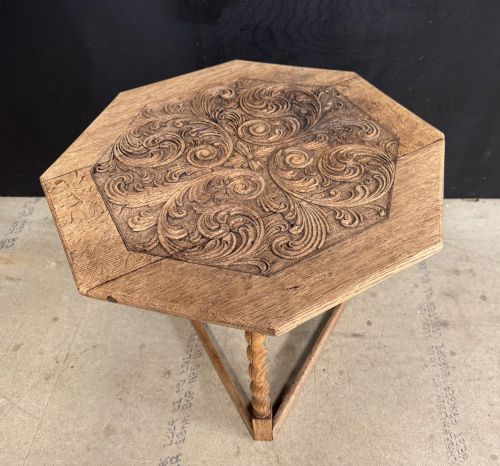
Anything out of the ordinary in the top or the action reads above the plain middle. Trefoil, oval and octagonal copper tops, tilt tops, drop flaps, two-tier bases and cheese-mould tops each turn up only once or twice. Scale works at both ends: large, huge and dining examples and pieces described as small in proportion both stand clear of the ordinary run, while an unqualified small table sits low.
Antique Cricket Tables Retail Price Guide 2026
Typical UK retail prices for cricket tables, calculated from the Sellingantiques database of over a million retail prices indexed since 2003. This retail price guide relies exclusively on Sellingantiques data; no external sources or auction records are used, so the figures do not describe the wider market.
About fifty-three cricket tables are listed on Sellingantiques each year, and a hundred different dealers have handled one.
The Antique Cricket Tables Glossary
- Plank top
- A top made from jointed solid boards rather than veneer. Named in titles because it is the standard construction for the form.
- Scrubbed or bleached
- Surface stripped or gone pale from washing, mostly used of pine tops.
- Original paint
- A period painted surface kept rather than cleaned back to bare wood. One of the most repeated selling terms in the category.
- Primitive or naive
- Dealer shorthand for unrefined vernacular work, used in 19 titles, sometimes alongside rustic, dairy or chopping block.
- Bobbin turned
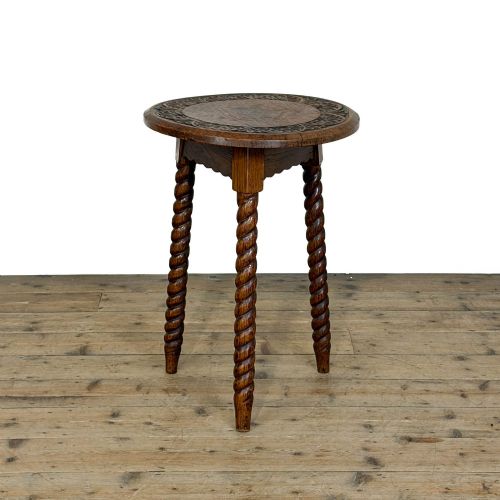
- Legs turned as a row of beads, cited on several 19th-century examples. Turned legs generally are common on pine tables, against square-cut alternatives.
- Cheese top
- A thick dished or dairy-derived top. It surfaces only once or twice, and near the top of the range when it does.
- Burr
- Figured knotty timber. Burr elm and burr ash both appear at the top end, as do pollard oak and yew.
Antique Cricket Tables: Frequently Asked Questions
Why do cricket tables have three legs?
The third leg suits uneven flagged and earth floors, which is what farmhouses, taverns and dairies had. Tables of this form were made from the 17th century onward.
The name is a later collectors' term rather than one used at the time.
What timber are they usually made from?
Oak appears in 170 titles and pine in 129, so between them they cover well over half the category. Elm is third, in 45.
Behind those come ash, sycamore, walnut, mahogany, fruitwood, cherry, yew, chestnut, teak and sapele, each thinning out to a handful of listings or fewer.
How old are most of them?
The period field puts 175 in the 19th century and 102 in the 18th. Georgian appears in 65 titles and George III in 21, and for many listings a century or a reign is the whole of the dating claim.
The dated field runs from 1700 to 1960, though only 95 listings carry a clean year. Titles and the dated field occasionally disagree with one another.
Seventeenth-century examples are scarce, with ten listings in that period.
Are Welsh cricket tables a separate type?
Wales is the single most-named place of origin, in 102 titles, which is about a fifth of the category. Welsh oak and Welsh pine each recur, and sycamore and fruitwood turn up in the same group.
Regional labels go finer in some descriptions, with Snowdonia, Monmouthshire and the Welsh borders all appearing. Ireland, Scotland, the Netherlands and Westmorland each appear only once or twice.
Do painted examples come up often?
Painted appears in 35 titles, and painted pine in 21. Scrubbed and bleached tops feature as well, mostly on pine.
Original paint, meaning the period surface kept rather than stripped, is used as a selling point through the dearer half of the listings.
Can you buy them as a pair?
Almost never. Three listings in the whole archive offer two tables together.
About 53 cricket tables come to market on Sellingantiques in a year, and 100 different dealers have listed one, so the form is handled by country-furniture dealers generally rather than by specialists.