


Antique Tavern Tables
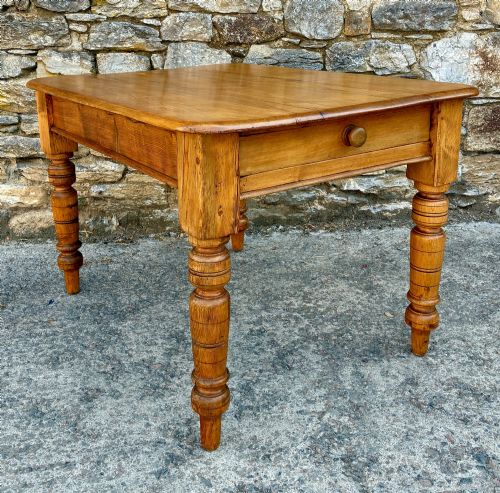
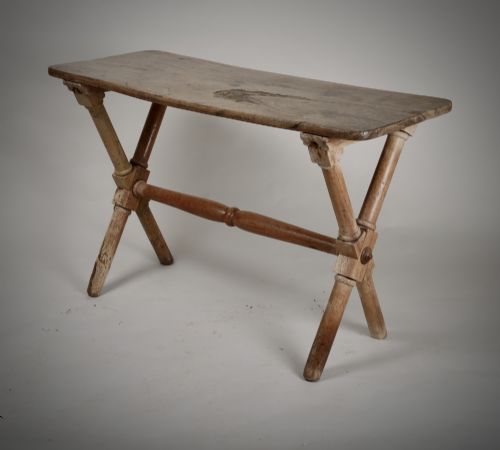
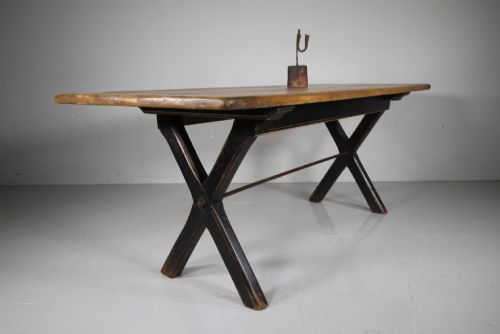
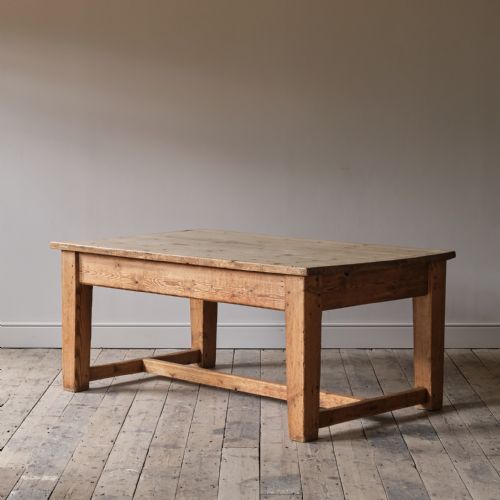
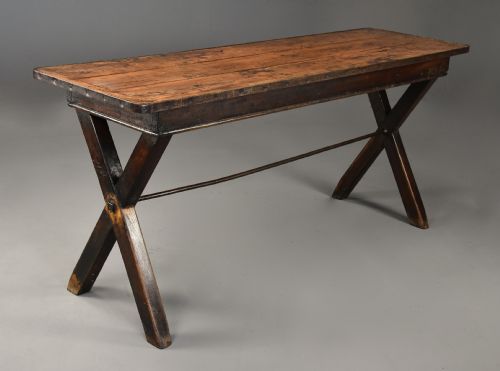
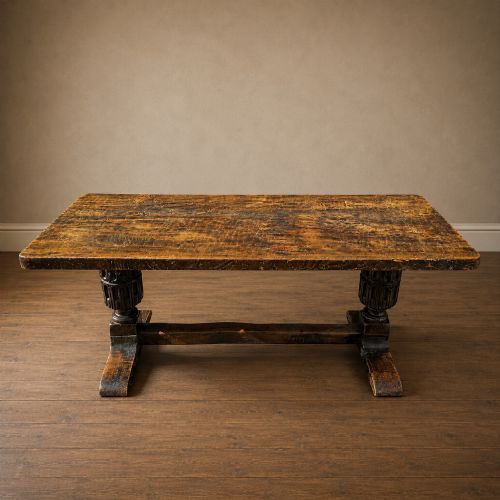
A plain country table built for scrubbing and heavy use in public rooms and kitchens, usually oak or pine, on an X-frame or trestle base.
What Is A Tavern Table?
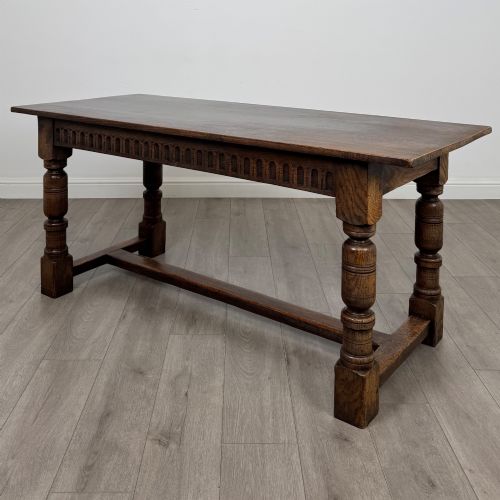
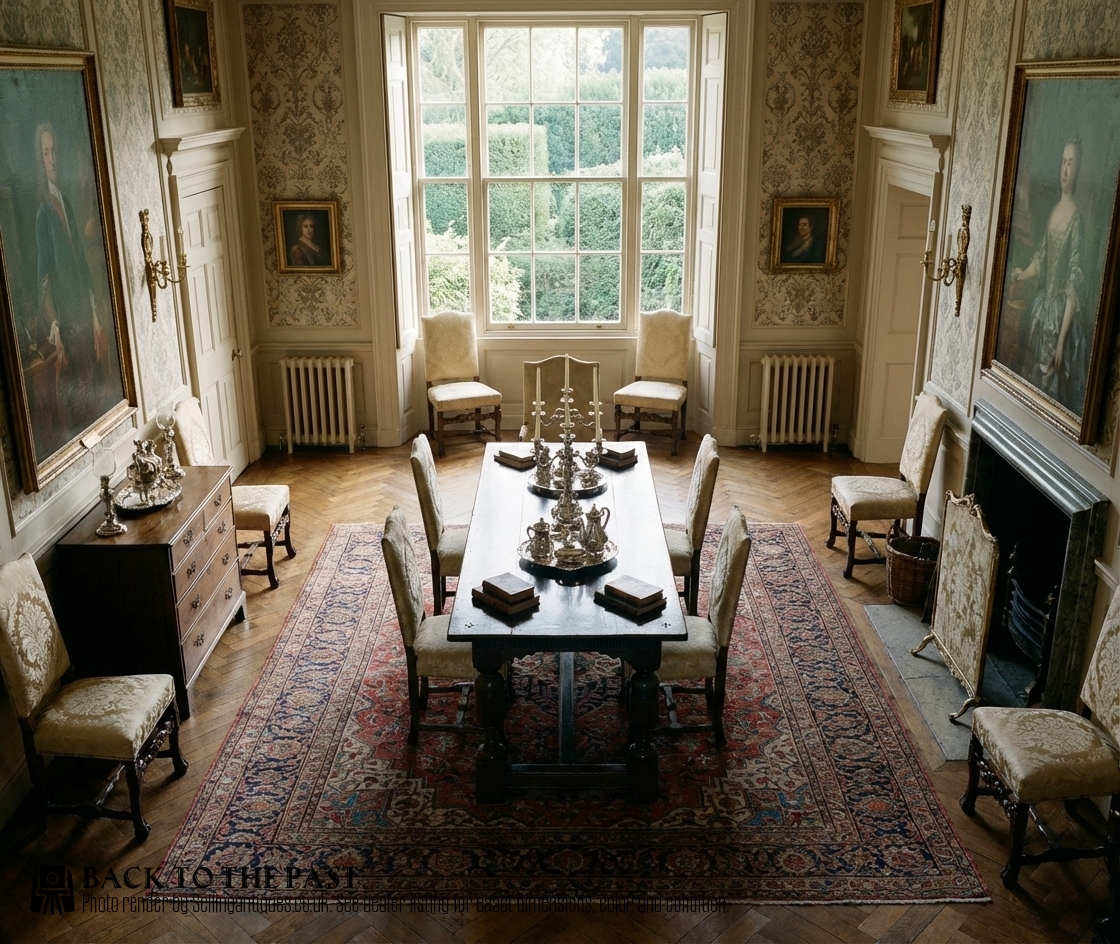
Two structurally different things sit under the heading. The first is the timber-framed country table: joined or trestle construction, plank top, oak or pine, and it dominates. Oak carries a third of titles on Sellingantiques, pine about a sixth, with elm behind it and single appearances from ash, walnut, chestnut, sycamore, yew and iroko.
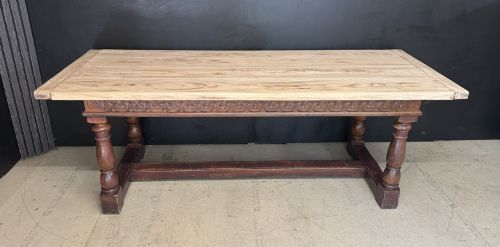
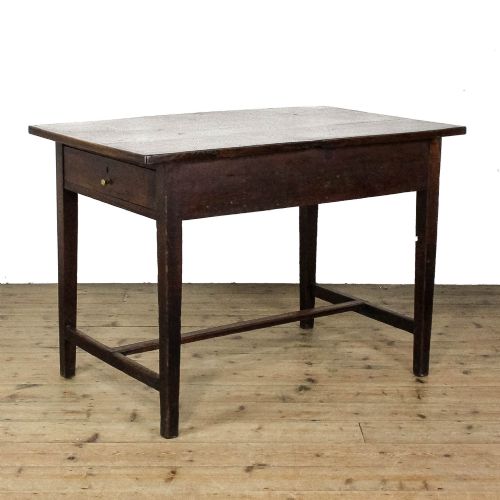
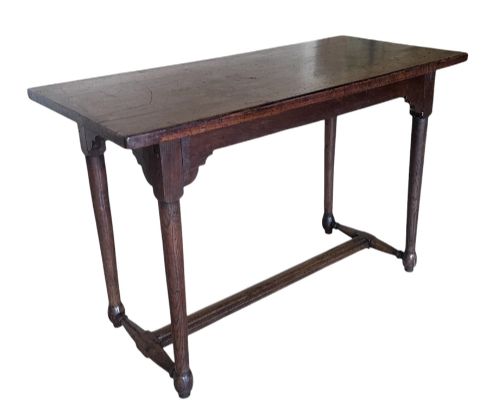
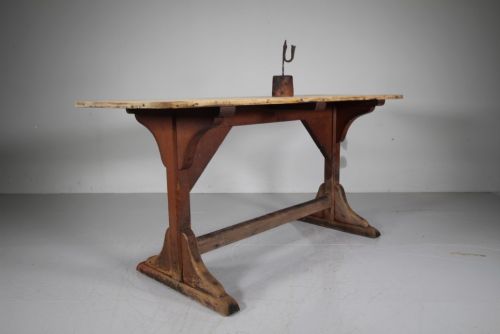
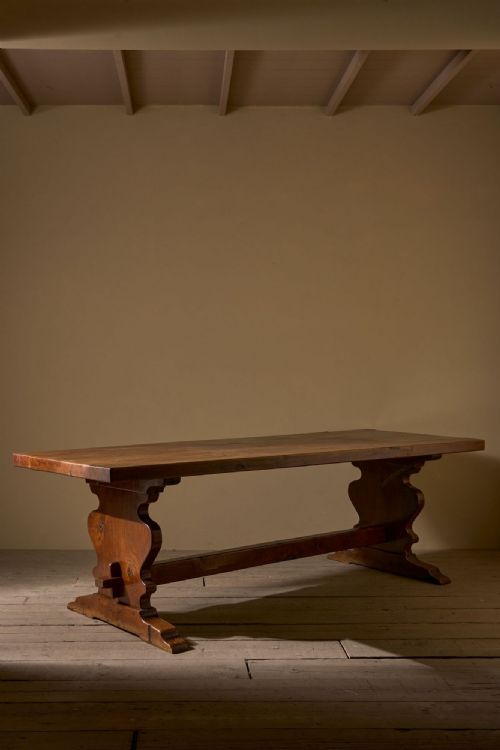
The form you're most likely to meet is a rectangular English table of the 18th or 19th century, standing on crossed X-frame ends or a trestle base, with a top of one or two wide boards. Nineteenth-century entries outnumber eighteenth by better than two to one. The name goes back to the seventeenth century, when these were built for use rather than display.
The second thing is a Victorian pub table: a moulded cast-iron base carrying a mahogany or pine top, made for crowded bar rooms from the mid-nineteenth century. Iron appears in seventeen titles, and one recurring pattern shows a moulded Britannia figure on the base.
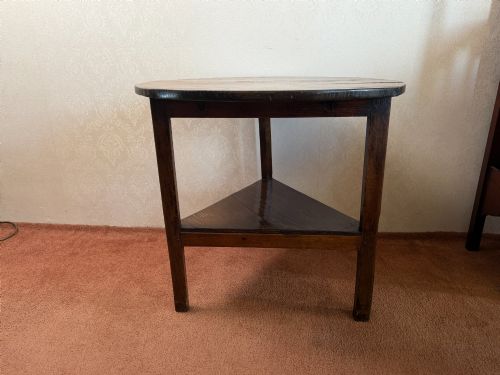
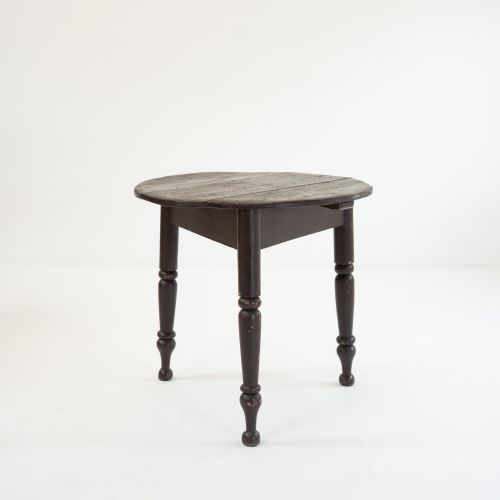
Round three-legged cricket tables are catalogued in the same place, around one title in eleven, and dealers routinely hedge rather than choose: "cricket or tavern", "centre/tavern", "refectory or tavern" all turn up. Welsh examples are the one regional group with any weight; French, Spanish, Swiss, Swedish, Austrian, Dutch and Irish tables appear once or twice each.
Where The Range Splits
Timber and surface do most of the sorting. Oak and elm with colour stated in the title sit at the top, and phrases like "fine patina", "faded patina" and "excellent colour" cluster in the upper part of the range rather than spreading through it. Georgian oak and elm tables cited for colour hold the highest ground.
Age and size pull the same way. Seventeenth century appears on only seven listings and several of those sit high; eighteenth-century stock is a bigger share of what's currently listed than of the archive. "Long", "Very Large", "With Thick Top" and single-plank tops gather above the midpoint. Original paint kept rather than stripped also lifts a table, while plain "painted" turns up at every level.
At the other end are the cast-iron-based pub tables. Almost every iron entry falls in the cheapest third, the paired Britannia bases included, alongside small early-twentieth-century pieces. Dating is worth reading as a bracket: only fifty of the listings commit to a clean year, and reign labels are used loosely, with titles and dated fields sometimes disagreeing by a century.
Retail Price Guide 2026
Typical UK retail prices for tavern tables, calculated from the Sellingantiques database of over a million retail prices indexed since 2003. This retail price guide relies exclusively on Sellingantiques data; no external sources or auction records are used, so the figures do not describe the wider market.
The oldest to pass through Sellingantiques is a small oak and elm table given as about 1620.
The Antique Tavern Tables Glossary
- X frame
- Crossed end supports forming an X, the most repeated base type in these titles, and often paired with pine, elm or oak.
- Trestle
- Separate end supports joined by a stretcher, rather than four legs at the corners.
- Plank top
- A top of one or two wide boards. Both "single plank" and "two plank" appear, and both sit above the midpoint of the range.
- Cleated ends
- Cross battens fixed at the ends of a plank top to hold it flat.
- Waney edge
- A top board that keeps the natural irregular edge of the tree, described in one title as a "live waney edge".
- Shove ha'penny
- A pub game. Two tables in the archive have the playing surface built into the top.
Frequently Asked Questions
What wood are tavern tables usually made from?
Oak is the default, accounting for about a third of titles, with pine next and elm behind that.
Everything else is scattered. Ash, walnut, chestnut, sycamore, yew, cherry, beech, iroko and pollard oak each appear only once or twice. Mahogany turns up mainly as the top on a cast-iron pub base.
Is a cricket table the same as a tavern table?
Not structurally. A cricket table is small, round and three-legged; a tavern table in the older sense is rectangular on an X-frame or trestle.
They're catalogued together, though, and dealers hedge constantly. "Cricket or tavern table" appears again and again rather than one label winning. Cricket tables run to about one title in eleven, in oak, pine, elm, ash and painted finishes.
Why do cast-iron pub tables appear in this category?
From the mid-nineteenth century the tavern name was attached to small pub tables with moulded cast-iron bases and timber tops, made for crowded bar rooms.
Seventeen titles mention iron, several described as Victorian, with mahogany or pine tops. One recurring pattern carries a moulded Britannia figure on the base.
They sit at the lower end of the range.
How reliable are the dates given on these tables?
Read them as brackets. Century-level entries dominate: 19th Century on seventy-seven listings, 18th Century on twenty-nine, against only fifty listings across the whole archive that carry a clean year.
Reign labels do broad duty. Georgian and Victorian each cover long stretches, and titles sometimes disagree with the dated field, an "18th Century Oak Tavern Table" filed as 19th century among them.
Do many dealers handle tavern tables?
Eighty-five separate dealers have listed one on Sellingantiques, and around twenty-one come to market in a year.
That spread says something about the category. Almost every country-furniture dealer touches it at some point, and almost none makes a speciality of it.
Are painted tavern tables common?
Paint appears on about one title in fifteen, including "in Paint", "Original Paint", "original red paint" and "stained pine".
Where the paint is described as original and left alone, the table tends to sit above the middle of the range. Plain "painted" without that qualifier turns up throughout.