


Antique Centre Tables
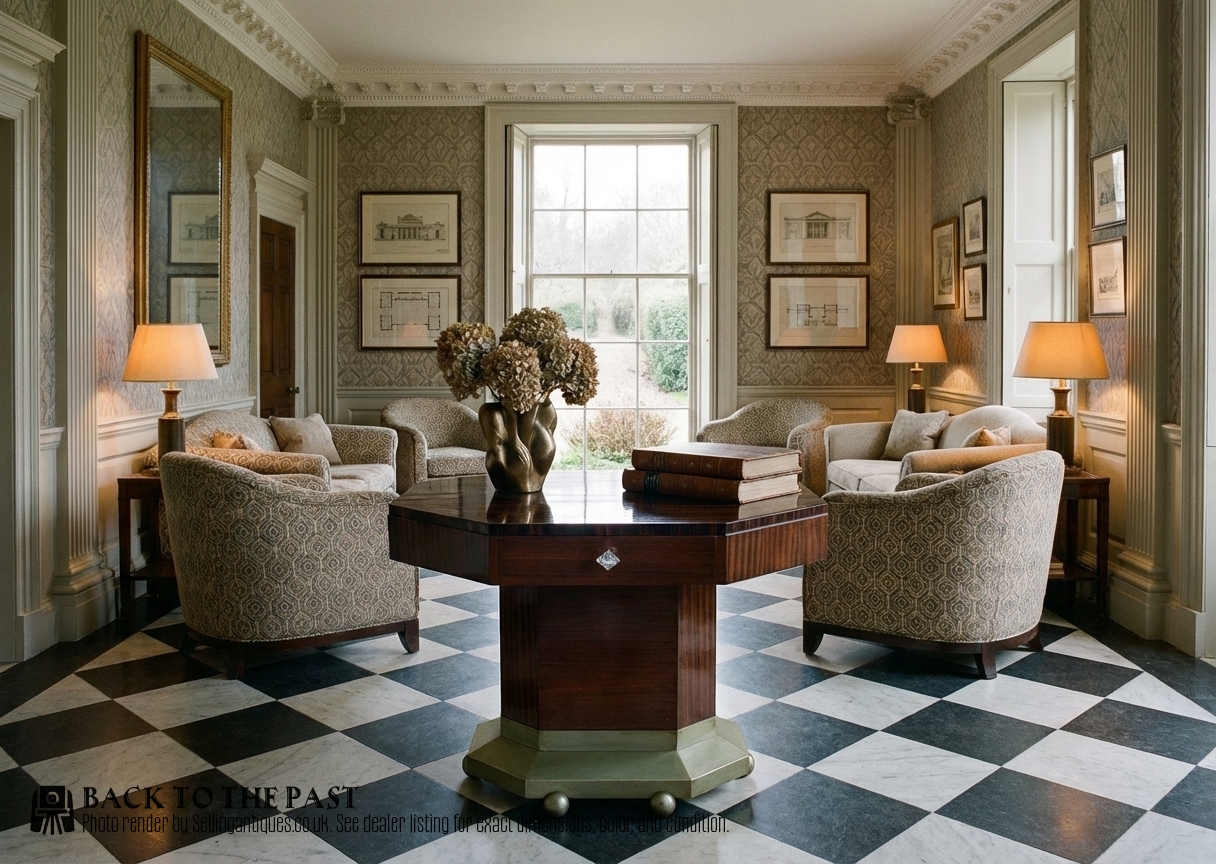
A centre table is finished on all sides and made to stand in the middle of a room, carrying a lamp, books or breakfast rather than sitting against a wall.
What Are Centre Tables?
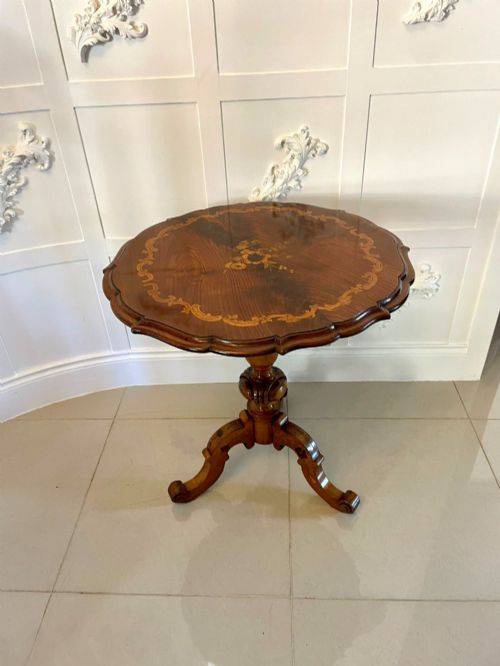
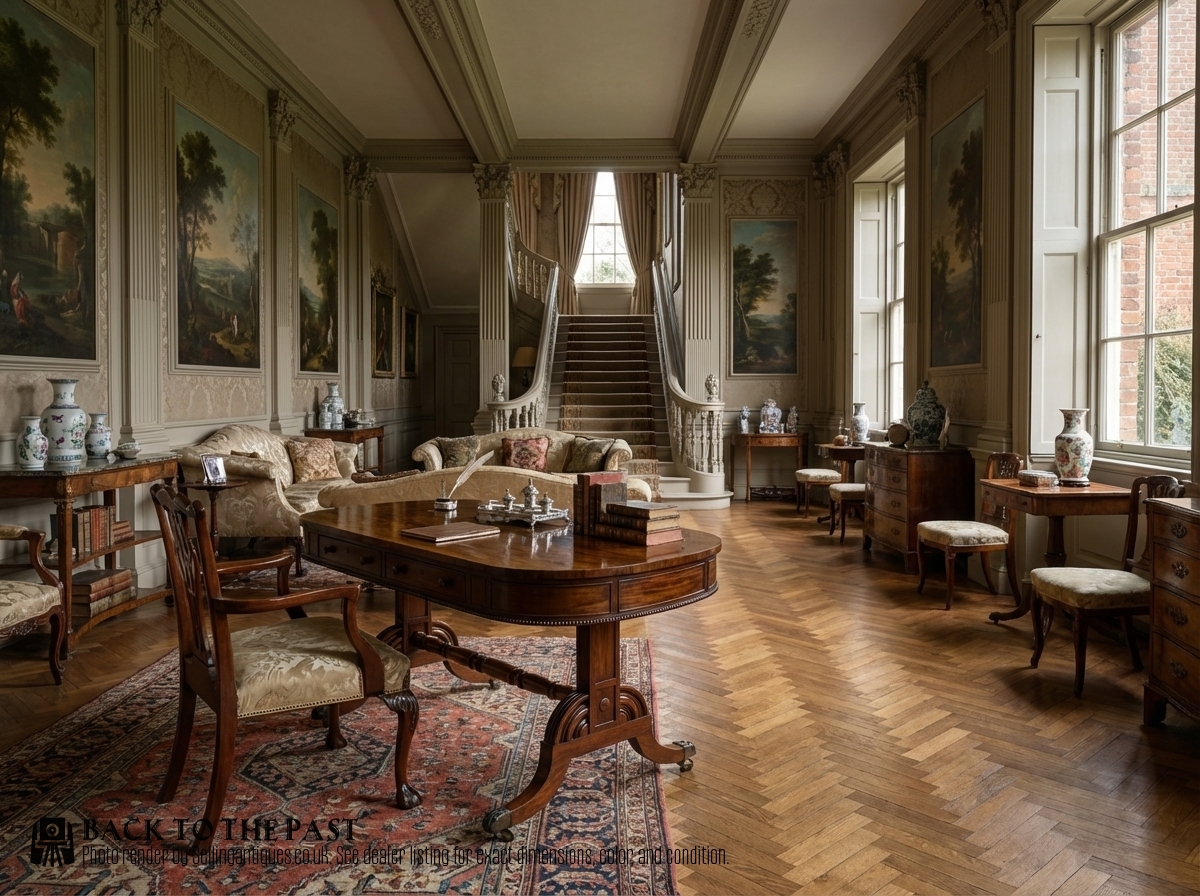
The form appeared as rooms began to be arranged around a focal table instead of with furniture pushed to the walls. Because it stands in the open, a centre table is veneered and moulded on every side, and it is usually carried on a pedestal, a column or paired end supports rather than four corner legs.
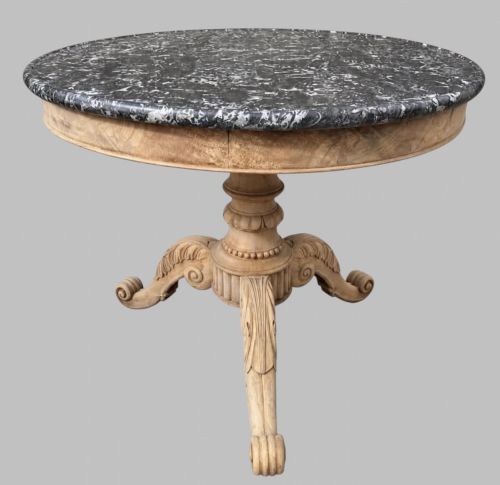
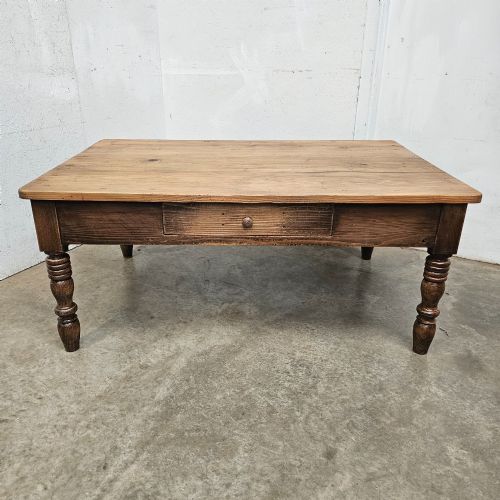
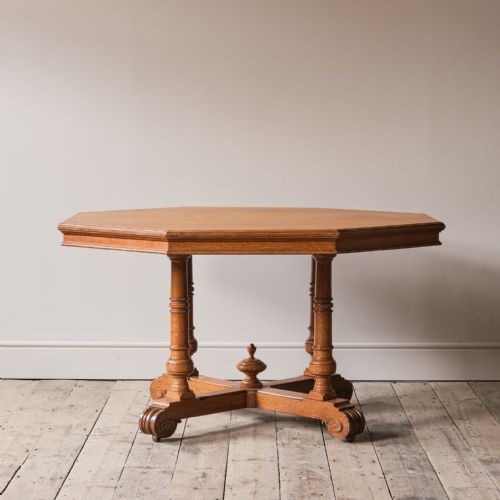
The heading covers a broad family: circular and oval tilt-top loo and breakfast tables, French gueridons with marble tops, four-square library and writing tables, and smaller occasional and lamp tables. Titles routinely double the function, so the same object turns up as "centre/dining", "centre or breakfast" or "library/centre" at once.
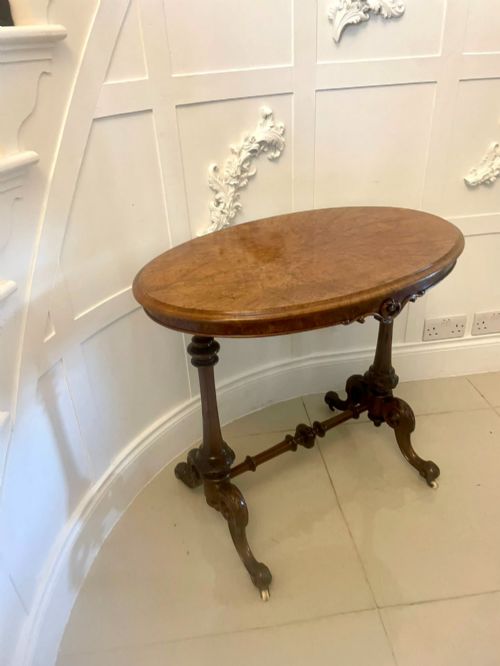
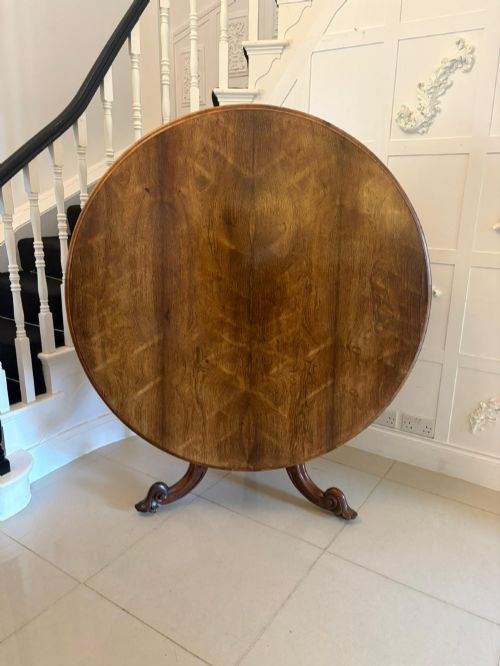
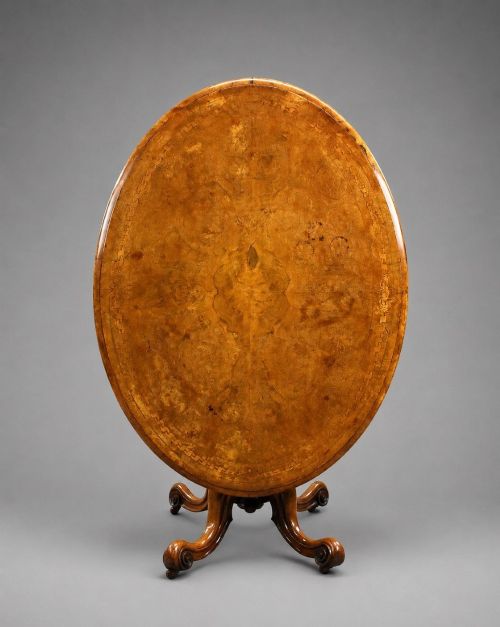
The table you are most likely to meet is Victorian, walnut or burr walnut, oval or circular, on a carved pedestal, and often tilting. Victorian appears in around a quarter of titles and walnut in a fifth, with mahogany and rosewood behind them and oak behind those. The 1860s is by a wide margin the densest decade recorded.
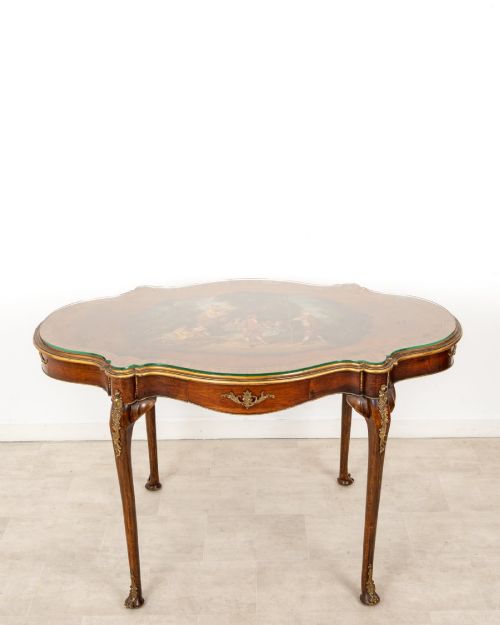
After that come Regency and William IV rosewood and mahogany centre and breakfast tables, roughly a fifth of the whole, and French gueridons, about one in ten, with Empire, Charles X, Louis Philippe and Napoleon III named in titles. A smaller stream is library, drum, rent and writing tables sold under the centre heading, and scattered through the range sits colonial and Continental work: Anglo-Indian padouk, Chinese and Qing pieces, Italian, Biedermeier and Swedish birch.
Where The Range Splits
Timber and figure do most of the work. Plain walnut, oak and pine sit at the bottom; burr and figured veneers lift a table, and the exotics climb hardest - amboyna, kingwood, satinwood, pollard and burr oak, yew, birds-eye maple and Gonçalo Alves all turn up in ones and twos near the top.
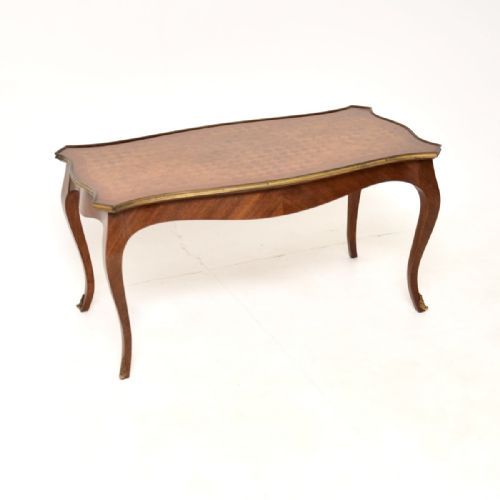
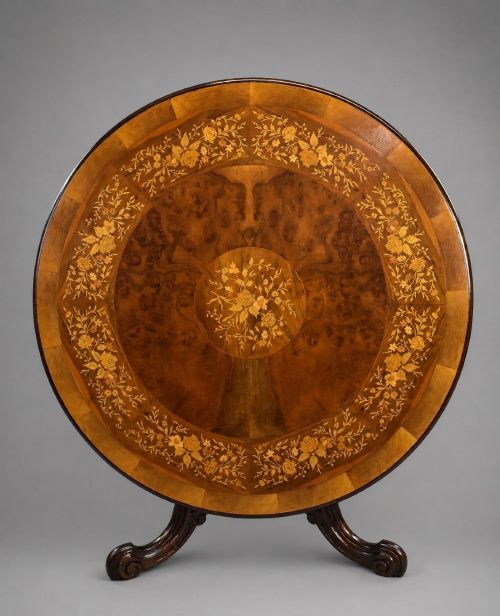
Decoration is the second axis. Marquetry is named in a good many titles and inlaid work in more, and the brass-and-tortoiseshell inlaid French tables and the ormolu-mounted ones sit well up the range. Top treatment counts too: marble is common enough, but specimen marble, Derbyshire fossil, majolica, porphyry, onyx and segmented sample-timber tops are among the least common things in the category.
Scale and authorship finish the picture. Large recurs in the highest-priced examples, and diameters and seat counts get stated in titles for that reason. A named or attributed maker pushes a table sharply upward, and individually attributed pieces cluster right at the top.
Retail Price Guide 2026
Typical UK retail prices for centre tables, calculated from the Sellingantiques database of over a million retail prices indexed since 2003. This retail price guide relies exclusively on Sellingantiques data; no external sources or auction records are used, so the figures do not describe the wider market.
The 1860s is the densest decade in the Sellingantiques archive for centre tables, at roughly three times the 1870s.
Gillows·Edwards & Roberts
The Antique Centre Tables Glossary
- Centre table
- A table finished on all sides, meant to stand in the middle of a room rather than against a wall.
- Loo table
- A large oval or circular Victorian tilt-top table, named for the card game, and sold interchangeably as a centre table.
- Tilt top
- A top hinged to swing vertical so the table can be stood aside against a wall. Some listings say snap-top instead.
- Gueridon
- The French form, usually small and round on a central column or tripod, often with a marble top. Around 181 titles use the word.
- Burr
- Veneer cut from a knotty growth on the tree, giving swirled figure. Of 338 burr titles, 302 are burr walnut.
- Specimen top
- A top made up of many sample woods or marbles set in a pattern. Also written as a segmented top.
Frequently Asked Questions
What is a loo table?
A large oval or circular Victorian tilt-top table, named after the card game loo. On Sellingantiques the term is used interchangeably with centre table, and the same piece often carries both names in one title.
They are commonly walnut or burr walnut on a carved pedestal, with the top hinged so it can be swung upright.
Which woods are most common?
Walnut leads at 636 titles, then mahogany at 549 and rosewood at 452, with oak behind them at 217.
The rarer timbers appear only in ones and twos: amboyna, kingwood, satinwood, pollard and burr oak, yew, lacewood and birds-eye maple among them. Those are the ones that climb the range.
How old are most of these tables?
The dated field runs from 1660 to 1960, but the bulk sits in the nineteenth century. "19th Century" alone accounts for 820 listings and "Victorian" another 302, so a large part of the archive gives a century or a reign rather than a year.
Where decades are stated, the 1860s dominates at 286 listings, roughly three times the 1870s. The twentieth century is thin, and pre-1750 pieces appear only as occasional oak, walnut and fruitwood examples.
Why do listings give two names for one table?
Because the form does more than one job. Titles pair "centre/dining", "centre/lamp", "centre or breakfast" and "library/centre", and drum, rent and writing tables all get filed here too.
A table finished on all sides can sit in the middle of a drawing room, a library or a hall, and dealers title it for whichever use suits.
What does gueridon mean?
It's the French name for a small round table on a central column or tripod. It appears in 181 titles and is the one foreign word the category has fully taken in.
Many carry marble tops, and the French group takes in Empire, Charles X, Louis Philippe and Napoleon III pieces, some with gilt-bronze mounts.
Are marble tops common on these tables?
Marble is named in 219 titles, with 149 saying marble top, so it turns up throughout, mostly on the French and French-taste tables.
The unusual tops are the hardstone and specimen ones: Derbyshire fossil marble, majolica, porphyry and onyx, along with a top made from sample timbers. Those sit near the top of the range.