


Antique Inlaid Tables
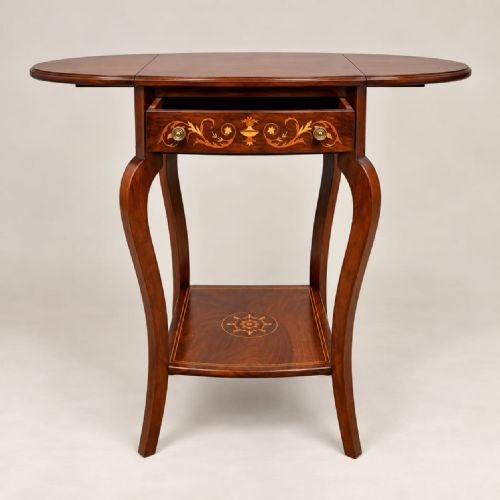
A table whose top or frieze is patterned with contrasting woods, brass or bone set into the surface, used for decoration where another maker would have carved.
What Are Inlaid Tables?
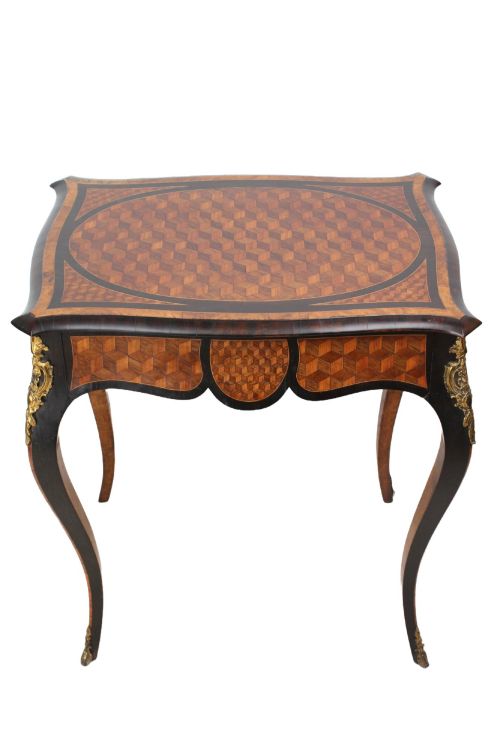
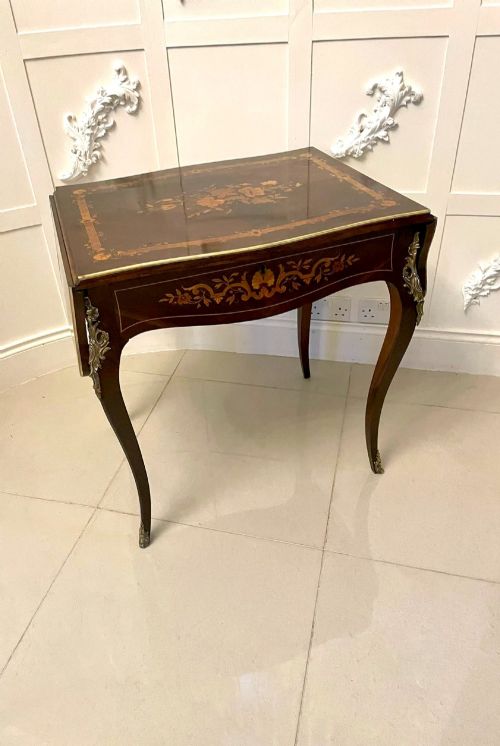
Inlay is a decorating method, not a form, so this heading gathers small and medium tables of many shapes. What holds them together is contrasting material let into the surface: fine lines of stringing, floral marquetry, geometric parquetry, or metal and bone. Dealer titles are usually built from three words - timber, period and use.
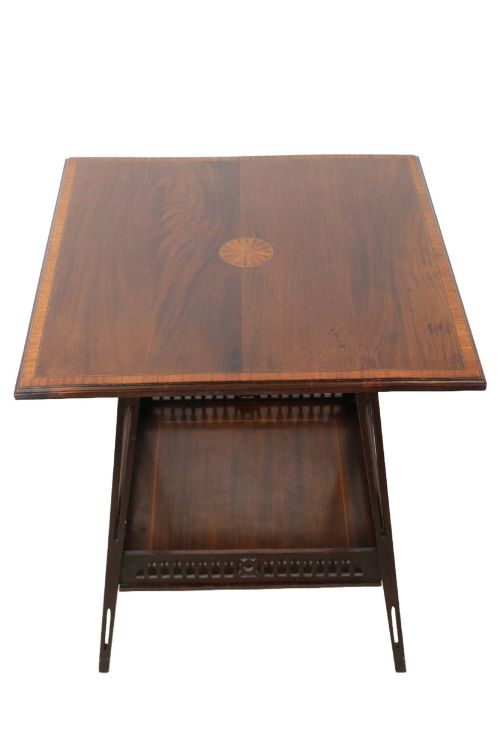
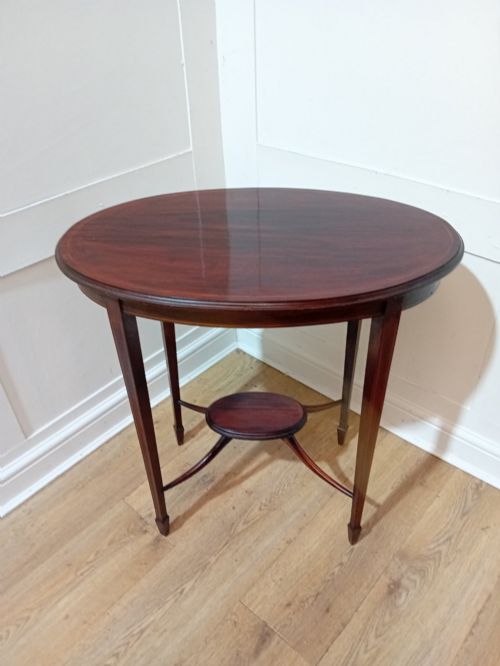
The table you'll meet most often is a small mahogany occasional, side or lamp table of Edwardian or late Victorian date with light-wood stringing or a little marquetry. Mahogany is named in a third of all titles on Sellingantiques, with Edwardian and Victorian close behind, and near-identical oval occasional tables run through the lower and middle of the range.
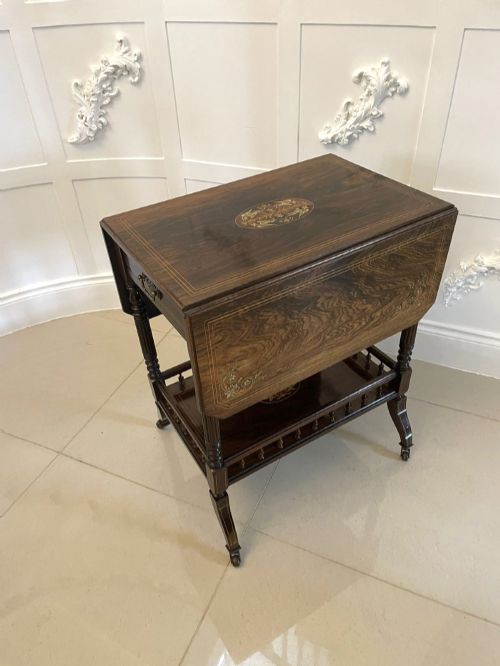
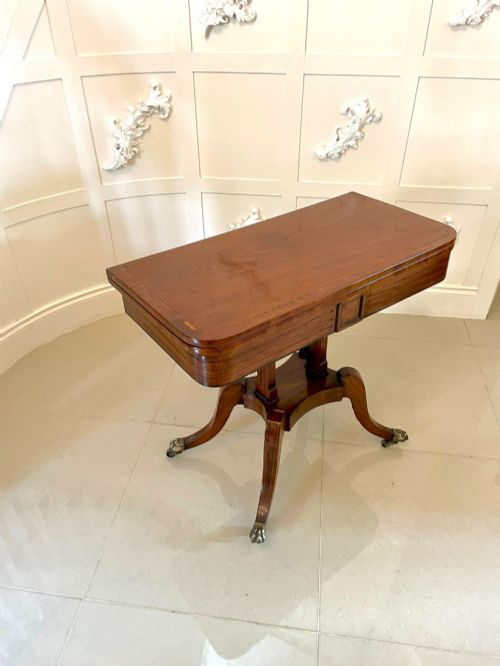
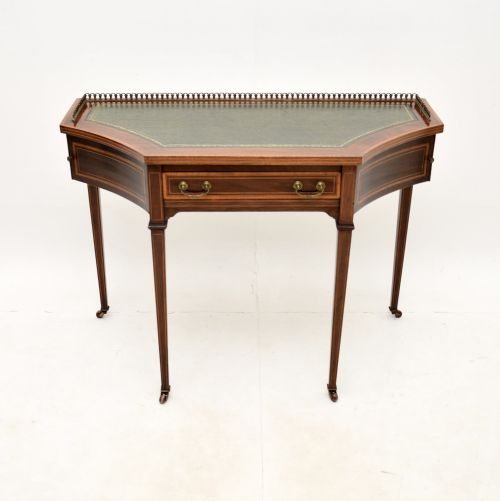
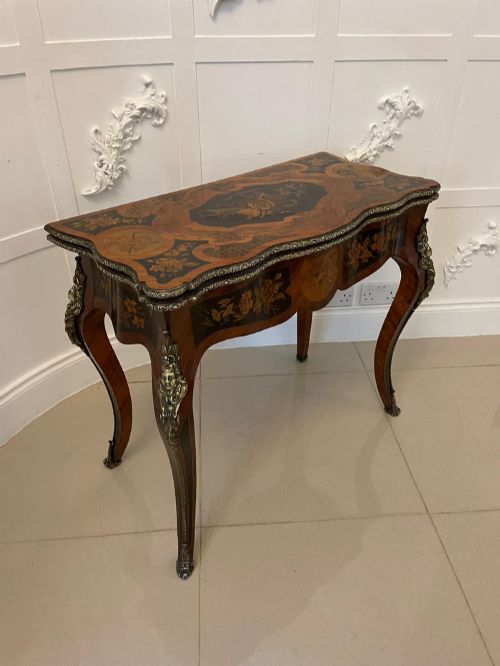
Three other groups sit alongside it. Victorian burr walnut and rosewood centre, loo, card and games tables with marquetry make up about a quarter. Regency and Georgian rosewood and mahogany card, sofa and Pembroke tables, often with brass inlay, are about a fifth. A smaller strand covers Indian, Anglo-Indian and Middle Eastern work in bone, brass and mother-of-pearl, with French and Continental marquetry, parquetry and nests under a tenth.
Dating is loose by convention. Well under half the listings commit to a clean year, and the largest single label is '19th Century', which outnumbers both Edwardian and Victorian. Treat 'Victorian' or 'Georgian' in a title as shorthand for a reign rather than a date, and note that the 1900s to 1920s buckets together outweigh any single earlier decade.
Where The Range Divides
The inlay itself does most of the sorting. A plain mahogany occasional table with stringing round the top sits low; marquetry pushes upward, and the highest sampled titles are large marquetry centre tables in Irish yew, walnut and kingwood, along with specimen-wood tops. Marquetry is named in around a tenth of titles, and it shows in where those pieces land.
Timber runs the same way. Mahogany is the commonest word in the category and dominates the lower samples, while burr walnut, rosewood, satinwood and exotics such as kingwood, amboyna, thuya and yew cluster at the upper end. Form matters too: centre, card, sofa, drum and library tables carry more weight than wine and lamp tables, which gather at the bottom.
Two other things lift a piece. A firm's name, whether stamped or offered as an attribution, puts sampled titles well above the median. So does scale and completeness - pairs of card, console and side tables, and graduated nests, including quartetto sets of four, recur through the upper range. 'Pair' and 'nest' each appear in well over a hundred titles.
Retail Price Guide 2026
Typical UK retail prices for inlaid tables, calculated from the Sellingantiques database of over a million retail prices indexed since 2003. This retail price guide relies exclusively on Sellingantiques data; no external sources or auction records are used, so the figures do not describe the wider market.
Mahogany is named in a third of inlaid table titles on Sellingantiques, and burr walnut in nearly one in ten.
Gillows·Edwards & Roberts·Maple & Co·Maison Millet·Collinson & Lock
The Antique Inlaid Tables Glossary
- Stringing
- Fine contrasting lines let into the surface. The commonest form of inlay on Edwardian mahogany pieces, usually outlining a top, frieze or leg.
- Marquetry
- Pictorial or floral patterning built from shaped veneers. Named in around a tenth of titles and a regular feature of the Victorian walnut centre and games tables.
- Parquetry
- Geometric inlay in repeating blocks or lozenges, rather than flowers or scenes. Turns up in the French and Continental strand in particular.
- Crossbanding
- A border of veneer laid with the grain running across the edge, framing a top. Named in several titles alongside stringing.
- Brass inlay
- Metal lines and motifs let into rosewood or mahogany. Concentrated in the Regency card and sofa tables, and 'brass' appears in a couple of hundred titles.
- Bijouterie table
- A display table with a glazed lift-up top, made to show small objects. Around 128 titles use the term.
Frequently Asked Questions
What timber are inlaid tables usually made from?
Mahogany is named in a third of the titles, which is why the small Edwardian occasional and side table is the face of the category. Walnut comes next, then rosewood and satinwood.
Burr walnut is the pairing to watch, appearing in 368 titles. Rarer timbers - kingwood, amboyna, thuya, yew - show up mainly on the larger marquetry centre tables.
How many are for sale in a year?
Around 412 inlaid tables are listed on Sellingantiques in a year, and 310 different dealers have offered one at some point.
That spread tells you something useful: this is a form almost every general furniture dealer carries, not a specialist corner.
Which forms turn up most often?
Occasional and side tables lead, with roughly 480 titles each. Card tables are next at just under 400, then centre tables, games tables and lamp tables.
Sofa, Pembroke and demi-lune tables cluster in the Regency and Georgian group. Bijouterie tables, with their glazed lift-up tops, run to over a hundred titles.
Do inlaid tables come in sets?
Yes, and it's a real feature rather than an oddity. 'Nest' appears in 139 titles and 'pair' in 142.
Quartetto nests of four graduated tables recur throughout the range, as do pairs of card, console and side tables. Sets sit higher in the range than single tables of the same type.
Are there non-European inlaid tables in this category?
A small but steady strand. Bone, brass and ivory inlaid Hoshiarpur shisham tables of around 1880 to 1900 turn up repeatedly in the sampled listings.
Alongside them come Syrian and Damascus mother-of-pearl octagonals, Manipuri teak, Kashmir marble, and Moorish and Egyptian examples.
How old are inlaid tables likely to be?
The dealer-supplied dates run from 1750 at the earliest to 1960 at the latest. Only 1,733 of 3,928 listings name a clean year.
Among the rest, '19th Century' is the largest label, ahead of Edwardian and Victorian. Regency accounts for 265 listings, and the 1900s to 1920s decade buckets together outweigh any single earlier decade.