



Antique Demilune Tables
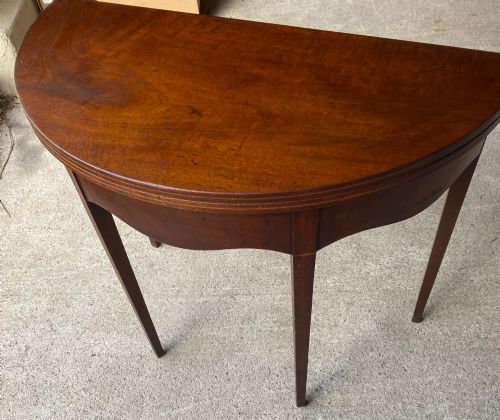
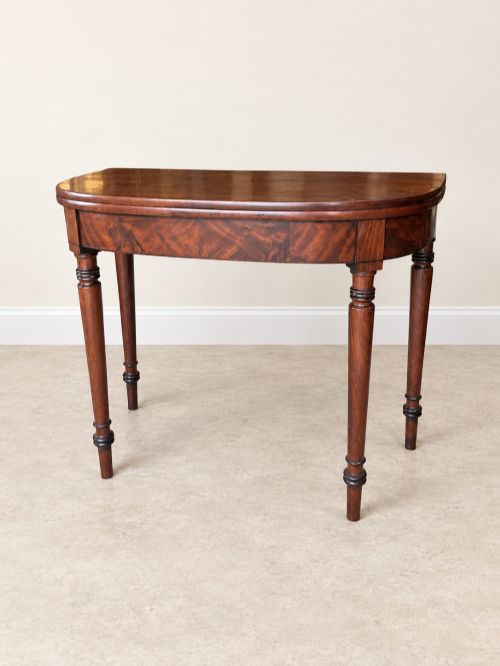
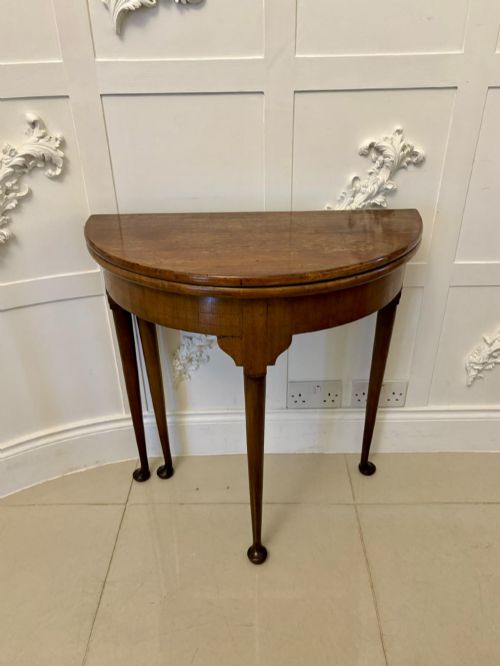
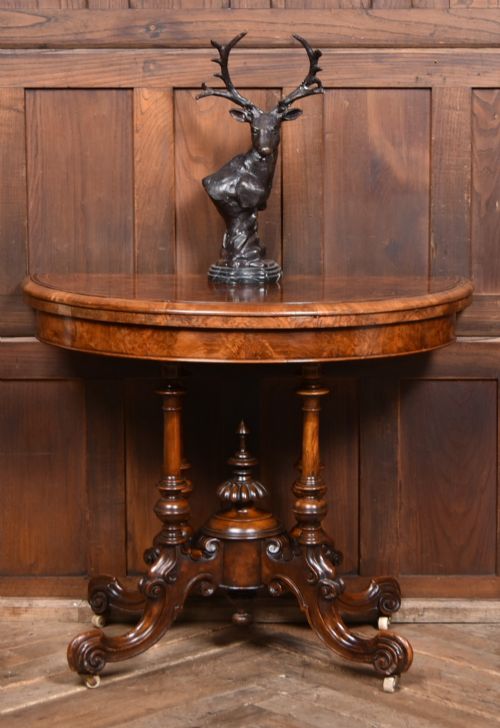
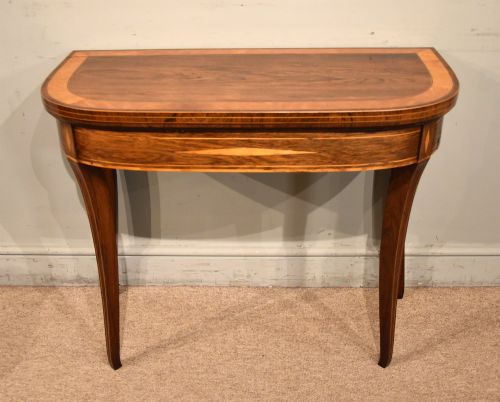
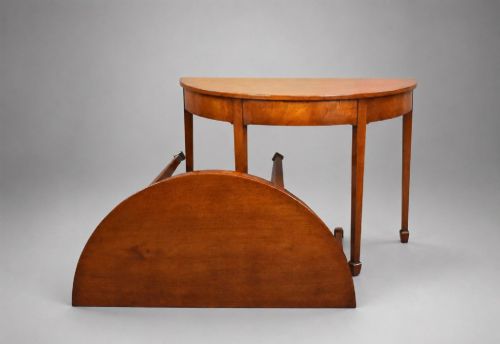
A demilune table is a half-round table, made either to stand flat against a wall or to fold open into a circle for cards and tea.

Antique Demilune Tables
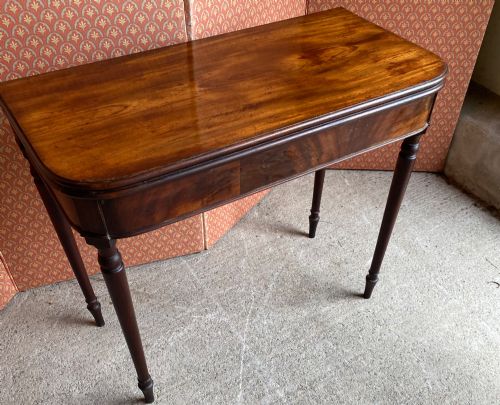
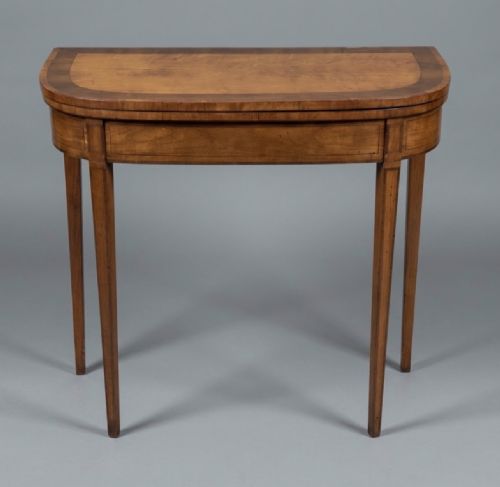
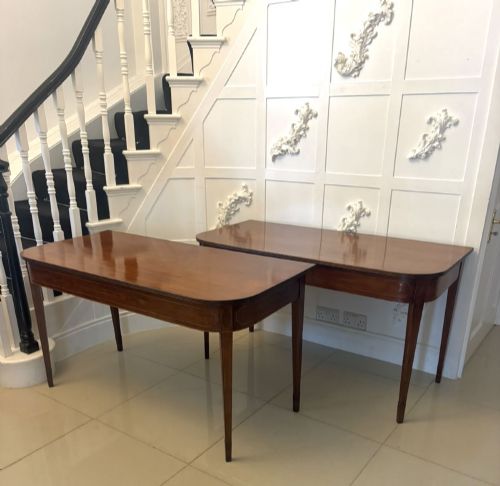
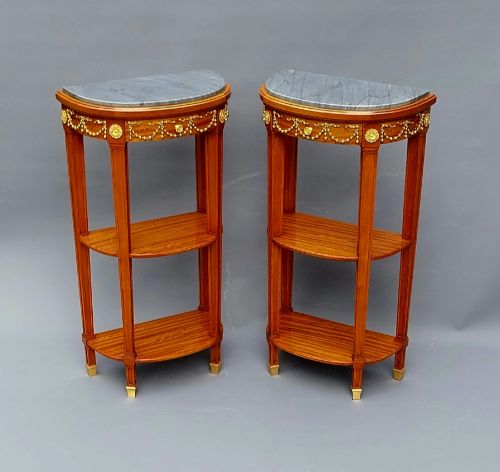
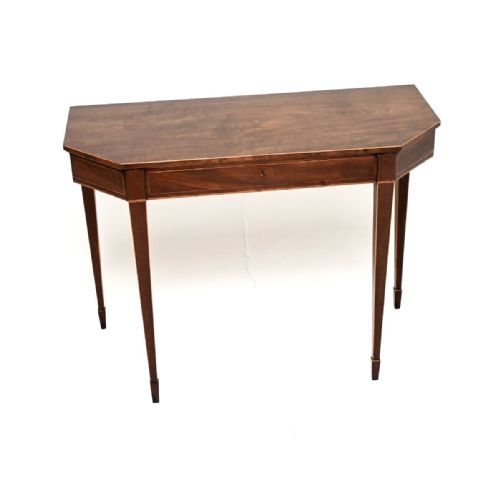
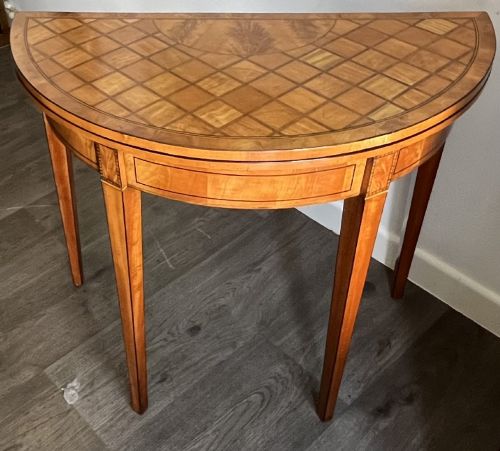
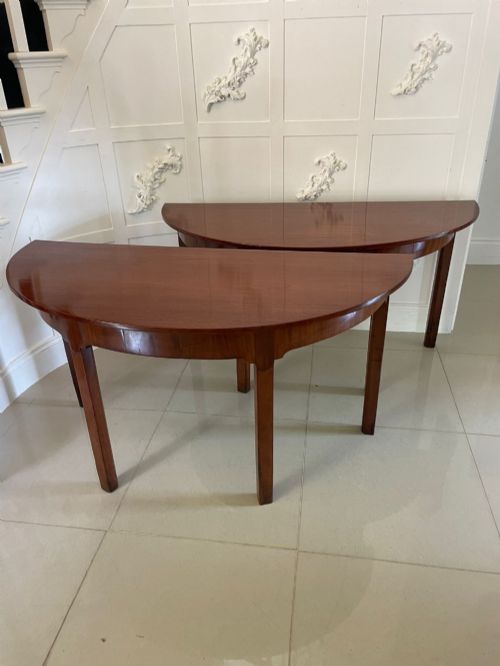
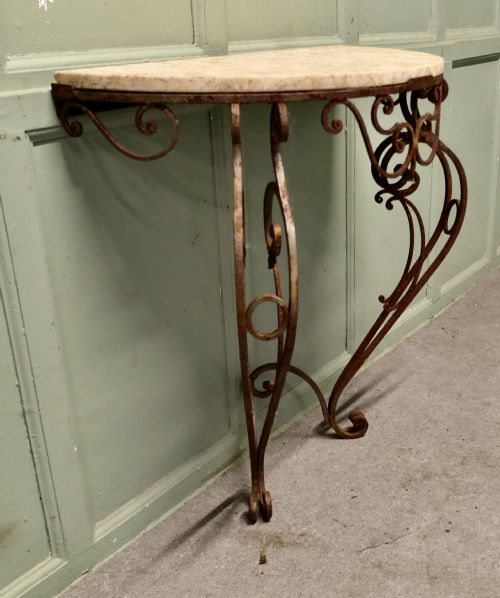
The heading covers a spread of related half-round forms. Fold-over card and tea tables, whose semicircular top swings open onto the frame to make a circle. Console and hall tables shaped to sit against a wall. D-end side tables, often made in twos. The straight back edge is what they share.
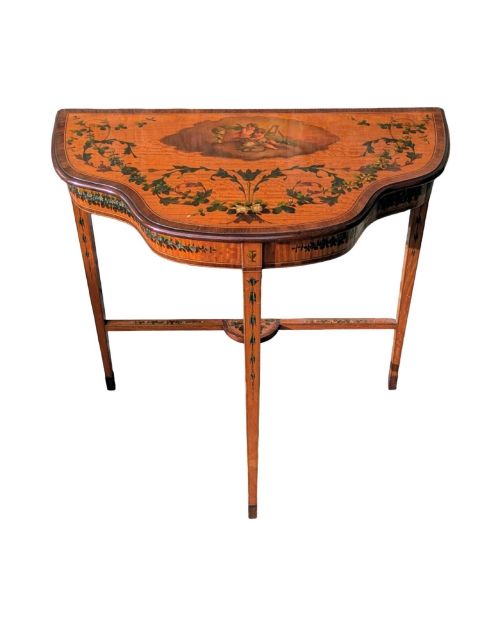
Mahogany dominates the titles, with satinwood, walnut and painted or gilded surfaces as the recognised alternatives. The most likely piece you'll meet is a mahogany half-round table listed either as a console or hall table, or as a fold-over card or tea table, and dated Georgian or George III.
The shape belongs to the neoclassical taste of the later eighteenth century, when semicircular tops suited both wall furniture and folding play surfaces. It was revived through the nineteenth century and again in the early twentieth. Dealer dates on Sellingantiques run from 1750 to 1930, eighteenth and nineteenth century almost evenly split, with a solid group of 1920s and Edwardian pieces behind them.
Period labels here are often broad. '18th Century' and '19th Century' get used as catch-alls, and a title occasionally carries a year that sits oddly with the period tag, so the title text and the date field are worth reading together. Continental and regional work turns up thinly but steadily: Swedish, Italian, Dutch, French, Genoese, Irish and Scottish.
Where The Range Splits
Timber and surface do most of the work. Satinwood and inlaid pieces cluster in the upper half of the range, with satinwood card and console tables among the highest-priced entries. Marquetry, parquetry, painted decoration and marble tops sit up there too. Plain oak and mahogany D-end hall tables occupy the bottom.
Date matters as much as material. Titles reading 'George III', 'Sheraton period' or 'late 18th century' sit high; 'Sheraton revival', 'Queen Anne Style', 'Georgian Style' and 1920s-dated tables sit low. The same half-round outline, made a century and a half apart, lands in different parts of the range.
Pairs push upward, and they aren't a curiosity: one title in five describes two tables, including matched pairs and one entry pairing card tables with a matching sofa table. Mechanism counts as well, with triple tops surfacing only twice in the whole sample. Titles using 'attributed to' or 'in the manner of' appear only in the upper part of the range.
Antique Demilune Tables Retail Price Guide 2026
Typical UK retail prices for demilune tables, calculated from the Sellingantiques database of over a million retail prices indexed since 2003. This retail price guide relies exclusively on Sellingantiques data; no external sources or auction records are used, so the figures do not describe the wider market.
18th Century is the period label used most on Sellingantiques for demilune tables, with 19th Century close behind and Georgian third.
The Antique Demilune Tables Glossary
- Demilune
- Half-moon, meaning a semicircular top. Written as demilune, demi lune or demi-lune, and the same shape also appears as D-end, D-shaped and half moon, so one form carries at least six spellings.
- Fold-over top
- A hinged semicircular leaf that swings open onto the frame to give a round surface. Also written turn-over.
- Card table
- A fold-over table with a playing surface inside. Roughly a third of titles use the word, making it the commonest single use.
- Console table
- Made to stand against a wall, the half-round shape following that purpose. The biggest single group on Sellingantiques.
- Pier table
- A console for the pier of wall between two windows. Turns up a handful of times.
- Crossbanded
- A border veneer laid with the grain running across the edge, common on the satinwood examples.
Antique Demilune Tables: Frequently Asked Questions
Are demilune tables always mahogany?
No, but mahogany is the default, appearing in more titles than every other timber put together.
Satinwood and walnut follow it, with painted or gilded surfaces a smaller group again. Rosewood, oak, kingwood, maple, padouk and burr yew each turn up in ones and twos.
What is the difference between a console and a card table?
A console is fixed in shape and made to stand against a wall, half-round because it needs a flat back. A card table folds: the semicircular top is hinged and opens onto the frame to make a circle.
Both are listed as demilune, and between them they account for most of the category.
How often do these come up for sale?
About thirty a year come to market on Sellingantiques, and 114 different dealers have listed one.
That spread tells you it's a form almost every furniture dealer meets rather than a specialist's line.
Do demilune tables come in pairs?
Often enough to be a feature of the category. Around one title in five describes two tables.
These include matched pairs assembled from separate tables, and one entry offering a pair of card tables together with a matching sofa table.
Which periods do these tables cover?
Dealer-entered dates run from 1750 to 1930. The eighteenth and nineteenth centuries are almost evenly represented, with Georgian and Regency labels overlapping both.
There is also a substantial early twentieth-century group, taking in 1920s, 1900s and Edwardian pieces. A few seventeenth-century entries appear but sit at the edge of the category.
What is a triple-top demilune?
One with two hinged leaves rather than one, giving three surfaces instead of two.
It is uncommon in this category, appearing only twice across the whole sample.