
Antique Side Tables
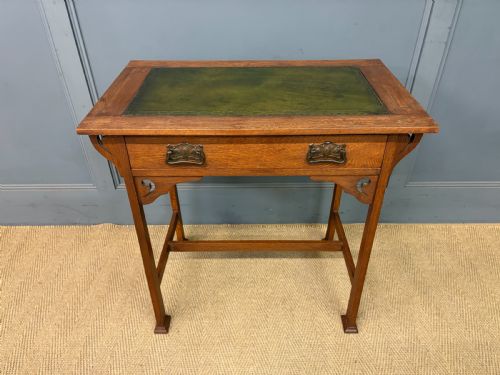
A side table is small occasional furniture, made to stand at the side of a room or against a wall for candles, tea, cards, writing and drinks.
Antique Side Tables
The category is a catch-all. The same object gets sold as a side, lamp, hall, console, occasional, wine, writing, work or tea table, and often several of those words land in one title. Those names describe the intended use, not a different way of building the table.
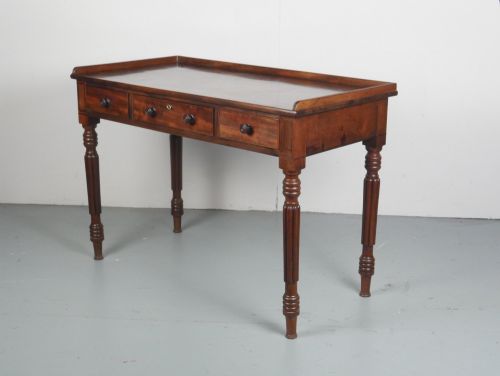
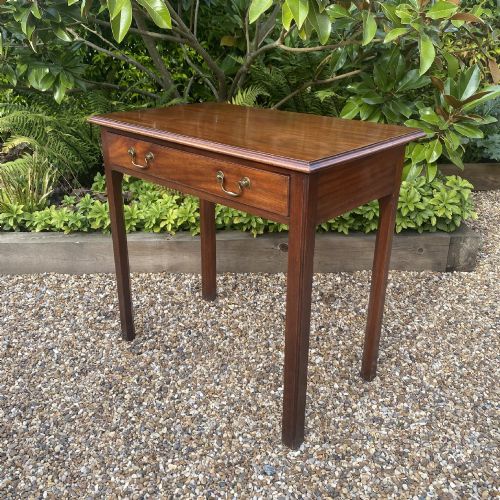
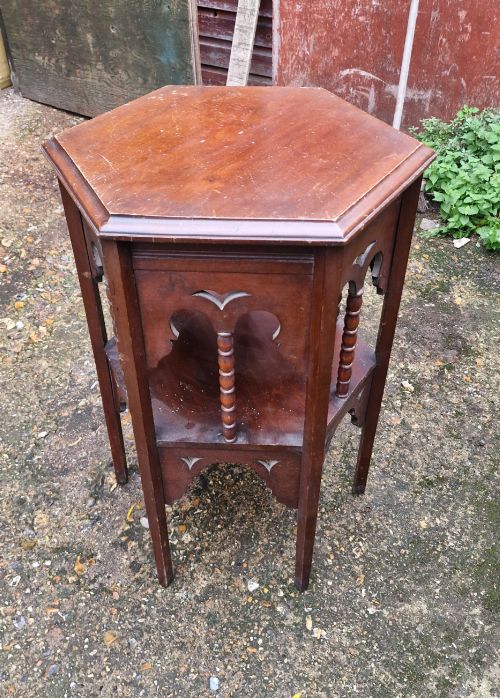
The version you'll meet most often is a rectangular table on four legs with one or two frieze drawers, in mahogany or oak. Mahogany appears in 3,635 titles on Sellingantiques and oak in 1,677, so timber, rather than shape, is the commonest thing a dealer leads with. Occasional, lamp, console and hall all run into the hundreds behind them.
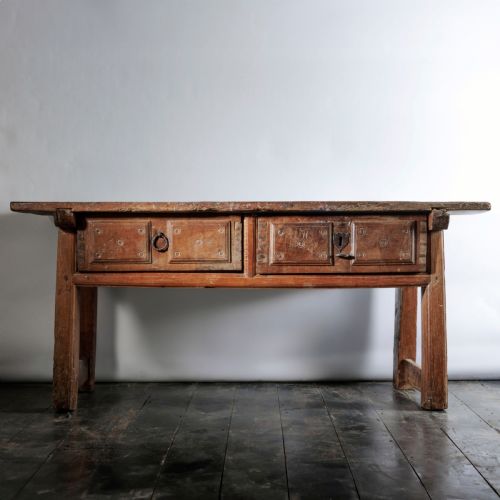
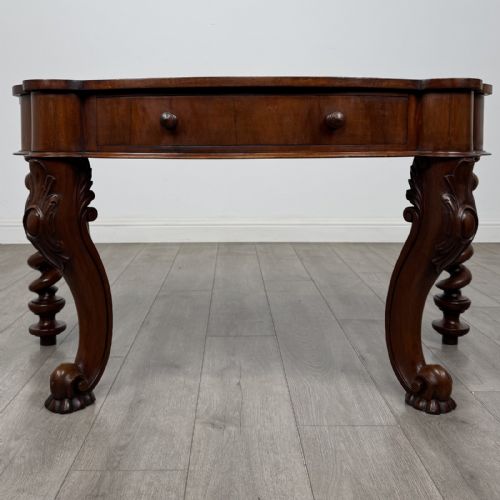
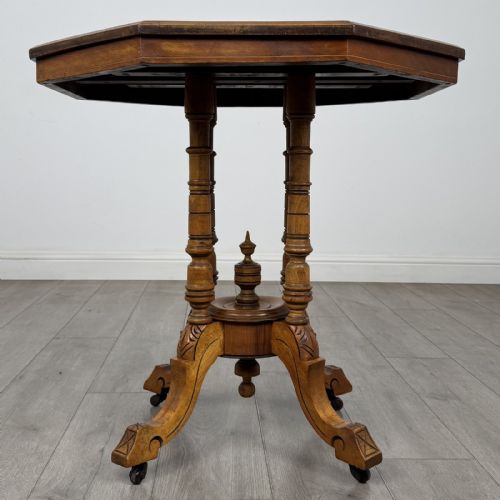
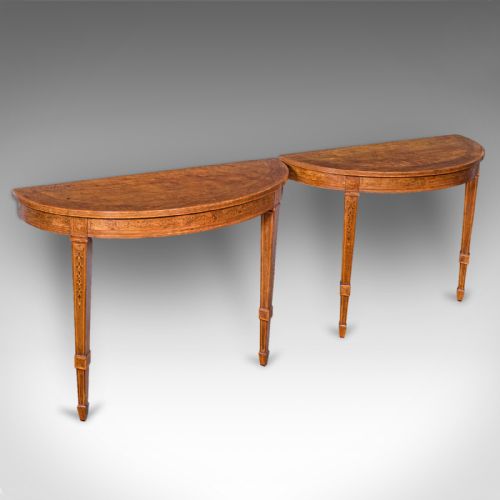
Alongside the plain boards sit the shaped and mechanical forms: demi-lune, bow-front and serpentine, drop-leaf, tilt-top, tripod, Pembroke and Sutherland. Console, hall and serving tables make up a smaller group, longer and made to stand against a wall. Continental work turns up throughout, French most often, with Anglo-Indian, Chinese, Japanese, Syrian and Spanish pieces forming a persistent minority. Around one listing in twenty is a pair or a graduated nest rather than a single table.
Dating is broad. Dealer dates run from 1660 to 1960, though only 3,798 of 10,371 listings carry a clean year. "19th Century" is the largest label bucket, with 18th Century, Georgian, Victorian and Regency behind it, and the 1920s, 1900s and 1930s well represented. Read those tags as spans.

Where The Range Splits
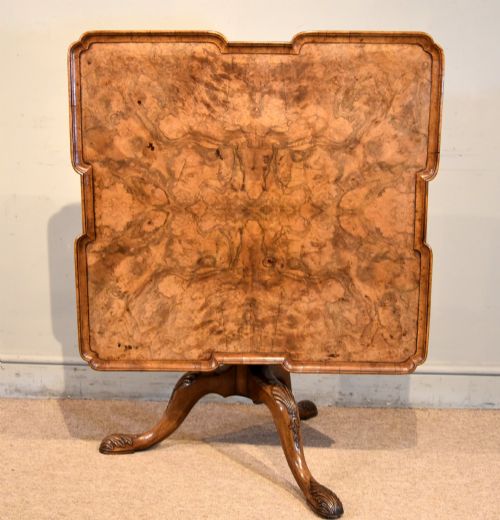
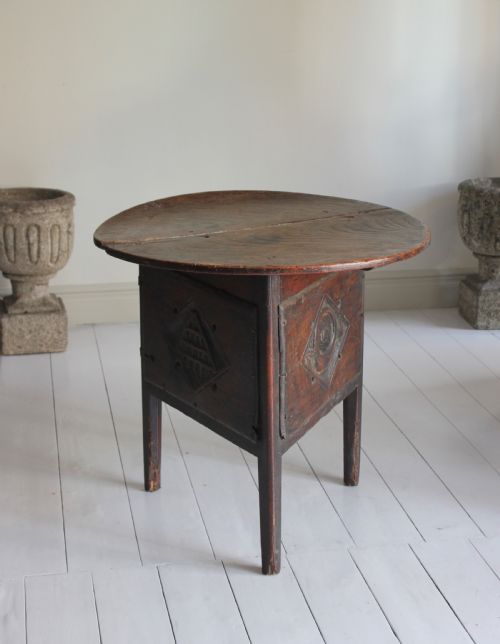
Timber does most of the work. Burr walnut, rosewood, satinwood and marquetry recur through the upper end, burr walnut most often on Sutherland, work and card tables. Plain stained and stripped pine sits at the bottom, along with plain turned-leg country tables in oak.
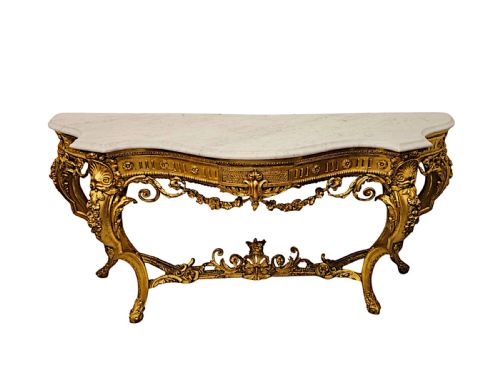
Scale and number matter next. Pairs dominate the top of the sampled range, and graduated nests of three, four and even five tables sell above comparable singles. Long console and serving tables, particularly giltwood or marble-topped, hold the very top, while the small four-legged table with a drawer fills the middle.
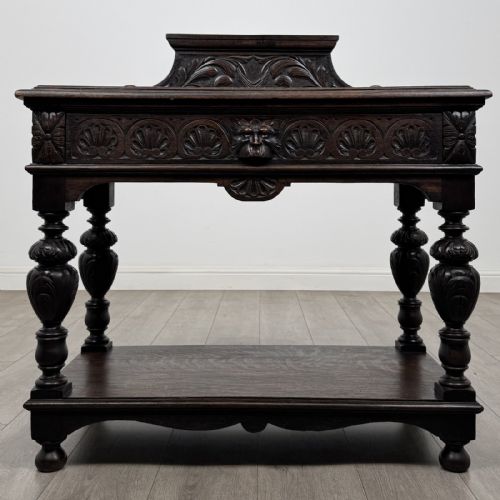
Decoration and a name lift the rest. Inlaid, carved and painted work, and specimen and pietra dura tops, sit above plain surfaces. A firm's name raises the ask too, though dealers use "attributed to", "in the manner of" and "design" freely, and those phrases carry less weight than a stamp or a label.
Antique Side Tables Retail Price Guide 2026
Typical UK retail prices for side tables, calculated from the Sellingantiques database of over a million retail prices indexed since 2003. This retail price guide relies exclusively on Sellingantiques data; no external sources or auction records are used, so the figures do not describe the wider market.
The dearest side tables ever to sell on Sellingantiques were a fine pair of George III burr yew-wood and mahogany D-shaped side tables, in November 2025.
Gillows·Edwards & Roberts·Maple & Co·Liberty & Co·Holland & Sons·Hille·Heal & Son
The Antique Side Tables Glossary
- Frieze drawer
- A drawer set in the rail beneath the top. "Single drawer" and "two drawer" are the commonest qualifiers you'll see in these titles.
- Console table
- A table meant to stand against a wall rather than free-standing, and one of the biggest groups in the category with 757 titles.
- Occasional table
- The catch-all term for a small movable table with no fixed job. It appears in 885 titles, more than any other function word.
- Demi-lune
- A half-moon top, usually made to sit flat against a wall. Bow-front means a single outward sweep at the front; serpentine a shallow S.
- Pembroke
- A small drop-leaf table with two short hinged flaps and a drawer. A Sutherland is narrow-bodied with very deep flaps, and turns up repeatedly in burr walnut.
- Quartetto
- A graduated set of three or four tables that stack together, also sold as a nest. Sets of five appear now and then.
Antique Side Tables: Frequently Asked Questions
What's the difference between a side and occasional table?
Very little in practice. Both names cover the same small movable table, and dealers pick whichever word suits the room they picture it in.
Titles bear this out. One sampled set of tables was described as sofa, lamp, side, occasional, low, coffee and wine, all in the same line.
Which woods are most common?
Mahogany and oak, by a distance. Mahogany appears in 3,635 titles and oak in 1,677, together accounting for half the category.
At the decorative end the timbers change. Burr walnut, rosewood and satinwood recur, with marquetry work alongside them. Pine titles cluster at the plain end.
How old are most side tables for sale?
Dealer dates run from 1660 to 1960, though fewer than four in ten listings carry a clean year.
The labels are broad. "19th Century" is the largest single bucket, followed by 18th Century, Georgian, Victorian and Regency, so treat any of those as a span rather than a date.
Twentieth-century work is well represented too, particularly the 1900s, 1920s and 1930s.
Are pairs of side tables often listed?
About one title in twenty describes a pair rather than a single table.
Pairs sit well above comparable singles in the range, and the top of the category is held largely by pairs of console, giltwood, walnut and marble-topped tables.
What is a Sutherland table?
A narrow-bodied drop-leaf table with very deep flaps, so it folds down to almost nothing and opens out to a usable surface.
In the listings it appears repeatedly in burr walnut, which is the figured timber of choice at the decorative end of this category.
Do non-English side tables turn up?
Yes, as a steady minority. French is the commonest, appearing in 670 titles, with Dutch, Italian, Spanish, Portuguese and Flemish examples alongside.
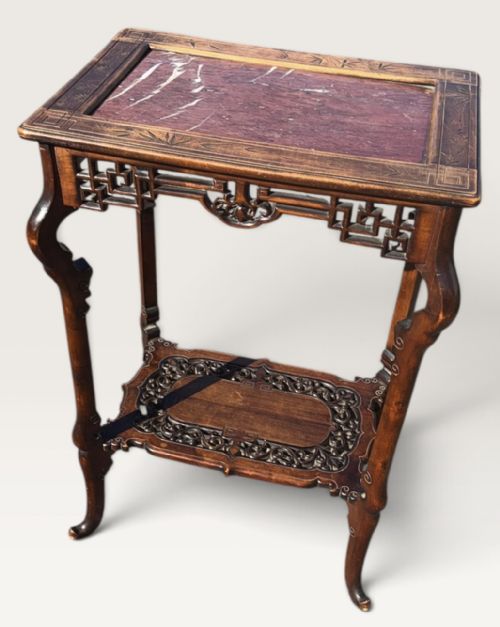
Anglo-Indian and Oriental work forms its own thread: carved elephant-leg tables, Hoshiarpur inlay, Burmese lacquer, Goanese pieces, Chinese hardwood and huanghuali, and Japanese red lacquer nests.