



Antique Bijouterie Tables
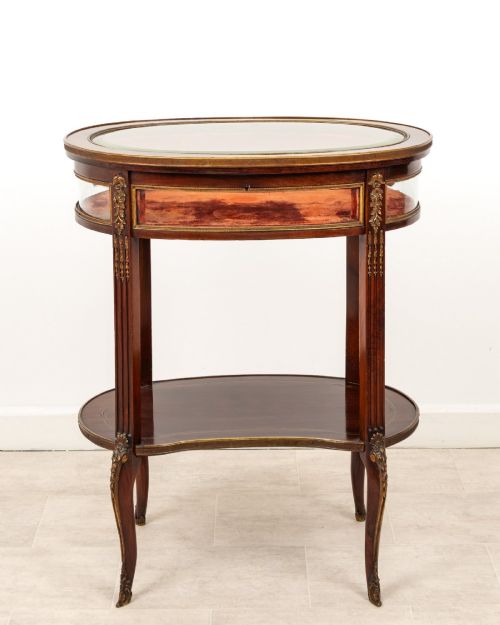
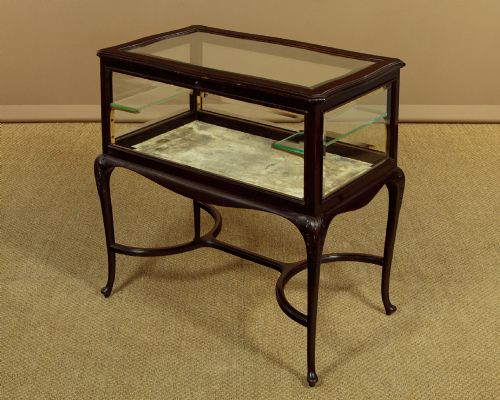
A small occasional table whose top is a glazed hinged or lift-off case, made so jewellery, coins and small curios could be seen without being handled.
Antique Bijouterie Tables
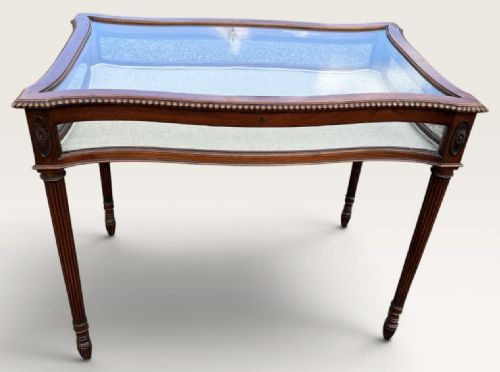
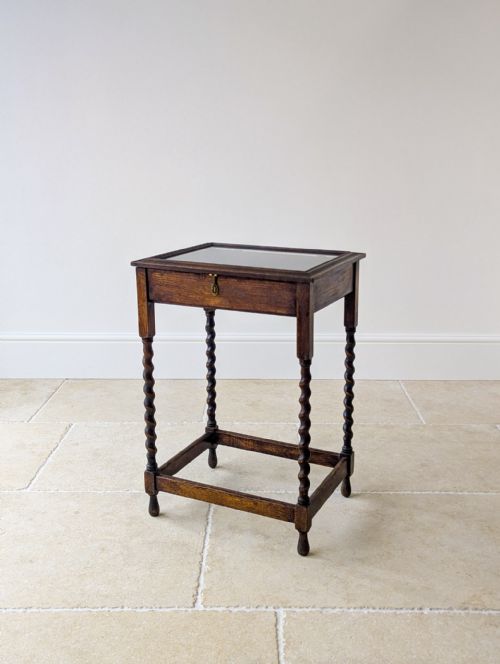
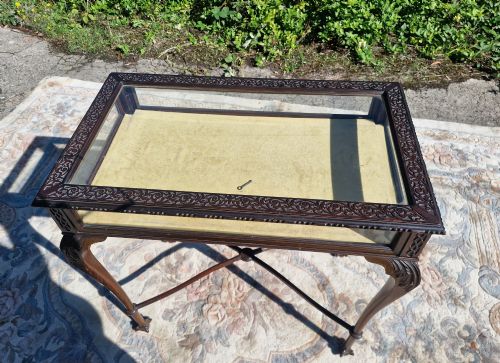
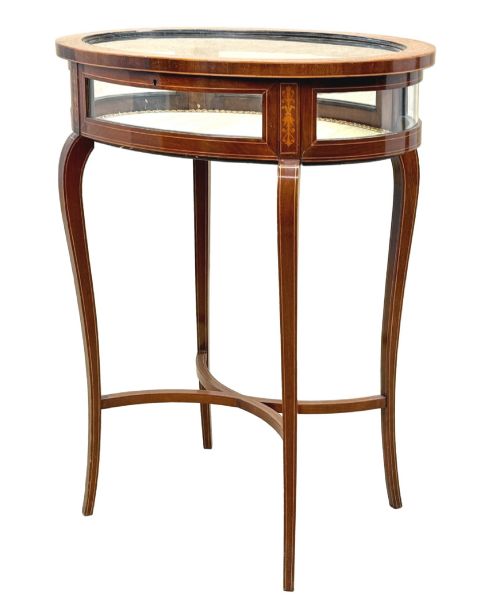
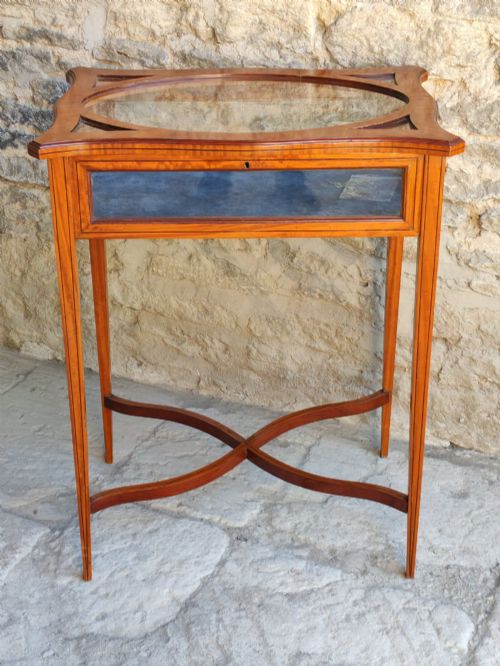
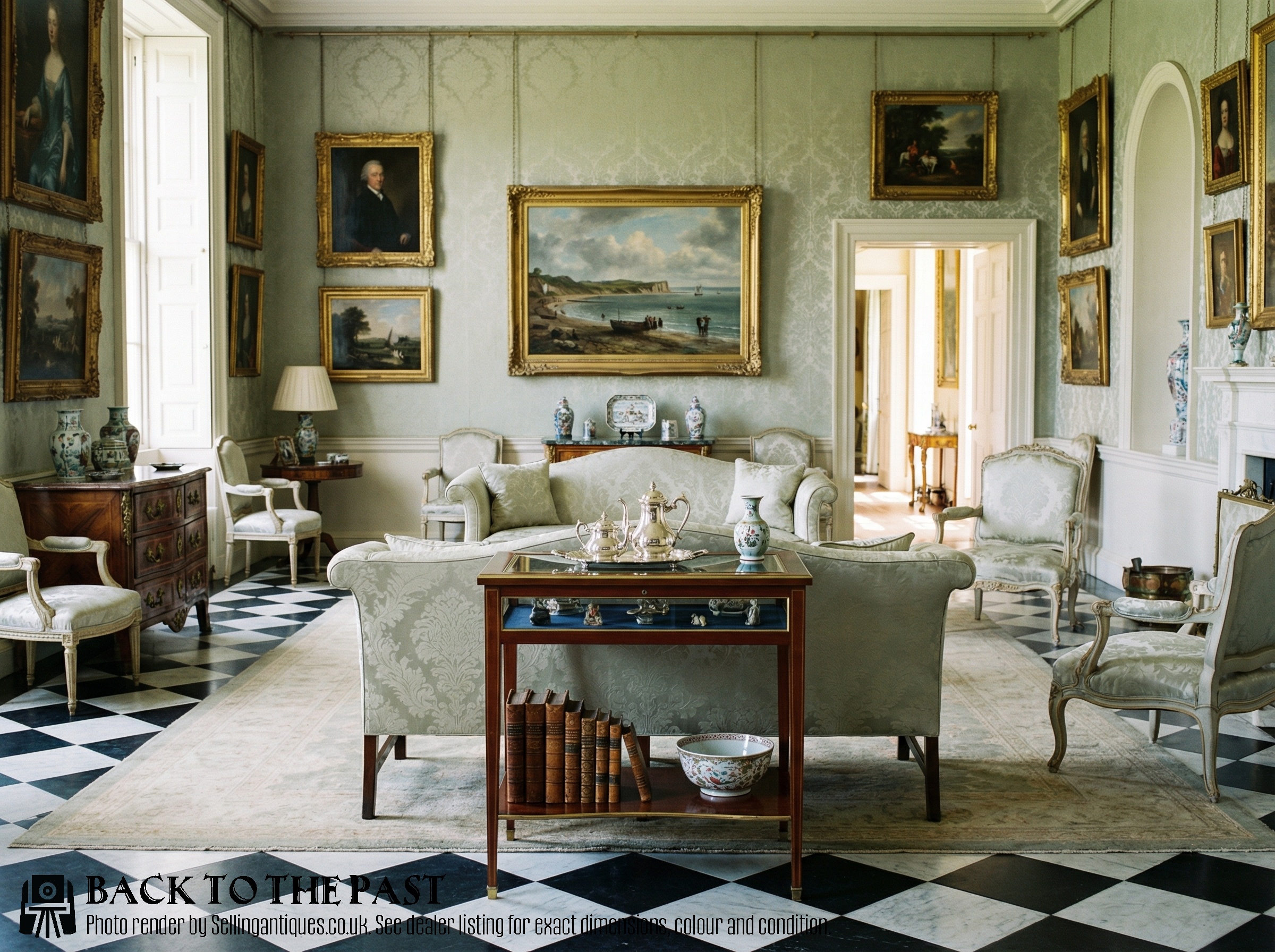
A bijouterie table is a side table with a display case for a top. The glass lid lifts or hinges, the sides are often glazed or open, and the whole thing stands on slender legs. The same object turns up in listings as a display table, a vitrine, a showcase or a cabinet, and dealers use those words interchangeably.
The form appeared in the nineteenth century as drawing-room furniture, combining an occasional table with a glazed case for jewellery, snuffboxes, fans and other small treasures. It was made in quantity in Britain and France into the early twentieth century, and the archive on Sellingantiques reflects that: veneered and inlaid British cabinet work above all.
The table you are most likely to meet is an Edwardian inlaid mahogany one. Mahogany appears in 158 of 389 titles, inlaid in 127, Edwardian in 120, and the recurring title clusters are 'Edwardian inlaid', 'inlaid mahogany' and 'Edwardian mahogany'. Satinwood follows at 57 titles, often described as Sheraton revival, with rosewood, walnut, kingwood and oak behind.
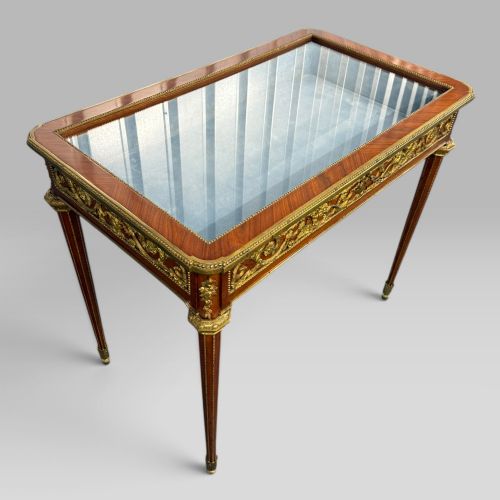
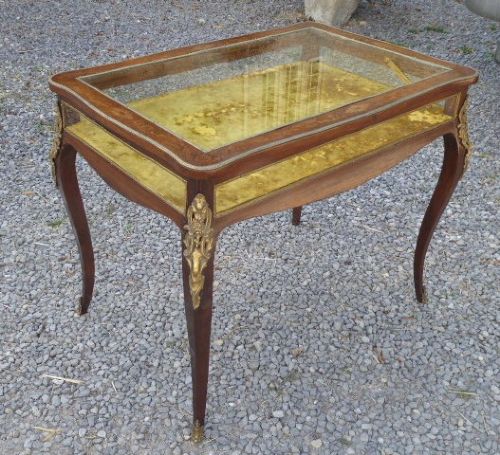
Dates are loose. Only 178 of the 389 listings carry a clean year, and the dealers' own dated field runs from 1800 to 1960, so 'Edwardian' and '19th Century' here mean a bracket rather than a year. Edwardian is the largest single label at 100 entries, and with the 1900s and 1910s groups added, the decades either side of 1900 account for the bulk. A smaller French strand runs alongside: gilt-metal or ormolu-mounted, marquetry-inlaid, and often kingwood rather than line-inlaid English mahogany.

Where The Range Splits
Timber sets the floor and the ceiling. Plain oak and plain mahogany sit at the bottom of the range; satinwood, rosewood and kingwood sit at the top. The archive also throws up one-off timbers - solid ebony from Ceylon, yew, bamboo and lacquer, beechwood, gilt gesso, harewood - each appearing once or twice.
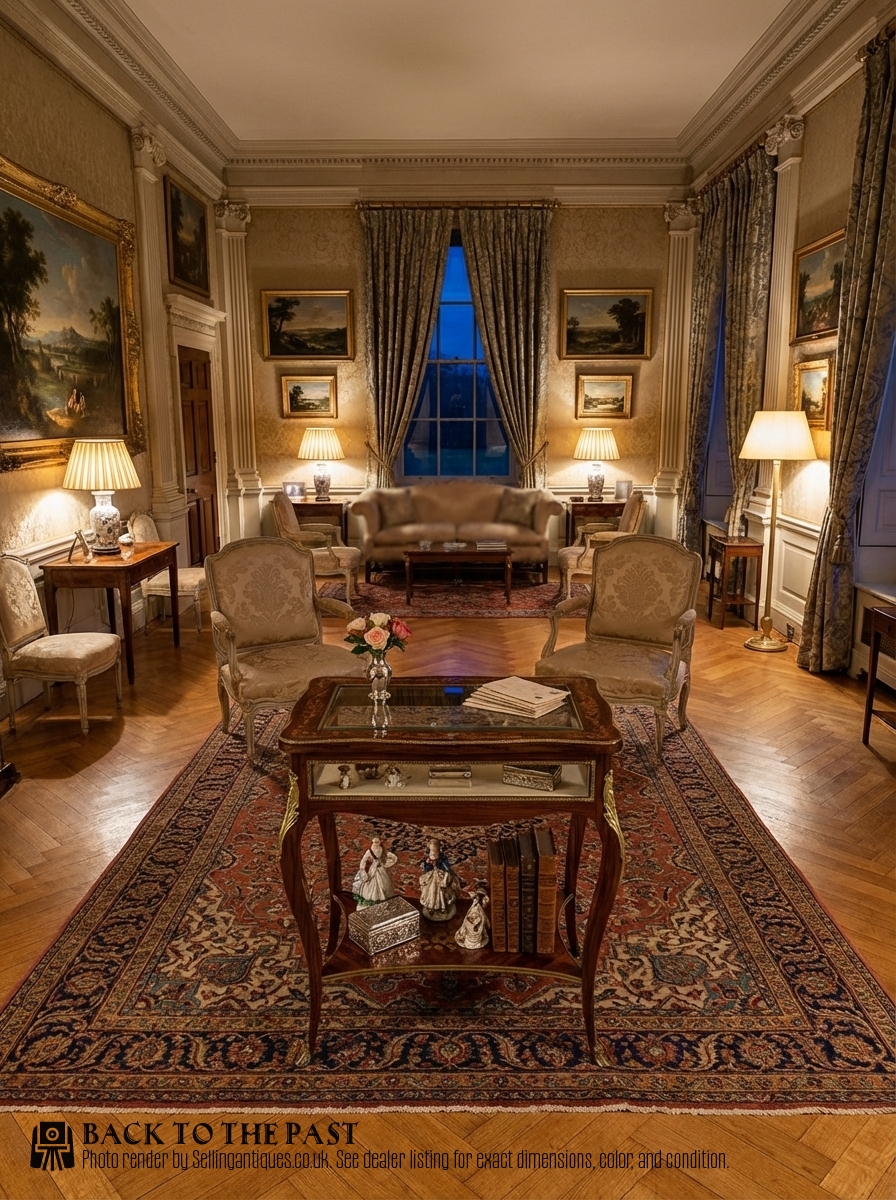
Decoration climbs in steps. Simple line inlay spans the whole range and tells you little on its own. Marquetry, painted satinwood and gilt-metal mounts cluster at the upper end, and it is there that the archive turns French: ormolu-mounted kingwood and rosewood vitrine tables, gilt-bronze mounts, floral marquetry.
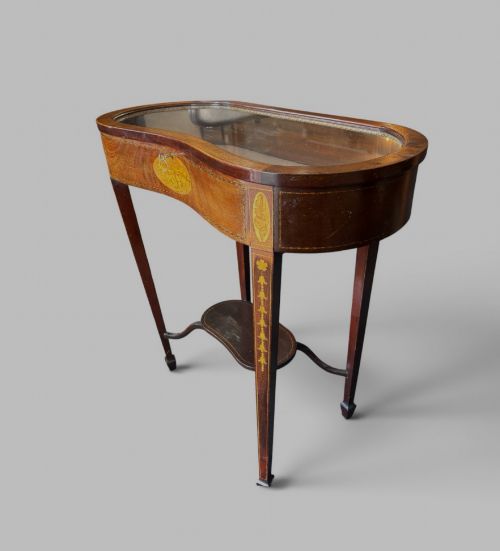
Shape and scale do the rest. Kidney, oval, heart, octagonal, serpentine and clover tops concentrate in the dearer half, above plain rectangles, with kidney the commonest fancy outline. Size counts too, and matched pairs are the real scarcity - only eight titles mention a pair, and they sit almost entirely in the upper reaches. The few titles that name or attribute a cabinet-making firm sit at the very top.
Antique Bijouterie Tables Retail Price Guide 2026
Typical UK retail prices for bijouterie tables, calculated from the Sellingantiques database of over a million retail prices indexed since 2003. This retail price guide relies exclusively on Sellingantiques data; no external sources or auction records are used, so the figures do not describe the wider market.
One small group in the archive had been sign-written for a watch brand, the tables put back to work as shop display.
The Antique Bijouterie Tables Glossary
- Bijouterie
- Small jewellery and trinkets. Applied to a table, it means the top is a glazed case for showing them.
- Display table
- The commonest alternative wording, with 'display' in 148 titles; 'show case' and 'vitrine' cover the same object, vitrine in 20 titles.
- Inlaid
- Decorative woods let into the veneered surface. In 127 titles, and often no more than simple line inlay round the top and legs.
- Marquetry
- Pictorial or floral inlay built up from shaped veneers, named in 11 titles and mostly on the French tables.
- Ormolu
- Gilded metal mounts, in 24 titles, 17 of them phrased as 'ormolu mounted'. Kingwood, in 13 titles, almost always travels with them.
- Sheraton revival
- The late-Victorian and Edwardian taste for pale satinwood and inlay after eighteenth-century models, named in 8 titles.
Antique Bijouterie Tables: Frequently Asked Questions
What was a bijouterie table used for?
The glazed top let jewellery, snuffboxes, fans and other small treasures be looked at without being picked up, while the piece still worked as a small side table in a drawing room.
The archive on Sellingantiques describes the object, not its household history, so the use is what the form itself shows: a case you see into, on legs.
Which wood is most common?
Mahogany, by a wide margin. It appears in 158 of 389 titles, usually with line inlay and usually labelled Edwardian.
Satinwood is second at 57 titles, often described as Sheraton revival or as satinwood and painted. Rosewood, walnut, kingwood and oak follow, and a handful of one-off timbers such as ebony, yew, beech and harewood turn up once or twice each.
Are French examples different from English ones?
Yes, and they read differently in a title. The French group, about a tenth of the archive, runs to gilt-metal or ormolu mounts and marquetry inlay, commonly on kingwood or rosewood.
English work in this category is veneered and line-inlaid, mahogany or satinwood, without the metal. The French tables sit at the top of the range and are a stronger presence in current stock than in the sold archive.
Why do so many say just 19th Century?
Because more than half the archive is dated by reign or century rather than by year. Only 178 of 389 listings carry a clean year, and 55 say nothing more precise than 19th Century.
Read those labels as brackets. Edwardian is the largest single period entry at 100, with the 1900s and 1910s groups behind it, so the form as recorded here is Victorian to Edwardian.
What top shapes do these tables come in?
Rectangular is the baseline. Beyond that, shaped tops are a persistent thread: 14 kidney, 14 oval and 8 heart-shaped titles.
Single instances of octagonal, clover-shaped, circular, serpentine and domed-top examples also appear. The fancy outlines concentrate in the dearer half of the sample.
How often do bijouterie tables come up for sale?
About 41 a year are listed on Sellingantiques, from an archive of 389.
Ninety-seven different dealers have handled one, so it is a form spread thinly across the trade rather than anybody's specialism. Pairs are the scarce thing: eight titles in the whole archive.