


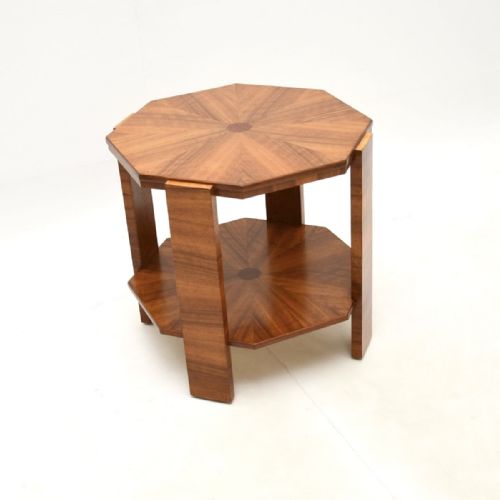
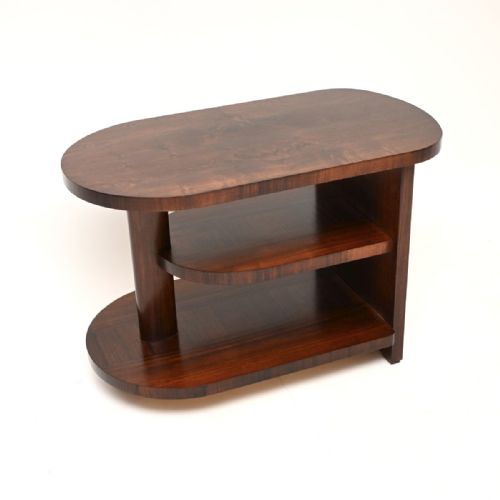
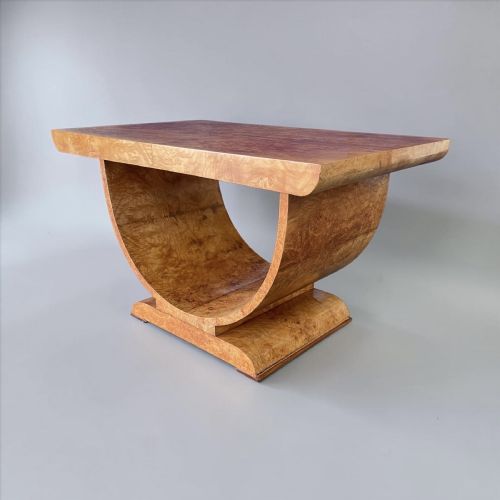
Art Deco Tables
Small and medium tables made between the wars for a more informal way of living, veneered in walnut and sold by use: coffee, side, occasional, console, dining and nests.
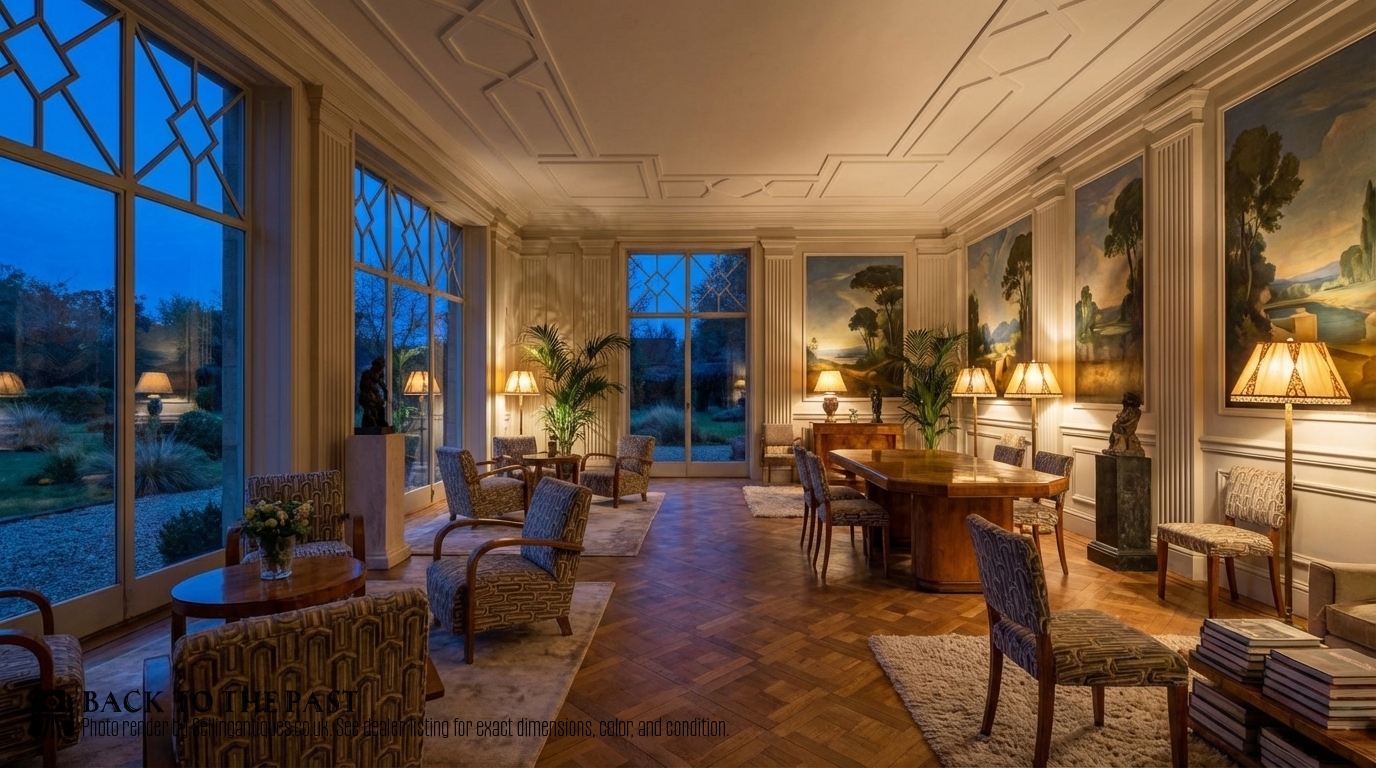
Art Deco Tables
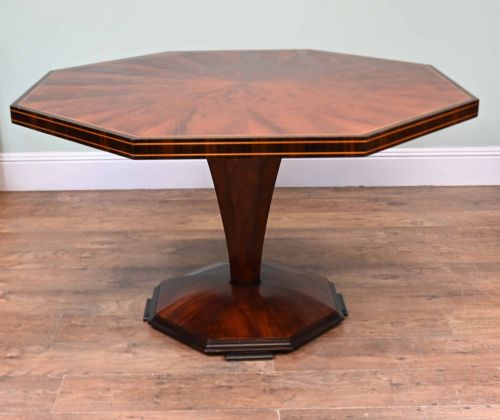
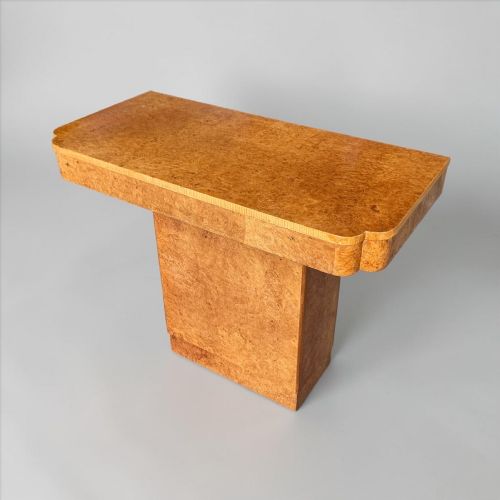
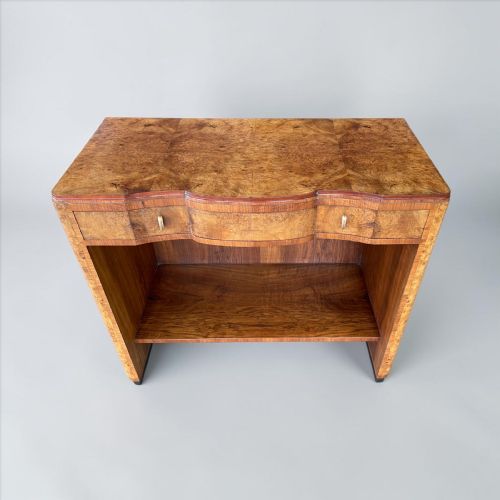
Art Deco furniture takes its name from the 1925 Paris Exposition Internationale des Arts Décoratifs et Industriels Modernes, and the style ran through domestic furniture-making across the 1920s and 1930s. Tables of the period were made for smaller modern rooms: low coffee tables, nests, lamp and console tables, built as veneered figured timbers over shaped carcasses.
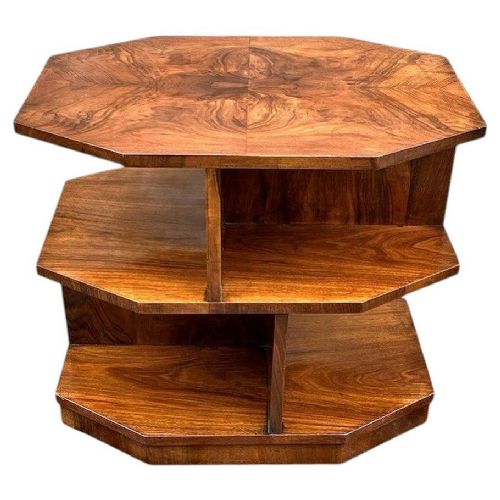
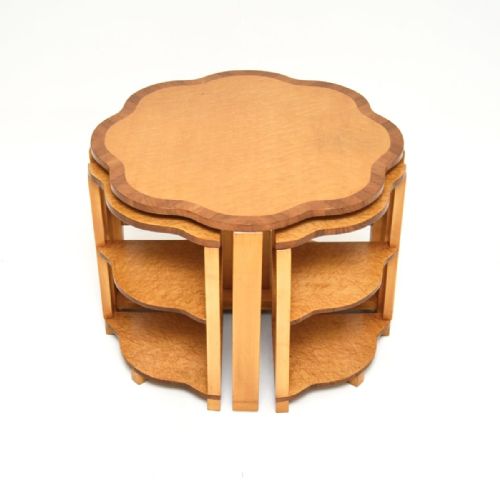
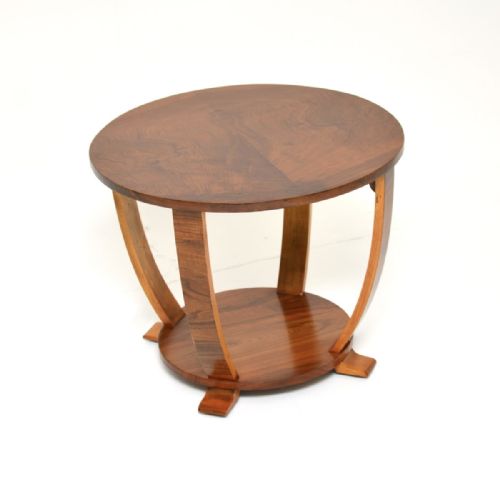
Walnut dominates. It appears in 308 of 796 titles on Sellingantiques, and the use words cluster as coffee, side and occasional, with "walnut occasional" and "walnut coffee" recurring as set phrases. Burr and figured walnut are called out in a large share of those titles, so a figured-walnut coffee or occasional table dated to the 1930s is the single most likely thing you'll meet. Two-tier and three-tier variants turn up throughout.
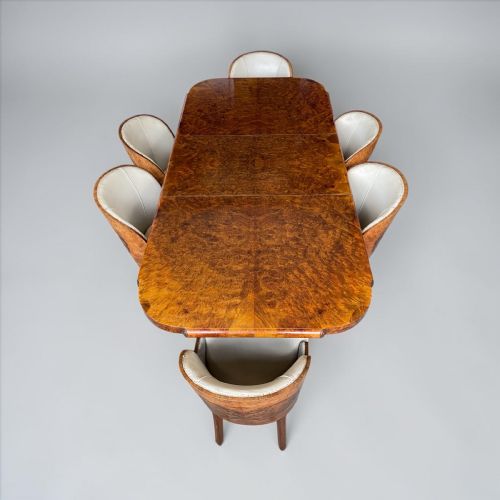
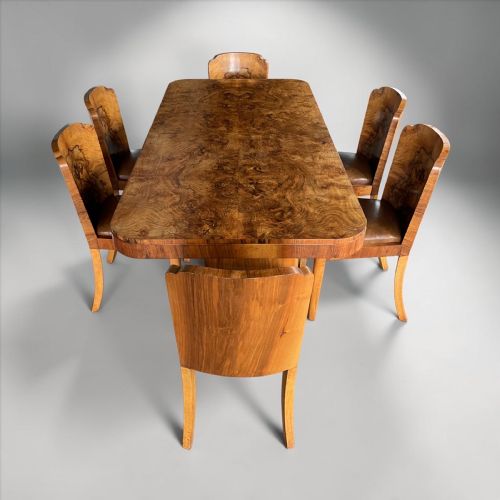
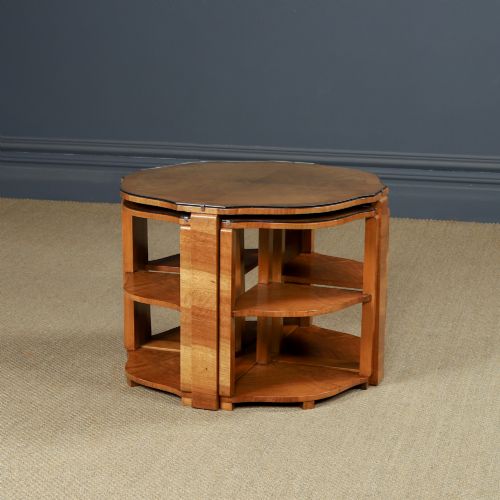
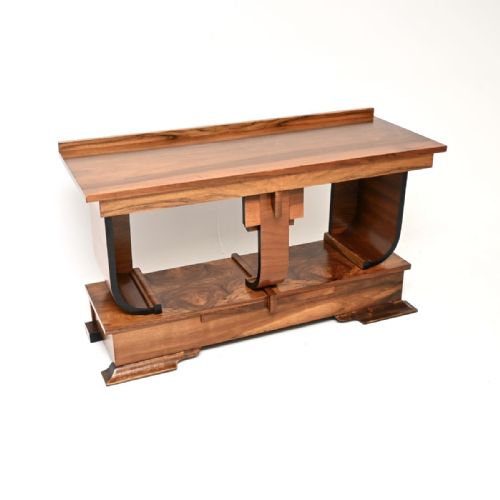
The rest divides into a few clear streams. Nests come as graduated sets of three, four and five, sometimes labelled quartetto or quintetto. Dining tables are about one in eight and often arrive with their chairs, cloud-backed on the better suites. Consoles and centre tables recur, frequently as pairs. A smaller stream is metal, glass and mirror: chrome, wrought iron, cast iron, frosted glass, marble and mirrored tops.
Dating is coarse. Of 779 clean years, 623 sit in the 1930s and 143 in the 1920s, and titles add their own circa freely, so a 1930 in the dated field usually means interwar rather than that year. Origins beyond England are uncommon and cluster French, with single Swedish, Danish, Italian, Finnish, Indian and American pieces scattered through.

Top And Bottom
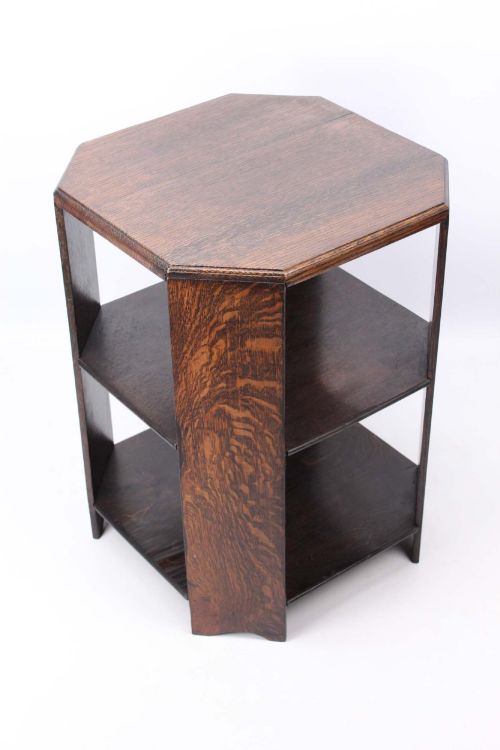
Timber does most of the sorting. Burr walnut, burr maple, bird's eye maple, amboyna, macassar ebony and rosewood sit well above plain oak or an unqualified walnut, and the named exotics surface only once or twice each: palmwood, coromandel, karelian and masur birch, satin birch, Carrara marble. Oak and mahogany, often small limed or dark oak side and book tables, hold the lower reaches.
Completeness pushes hardest of all. A dining table on its own is common enough, but the highest-placed listings read "dining table and six, eight or twelve chairs", and cloud-back chairs appear in only thirteen titles, nearly all of them on burr walnut suites near the ceiling of the range. The largest recorded are two ten-foot burr walnut dining tables from the 1920s, one seating twelve.
Count matters elsewhere too. Nests of three are commoner and sit lower than nests of five, which recur near the top. Consoles and side tables sold as a pair sit above the equivalent single. A named attribution lifts a piece again: Epstein and Hille titles cluster in the upper reaches.
Art Deco Tables Retail Price Guide 2026
Typical UK retail prices for art deco tables, calculated from the Sellingantiques database of over a million retail prices indexed since 2003. This retail price guide relies exclusively on Sellingantiques data; no external sources or auction records are used, so the figures do not describe the wider market.
Walnut is the timber named most often on Sellingantiques, in over three hundred titles. Palmwood, coromandel, amboyna and masur birch appear once or twice each.
Harry and Lou Epstein·Hille
The Art Deco Tables Glossary
- Occasional table
- A small general-purpose table, and the commonest single label in this category. Often paired with coffee or side in the same title.
- Nest
- A graduated set that stows one table under another. Sold in threes, fours and fives, the larger sets sitting higher.
- Burr
- Veneer cut from a knotty growth on the trunk, giving a swirled figure. Claimed in 82 titles, usually walnut.
- Figured
- Veneer chosen for pronounced grain pattern. It appears in 70 titles and is nearly always describing walnut.
- Cloud back
- The scalloped, cloud-outline chair back that comes with many of the dining suites here. Only thirteen titles use the phrase.
- Quartetto and quintetto
- Older trade words for a nest of four or of five. Both survive in titles on Sellingantiques.
Art Deco Tables: Frequently Asked Questions
What wood are Art Deco tables usually made from?
Walnut, by a long way. It's named in 308 of 796 titles, commonly as burr walnut or figured walnut, laid as veneer over shaped carcasses.
Oak accounts for a smaller group, often limed or dark, and mahogany for fewer still. Maple, including bird's eye maple, macassar ebony, amboyna and rosewood turn up as the contrast timbers.
When were these tables made?
Between the wars. The dated field runs 1900 to 1940, but 623 of 779 clean years fall in the 1930s and 143 in the 1920s.
The tails are token: a handful in the 1940s and single entries earlier. Titles often add their own circa, so treat a stated 1930 as shorthand for the interwar period.
What is a nest of tables?
A graduated set that stows one under another. They come in threes, fours and fives, and make up about one in ten listings in the category.
The older trade words quartetto and quintetto, for sets of four and of five, still appear in titles. Sets of three are the commoner size; fives recur nearer the top of the range.
Are Art Deco dining tables sold with chairs?
Often. Dining appears in 109 titles and chairs in 47, with six chairs the most repeated count.
The suites carry the top of the category. Cloud-back chairs in particular attach almost entirely to burr walnut dining sets, and the two ten-foot burr walnut dining tables in the archive, both 1920s, sit at the very top.
Do chrome and glass tables appear in this category?
Yes, as a small but steady minority against the walnut. Titles record chrome, wrought iron, cast iron, steel and frosted glass, along with mirrored tops.
Marble and Carrara marble tops turn up, and Bakelite twice. That's about as close as the category gets to a plastic.
How many Art Deco tables come up for sale?
Around eighty-six pieces a year on Sellingantiques, listed by ninety-eight dealers over time. It's a broad trade rather than a specialist corner.
The odd ones are the non-tables filed as tables: a jeweller's countertop shelf, a pop-up cocktail bar, a lazy susan, a chrome-and-mirror hostess trolley and a snooker table.