


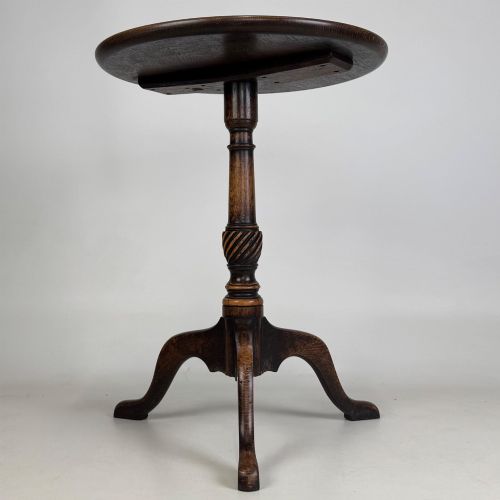
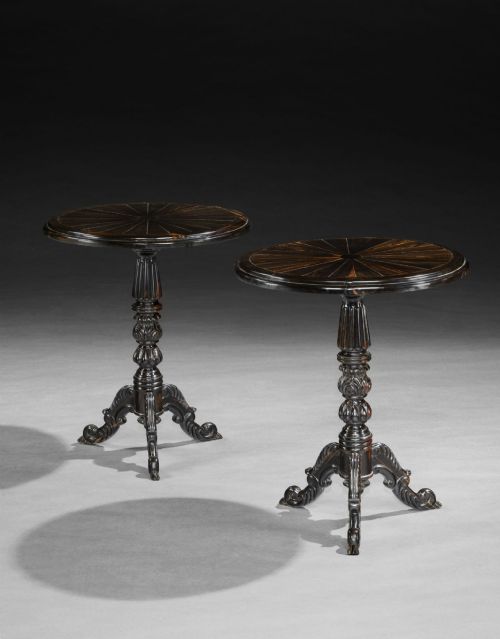
Antique Tilt Top Tables
A table whose top is hinged to the pillar so it swings upright, made from the early 18th century onward so a small table could stand against a wall, and later scaled up for round tops that had to be cleared from the middle of a room.
What They Are
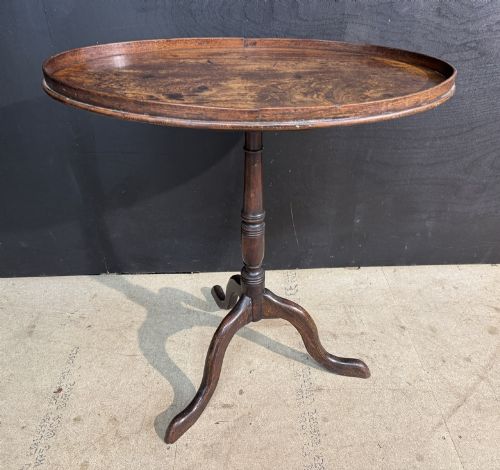
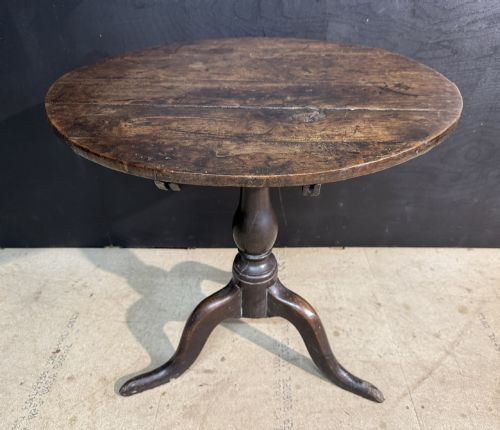
The hinged action is the whole point, and dealers name it several ways. Tilt top, tip top, snap top, flip top and "tilting top" all describe the same movement. Beyond that, the category splits by size: small round or oval tops on a turned column and three splayed legs, and larger tops on a heavier pillar with a platform or splayed base.
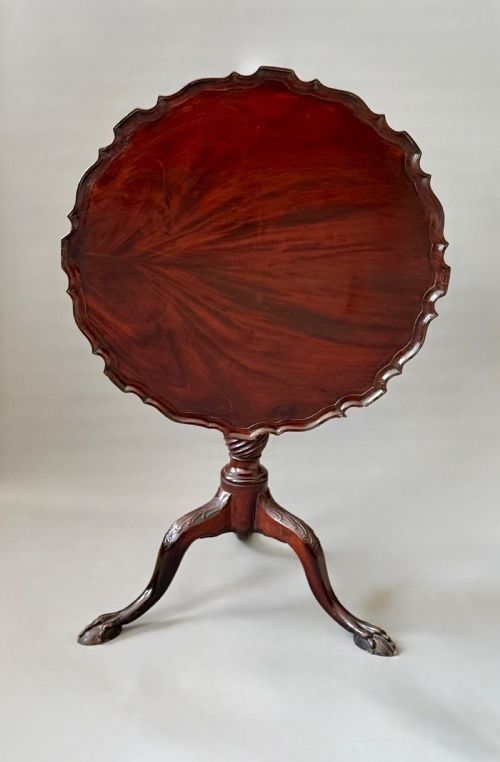
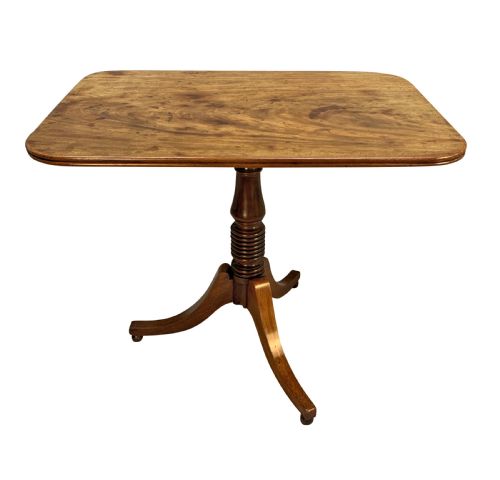
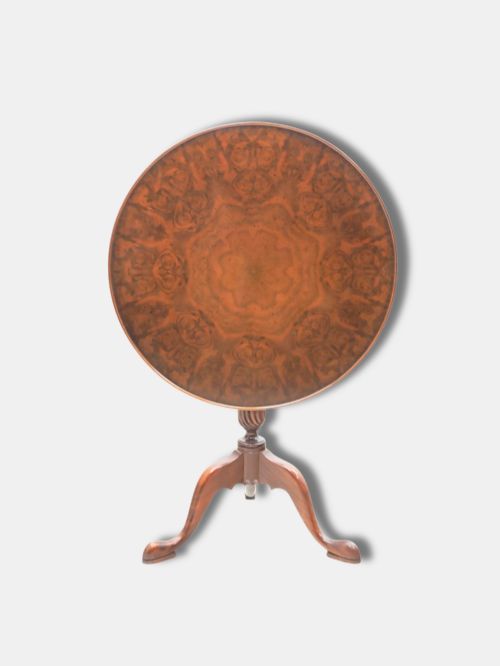
The small tripod is what you'll meet first. Mahogany runs through very nearly half of all titles, tripod through a fifth, and the small-table names cluster tightly together: occasional, wine, lamp, supper, side. Georgian and George III labelling attaches to this form more than any other, and it fills out the lower and middle of the range.
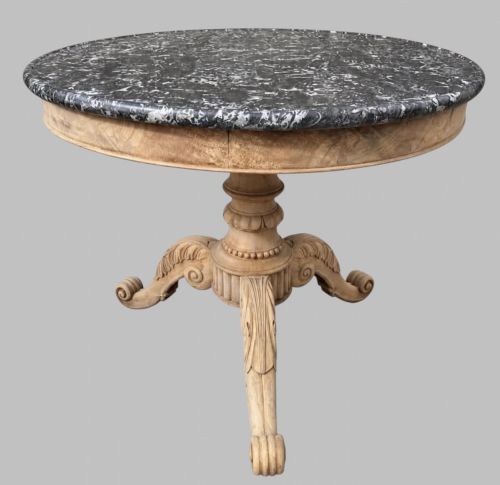
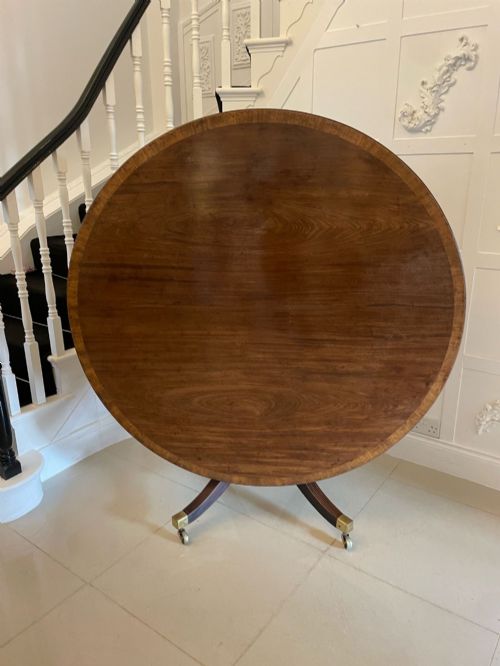
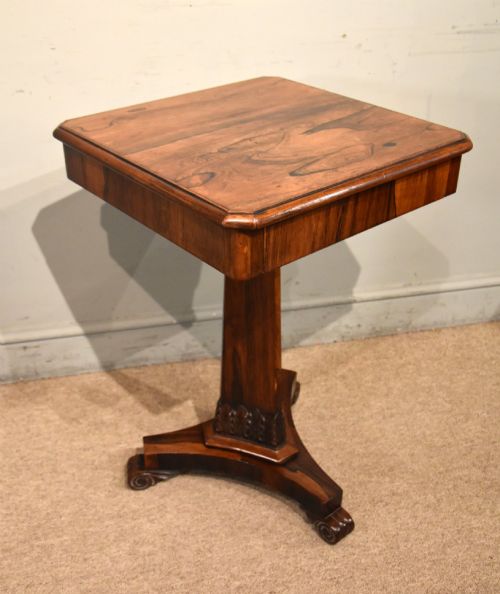
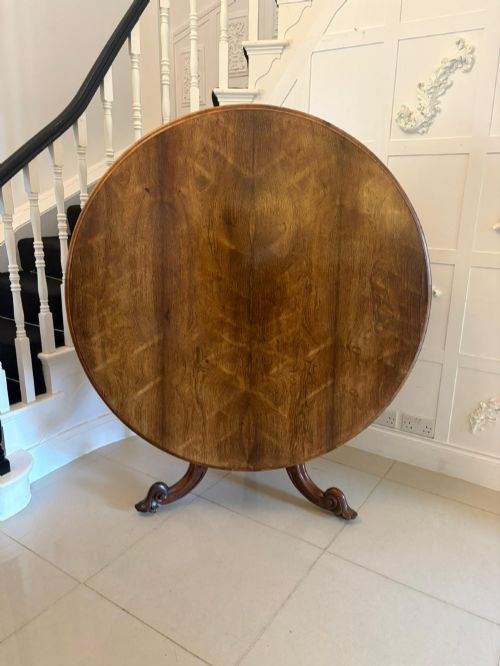
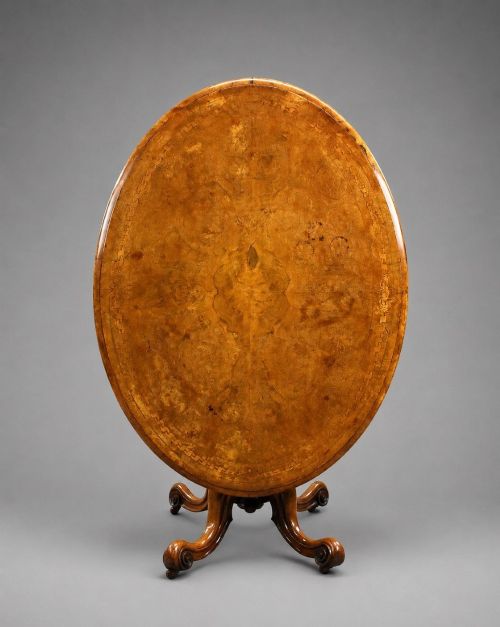
Above that sit the pillar-base tables. Breakfast, dining and loo tables account for about a fifth of listings, and centre tables another eighth, largely rosewood and burr walnut, and the strongest riser in current stock. Country tilt tops in oak, elm, fruitwood and yew make up roughly a tenth.
Dating is by reign or century rather than by year. 19th Century is the single largest dated bucket, ahead of Georgian, 18th Century, Regency and Victorian, and only a fifth of listings carry a clean year at all. The dated field spans 1750 to 1930, with one sampled supper table put at around 1690.
What Sets Them Apart
Timber does most of the work. Burr and figured woods sit at the top, burr walnut above all, with plum pudding and Cuban mahogany, satin birch, harewood, amboyna, macassar ebony, coromandel and pollard oak all appearing in the upper part of the range. Plain mahogany and country oak hold the bottom.
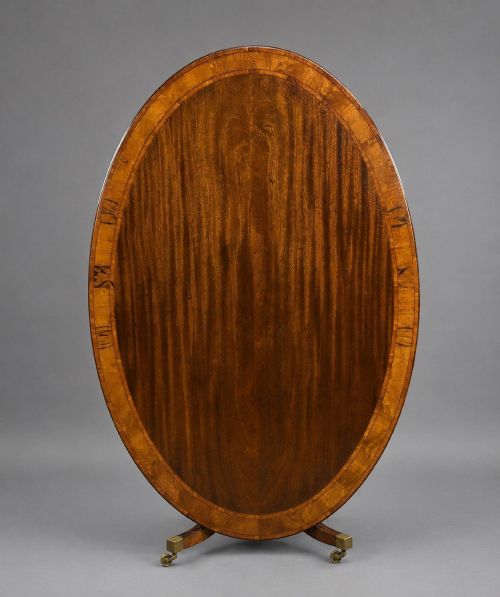
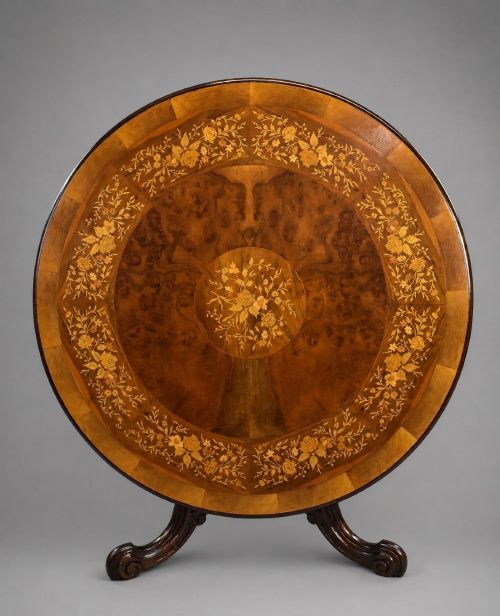
Then it's a question of scale and what has been done to the top. Large centre tables and tops described as seating six or eight sit high, while small, miniature and wine-table titles sit low. Marquetry, specimen wood, inlay and carving all push a table upward, and specimen-top, penwork and papier mache examples cluster in the upper range.
Edges and authorship do the rest. Pie crust, scalloped and dished rims read above a plain edge, though pie crust turns up across the whole range and it's the carved treatments that sit high. Gillows and James Winter are the only names to clear three dealers, appearing stamped or as attributions, and both fall in the upper half.
Retail Price Guide 2026
Typical UK retail prices for tilt top tables, calculated from the Sellingantiques database of over a million retail prices indexed since 2003. This retail price guide relies exclusively on Sellingantiques data; no external sources or auction records are used, so the figures do not describe the wider market.
The top sale of the last year on Sellingantiques was a Regency oval tilt top figured mahogany dining table, seating six, in June 2026.
Gillows·James Winter
The Antique Tilt Top Tables Glossary
- Tripod
- Column on three splayed legs, named in about a fifth of titles and the base under most of the small tables.
- Birdcage
- A small boxed block of four turned pillars between top and column, letting the top revolve as well as tilt. Named in only 53 titles across its two spellings, most often on 18th century mahogany and oak.
- Loo table
- Victorian oval or round tilting centre table, named after the card game. Turns up as loo, looe and "loo breakfast".
- Pie crust
- Carved scalloped and raised rim to a circular top, in around thirty titles and spread right across the range.
- Dished top
- Top worked from the solid with a raised lip, written as "dished" or "dish top".
- Burr
- Figured growth veneer, in ninety-odd titles and mostly burr walnut.
Frequently Asked Questions
How common are tilt top tables on Sellingantiques?
Around 181 are listed in a year, and 279 different dealers have handled one. That makes it one of the most widely stocked table forms on the marketplace.
The spread of dealers matters more than the number. It means the form turns up in almost every kind of stock, from country oak to large veneered centre tables.
What wood are they usually made from?
Mahogany appears in 807 of 1,634 titles, so you are more likely than not looking at a mahogany table before anything else is said.
Oak comes next, then rosewood and walnut. Elm, fruitwood, cherry, yew, burr oak and ash show up among the country and provincial examples.
Are birdcage tilt tops the normal type?
No. Between the two spellings, birdcage is named in only 53 titles, so it's a minority feature rather than the standard.
Where it does appear, it's most often on 18th century mahogany and oak examples. The block lets the top revolve as well as tilt.
What's the difference between a wine table and a supper table?
Both are tilt tops on the small side. Wine tables run to about 160 titles and are frequently paired with lamp in the same description.
Supper tables appear in around sixty titles and lean towards oak and country making. Neither name marks a fixed size.
Which tilt top tables sit at the top of the range?
Large marquetry and specimen-wood centre tables, rather than any tripod form. Size counts too: sampled titles naming six seats, eight seaters, a 48-inch diameter top and a 4.5ft round centre table sit high.
The bottom of the range is almost entirely small mahogany and oak tripods.
Do unusual or non-English examples turn up?
Only in ones and twos. Swedish birch and alder root, French vendange and gueridon, Italian Sorrento, Black Forest linden wood, Anglo-Indian and Burmese padauk, and Chinese lacquer each appear that thinly.
One-offs in the record include a papier mache top inlaid with mother of pearl, a penwork games top, a specimen marble top, an Irish Killarney yew marquetry table and a cast iron adjustable bed table.
Pairs are just as scarce, with only two sampled titles offering more than one table together.