


Antique Loo Tables
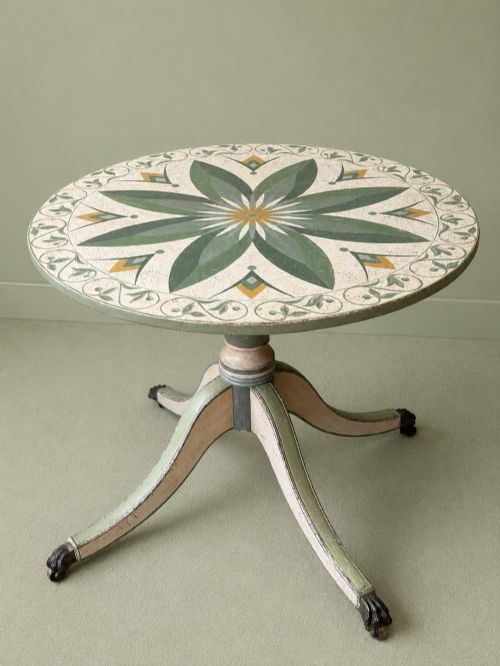
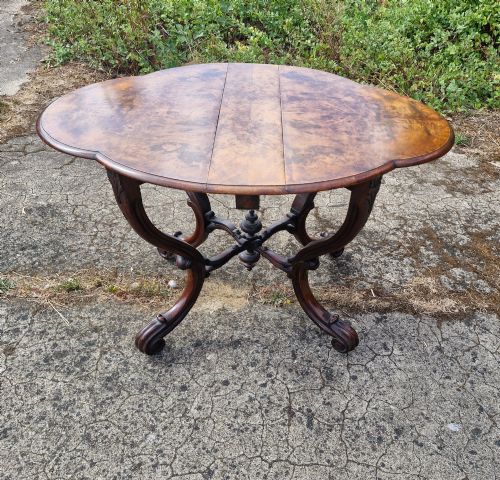
A loo table is a big oval or round top on a central pedestal, hinged to tilt vertical and stand against the wall, named after the card game loo and used through the 19th century for cards, tea and small dinners.
What Is A Loo Table?
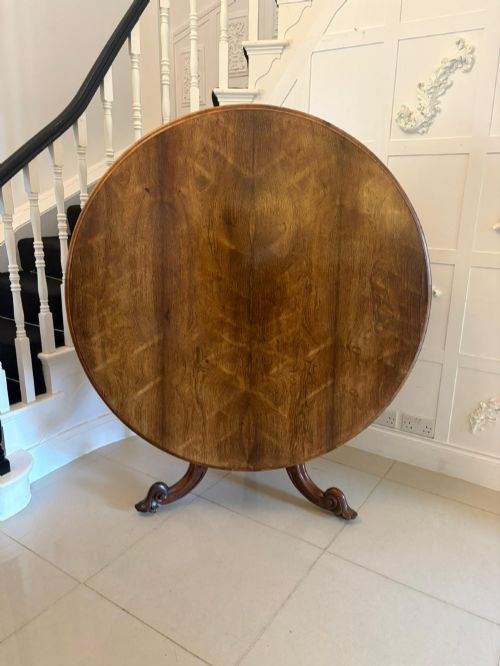
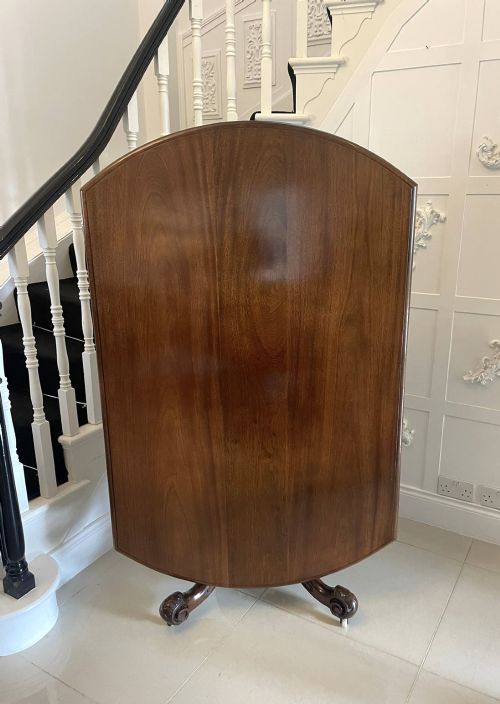
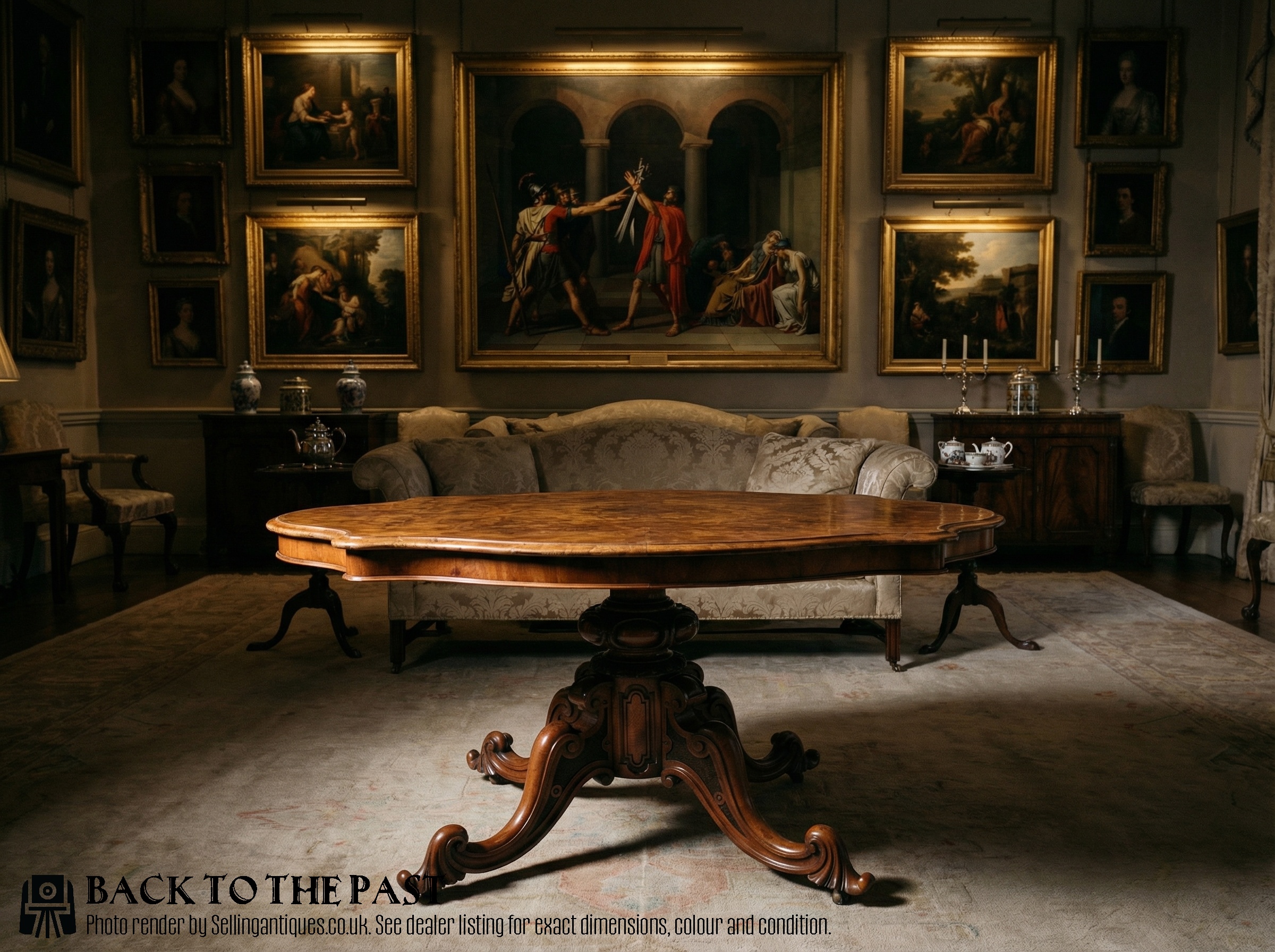
The form is a single pedestal or column carrying a large top, usually oval or circular, with the top hinged so it swings up on a catch. That tilt or snap action is the point of the thing: one table served cards, tea and a small dinner, then stood back out of the way in a modest room.
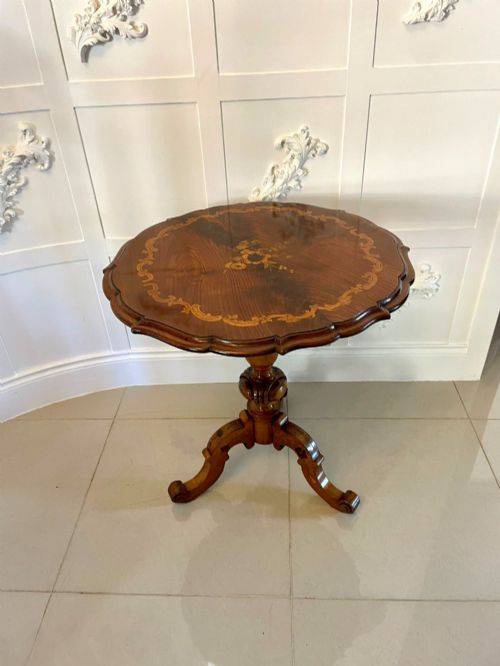
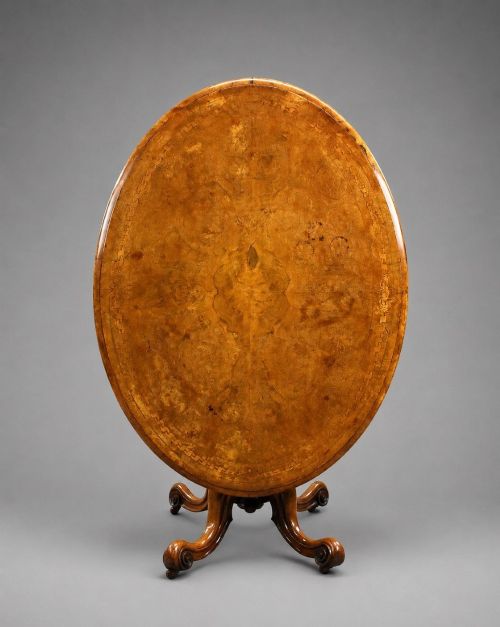
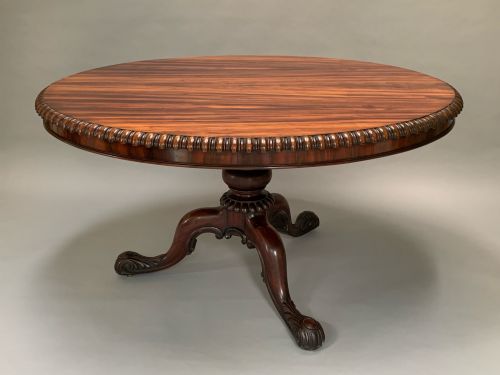
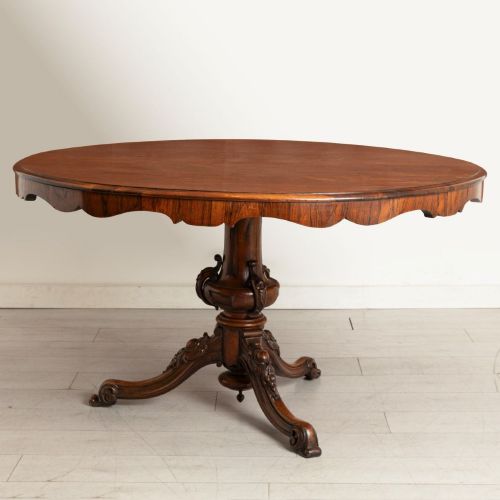
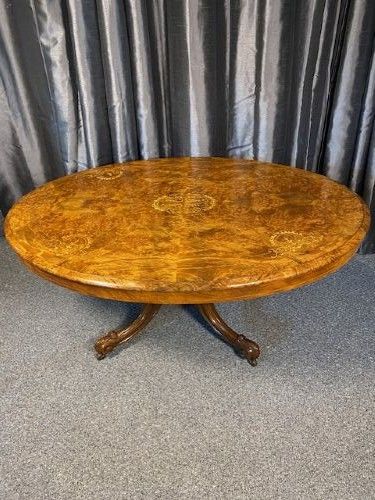
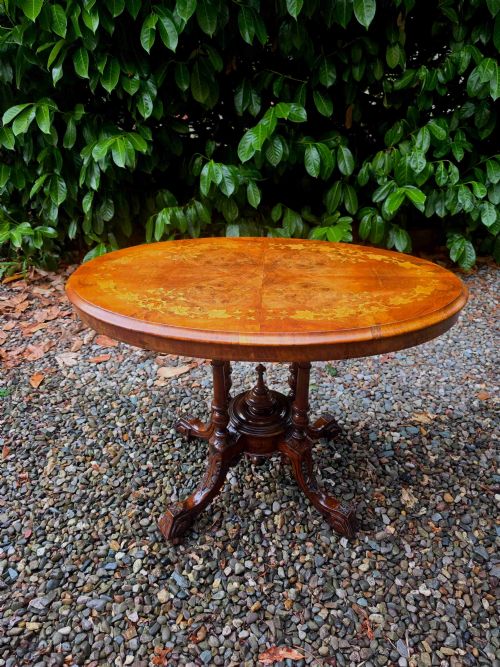
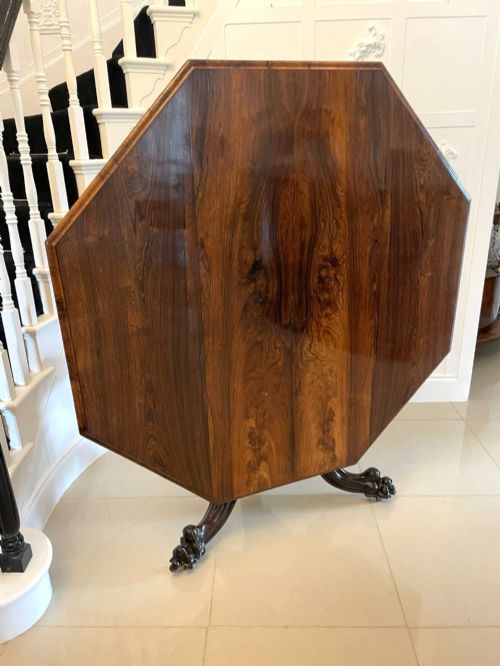
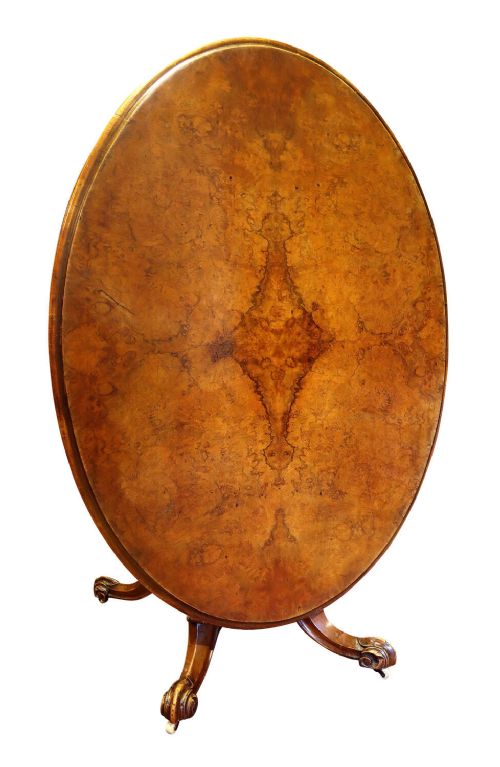
The version you'll meet most often is Victorian and veneered in walnut. Walnut is named in nearly half the titles on Sellingantiques, and burr walnut in a third of them, generally an oval top on a carved quadruped or quadruple base. Rosewood comes second, mahogany third, with Regency and William IV examples in both of those timbers making a real early-19th-century tail.
The dating leans heavily to mid-century. Where a decade is given the 1860s dominate, with the 1870s and 1850s behind it, though bands like Victorian and plain 19th century outnumber every decade figure. Only a couple of listings reach the 1890s and a couple the 1920s, one of those a Regency Revival, so the form effectively closes with the century.
One object, several names. The same table is listed as a loo table, centre table, breakfast table, dining table or snap-top table, and dealers stack two or three of those words in a single title. Centre appears in over a third of them. Around 38 come up a year, handled by 127 different dealers, so it is a form spread thinly across the whole trade rather than anyone's specialism.
Where The Range Splits
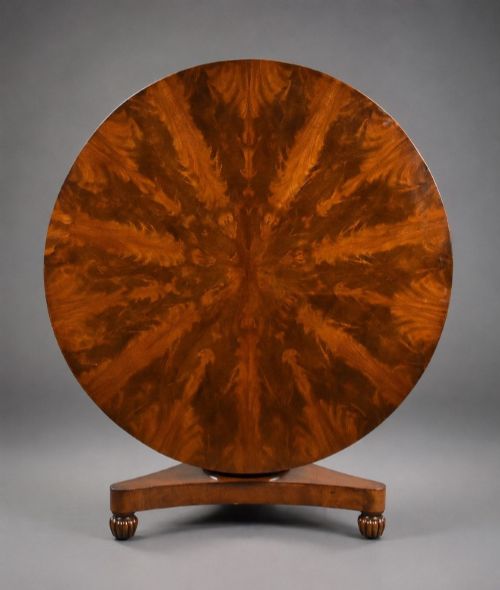
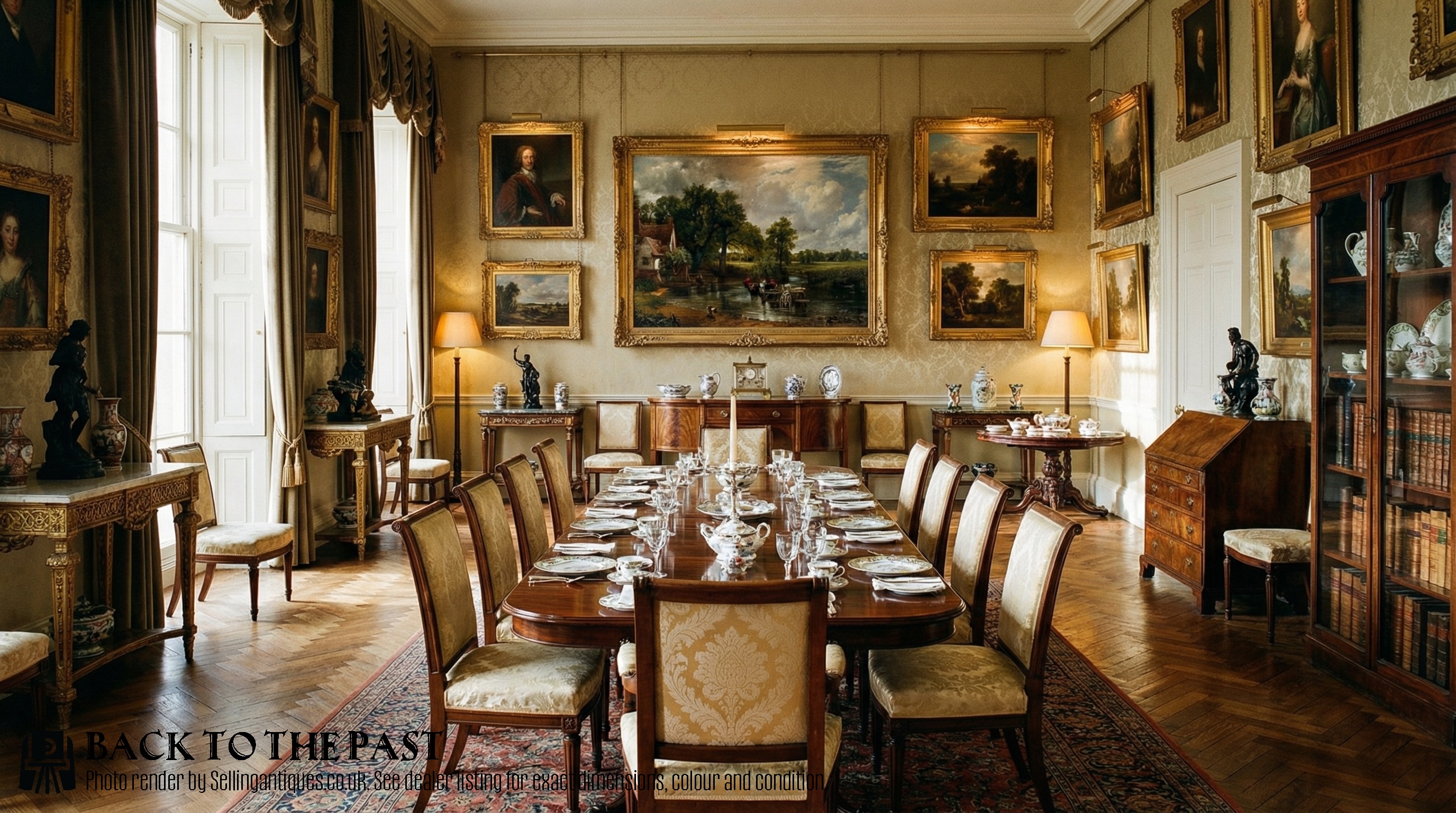
Veneer does most of the work. Burr, figured, flamed, quartered and radially veneered are the words that carry a top upward, and burr walnut sits through the middle and upper reaches. Plain timber and a small top put a table at the bottom of the range; the biggest recorded tops state 4ft 6in diameter and 64 inches, with six seaters the largest capacity claimed.
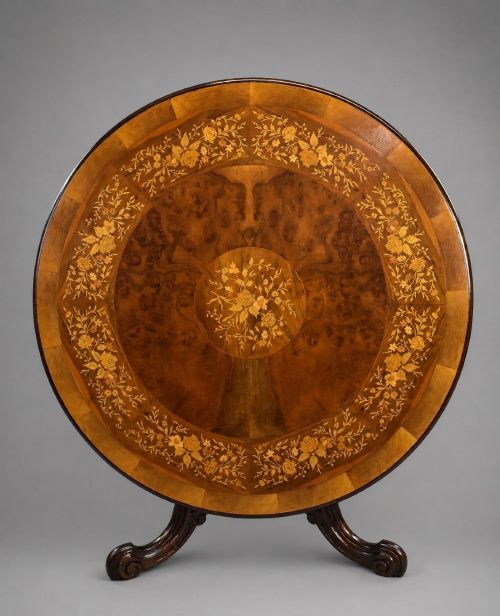
Decoration on the top separates one tier from the next. Simple stringing described as inlaid turns up across the whole range and settles nothing on its own. Pictorial and floral marquetry, particularly on burr walnut, concentrates in the upper reaches, as does carving on the pedestal and base: carved quadrupods, basket bases, fluted and octagonal pillars.
Above that sit the timbers that appear once in a blue moon. Pollard oak, burr oak, amboyna, coromandel, macassar ebony, satin birch, yew, sycamore and burr elm take a table well clear of walnut, and a George IV pollard oak example stands several multiples above the next piece in the archive. A handful of listings attributed to named cabinetmakers, or given as in the manner of one, sit at the same end.
Retail Price Guide 2026
Typical UK retail prices for loo tables, calculated from the Sellingantiques database of over a million retail prices indexed since 2003. This retail price guide relies exclusively on Sellingantiques data; no external sources or auction records are used, so the figures do not describe the wider market.
Timbers that appear only once or twice on Sellingantiques include pollard oak, amboyna, coromandel, macassar ebony, satin birch and Gonçalo Alves.

The Antique Loo Tables Glossary
- Loo table
- Pedestal table with a large oval or round tilting top, named after the card game lanterloo. Also spelled looe in some titles.
- Tilt top or snap top
- The top is hinged to swing vertical on a catch. Stated in only 65 titles, so many dealers treat the action as understood.
- Centre table
- The same form named by where it stood rather than what it was for, and the commonest alias after loo itself. Breakfast table is the other, often combined as loo breakfast table.
- Burr walnut
- Veneer cut from a burr or wart in the walnut trunk, giving swirling figure with no straight grain. The single most common surface in the category.
- Quartered or radially veneered
- Top laid up from four or more matched leaves so the figure mirrors out from the centre. Crossbanded means a border strip of contrasting veneer round the edge.
- Quadruped base
- Four scrolled or carved legs springing from the foot of the pedestal. A basket base is an openwork carved stage sitting between pedestal and legs.
Frequently Asked Questions
Why is it called a loo table?
It takes its name from lanterloo, or loo, a card game popular from the 18th century. The big top gave players room and the pedestal left knees clear all the way round.
By the Victorian period the name had stuck to the form rather than the use. Tables listed as loo tables were used for cards, tea and small dinners alike.
What wood are they usually made from?
Walnut, in about half the titles on Sellingantiques, and burr walnut specifically in a third of them.
Rosewood is a distant second and mahogany third. Beyond those, pollard oak, amboyna, coromandel, macassar ebony, yew, sycamore and burr elm each turn up once or twice, and they sit at the top of the range.
Are loo tables and centre tables the same thing?
Generally yes. The archive answers to at least six names for one form: loo, looe, centre, breakfast, dining and snap-top.
Centre appears in more than a third of titles, breakfast and dining in a smaller share each. Dealers often stack several in one title, and one listing manages occasional, loo, centre and dining together.
Do all loo tables have tilting tops?
The tilt or snap action is what defines the form, but only 65 titles say so outright.
Most dealers seem to treat it as understood rather than worth writing down, so the absence of the words tilt top in a title says little about the table.
What period do they date from?
The dated field runs 1800 to 1920, with the weight firmly mid-century. Where a decade is given, the 1860s account for the largest group, then the 1870s and 1850s.
Regency is claimed by a couple of dozen listings and William IV appears in a similar number of titles, so there is a genuine early-19th-century tail. Two listings fall in the 1890s and two in the 1920s.
How big do loo tables get?
The largest tops recorded state 4ft 6in diameter and 64 inches, with six seaters the biggest capacity claimed.
Large appears in 15 titles against a scattering of small, and the smaller undated walnut and rosewood examples sit at the bottom of the range.