


Georgian Tables
Small and medium English domestic tables in the Georgian taste, made for tea, cards, wine glasses, candles and writing, with mahogany the timber you'll meet most often.
What Are Georgian Tables?
Georgian covers British furniture from the reigns of George I to George IV, roughly 1714 to 1830, the span in which imported mahogany pushed walnut and oak aside for fashionable work. It's also the period when the specialised small table multiplied, as rooms and their uses became more distinct.
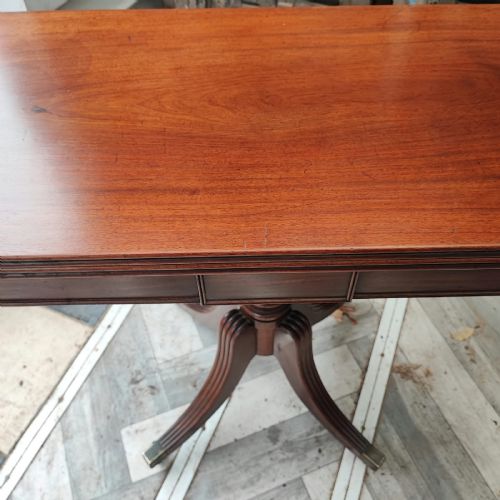
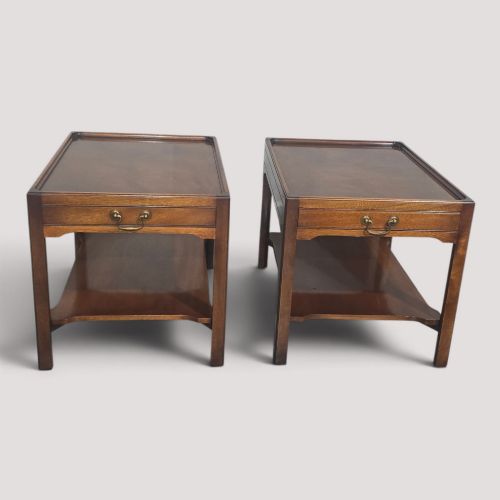
Mahogany is named in around three of every five titles on Sellingantiques, with oak the only other timber close behind it and walnut, rosewood and satinwood present in small numbers. The single most likely thing you'll be looking at is a mahogany side table, followed by the tripod and tilt-top group sold as wine, lamp, supper or occasional tables. Side tables run to 1,192 titles, tripods 589.
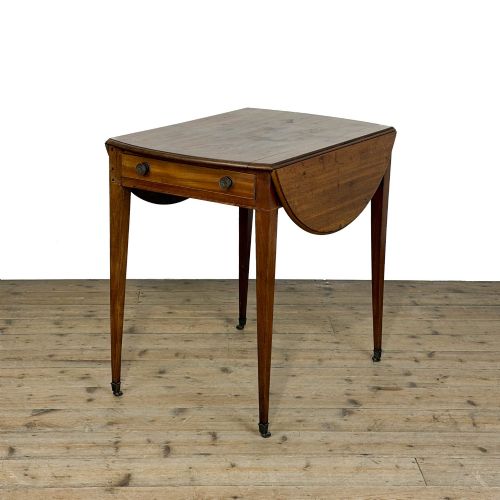
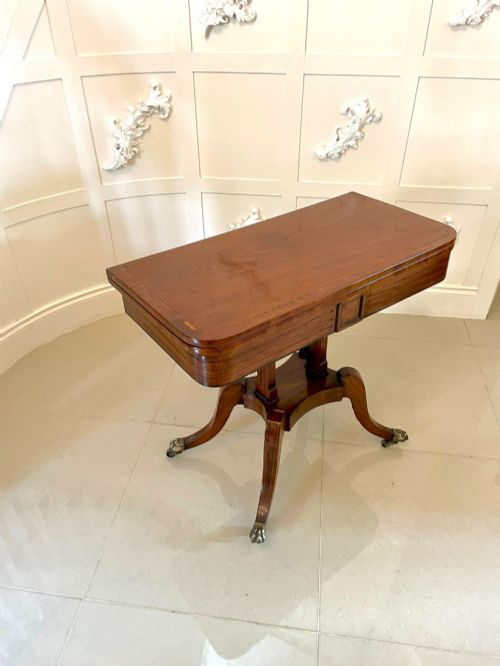
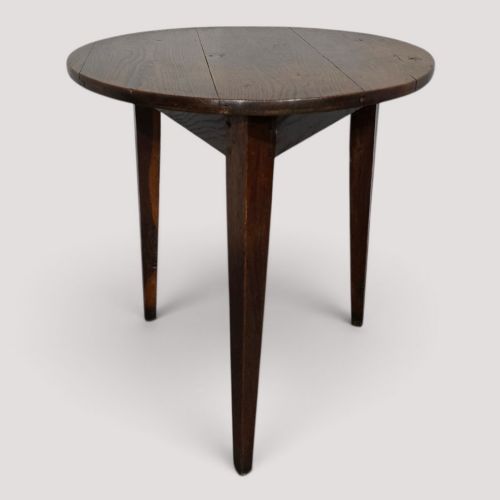
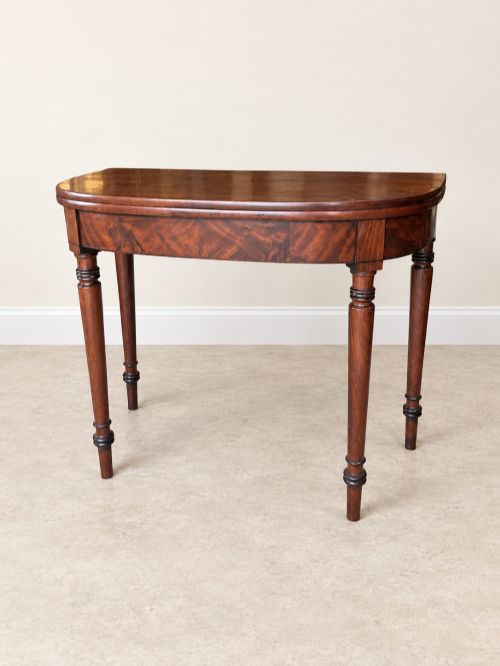
Behind those two blocks sit three smaller ones. Folding and leaf tables cover card, games, tea, Pembroke, drop-leaf and sofa forms, many of them demi-lune. Oak and country tables bring in lowboys, cricket tables, gatelegs and tavern tables, with elm, pine, yew, fruitwood and cherry alongside. Larger case pieces, dining, drum, library and serving tables, turn up in smaller numbers.
The label is elastic. The dated field's commonest entry isn't a year at all but the bare word "Georgian", used on 1,795 listings, with "18th Century" and "1800s" close behind. Only 1,191 of 5,160 listings pin down a clean year, and the field runs from 1700 to 1960, so Georgian-style and Georgian Revival copies dated 1890 to 1930 sit under the same heading as period work.

The Range
Timber and figure do a lot of the work. Satinwood, rosewood, yew, harewood and burr elm cluster at the upper end, while plain oak and pine sit at the lower, and "Cuban mahogany", "flame grain" and "well figured" are used in titles because they carry weight. Decoration follows the same line: inlay appears in 226 titles, painted in 94, and marquetry Pembrokes, brass-inlaid Regency work and painted satinwood hold the top of the sampled range.
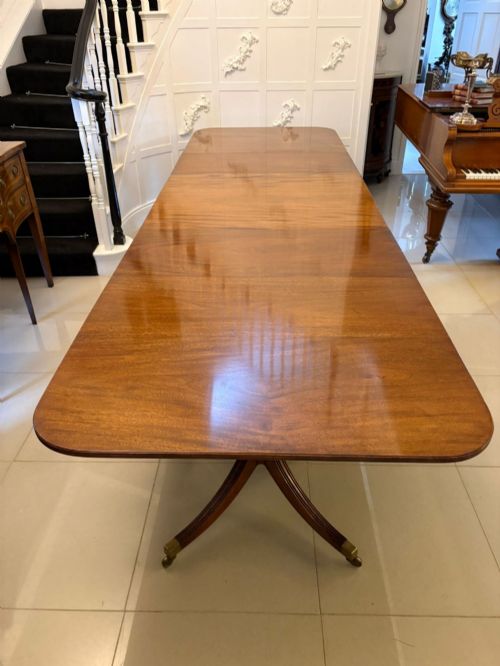
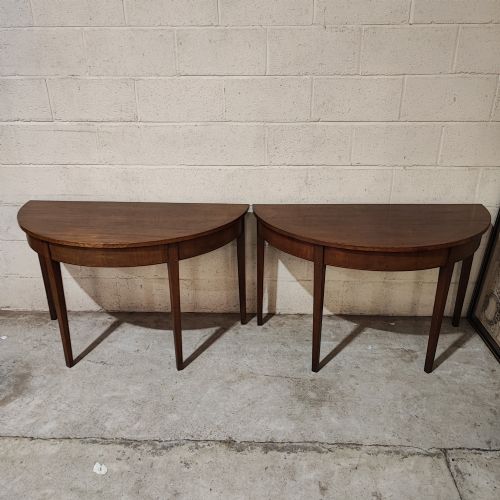
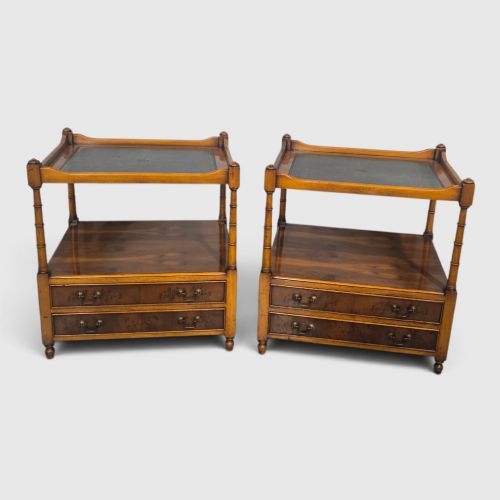
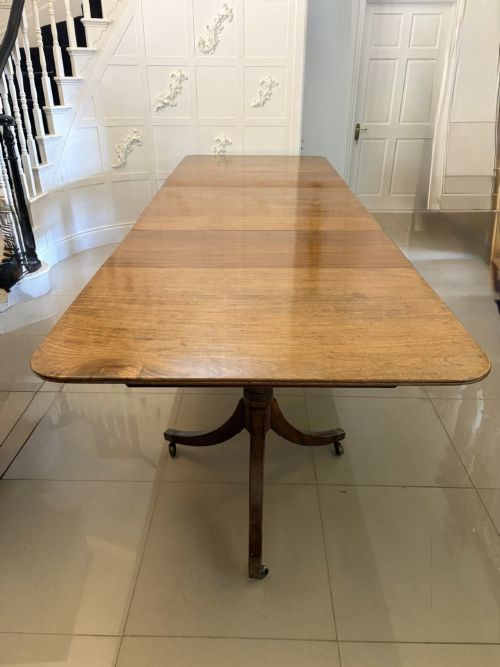
Scale and complexity separate the two halves of the category. Small wine, lamp and side tables dominate the lower part; twin-pillar and extending dining tables, serving tables, drum and library tables sit well above them. Pairs matter too. Some 259 titles are for pairs, usually demi-lune consoles, side tables or wine tables, and pairs and nests of three or four consistently sit above comparable singles.
The clearest divide is period against revival. Titles carrying "Georgian Style", "Georgian Revival" or a date between 1890 and 1930 concentrate in the lower half, and a 1920s style card table opens the range. At the far end sits an eighteenth-century pair of giltwood side tables, an order of magnitude above the ordinary mahogany side table.
Retail Price Guide 2026
Typical UK retail prices for georgian tables, calculated from the Sellingantiques database of over a million retail prices indexed since 2003. This retail price guide relies exclusively on Sellingantiques data; no external sources or auction records are used, so the figures do not describe the wider market.
Georgian tables have been listed on Sellingantiques since 2008, with more than 2,700 through the archive since then.

Gillows
The Georgian Tables Glossary
- Tripod table
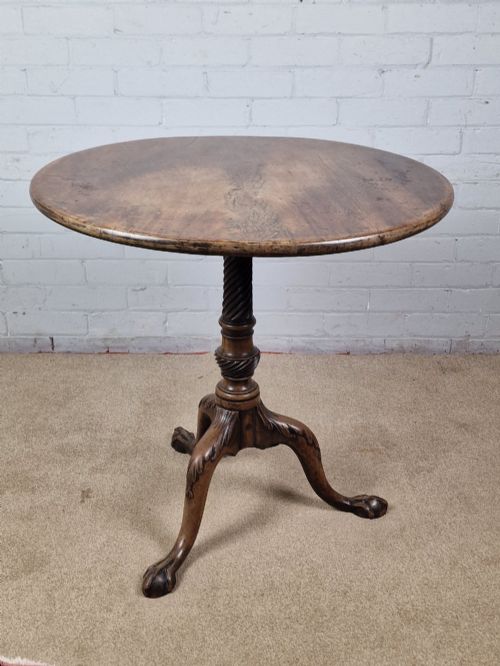
- A round or shaped top on a turned pillar rising from three splayed legs. It's the commonest occasional form after the plain side table, with 589 titles.
- Tilt-top
- A top hinged to swing vertical so the table can stand against a wall. Snap-top and tip-top mean the same thing, and 346 titles use tilt.
- Pembroke
- A small table with two hinged flaps on a fixed centre section, usually with a drawer. It appears in 272 titles, sometimes with marquetry.
- Demi-lune
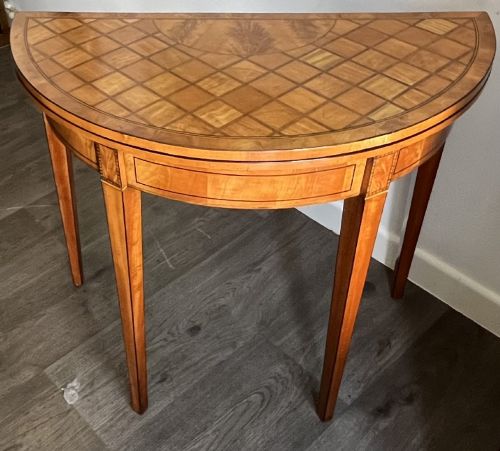
- Half-moon shaped, most often a console or a fold-over card table. Used in 226 titles, and a common form for pairs.
- Lowboy
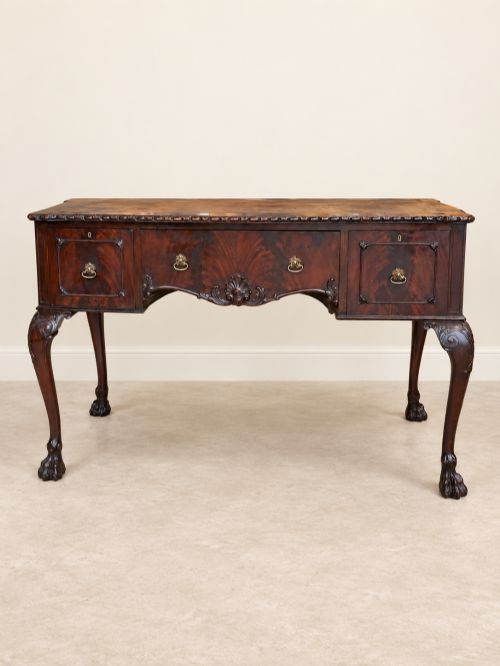
- A low dressing or side table on legs with a bank of two or three drawers. Sits with the oak and country group; 114 titles.
- Birdcage
- A small boxed cage of turned pillars between the top and the pillar of a tripod table, letting the top both tilt and revolve.
Frequently Asked Questions
What wood are most Georgian tables?
Mahogany, by a wide margin. It's named in around three of every five titles, close to a default for the category.
Oak is the only other timber with a real share, and it carries the country end of the group. Walnut, rosewood and satinwood appear in small numbers, with elm, pine, yew, fruitwood, sycamore and cherry behind them.
Does Georgian in a listing mean an exact date?
Usually not. The commonest entry in the dated field is the bare word "Georgian", used on 1,795 listings, and "18th Century", "1800s", "19th Century" and "Regency" follow it.
Only 1,191 of 5,160 listings carry a clean year, and the field runs from 1700 to 1960. Read the label as a broad band rather than a date.
Are Georgian style copies included in the category?
Yes, and they're a steady minority. Titles reading "Georgian Style", "Georgian Revival" or "Regency Style" carry dates from 1890 to 1930, with the 1920s the largest cluster.
They concentrate in the lower half of the range. A 1920s style card table sits at the bottom of everything sampled.
What is a wine table?
A small tripod table, often with a dished top, made to stand beside a chair. The name appears in 264 titles, which makes it the commonest term for the smallest tripods.
Lamp, supper, candle and occasional tables describe much the same thing at slightly different sizes.
How many Georgian tables come up for sale?
Around 561 are listed on Sellingantiques in a year, and 338 different dealers have handled them. That's one of the broadest dealer bases of any furniture form on the site.
Regional and foreign pieces are thin. Irish, Scottish and Welsh examples appear a handful of times each; Italian, Dutch, French and American ones once apiece.
Which forms turn up only rarely?
A few surface once or twice across the whole sample: a Manx adjustable candlestand, an architect's table, a metamorphic dining table, a tea caddy table, a spider-leg table and a dough bin with a flat top.
Against those, side tables and tripods make up the bulk of what's listed.