
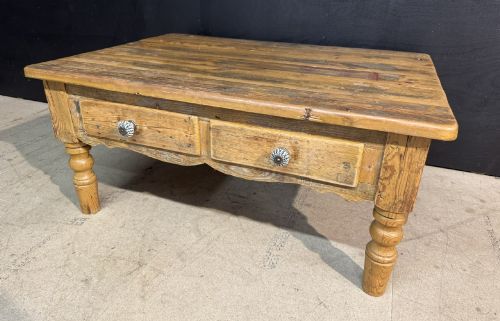
Antique Pine Tables
Softwood tables built as everyday furniture for kitchens, dairies, taverns and workshops, running from small round cricket tables up to farmhouse and refectory boards seating ten or more.
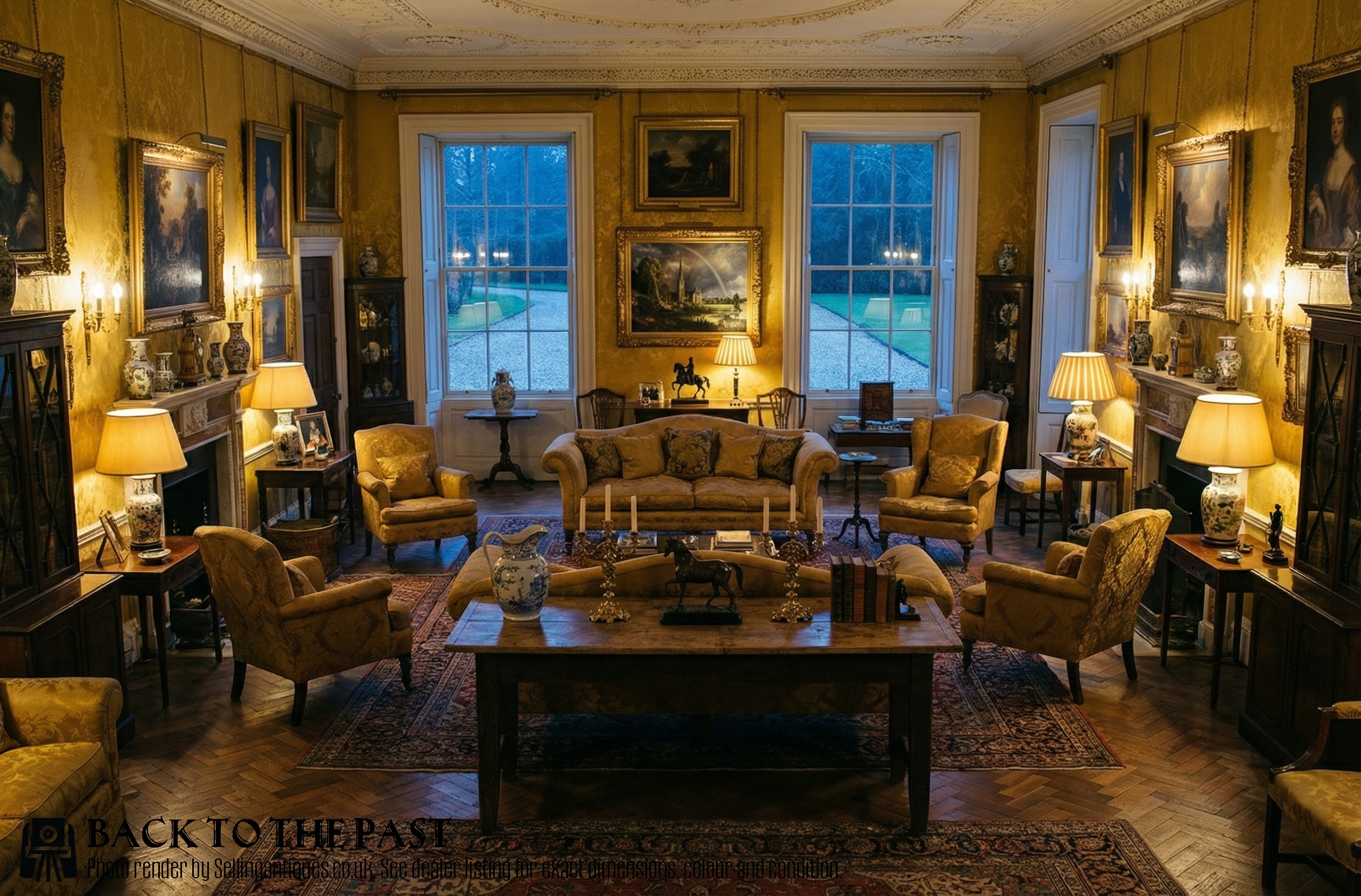
Antique Pine Tables
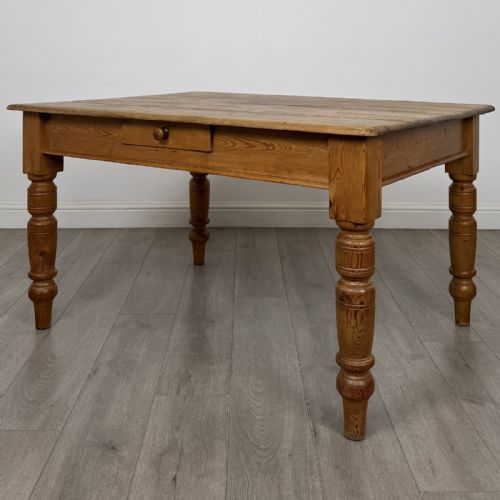
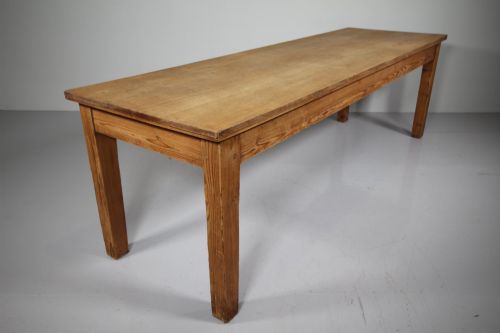
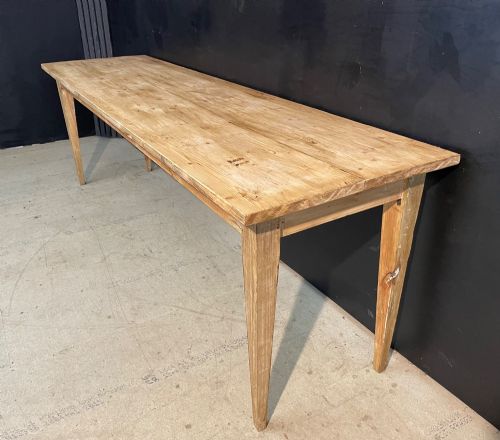
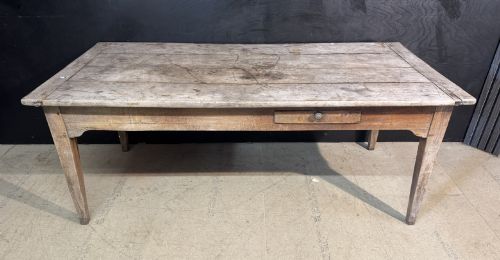
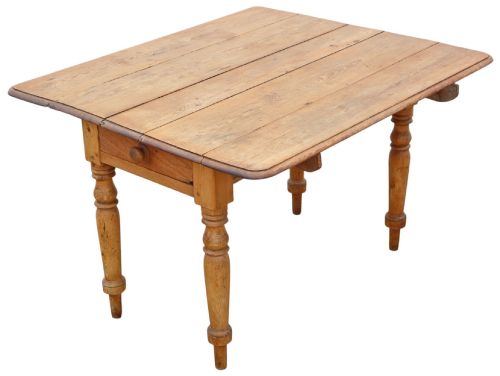
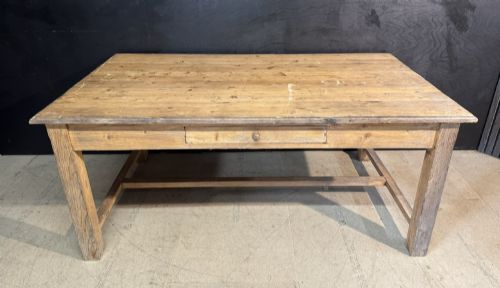
The form you'll meet most often is a 19th-century English pine kitchen or farmhouse table on turned or square tapering legs, sometimes with a single drawer in one end. "Kitchen" appears in 384 titles and "farmhouse" in 309, and the two words combine in 98 of them.
Pine was the cheap timber. It went into furniture where a top that could be scrubbed or painted mattered more than figure or polish, which is why the same tables served food preparation, communal eating and trade work. Many were stripped or repainted in the later 20th century for domestic use.
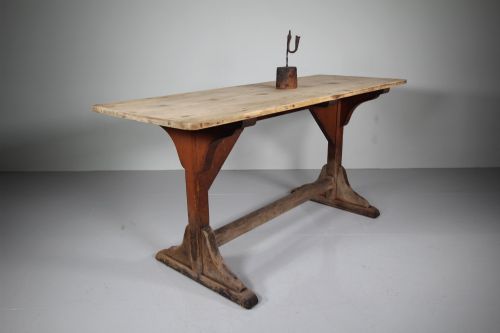
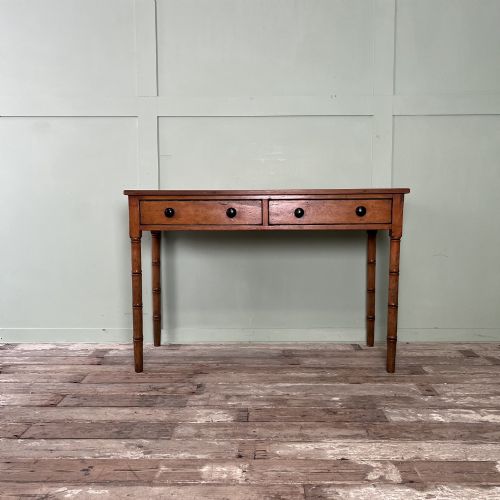
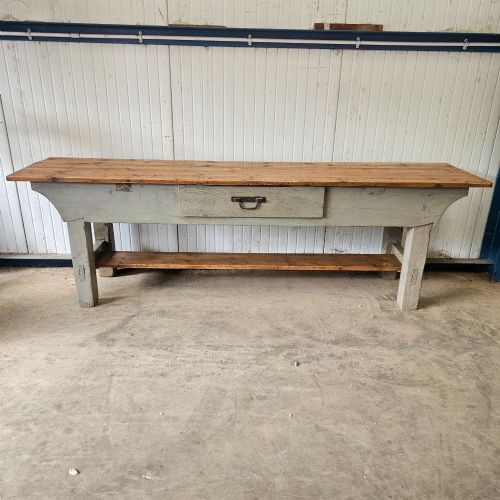
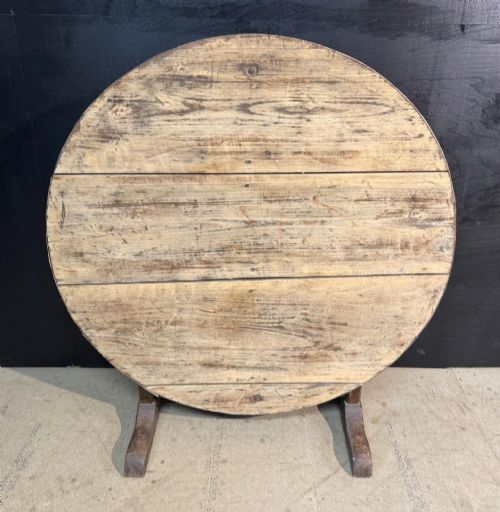
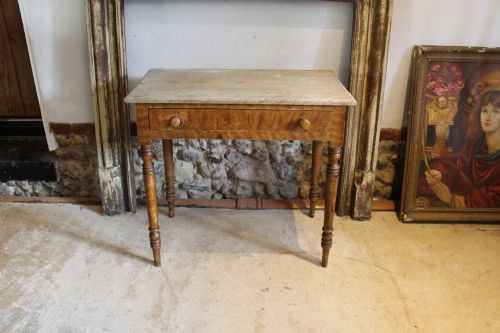
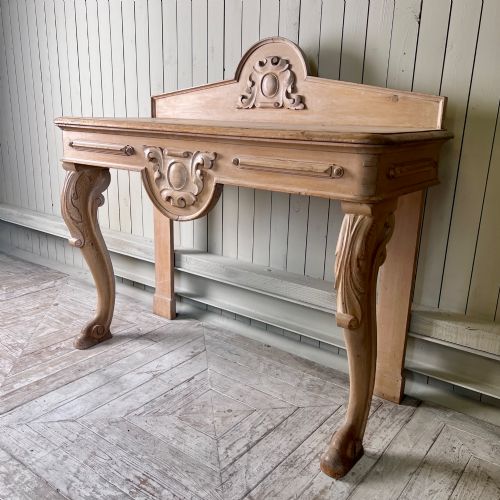
Beyond the long dining tables sit four other groups: side, console and lamp tables at the smaller end; round three-legged cricket tables, 133 of them, with Welsh and West Country ones recurring; refectory, trestle and tavern tables on end supports; and painted Continental pine, chiefly French and Swedish, whose share of live listings runs well ahead of its share of the archive. Trade tables are a visible minority, drapers', bakers', dairy and potting among them.
Dates are broad rather than precise. "19th Century" and "Victorian" between them do most of the work in the dealer date field, with fewer than a third of listings carrying a clean year, and the year span that does exist runs 1750 to 1950. Pine also rarely appears alone: oak turns up in 66 titles, with elm, sycamore, fruitwood, beech, walnut and poplar as secondary timbers, and iron, brass, slate or marble in some bases and tops.
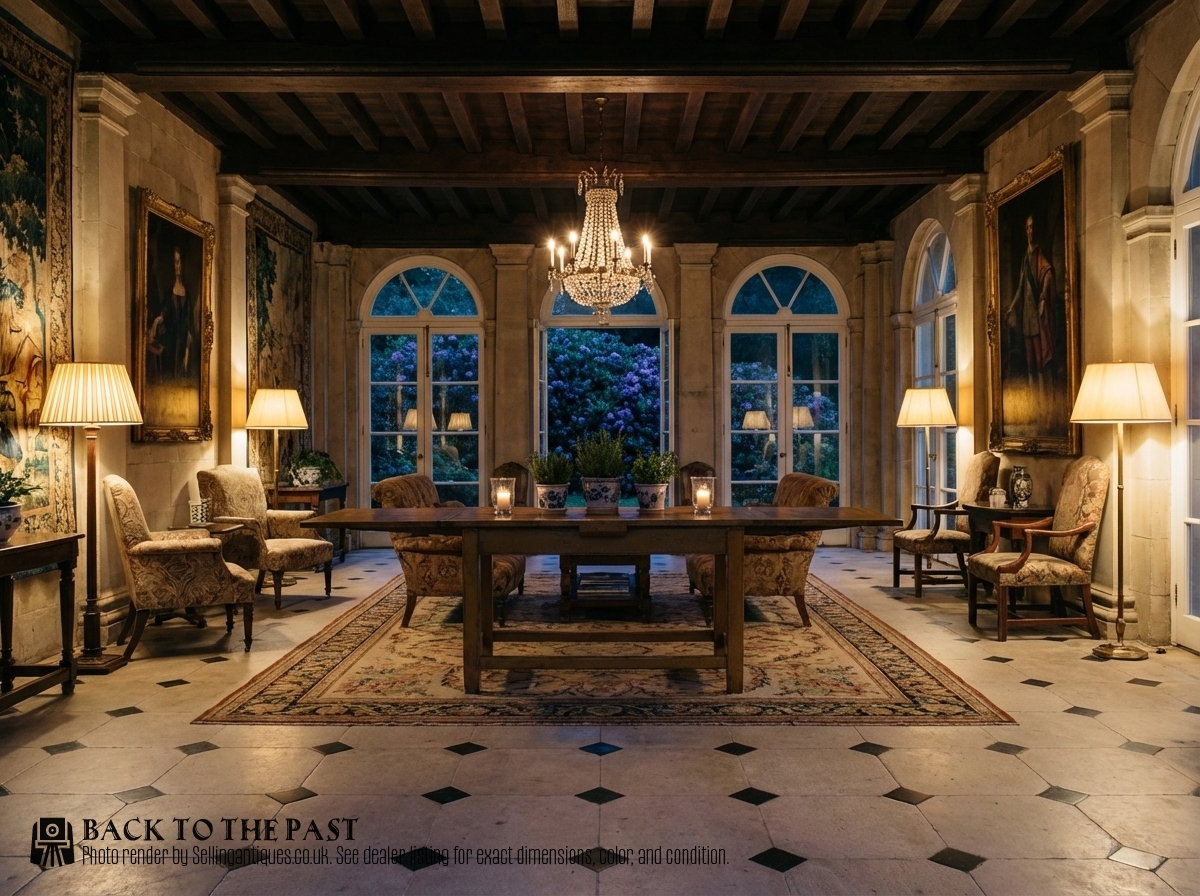
What Sets Them Apart
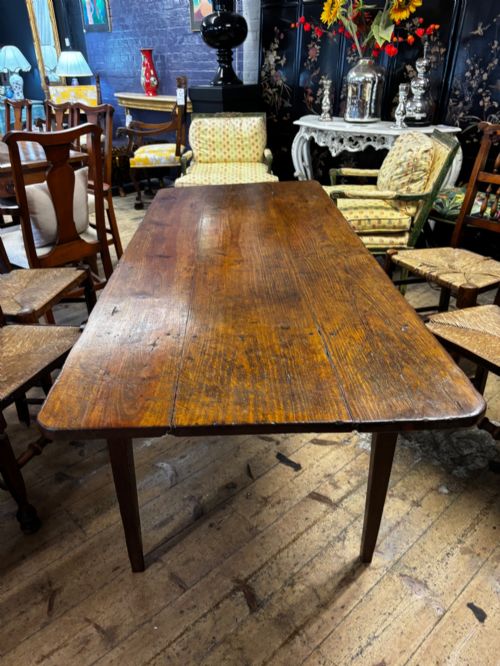
Length is the clearest divider. Titles that state a measurement or a seat count cluster at the top of the range, with 8ft, 10ft, 12.5ft and 13ft boards, one at 3m and a single 18-seater; "small" appears in 54 titles and sits near the bottom. Ten-seaters recur among the extending kitchen tables.
Surface does the next most work. Original or early paint, described as "in original paint" or "original paintwork", runs through the upper half of the range, while plain stripped pine sits lower. Painted Continental pine has its own following, and Swedish examples are far better represented among what's for sale now than in what has sold.
Then ambition of form and identity. Drapers', harvest, vendange, altar, library and console tables sit high, plain side and coffee tables low. Welsh, West Country, Cornish, Scottish and Irish attributions, along with French and Swedish origin, recur above the middle, and 18th-century or Georgian descriptions do the same.
Antique Pine Tables Retail Price Guide 2026
Typical UK retail prices for pine tables, calculated from the Sellingantiques database of over a million retail prices indexed since 2003. This retail price guide relies exclusively on Sellingantiques data; no external sources or auction records are used, so the figures do not describe the wider market.
19th Century is the period label used most on Sellingantiques for pine tables, with Victorian next and the 1900s third.
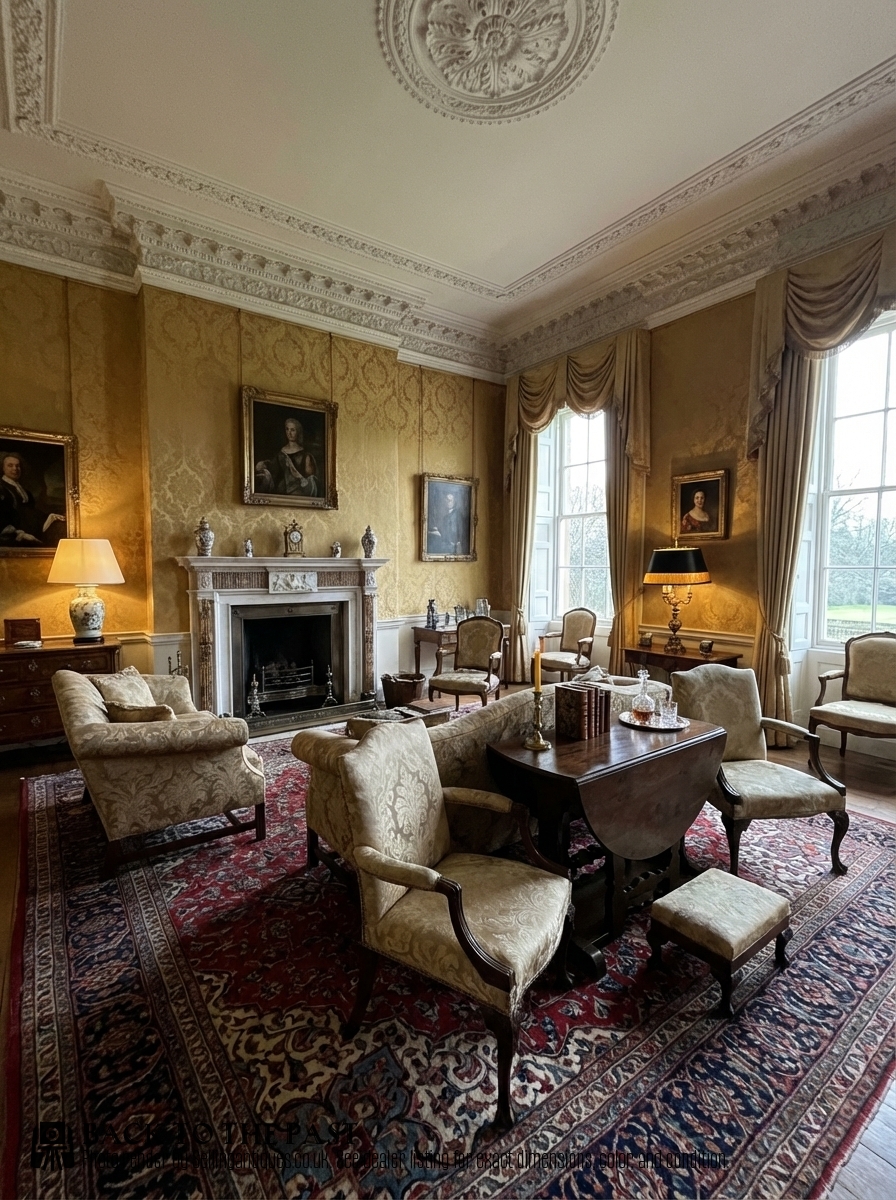
The Antique Pine Tables Glossary
- Scrub top
- A softwood top left unpolished and scrubbed repeatedly until it goes pale and bleached. The wording appears in 77 titles, with "scrubbed" in another 17.
- Farmhouse table
- A plain long kitchen dining table, and the single commonest description in this category at 309 titles.
- Cricket table
- Small round table on three legs, 133 titles, with Welsh and West Country examples recurring often.
- Refectory table
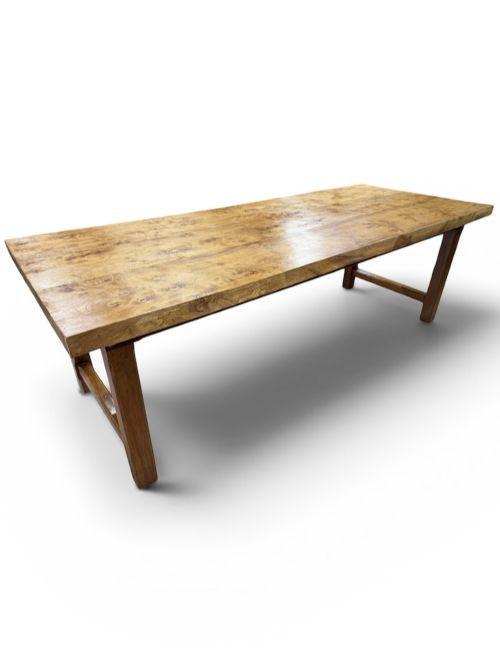
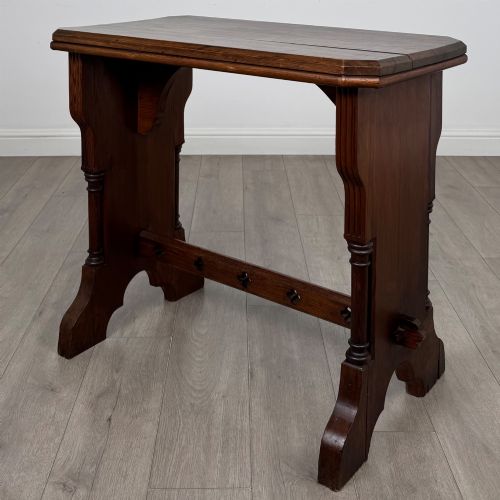
- Long table standing on end supports or a trestle frame rather than four corner legs. Eighty titles use the term.
- Plank top
- A top made from one, two or three wide boards, sometimes cleated across the ends. "Single plank" and "two plank cleated top" both turn up.
- Pitch pine
- Dense resinous pine, often reclaimed from ecclesiastical or institutional joinery, named in 63 titles.
Antique Pine Tables: Frequently Asked Questions
How many pine tables come up each year?
Around 159 reach the market on Sellingantiques in a year, and 170 different dealers have listed one.
That spread of stockists makes it one of the most widely handled country-furniture forms in the archive.
What does scrub top mean?
It describes a pine top left unpolished and scrubbed over and over, which takes the surface to a pale, bleached colour.
The phrase appears in 77 titles, with "scrubbed" in a further 17, so it reads as a recognised finish rather than a description of wear.
Are painted pine tables different from stripped ones?
Painted and paint between them appear in over 200 titles. Wording such as "original painted" and "in original paintwork" runs through the upper half of the range.
Stripped pine means an earlier paint or stain has been taken off to leave bare timber. Those examples sit lower.
Painted Continental pine, chiefly Swedish and French, forms its own branch and is growing as a share of current listings.
Which sizes turn up in farmhouse tables?
Titles that state a length record 6ft up to 13ft, with metric equivalents around 2.4m to 3m.
Seating claims run from four to eighteen. Ten-seaters appear several times among the extending kitchen tables.
Why are so many dated only as Victorian?
The dealer date field is dominated by broad period labels. "19th Century" accounts for 503 listings and "Victorian" for 340, together well over half.
Only 458 of 1,521 listings carry a clean year, and those run 1750 to 1950. Georgian and Edwardian are used as period words too.
What unusual pine tables have appeared?
The trade tables are the oddities: drapers' and textile tables, bakers' and haberdashery tables, a silversmith's bench, a foundry table, a jewellers' work table and a florists' worktable with eight drawers.
One-offs include a table said to come from a narrowboat, an adjustable reading table, a lead-topped estate-made table, a kitchen table with a duck-egg-blue Formica top and a Swedish slagbord drop-leaf.