



Antique Pie Crust Tables
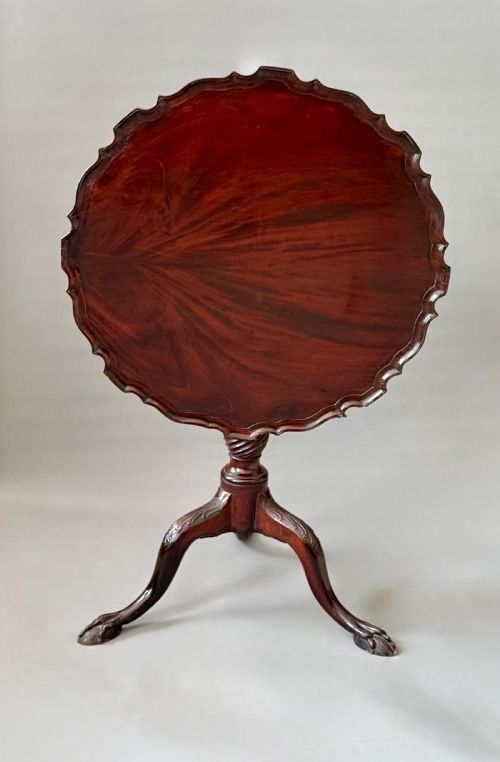
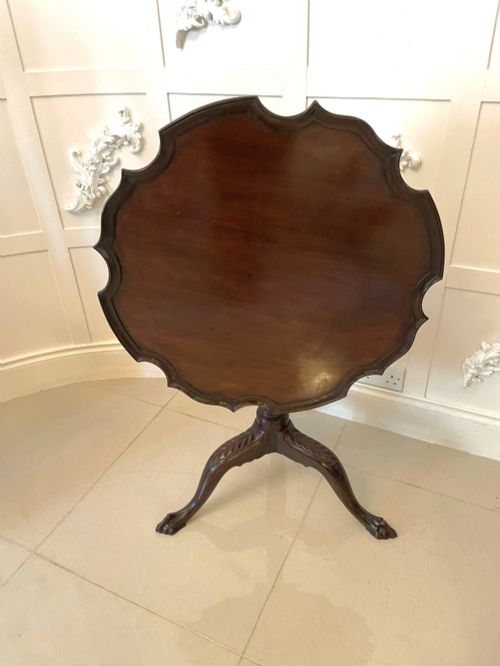
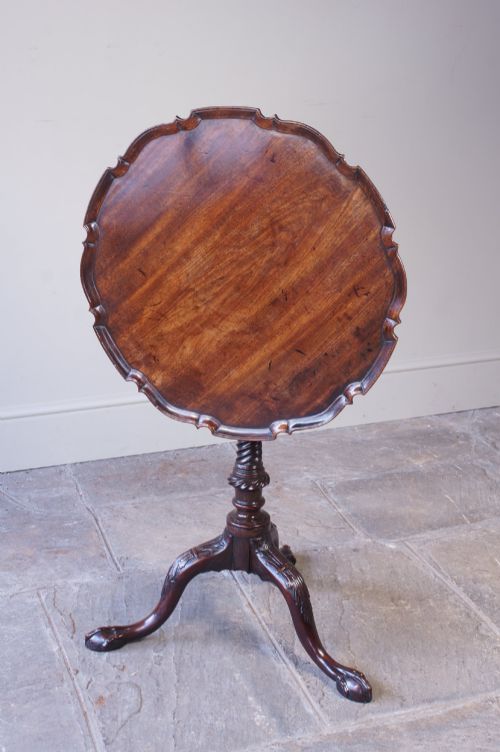
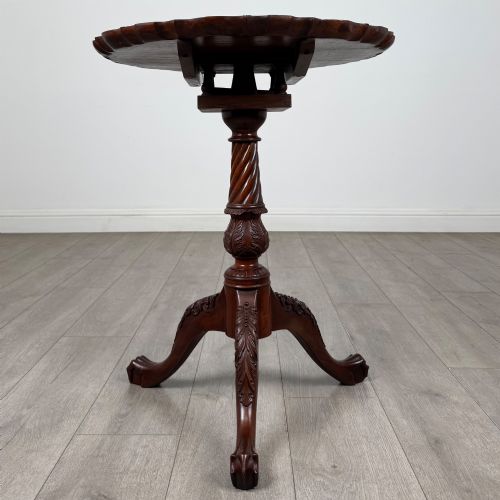
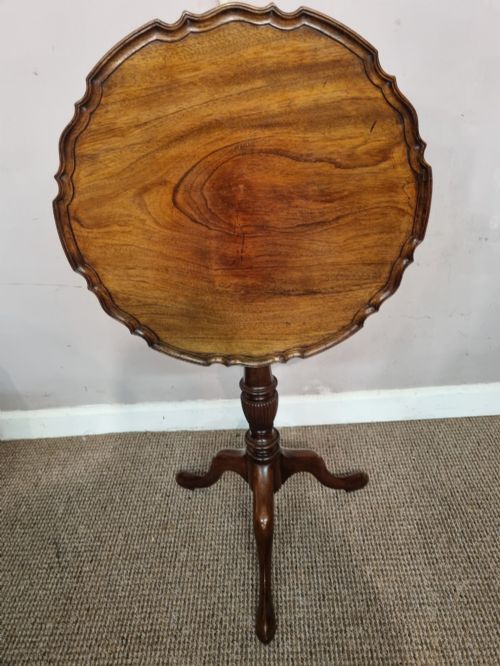
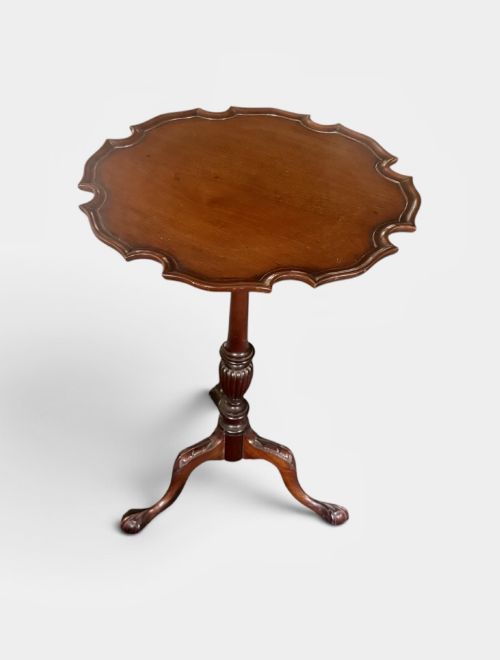
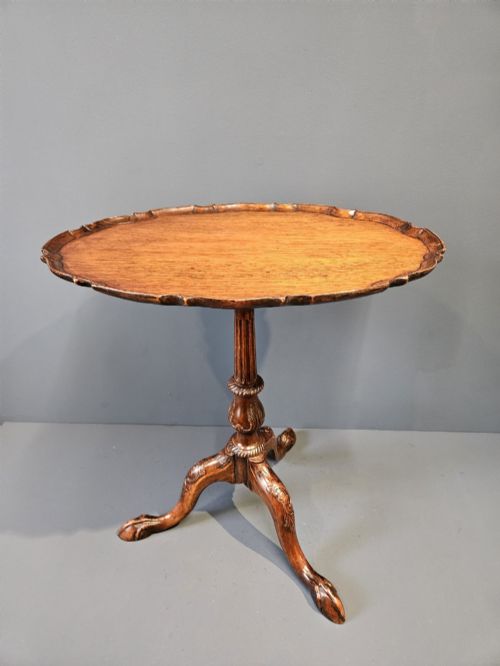
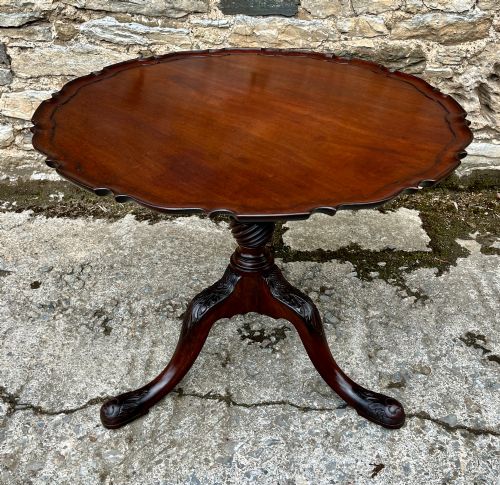
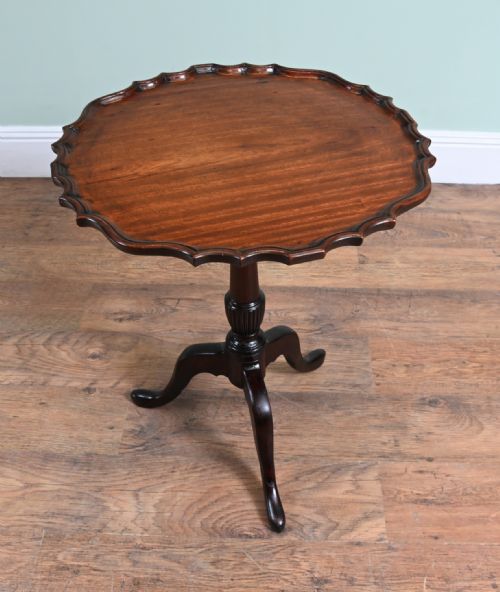
A small round-topped occasional table with a raised, scalloped rim carved round the edge like the crimped crust of a pastry case, made to stop cups and glasses sliding off.
Antique Pie Crust Tables
The name describes the top, not the table. A circular or oval surface is edged with a raised rim carved into scallops or lobes, the profile a pastry cook crimps into a pie. On 18th-century English tea, wine and supper stands that rim did a job: it kept things on the top when the top was tilted or knocked.
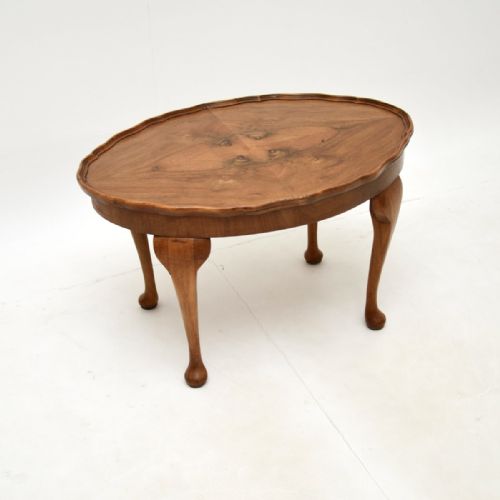
Two forms dominate. One is mahogany on a turned column with three cabriole or splayed legs, described as a tripod in 36 of 122 titles, often with a hinged top that swings vertical. The other is a low burr or figured walnut coffee table, and coffee appears in the same number of titles. Between them, mahogany and walnut account for nearly every piece.
Despite the Georgian reputation, the dated field leans late. It runs from 1750 to 1930, but the two largest blocks are the 1930s and the 1920s, so the walnut coffee-table era outnumbers the Georgian one. Georgian attribution is claimed in 21 titles and George III in 13, and era labels like Georgian or 19th Century are used loosely: two identically titled mahogany tripods carry different centuries.
Around the edges sit smaller groups. Nests of graduated tables with pie crust rims turn up steadily, all walnut in the samples. Georgian-revival and carved-manner reproductions form a visible minority, mostly late 19th to early 20th century. And the same tables get named for their job: wine, lamp, tea, supper, occasional, kettle stand.
The Range
Period does most of the work. Georgian and George III mahogany tripods hold the top of the range, while tables described as revival, or as Georgian style circa 1930, sit in the lower and middle bands. The gap is wide for so small an object: a Georgian mahogany tripod at the top is worth some eighty times a plain 1930s walnut coffee table.
Form separates the two halves. The mahogany tripod concentrates at the upper end; the burr walnut coffee tables of the 1920s and 30s cluster near the bottom. Within each, what the title declares matters. Carved, birdcage and birdcage mechanism all sit above the plain pattern, and a named timber does the same, with Cuban, flame and Irish mahogany turning up in the middle and upper bands.
Anything that breaks the single-table norm lifts a piece. A pair of tripod wine tables, a pair of console tables, a table described as large: all sit well above the usual. Nests of three or five likewise sit above single walnut coffee tables. Pairs are close to unheard of, with only two in the samples.
Antique Pie Crust Tables Retail Price Guide 2026
Typical UK retail prices for pie crust tables, calculated from the Sellingantiques database of over a million retail prices indexed since 2003. This retail price guide relies exclusively on Sellingantiques data; no external sources or auction records are used, so the figures do not describe the wider market.
The 1930s is the period label used most on Sellingantiques for pie crust tables, with the 1920s next and Georgian third.
The Antique Pie Crust Tables Glossary
- Pie crust edge
- The raised, scalloped rim carved round the top, and the feature the whole category is named for. Edge appears in 19 titles.
- Tripod
- A central turned column standing on three legs, usually cabriole or splayed. Named in 36 titles, the commonest structure in the archive.
- Tilt top
- A top hinged to swing vertical so the table stands flat against a wall. Written six ways across the archive: tilt top, tip top, tipping top, snap top and flip over top.
- Birdcage
- The small boxed block of turned pillars between top and column, letting the top both tilt and revolve. Named in only two sampled titles.
- Burr walnut
- Veneer cut from a burred growth for its swirling figure, the usual surface on the 1920s and 30s coffee tables. Figured walnut, chosen for pronounced grain, appears rather less often.
- Wine table
- A small tripod of glass-carrying height. Sits alongside supper table for the larger tilting tops, kettle stand for the smallest, and occasional table when no job is specified.
Antique Pie Crust Tables: Frequently Asked Questions
Are pie crust tables always Georgian?
No. The dated field runs from 1750 to 1930, and the largest blocks in it are the 1930s and the 1920s rather than any 18th-century decade.
Georgian attribution is claimed in 21 of 122 titles and George III in 13. Where a listing gives an era label instead of a year, it is the dealer declining to commit to a decade.
What wood are they usually made from?
Mahogany leads, appearing in about half of all titles, with walnut behind it. Between them the two woods cover nearly every piece on Sellingantiques.
Mahogany goes with the tripod form, walnut with the low coffee tables and nests. Named timbers surface in single titles only: Cuban mahogany, flame mahogany, Irish mahogany, and one goncalo alves table.
Who made antique pie crust tables?
No maker names appear. A scan across all 122 listings returned nothing stamped, labelled or attributed.
This is a form spread thinly across the trade rather than held by a few workshops. Fifty-one different dealers have listed one, and about sixteen come to market in a year.
What does birdcage mean on a tripod table?
It is the small boxed block of turned pillars set between the underside of the top and the head of the column.
That block lets the top revolve as well as tilt. It is named in only two sampled titles, and titles that carry it sit above the plainer pattern.
Do pie crust tables come as pairs or sets?
Rarely as pairs. Only two turn up in the samples, a pair of tripod wine tables and a pair of console tables.
Sets are commoner as nests. Eight titles describe a nest, sampled as nests of three with one nest of five, all walnut and all dated between the 1910s and 30s.
Why is the edge carved that way?
The raised, scalloped rim served to stop cups and glasses sliding off a small top, particularly one hinged to tilt.
It began as an 18th-century English treatment for tea, wine, supper and candle stands, then was revived from the later 19th century onward, first on mahogany tripods and later on low walnut coffee tables.