
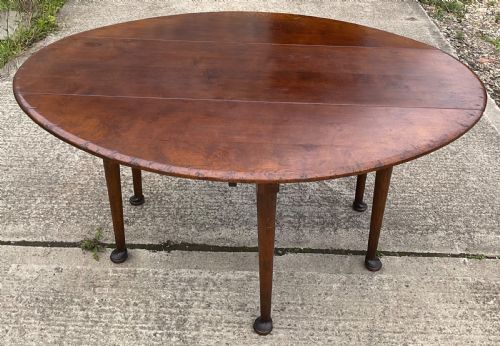


Antique Dropleaf Tables
A table with hinged leaves that lift on gates, swing legs or pull-out lopers to enlarge the top, then fold flat when the room is wanted for something else.
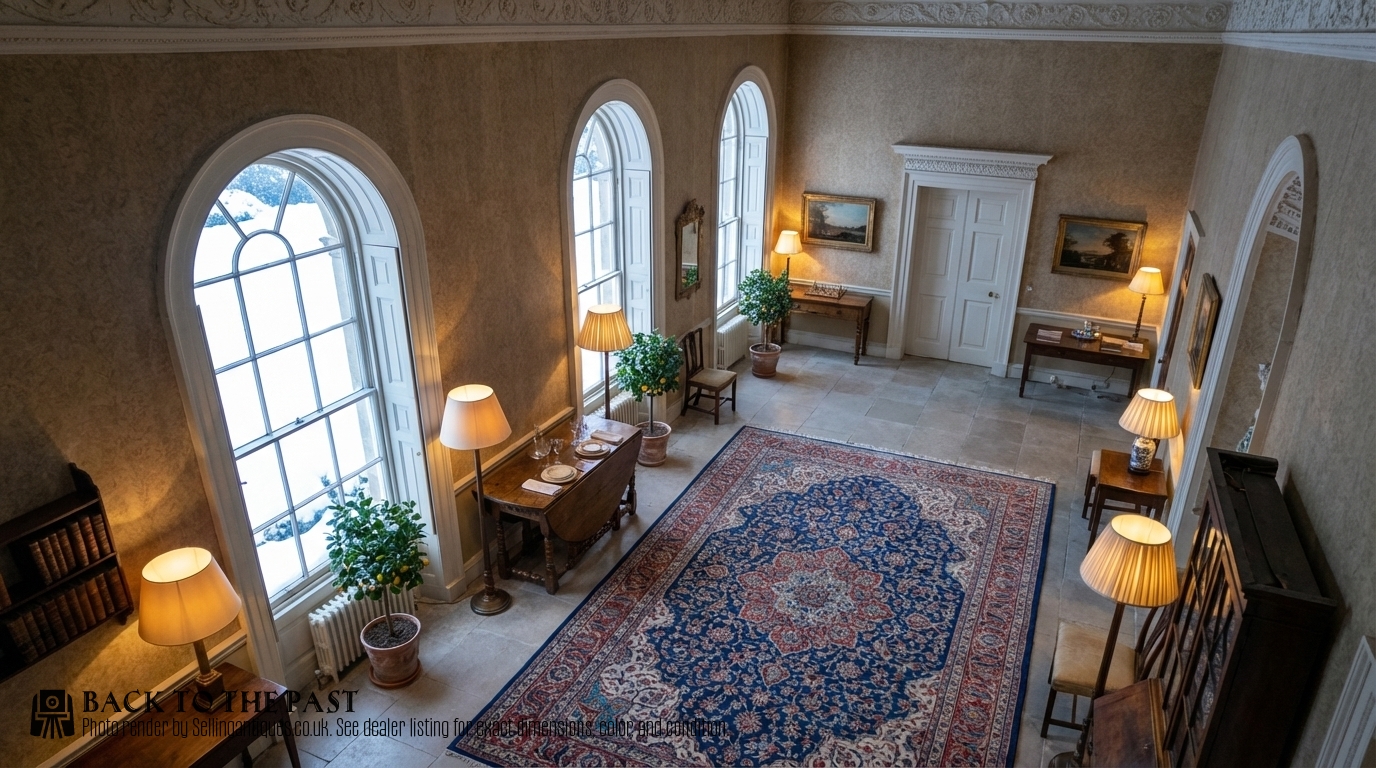
What Are Dropleaf Tables?
Tables with falling leaves carried on swinging gates or legs were made in Britain from the seventeenth century onward, a way of getting a big surface out of a small footprint in rooms used for more than one thing. The form carried on through the eighteenth and nineteenth centuries in dining, breakfast and occasional sizes, and was revived again around 1900.
The category on Sellingantiques is British and timber-led. Mahogany is named in the majority of titles, with oak a distant second and walnut and rosewood behind that. The piece you are most likely to meet is a Georgian mahogany table, either a full dining size or a Pembroke. Oval is the only shape named often enough to count as a norm.
Sizes run a long way. Dining tables described as seating six or eight sit at one end, with Pembroke, Sutherland, lamp, coffee, work and side tables at the other. Oak gateleg and country tables form a smaller group, and inlaid walnut and rosewood pieces another. Edwardian and later revival tables, including Georgian-style examples dated around 1900, make up around one in ten.
Seventy listings carry a clean year and the dated field spans 1700 to 1920, with the 1800s the largest single bucket. Much of the dating is loose rather than precise: fifteen are given only as Georgian, ten as 18th century, nine as 19th century. Decade-level dating is uncommon, so a stated 1800 often means around the turn of the nineteenth century rather than a documented year.

Where The Range Divides
Timber does most of the work. Named and figured woods hold the upper reaches: Cuban mahogany, burr walnut, faded walnut, plum pudding mahogany and rosewood. Plain mahogany and oak fill the lower half. Decoration follows the same line, with brass inlay, marquetry and cross-banding appearing on the higher-placed listings rather than throughout.
Date and scale pull in the same direction. George II, circa 1730 and eighteenth-century titles cluster well above the middle of the range, and dining tables described as seating six or eight, or simply as huge, sit high. Small occasional and coffee tables gather at the other end, Edwardian inlaid coffee tables among the lowest.
Unusual form is the other lift. A corner table, triangular tops, a double Sutherland, a spider-leg table and Swedish examples including a Baroque piece and a slagbord all sit up the range, as does a pine table said to have come out of a narrowboat, the only non-cabinet timber in the sample. The very top is held by eighteenth-century mahogany dining tables and a George II oak corner table.
Retail Price Guide 2026
Typical UK retail prices for dropleaf tables, calculated from the Sellingantiques database of over a million retail prices indexed since 2003. This retail price guide relies exclusively on Sellingantiques data; no external sources or auction records are used, so the figures do not describe the wider market.
The dated examples on Sellingantiques run from 1700 at the earliest to 1920 at the latest, over two centuries of one form.
The Antique Dropleaf Tables Glossary
- Dropleaf
- A table with hinged leaves that fold down at the sides and lift to enlarge the top.
- Gateleg
- A leaf supported by a pivoting frame of leg and stretchers that swings out like a gate.
- Pembroke
- A small table with two short leaves and usually a frieze drawer; twenty titles here.
- Sutherland
- A narrow table with a very slim centre and two deep leaves, folding almost flat.
- Cross-banded
- A border of contrasting veneer laid across the grain around the top.
- Slagbord
- The Swedish term for a dropleaf table, used on one continental listing.
Frequently Asked Questions
What wood are dropleaf tables usually made from?
Mahogany, and by a wide margin. It is named in the majority of titles on Sellingantiques, with oak a distant second.
Walnut and rosewood follow. Beyond those four, a single pine table said to have come from a narrowboat is the only non-cabinet timber in the sample.
How old are most of these tables?
Seventy listings carry a clean year, and the dated field runs from 1700 to 1920. The 1800s is the largest single bucket.
Much of the dating is broad. Fifteen are given only as Georgian, ten as 18th century, nine as 19th century, five as Victorian and three as Edwardian. Decade-level dating is scarce, with the 1850s the commonest at six.
Which shapes turn up?
Oval is the norm, and it is the only shape named often enough to count as one.
Circular, triangular and serpentine tops each show up only once or twice. Among the odder forms in the sample are a corner table, a triangular marquetry occasional table, a two-cupboard table and a spider-leg table.
Are dropleaf tables ever signed or attributed to a maker?
No maker names appear in this evidence. One title compares a table to a known workshop's style, which is a comparison rather than an attribution.
So the listings describe these tables by timber, period, form and shape instead of by hand or firm.
How many seats does a dropleaf dining table give?
Seating is stated on only a handful of dining examples, and where it is, it runs from six to eight places.
The largest table in the sample is described simply as huge. Dining is named in a quarter or so of titles, so the full-size version is a substantial part of the category.
Do continental dropleaf tables come up?
Rarely. The field is otherwise wholly British.
The sample holds a Swedish Baroque example, a Swedish table listed as a slagbord, and two French walnut tables. All sit in the upper part of the range.