
Antique Drop Leaf Tables
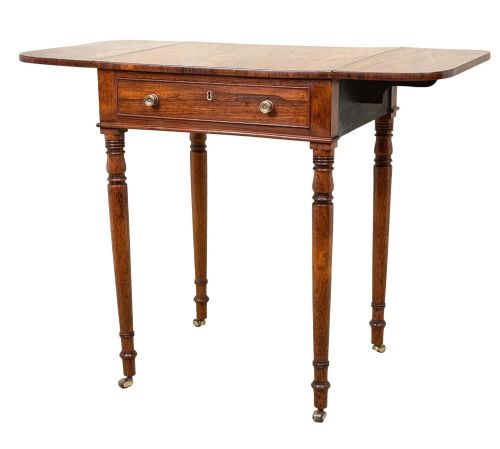
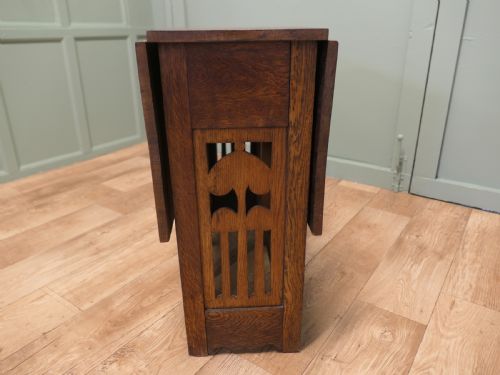
A table whose top is extended by one or two hinged flaps, made so a large surface could be folded down and stood against the wall in a room used for more than one thing.

Antique Drop Leaf Tables
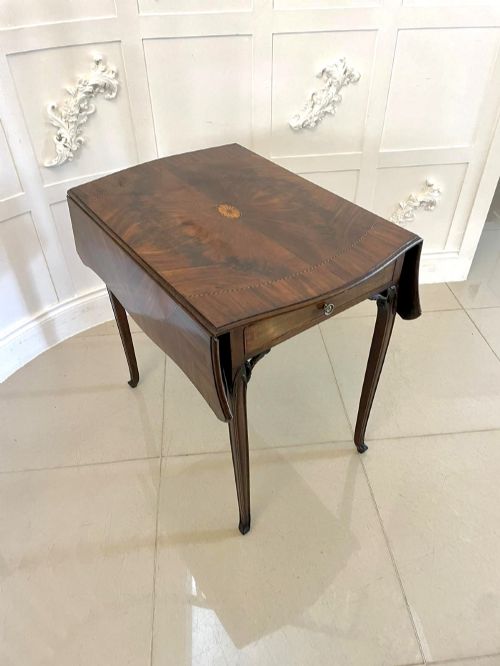
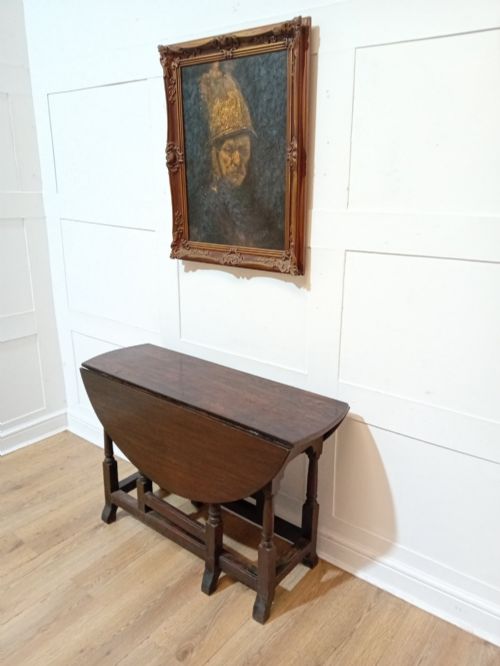
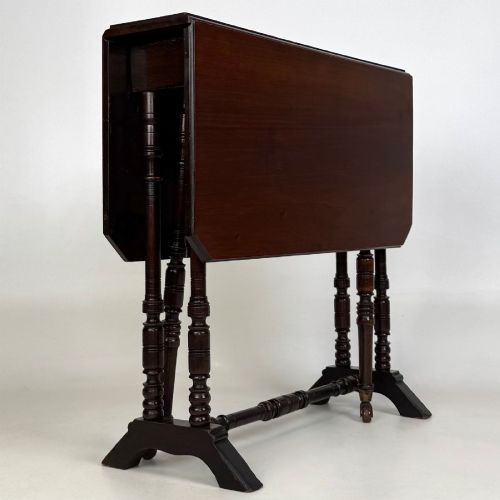
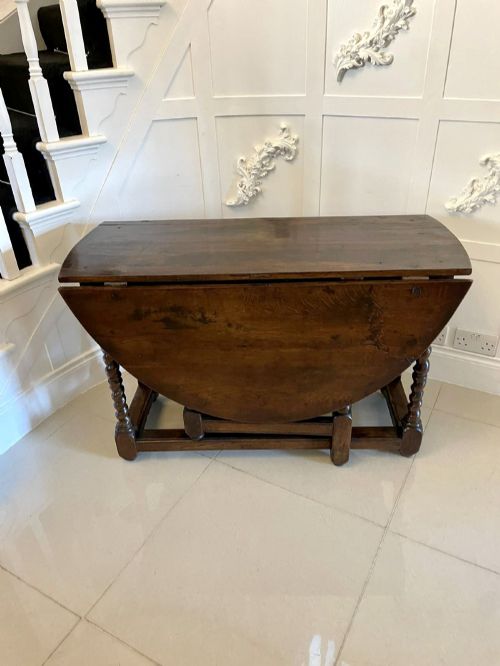
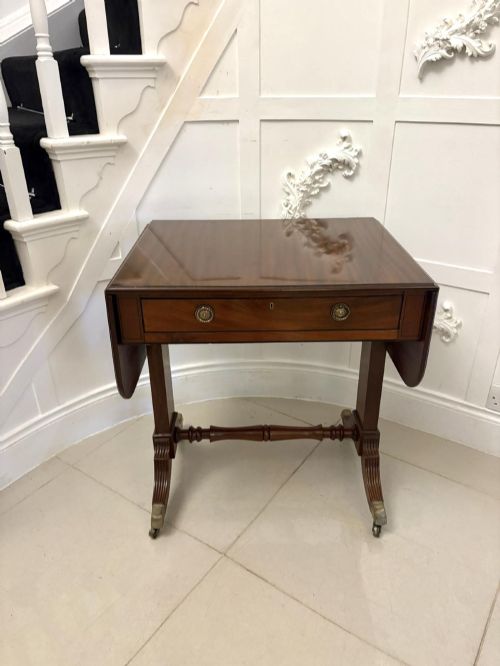
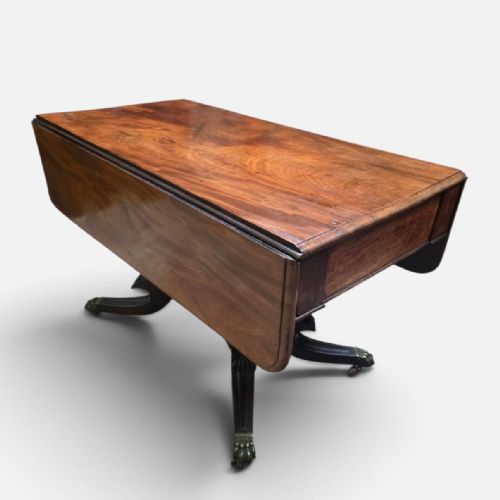
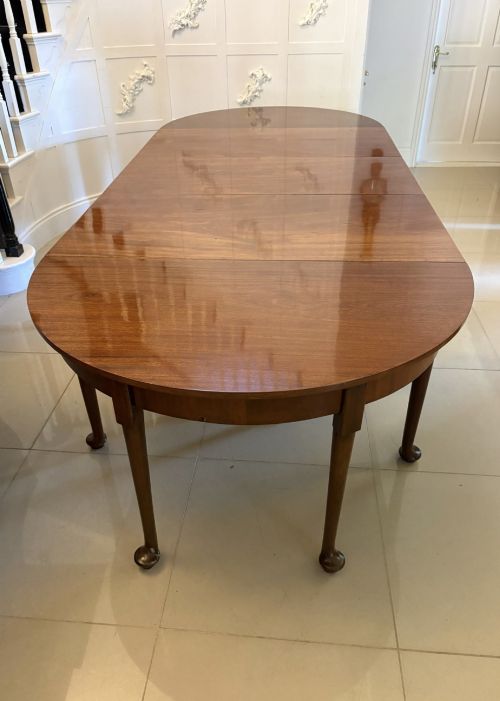
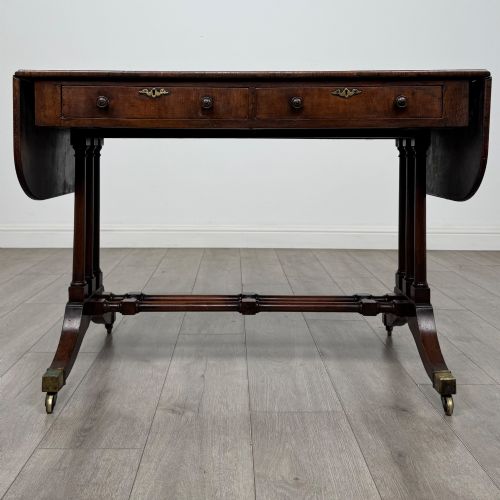
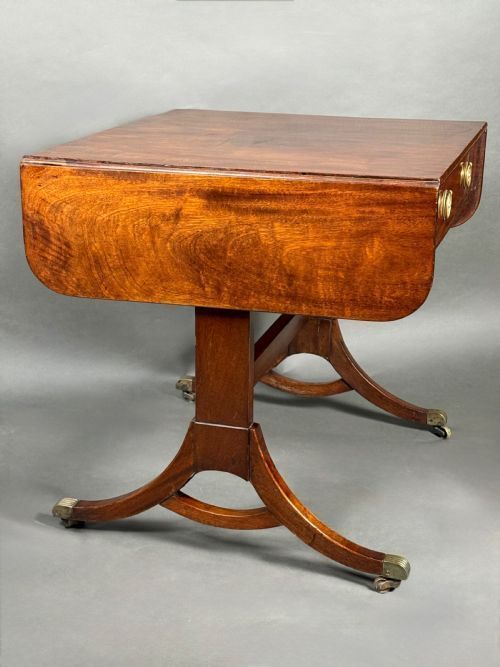
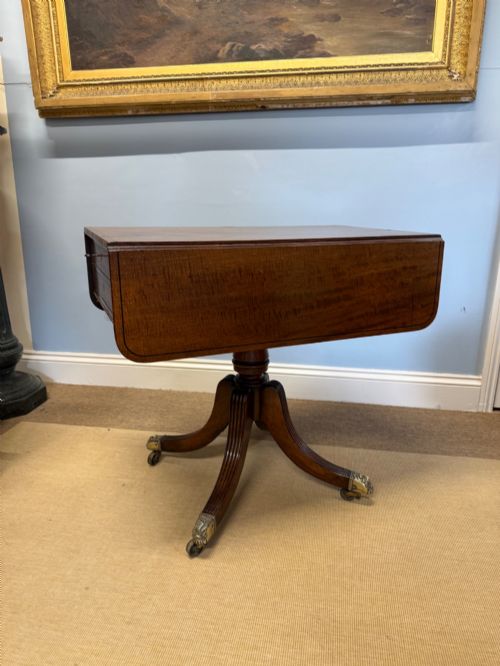
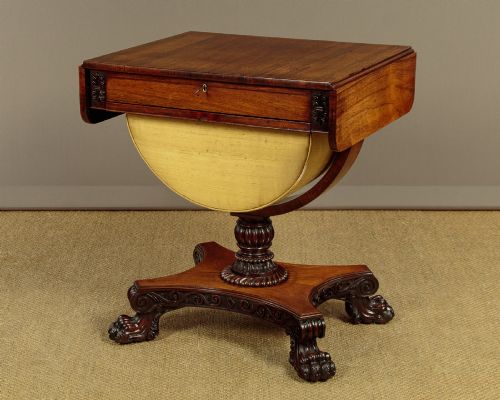
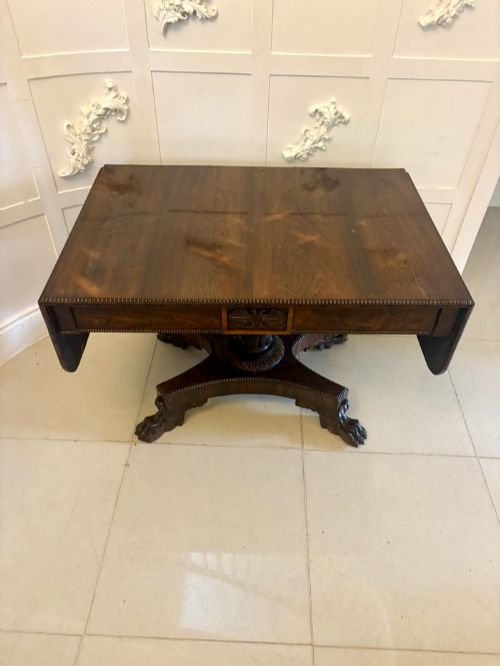
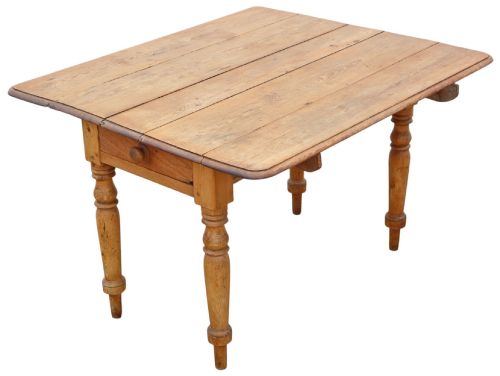
The heading covers a family of named forms rather than one object. Full-size drop leaf dining tables, Pembrokes with two short leaves and a frieze drawer, Sutherlands with a narrow top and deep leaves, oak gatelegs on turned or bobbin legs, and sofa and work tables with a flap at each end.
Mahogany dominates: it names 675 of 1,391 titles, against 227 for oak, 117 for walnut and 102 for rosewood. The table you are most likely to meet is mahogany, given as Georgian or Regency, and described as either dining or Pembroke. Timber and period travel together in the titles, with "regency mahogany" and "georgian mahogany" both recurring pairs.
Pembroke is the single most common named form at 227 titles, dining runs to 281, sofa 179, gateleg around a hundred, and Sutherland 106. Smaller Victorian and Edwardian mahogany or oak occasional pieces sit at the cheaper end of what has sold; Georgian mahogany dining and Pembroke work fills the middle.
Dates run from 1700 to 1960, though only 387 listings carry a clean year. The rest is given by period label, and those labels overlap heavily: Georgian and Regency often describe the same objects seen from different angles. A dealer's period word and a dated year can disagree inside one listing, so read a period label as a description rather than a date.

What Sets Them Apart
Timber and figure do most of the work. Plain mahogany and oak fill the lower range, while satinwood, rosewood, burr walnut, flame mahogany, harewood, pollard oak, birds eye maple and plum pudding mahogany turn up in the highest-priced sampled titles. Karelian birch, amboyna, burr yew and goncalo alves each appear once or twice.
Decoration follows the same line. Inlaid appears in 107 titles, and the top of the sampled range runs to marquetry, brass inlay, satinwood banding and parcel gilding. Named form matters too: sofa and Pembroke tables reach highest, while small, occasional, lamp and coffee versions cluster at the bottom.
Two other things lift a table. Early oak is one, the 17th century being the smallest period group at 35 listings yet supplying several of the highest-priced gatelegs, with patina cited in those titles. Scale and completeness is the other, with eight- to twelve-seater dining tables and matched pairs of Pembroke, sofa and side tables at the upper end.
Antique Drop Leaf Tables Retail Price Guide 2026
Typical UK retail prices for drop leaf tables, calculated from the Sellingantiques database of over a million retail prices indexed since 2003. This retail price guide relies exclusively on Sellingantiques data; no external sources or auction records are used, so the figures do not describe the wider market.
Named forms in the archive include a handkerchief table, a tea caddy table, a metamorphic cellarette table, a dumb waiter and a deception table.
Gillows
The Antique Drop Leaf Tables Glossary
- Drop leaf
- The hinged section of top that folds down at the side or end. Titles also write it dropleaf or drop-side.
- Pembroke
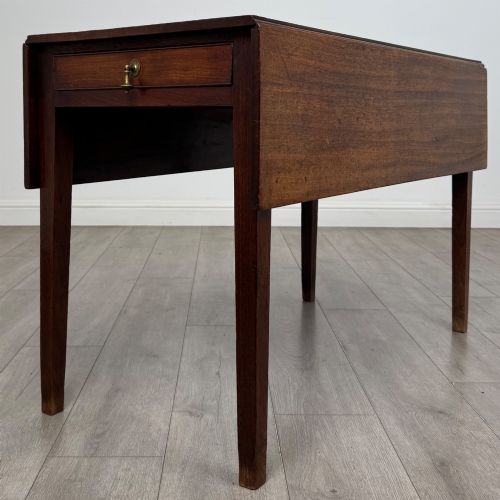
- A small table with a fixed centre and two short leaves, usually with a frieze drawer. Pedestal, baby, oval, spider-leg and satinwood variants all appear.
- Gateleg
- A leg-and-stretcher frame that swings out like a gate to carry the raised leaf. Common on the oak country tables, often with barley twist or bobbin turning.
- Sutherland
- A narrow-topped table with two deep leaves, so it stands almost flat when closed. Walnut and burr walnut examples recur, including small "baby" ones.
- Sofa table
- Long and shallow with a small flap at each end, usually on end supports or a pedestal.
- Pad foot
- A plain rounded foot ending a cabriole leg. "Pad" appears in 30 titles, "pad foot" in 27.
- Crossbanded
- A border of contrasting veneer laid across the grain around the top or leaf.
- Wake table
- A long, narrow oval drop leaf dining table, an occasional form in the archive; one oak example is offered as a 10/12 seater.
Antique Drop Leaf Tables: Frequently Asked Questions
What is a Pembroke table?
A small table with a fixed centre section and two short hinged leaves, usually carrying a frieze drawer. It's the most common named form under this heading, at 227 of 1,391 titles.
The samples include pedestal, baby, oval, spider-leg and satinwood versions, and 75 titles read specifically as mahogany Pembroke.
Which wood is most common?
Mahogany, and by a wide margin. It names 675 of 1,391 titles.
Oak follows at 227, walnut at 117 and rosewood at 102. The oak tends to be gateleg and country work, while walnut is strongly associated with Sutherland tables.
How old are these tables?
The dated field spans 1700 to 1960, though only 387 listings carry a clean year. The rest are given by period label.
By count, the biggest groups are 19th Century, Georgian, Regency and 18th Century, then Victorian and the 1800s, with 1920s, Edwardian and 1900s behind them. The 17th century is the smallest group at 35 listings, nearly all oak gatelegs.
Are drop leaf dining tables big enough to seat guests?
Seating is quoted in titles from four up to twelve. Four and six seaters are the ordinary run; eight and above sit at the upper end of the sampled range.
One oak wake table is offered as a 10/12 seater, the largest capacity stated in the archive. D-end, folding and refectory forms also appear under the dining heading.
What's the difference between a Sutherland and a Pembroke?
A Sutherland has a narrow top with two deep leaves, so it closes down almost flat and stands against a wall. A Pembroke has a wider fixed centre and two short leaves.
Sutherland accounts for 106 titles, often in walnut or burr walnut. Pembroke runs to 227, most often mahogany.
Both are smaller, specialised versions of the same folding principle.
Do these tables ever come in pairs?
More often than you'd expect for a folding table. Matched pairs of Pembroke, sofa and side tables account for several of the highest-priced sampled entries, including a pair of Regency sofa tables near the very top.
Around 159 come to market a year on Sellingantiques, listed by 236 separate dealers over time.