
Antique Library Tables
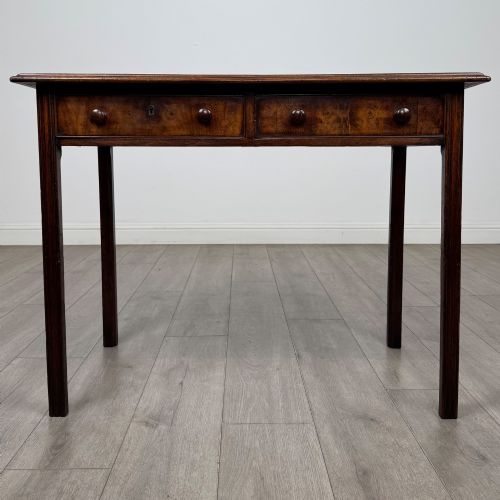
A library table is a freestanding working table, finished on all sides so it can stand out in a room and be used from any side for reading, writing and consulting large books.

Antique Library Tables
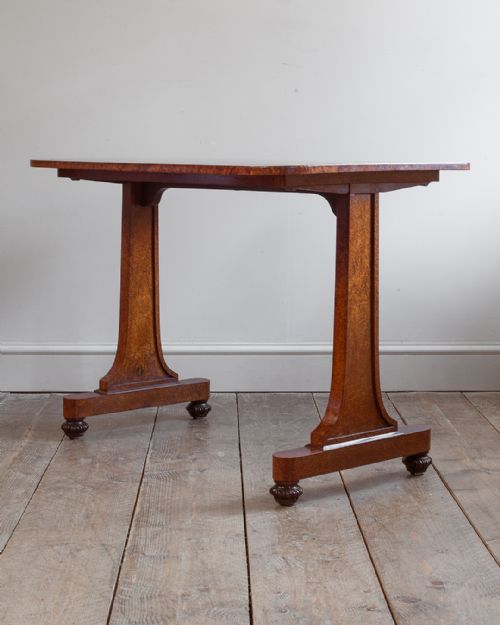
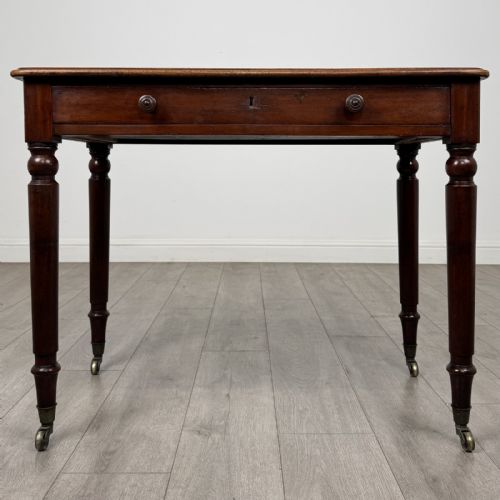
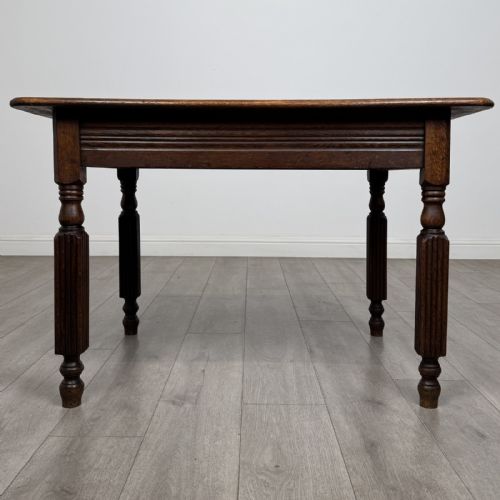
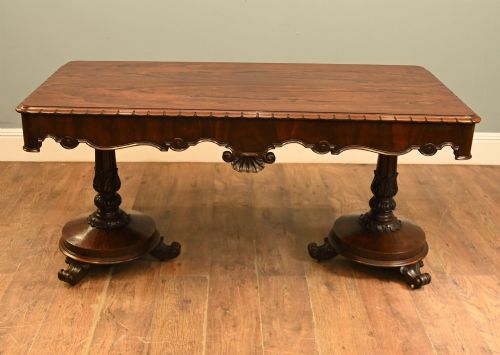
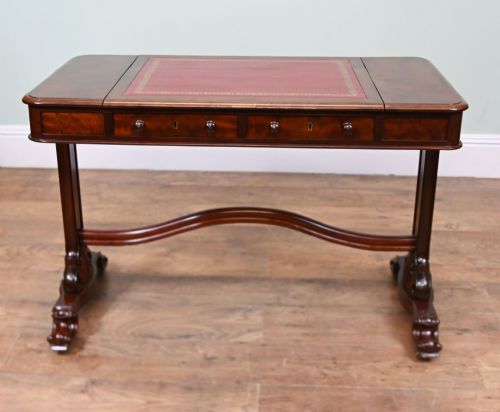
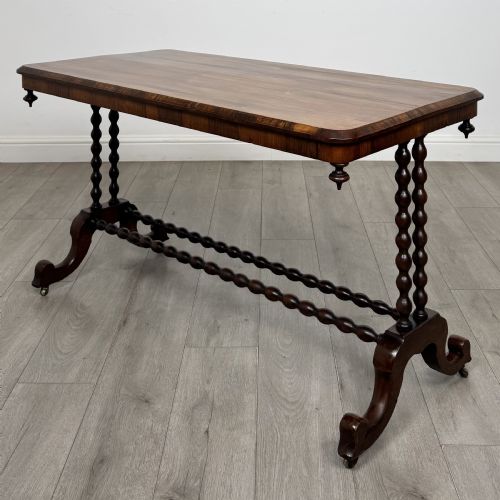
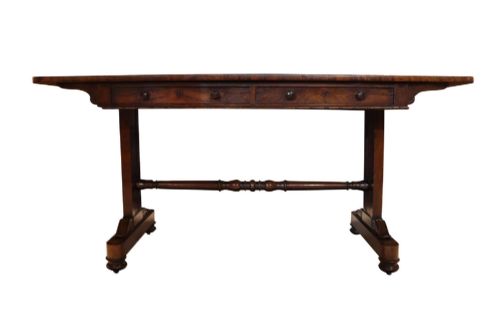
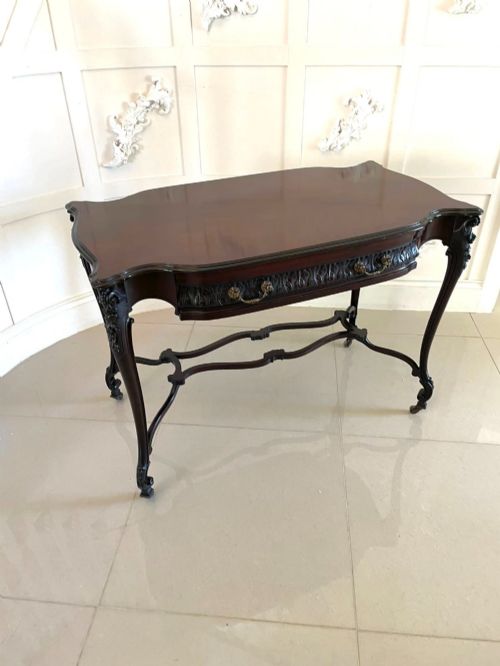
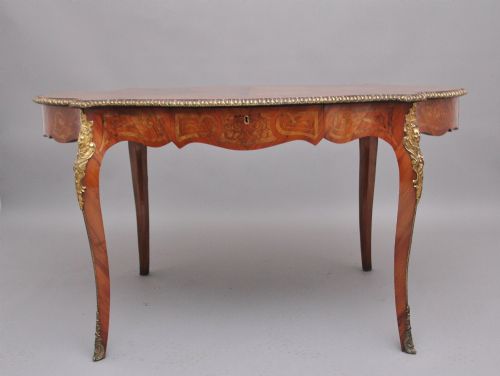
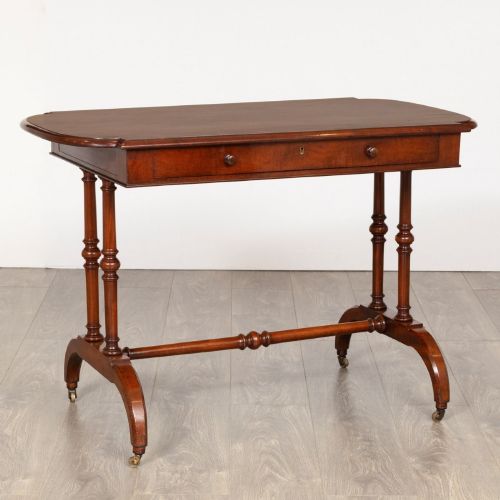
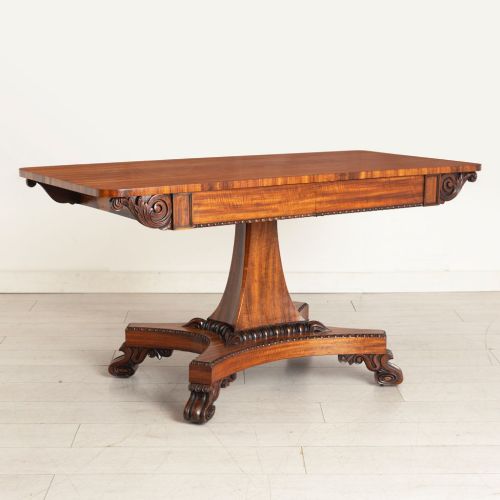
The heading covers a family of tables rather than one design. Rectangular writing tables with two or three frieze drawers dominate, sitting either on turned legs or on shaped end supports joined by a stretcher. Alongside them come circular drum and rent tables, centre tables, sofa tables and full partners' desks with drawers to both sides.
The form began in the 18th century as a large table for a private library, made finished all round so it needn't stand against a wall. Through the 19th century the name widened, and on Sellingantiques the words writing and centre are used almost interchangeably with library in titles: writing appears in around a quarter of them, centre in about an eighth.
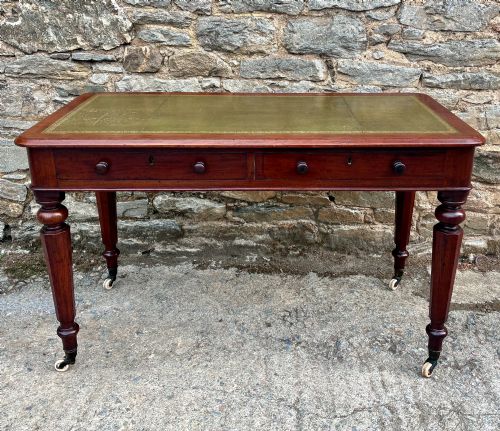
The one you're most likely to meet is a 19th-century English mahogany or rosewood rectangular table with frieze drawers, often with a leather inset top. Mahogany is named in a third of all titles, rosewood in a fifth, with oak and walnut behind them. Period labels cluster on Victorian and Regency, and William IV pieces make up a large sub-population that the period field files under one or the other.
Dates run from 1750 to 1930, though the commonest single entry is plain 19th Century. Where decades are given they gather in the 1850s and 1860s. Sizes run from small chairside and chamber tables up to boardroom-scale pieces of six feet and more, and institutional provenance surfaces occasionally: school, college and public-building tables.
Where The Range Splits
Timber does most of the work. The bottom of the range carries plain mahogany, pine and satin walnut; the top carries burr walnut, pollard and burr oak, birdseye maple, satinwood, kingwood and coromandel. Names beyond the four staples read like a wood library in themselves, with goncalo alves, sabicu, zebrawood, padauk, purple heart, burr elm and burr yew each turning up once or twice.
Form and scale come next. A plain two-drawer rectangle sits below a drum table, a partners' table or a metamorphic piece with an adjustable reading slope, and below oval, kidney, serpentine and tilt-top shapes. Genuinely freestanding and large pushes upward: six-foot partners' tables with six drawers, boardroom pieces and the handful of matched pairs occupy the upper range, while side, chairside and occasional tables sit low.
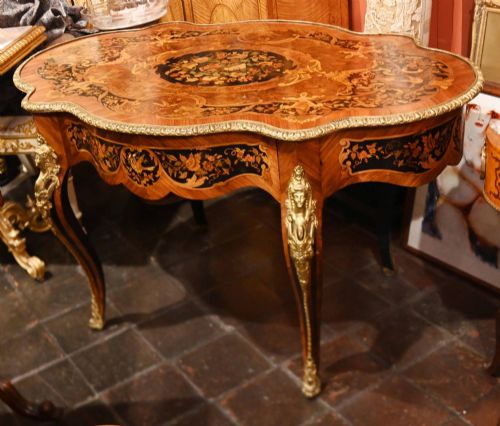
Decoration and authorship separate the rest. Inlay, marquetry, brass inlay, ormolu mounts, parcel gilding and boulle work cluster at the top. A stamped workshop name lifts a table further than a stylistic association does, and titles hedged with 'in the manner of' or 'after' sit below the ones that carry a firm attribution.
Antique Library Tables Retail Price Guide 2026
Typical UK retail prices for library tables, calculated from the Sellingantiques database of over a million retail prices indexed since 2003. This retail price guide relies exclusively on Sellingantiques data; no external sources or auction records are used, so the figures do not describe the wider market.
The most expensive library table ever sold on Sellingantiques was a pair of early 19th century mahogany library tables, in June 2024.
Gillows of Lancaster·Charles Hindley & Sons·Heals
The Antique Library Tables Glossary
- Freestanding
- Finished on all four sides so the table can stand in the middle of a room rather than against a wall. Around 27 titles say so outright.
- Partners
- Worked from both sides, usually with drawers front and back. Around 49 titles use the word, often on six-drawer tables of five feet and more.
- Drum table
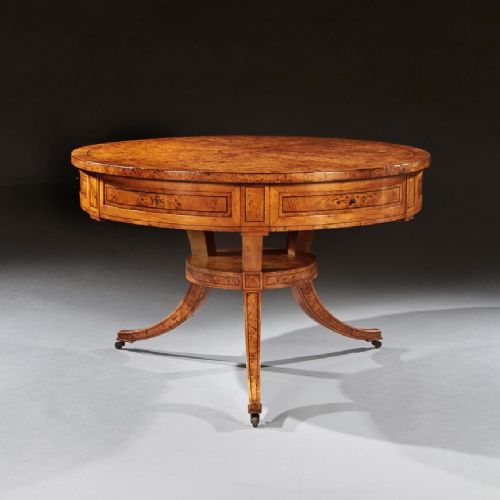
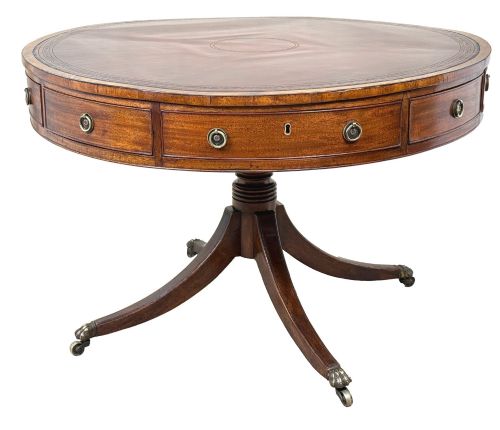
- A circular top over a deep drawered frieze, frequently revolving. Some 57 titles, and they turn up circular, octagonal and occasionally oval.
- Rent table
- A drum table with lettered or numbered drawers, made for keeping estate accounts in order. A handful appear.
- End support
- Solid shaped standards at each end in place of corner legs, commonly tied by a horizontal stretcher.
- Bureau plat
- The French flat-topped writing table, usually leather-lined. Named in 23 titles.
Antique Library Tables: Frequently Asked Questions
What is the difference between a library and writing table?
In practice, very little. On Sellingantiques the two words are used almost interchangeably in titles, with writing appearing in around a quarter of them.
Both describe a freestanding table with frieze drawers meant to be worked at. Centre table is used the same way, in about an eighth of titles.
How common are library tables on the market?
Around 126 come to market on Sellingantiques in a year, and 233 different dealers have listed one.
That makes it a form almost every general furniture dealer handles at some point, rather than a specialist corner of the trade.
Which woods were used?
Mahogany is named in a third of all titles, rosewood in a fifth, then oak and walnut. Between them those four account for the great majority of timber named.
Beyond the staples come burr walnut, pollard and burr oak, satinwood, kingwood, coromandel, calamander, zebrawood, birdseye maple and satin birch, each appearing once or twice.
Do these tables have leather tops?
Many do. Leather appears in 49 titles, with leather top in 30, sometimes gilt-tooled around the edge.
The rest are timber-topped, and on drum tables the whole circular surface may be leather-inset.
What is a drum table used for?
A drum table is a circular top over a deep drawered frieze, often revolving so the drawers come round to the sitter.
Where the drawers are lettered or numbered, it was made as a rent table for estate accounts. Around 57 turn up, in circular, octagonal and occasionally oval versions.
Are there Continental examples?
Yes, though English pieces dominate. French bureaux plats appear in 23 titles.
The unusual ones are one-offs: a late 17th-century Dutch parquetry table, Portuguese and Spanish walnut and rosewood, a Swedish drum table, an Anglo-Indian padouk table, and Japanese and Italian marble-topped centre tables.