
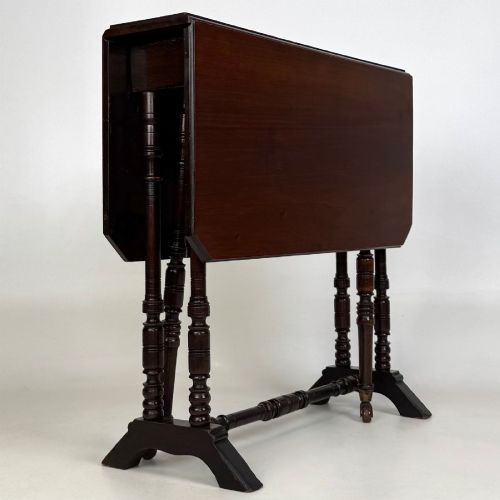
Antique Trestle Tables
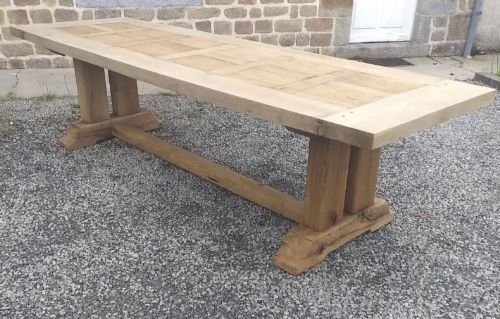
A top laid across two end supports tied by a stretcher, built to be moved or taken apart, and used for eating and working in halls, refectories and farm kitchens.

Antique Trestle Tables
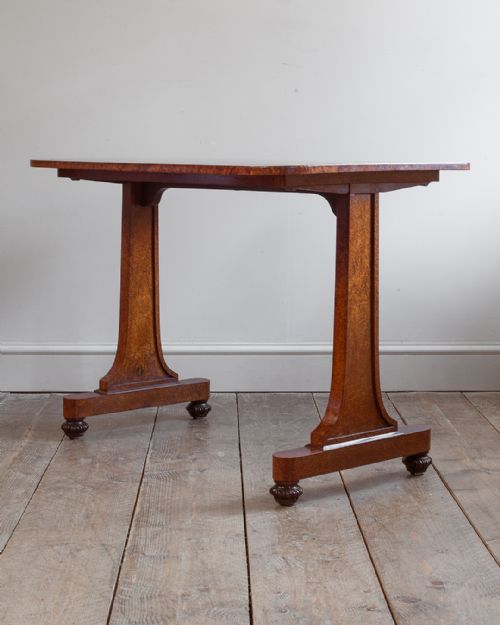
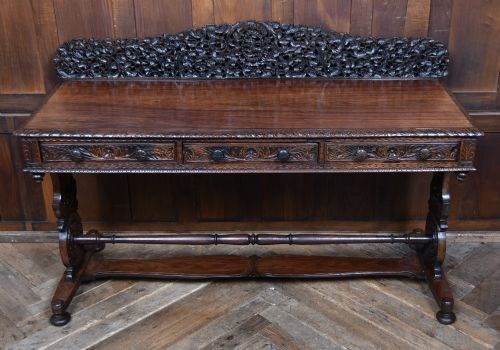
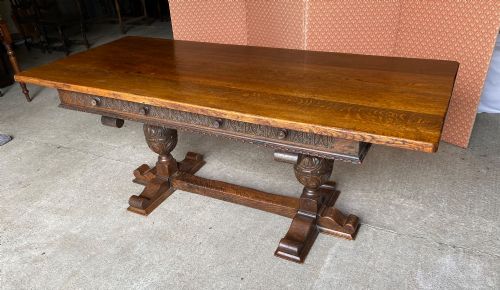
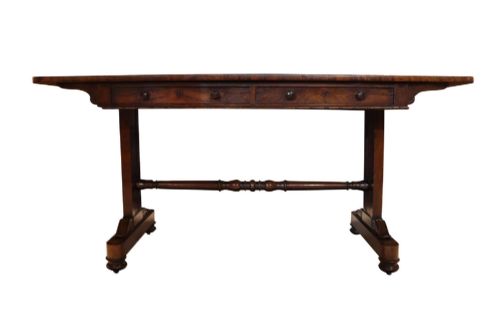
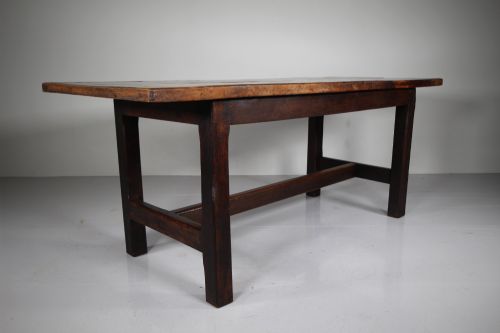
The heading covers two overlapping populations. One is the table genuinely built on trestle or X-frame ends joined by a stretcher. The other is the wider sweep of long plank-topped country tables that dealers file alongside it: refectory, farmhouse, tavern, vendange. Sitting with them is a body of Victorian and Regency library, writing, sofa and centre tables, concentrated in the live stock.
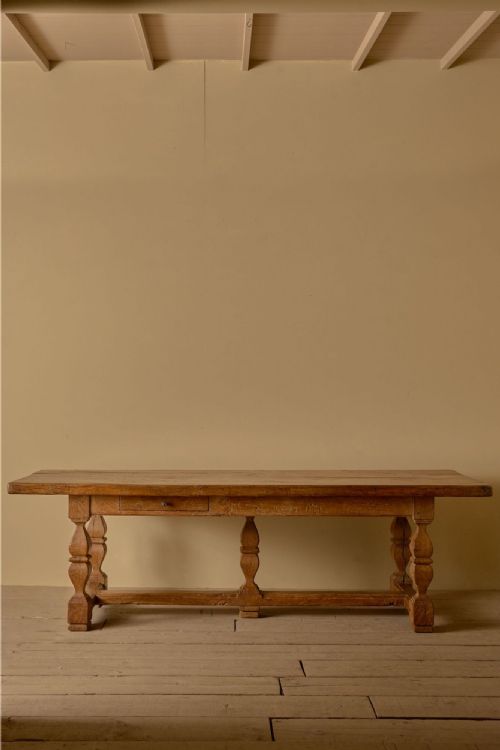
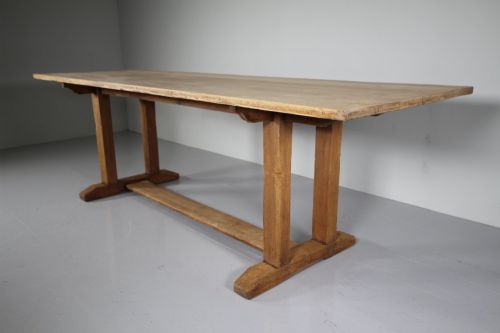
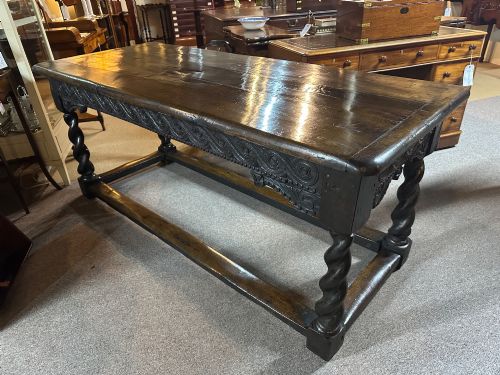
Oak dominates. It appears in a third of titles, and the likeliest thing you'll meet is a plain oak refectory or farmhouse dining table on heavy end standards. Refectory turns up in around one title in seven, dining in one in five. The same object gets called refectory by one dealer, farmhouse by another, tavern or monastery table by a third, so the words track the seller rather than the form.
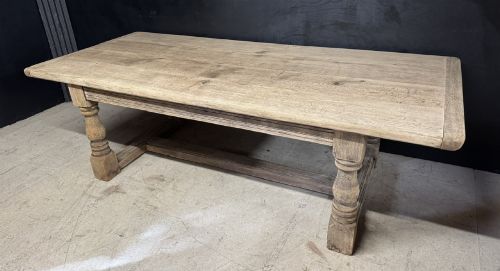
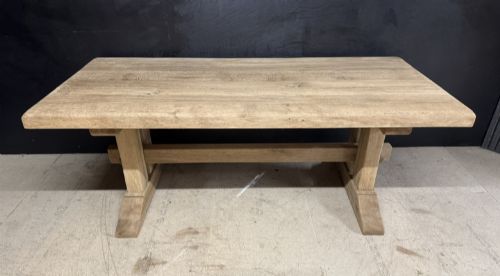
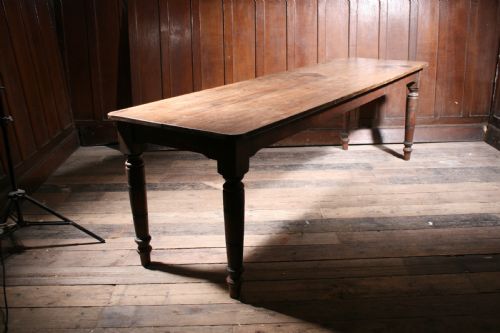
The French group is the largest single named branch, roughly a fifth of the category. Long scrubbed or bleached tops on trestle ends, in oak, sycamore and elm, running in near-identical batches dated to the 1880s or the 1920s. Behind it comes an English country strand in pine, elm and painted timber, with folding Cornish trestles and X-frame Welsh tavern tables.
Dating is broad. The dated field runs 1690 to 1940, but the commonest entry by a wide margin is simply "19th Century", and Victorian and Regency are used as loose brackets too. Only a couple of dozen listings sit in the 18th century and a handful in the 17th. Titles sometimes claim an earlier origin than the dated field carries, so the two are worth reading against each other.
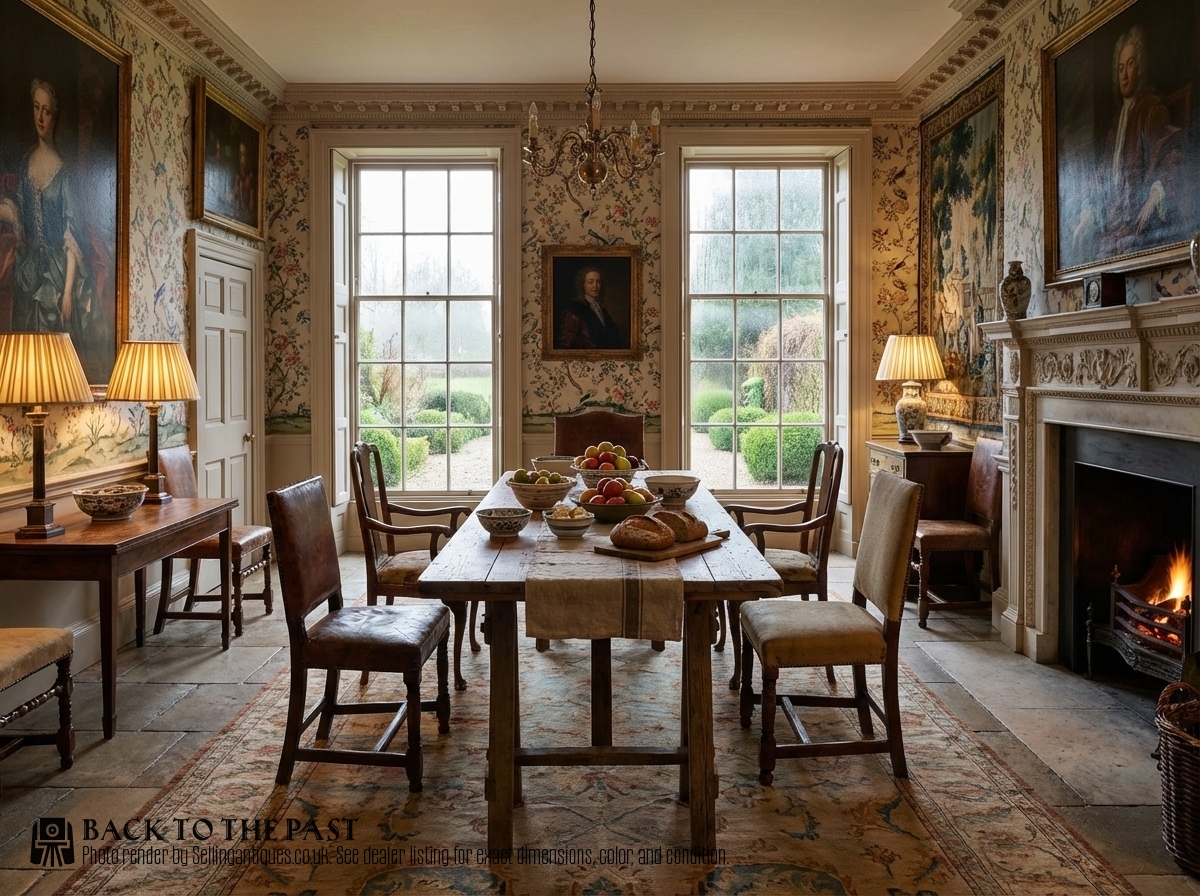
Where The Range Splits
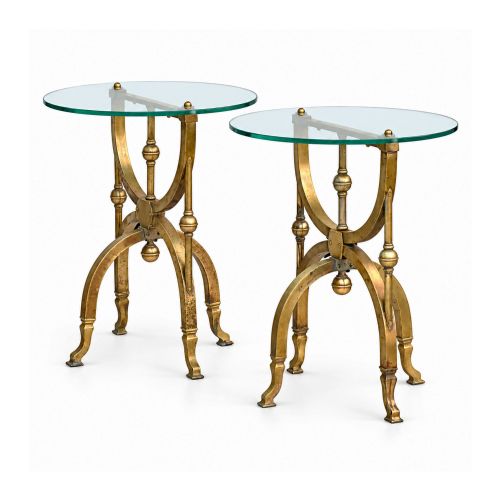
Length carries the top of the range more than anything else. The pieces at the ceiling are described in metres and seat counts: four-metre French oak drapers and refectory tables, a 12.5ft pine community harvest table, a thirty-seater oak banqueting table. At the other end sit small lamp, coffee and side tables on the same trestle idea, shrunk down.
Claimed age is the second lever. The 17th and 18th century titles sit well above the 1920s and Edwardian trestles, and the earliest dated piece in the archive is a late 17th century oak trestle table given as 1690. Timber pulls in a different direction: oak and walnut carry the heavier country pieces, pine clusters low, while rosewood and mahogany mark the formal library and writing tables rather than the farmhouse ones.
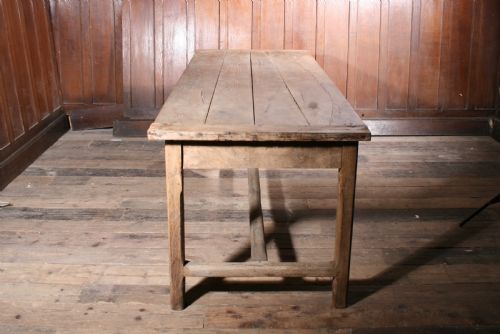
Detail stated in the title tends to travel with the better examples. Single plank, two planked, three eleven-inch planks: where the top's construction is spelt out, the piece is usually at the upper end, while unspecified tops fill the bottom. Surface treatment works the same way. Bleached, scrubbed and original paint are put forward as selling points rather than left unmentioned.
Antique Trestle Tables Retail Price Guide 2026
Typical UK retail prices for trestle tables, calculated from the Sellingantiques database of over a million retail prices indexed since 2003. This retail price guide relies exclusively on Sellingantiques data; no external sources or auction records are used, so the figures do not describe the wider market.
Spain and Sweden are the rarest recurring origins for trestle tables on Sellingantiques, at nineteen titles apiece, with Italy rarer still.

The Antique Trestle Tables Glossary
- Trestle
- An end support of two standards joined by a stretcher, carrying the top instead of four corner legs.
- Refectory table
- A long dining table on end supports with a stretcher. Around ninety-seven titles use the word, and it turns up spelt "refrectory" and "refractory" too.
- Trestle end
- A table whose ends are trestles but whose top is fixed rather than laid loose, as in "French Oak Trestle End Farmhouse Dining".
- Plank top
- A top made from a few wide boards. Titles specify single plank, two planked or three plank where it counts in the piece's favour.
- Bleached oak
- A pale-toned oak surface, named in thirty-odd titles and a strong marker of the French sub-type. Scrubbed means bare timber cleaned back rather than polished.
- Potboard
- A low shelf set between the trestles. Cleated ends are battens run across the ends of a plank top to hold it flat.
Antique Trestle Tables: Frequently Asked Questions
What makes a table a trestle table?
The top sits on separate end supports, usually tied together by a low stretcher, rather than on four corner legs. The form was built so it could be dismantled or shifted in halls, refectories and workshops.
It persisted in country, monastic and agricultural use long after fixed-leg tables took over domestic rooms, which is why so many of these are plain scrubbed or bare timber.
Which wood is most common?
Oak, by a distance. It appears in a third of all titles and defines the category, both in the English refectory tables and in the French bleached ones.
Pine, elm and sycamore fill out the country end. Mahogany, rosewood and walnut show up mostly on the formal Regency and Victorian library, writing and centre tables that dealers have filed under the same heading.
How old are most of these tables?
Around four hundred of the listings carry a clean year, and the field runs from 1690 to 1940. The single commonest entry is the unspecific "19th Century".
Where decades are given they gather in the 1920s, 1880s and 1900s, with smaller clusters in the 1850s and 1860s. Only a few dozen listings sit in the 18th century and fewer still in the 17th.
Are French trestle tables different from English ones?
They read as a house style on Sellingantiques. Long scrubbed or bleached tops in oak, sycamore and elm on trestle ends, arriving in runs of near-identical tables dated to the 1880s or the 1920s.
The English side is more mixed: oak refectory and farmhouse tables, pine and elm country pieces, folding Cornish trestles, X-frame Welsh tavern tables.
Do trestle tables carry maker's names?
The trestle and refectory pieces don't. No workshop or maker attaches to them in the listings, which fits a form made in country and farm settings rather than named cabinet shops.
What identifies them instead is timber, origin, top construction and length.
What unusual examples turn up in this category?
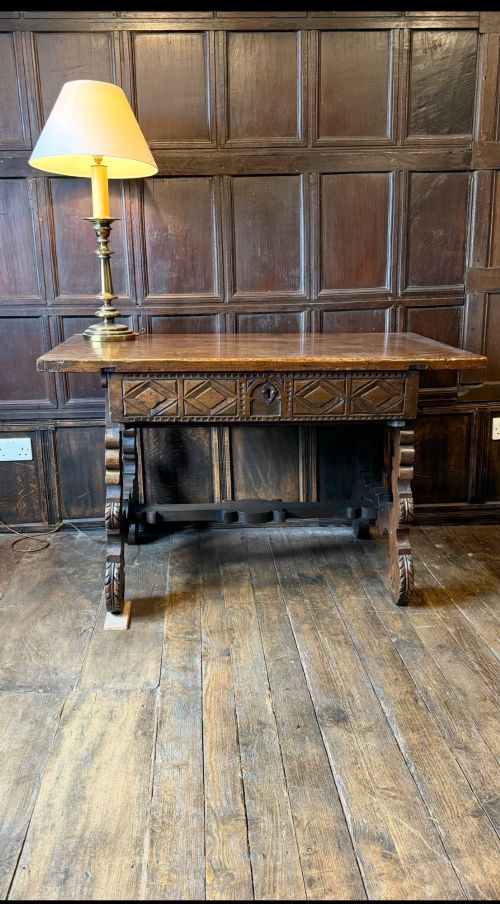
Occasional pieces from well outside the French and English mainstream. A Chinese hardwood plank-top trestle table of the 1800s, a Burmese painted teak village table, an Austrian low table, a Catalan trestle with an iron stretcher, a Swedish pine bakers' table.
Spain and Sweden are the rarest recurring origins, Italy rarer again. Pairs are unusual: two entries for a pair of English oak trestle tables, and one fruitwood table offered with its benches.