

Regency Tables
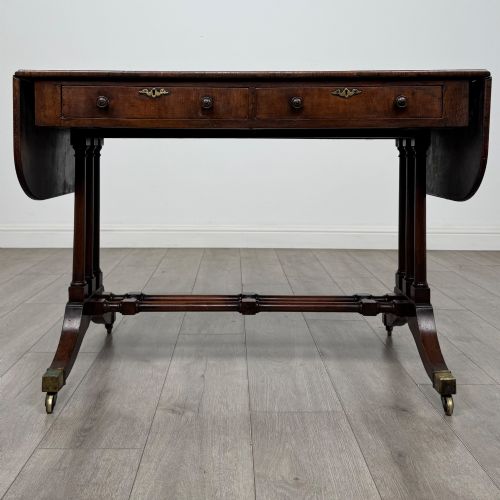
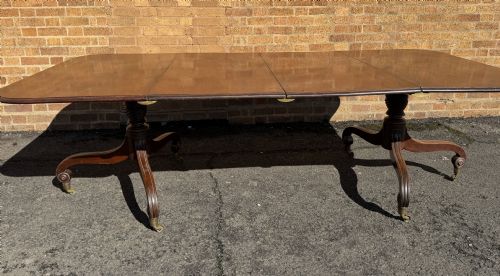
Tables made in England in the opening decades of the nineteenth century, and later ones in the same taste, from long pillar dining tables down to small tripod lamp and wine tables.
Regency Tables
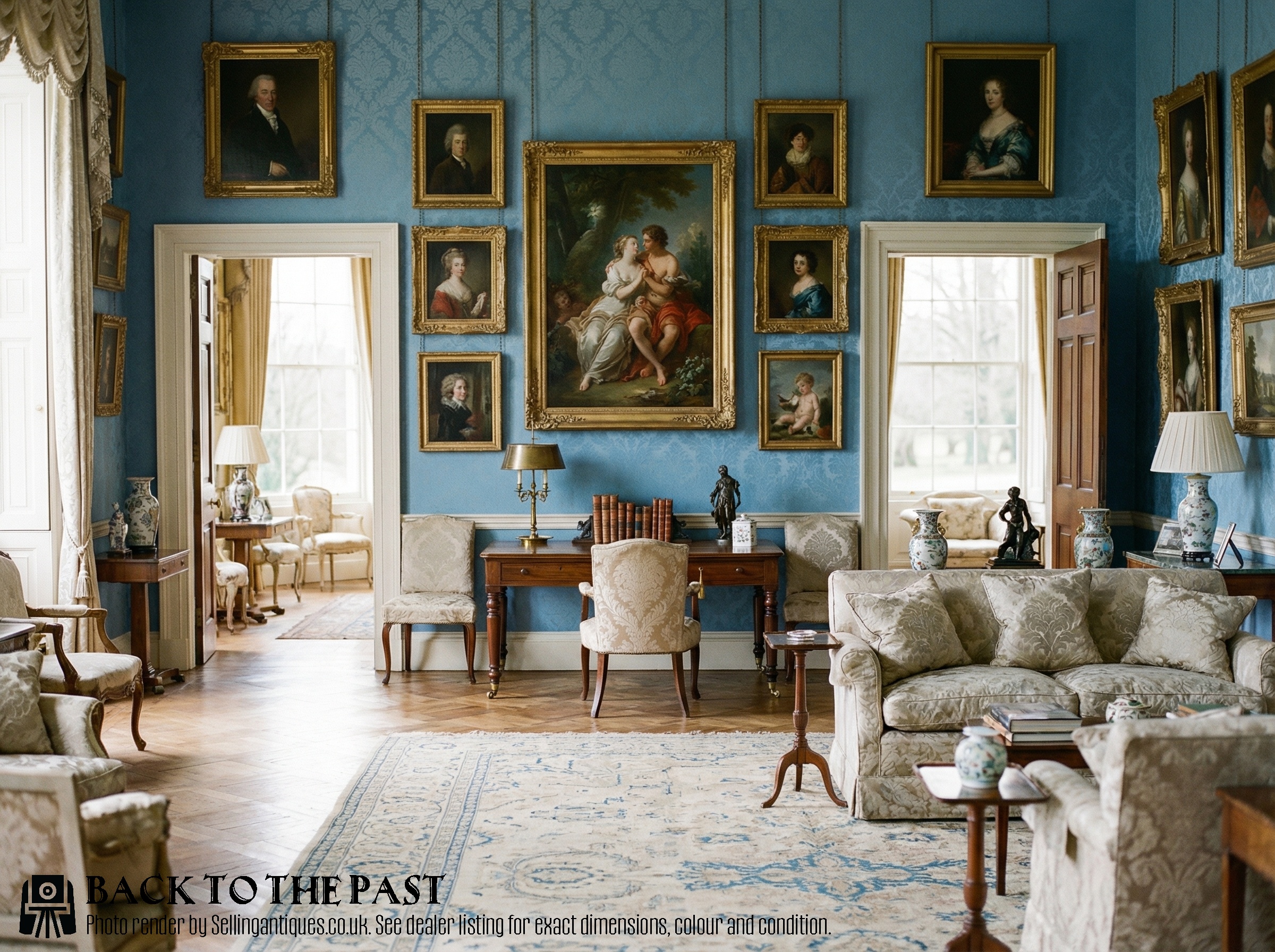
The Regency style belongs to the early nineteenth century, when classical and archaeological sources were reworked into lighter, more architectural furniture for town and country houses. It was revived and reproduced from the later nineteenth century onwards, which is why the label sits on both period pieces and later work in the taste.
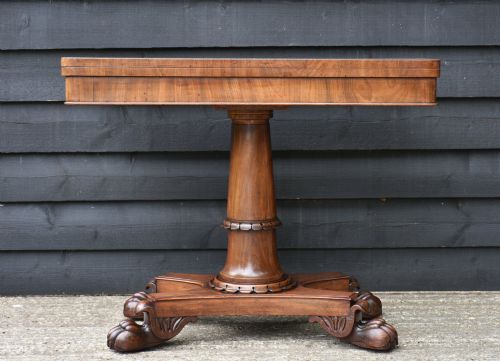
Material does most of the identifying in the titles. Mahogany appears in 2,427 of 4,416 titles and rosewood in 928, with oak, pine, satinwood, walnut, goncalo alves, birds-eye maple and painted or ebonised finishes sharing what's left. The piece you're most likely to meet is a mahogany table of small-to-medium domestic scale.
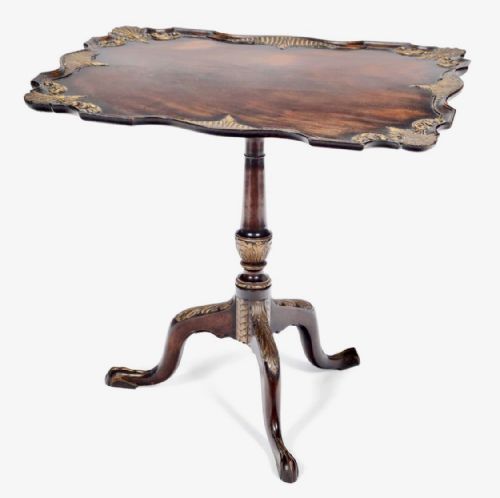
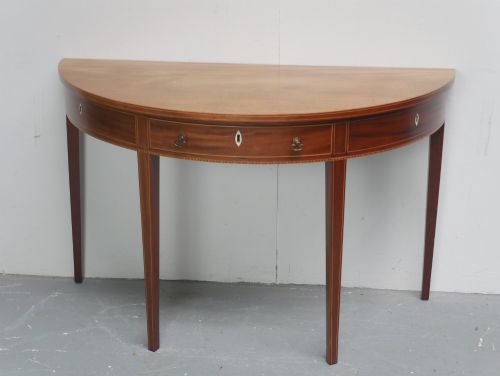
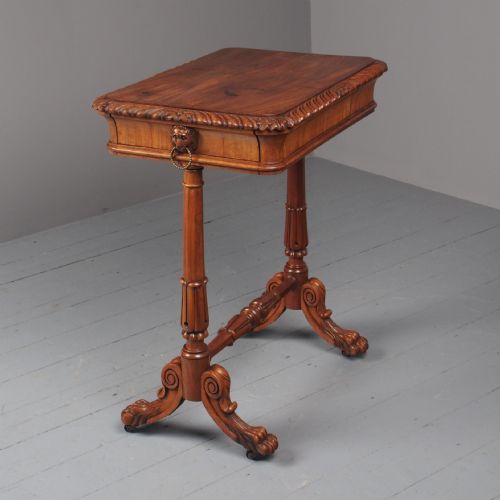
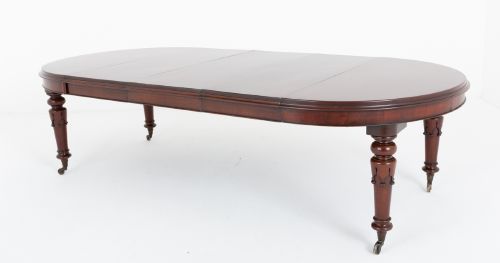
Function then splits the group. Dining, side and console, and sofa tables are the three largest clusters; card, games and work tables come next, and that's where rosewood and brass inlay concentrate. Below them sit lamp, occasional, wine and tilt-top tables on tripod or pillar supports, which fill the lower reaches of the range.
Dating is loose. Only 654 of 4,416 listings carry a clean year, and the rest are filed under a style or century label. A visible minority isn't of the period at all: 154 listings are dated to the 1920s and 47 to the 1930s, titled Regency Style, Regency Revival or Regency Design.
What Sets Them Apart
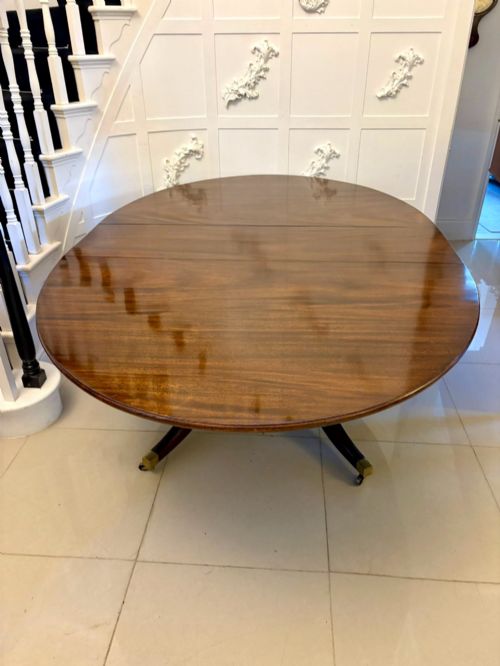
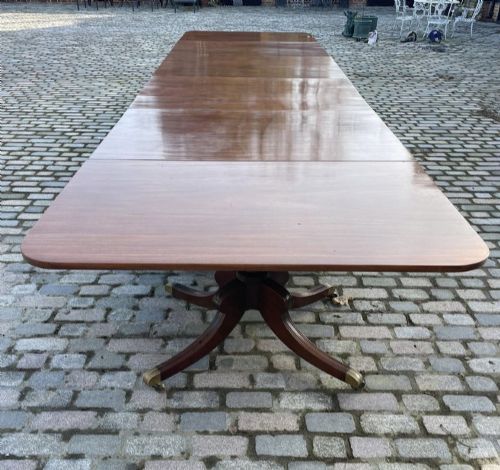
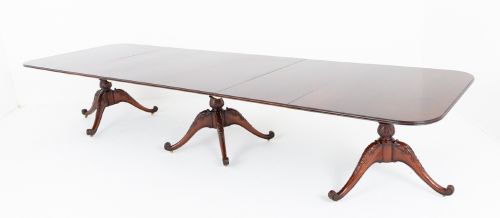
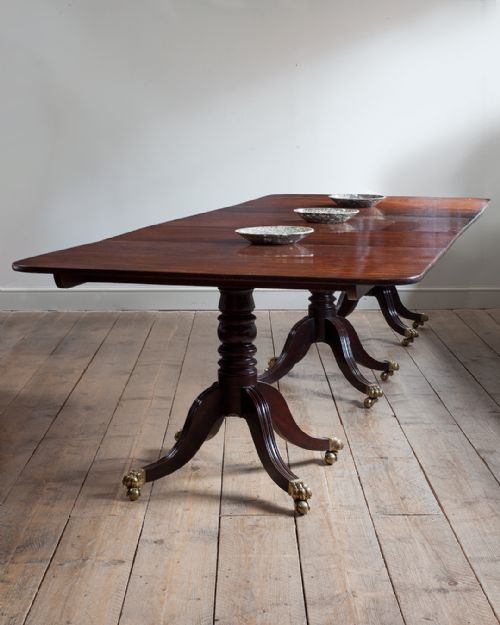
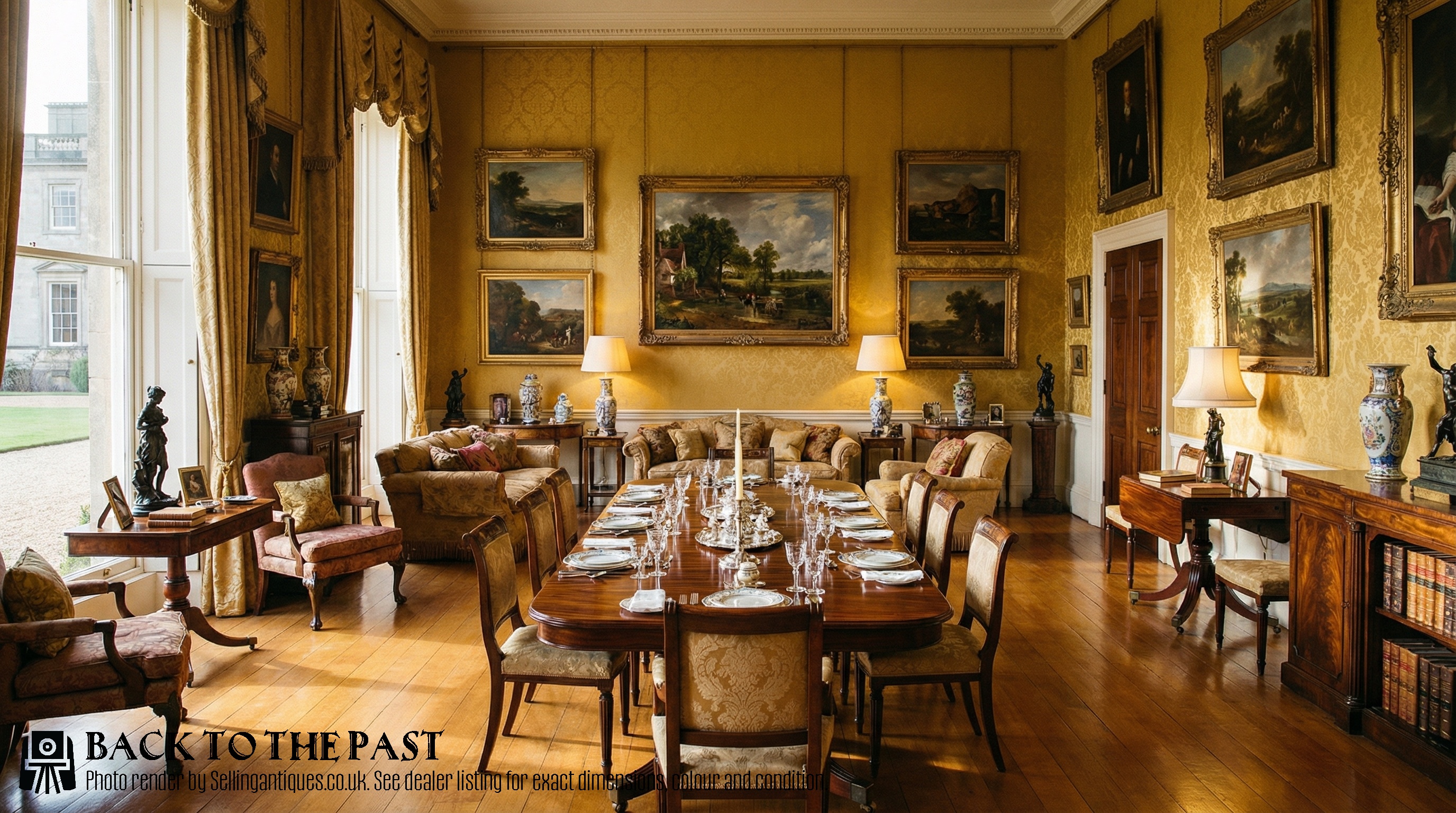
Size and support count decide the top of the range. Two-pillar dining tables sit in the low-to-mid thousands, while three-pillar and multi-pillar tables quoting 12ft to 16ft and twelve to twenty-eight seats occupy the highest positions, one six-pillar table running to 609cm and seating 28.
Timber and decoration move a piece up from there. Plain mahogany is the baseline; rosewood, satinwood, goncalo alves, pollard and burr oak, burr yew, birds-eye maple and specimen tops appear disproportionately in the upper half, as do figured and flame veneers. Brass line and foliate inlay, most often on rosewood card, sofa and games tables, and gilt-metal mounts, sit well above plain equivalents.
Two other things count. A named workshop lifts a table, and titles that stamp or attribute Gillows sit high, while 'in the manner of' and 'design' wording appears lower down. Pairs and sets outrank singles: pairs of console, card, tea and pier tables, and nests of three or four, consistently do better than the same thing on its own.
Regency Tables Retail Price Guide 2026
Typical UK retail prices for regency tables, calculated from the Sellingantiques database of over a million retail prices indexed since 2003. This retail price guide relies exclusively on Sellingantiques data; no external sources or auction records are used, so the figures do not describe the wider market.
Gillows is the name that turns up from the most dealers on Sellingantiques in this category, listed by 27 of them.
Gillows of Lancaster and London·William Trotter·James Mein·Mack, Williams & Gibton
The Regency Tables Glossary
- Sofa table
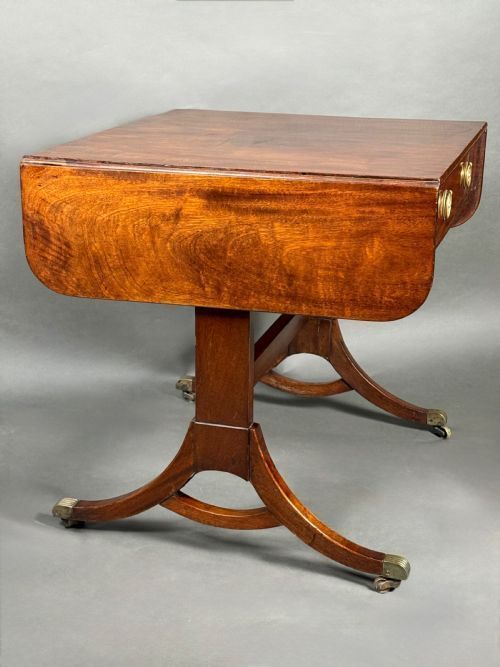
- Long table with a drop flap at each end, made to stand behind or beside a sofa. Around 410 titles use the term.
- Pembroke table
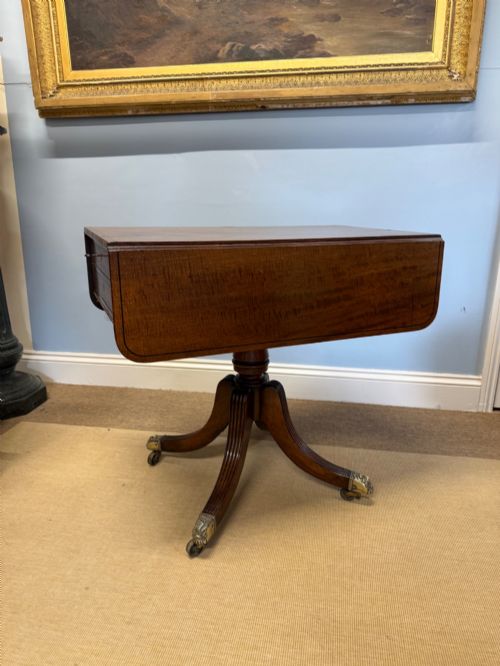
- Small table with two hinged flaps and usually a drawer. The word often shares a title with 'work' or 'lamp'.
- Pillar and pedestal
- The central support. Dining tables are counted by them, from twin pillar and three pillar up to six in the sample.
- Tilt top
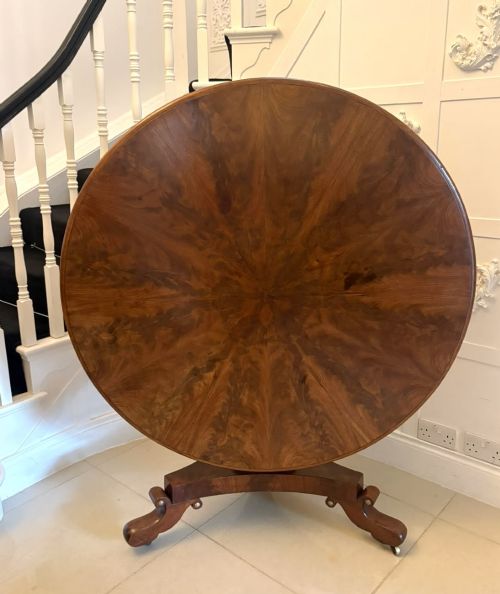
- A top hinged to tip vertical so the table stands against a wall. Also called snap top; 130 titles say tilt top.
- Brass inlaid
- Brass line or foliate inlay set into the wood, most often rosewood, in around 140 titles.
- Quartetto
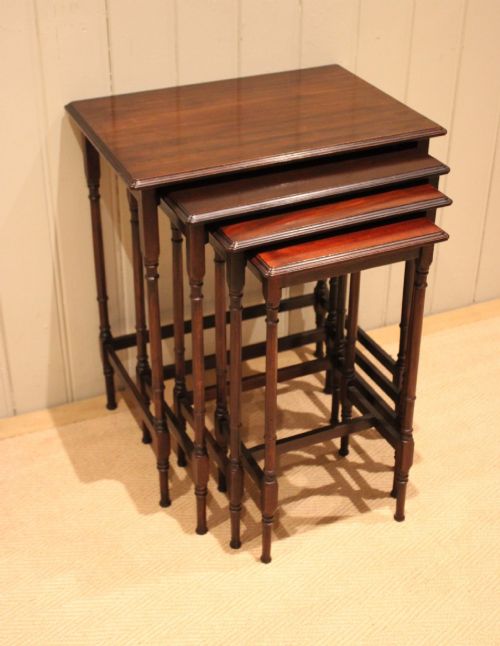
- A graduated set of three or four small tables that store one inside another, seen in rosewood, mahogany, satinwood and Chinoiserie lacquer.
Regency Tables: Frequently Asked Questions
What wood are Regency tables usually made of?
Mahogany dominates, appearing in 2,427 of the 4,416 titles on Sellingantiques, with rosewood in 928 more. Between them they cover three-quarters of the category.
The remainder is scattered: oak, pine, satinwood, walnut, goncalo alves, burr yew, birds-eye maple, cherrywood, fruitwood, birch and beech, plus painted and ebonised finishes.
Which types turn up most often?
Dining tables are the largest single group, followed by side and console tables, then sofa tables. Card, games and work tables form the next cluster.
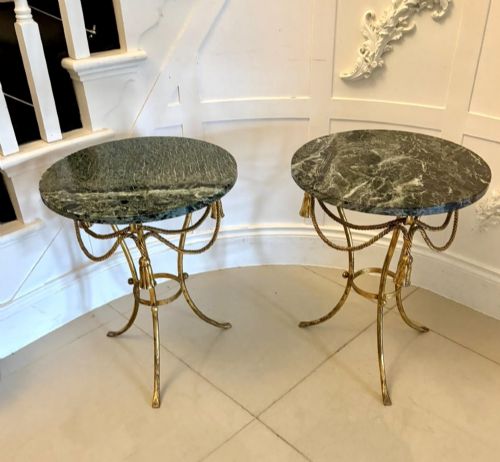
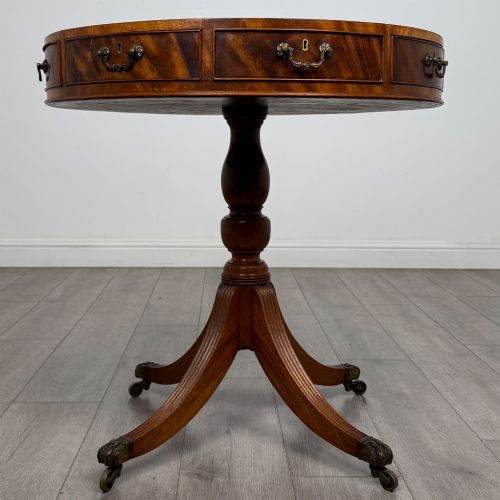
Small occasional pieces make up roughly a sixth of the category: lamp, wine, tripod and tilt-top tables, often circular and on a pillar or three splayed legs.
Are all of these actually from the Regency period?
No. The style was revived and reproduced from the later nineteenth century onwards, so the label covers both period pieces and later work in the taste.
The dated field runs from 1740 to 1950. A twentieth-century tail shows clearly: 154 listings in the 1920s and 47 in the 1930s, titled Regency Style, Regency Revival or Regency Design.
How big do the dining tables get?
The multi-pillar dining tables are the largest things in the category. Sampled titles advertise 12ft, 13ft, 14ft 6in, 15ft, 16ft and 405cm lengths.
Seat counts run to 22 or 24 on those, and at the top of the range a six-pillar table seats 28 at 609cm long.
Who made Regency tables?
Gillows is the only workshop that behaves like a category rather than one dealer's stock: 182 titles mention it and 27 separate dealers have handled a piece carrying the name.
The wording ranges from 'in the manner of' through attribution to one table stamped 'Gillows . Lancaster'. William Trotter, James Mein and Mack, Williams & Gibton appear in smaller numbers.
Do unusual Regency tables come up?
They do, though singly. The sample holds a metamorphic library table converting to steps, a military campaign dining table, a bidet table, a coaching table and a double-sided reading table.
Regional and overseas attributions are scarce but real, with Scottish, Irish and Anglo-Colonial pieces in single figures, alongside a Calcutta-made centre library table and a Chinese export work table.