



Antique Altar Tables
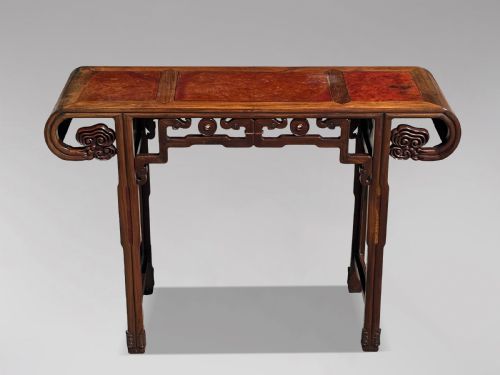
A long, narrow table made to stand against a wall holding incense, candles and offerings, or in a church the communion vessels.
Antique Altar Tables
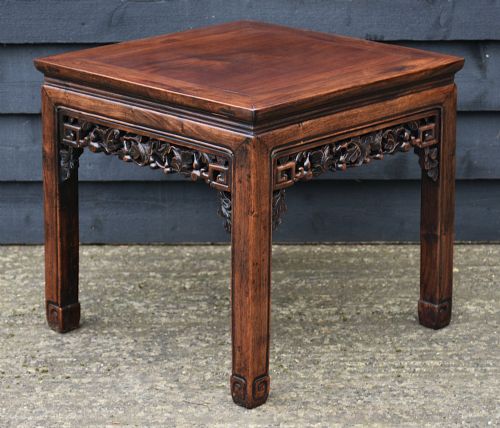
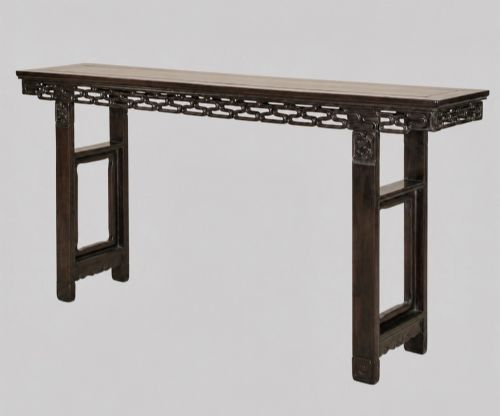
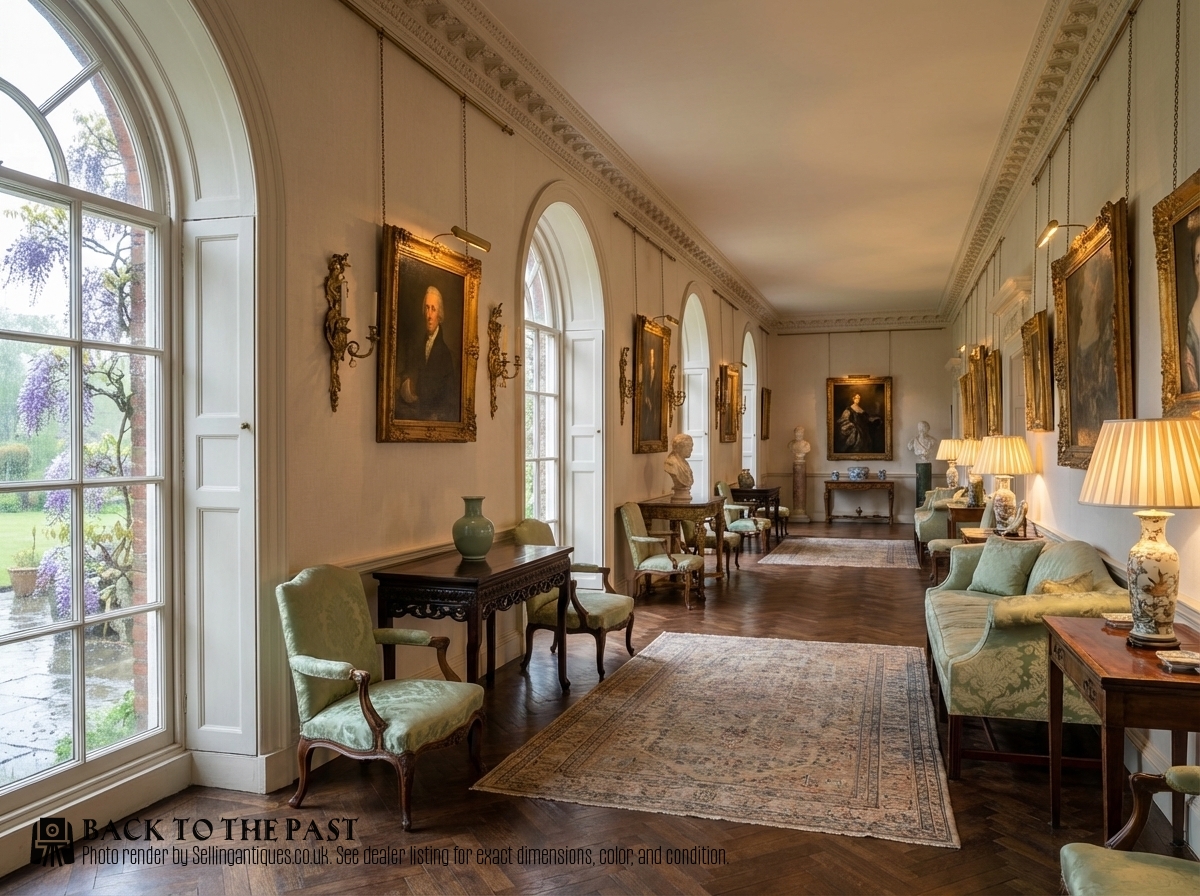
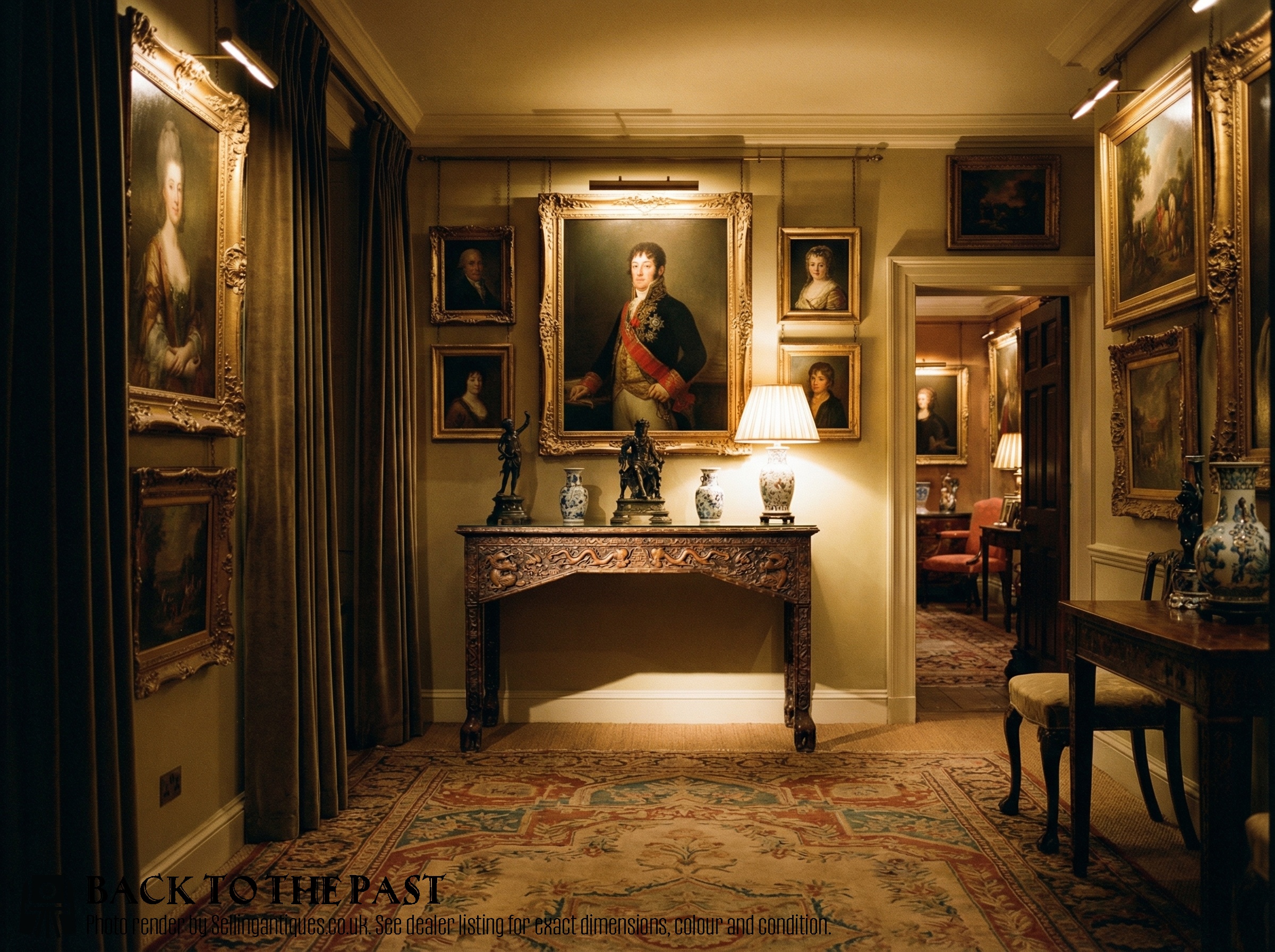
The word "chinese" appears in 67 of the 95 titles in this category, so the usual reading of the name is a Chinese table: long, narrow, rectangular, four legs, made to stand against the wall of a temple or a household's ancestral shrine. From the 19th century onward these came into European rooms as hall and console furniture, and dealers list them that way. Console appears in 17 titles and side table in 15, often describing the same object.
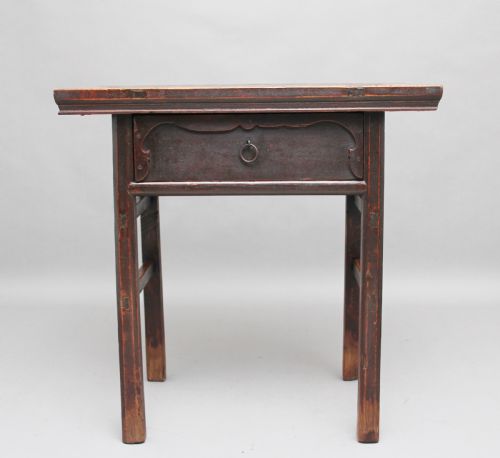
Elm leads the named woods at 23 titles, with Chinese elm the northern provincial timber for this sort of furniture. Hardwood, dealer shorthand where the species isn't identified, follows at 15. Beyond that the names thin out: rosewood, hongmu, fruitwood, teak, pitch pine. Red or black lacquer turns up on a handful.
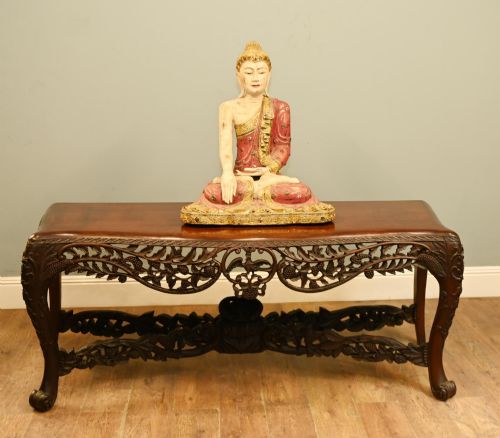
The everyday example is a 19th-century Chinese elm altar table also offered as a console or side table. Qing attribution appears in 11 titles, usually as late Qing. Carved hardwood tables of that group sit in the upper reaches, and a scattering of related Chinese forms comes through alongside: a kang table described as a miniature altar table, a plank-top trestle, a folding travelling trader's altar in teak.
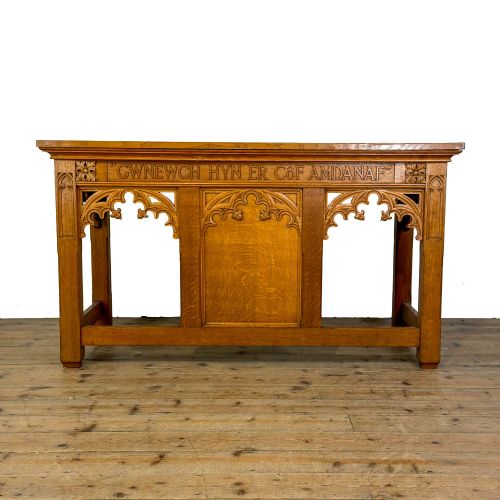
The English strand is smaller: oak and pitch-pine altar tables from churches and chapels, several in a Gothic Revival idiom with pointed arches. On dating, the bare label "19th Century" is the commonest entry in the archive, used 38 times out of 95, and titles frequently hedge across the divide with "Late C19th/ early C20th" or "c1890-1910". Dated years run 1850 to 1930, the 1900s the fullest decade.
Where The Range Splits
Timber does most of the work. Hongmu, amboyna and rosewood titles sit in the upper half, and the top of the range is a pair of hongmu tables. Plain elm and pitch pine sit low. Dense named timbers are scarce against elm's 23 titles, so the split isn't a fine gradation, it's a small group apart from the bulk.
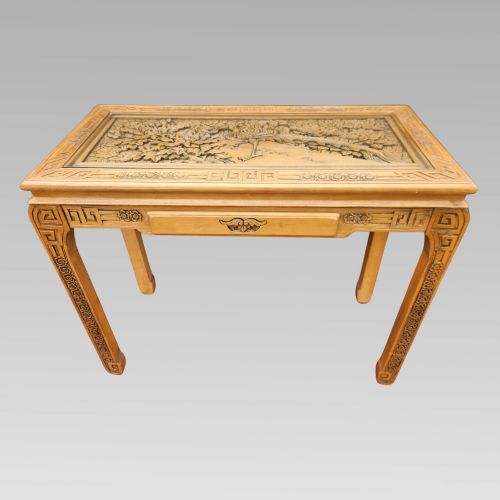
Carving pushes the same way. The word appears in 13 titles and concentrates in the Qing hardwood group, scroll-ended and carved rectangular tops, rather than among the cheapest listings. Scale runs with it: "Large", "Huge", "Long" appear only above the middle, while "Small" and "half table" mark the bottom.
Pairs are unusual, four in the sample, and every one sits well above the middle. So does specificity of description. Titles naming a dynasty, a reign design or a province cluster higher than those marked simply "19th Century" or "Antique", and provincial origins are named rarely, Shanxi appearing twice.
Antique Altar Tables Retail Price Guide 2026
Typical UK retail prices for altar tables, calculated from the Sellingantiques database of over a million retail prices indexed since 2003. This retail price guide relies exclusively on Sellingantiques data; no external sources or auction records are used, so the figures do not describe the wider market.
The deepest the Sellingantiques archive goes for altar tables is five given as 18th century, plus one labelled Georgian.
The Antique Altar Tables Glossary
- Altar table
- A long narrow table made to stand against a wall bearing offerings or communion vessels. Used loosely across this heading for any table of that outline.
- Console table
- A wall-side table with nothing behind it. Seventeen titles use the word, often of the same object also called an altar table.
- Hardwood
- Dealer shorthand for a dense tropical timber where the species isn't identified. Fifteen titles.
- Hongmu
- The Chinese term for dense red hardwoods used in better furniture. Three sampled titles carry it.
- Kang table
- A low table used on a heated platform bed. One title describes such a piece as a miniature altar table.
- Corner-leg, scroll-ended
- Construction and profile terms for Chinese tables: the leg meets the top at the corner, or the top finishes in a scroll.
Antique Altar Tables: Frequently Asked Questions
Are altar tables always Chinese?
No, but the Chinese reading dominates. The word "chinese" appears in 67 of 95 titles on Sellingantiques, which makes the English church altar table the minority use of the name.
That English strand is oak and pitch-pine tables from churches and chapels, several of them Gothic Revival.
What wood are they usually made from?
Elm is the leading named wood at 23 titles, and Chinese elm on its own accounts for 15 of those. Hardwood, used where the species isn't stated, comes next at 15.
After that the timbers thin out fast. Hongmu appears in three titles, with amboyna, rosewood, fruitwood and cherrywood in one each.
Can an altar table be used as a hall table?
That's how many are sold. Console appears in 17 titles and side table in 15, frequently describing the same object as the altar-table name.
Both the Chinese and the church forms were adopted into European interiors from the 19th century onward as hall and console tables.
How reliable is the dating on these?
Much of it is a century rather than a date. The commonest entry in the dated field is the bare label "19th Century", used 38 times, and only 44 of 95 listings carry a clean year.
Titles hedge openly across the divide: "Late C19th/ early C20th", "Circa 1900-1920", "c1890-1910". Single years read as approximations unless the dealer says otherwise.
The dated years run 1850 to 1930, with the 1900s the fullest decade.
Do pairs of altar tables come up?
Rarely. Four pairs appear in the sample, among them a pair of Chinese elm side tables and a pair of demi-lune console tables.
Every one sits well above the middle of the range, and a pair of hongmu tables holds the top.
How often do altar tables come to market?
Around eleven a year on Sellingantiques, and 56 different dealers have listed one.
That spread means most dealers who handle them do so once rather than keeping them as a line of stock.