

Antique Pembroke Tables
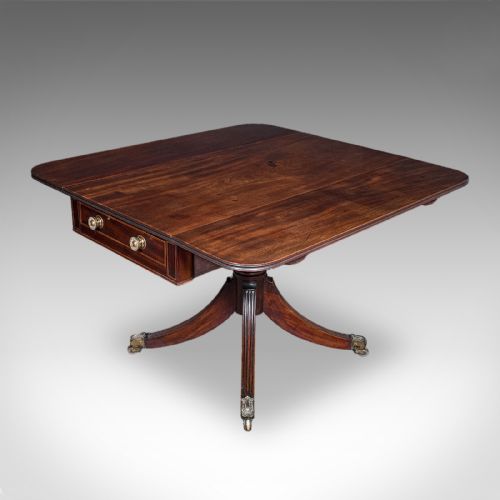
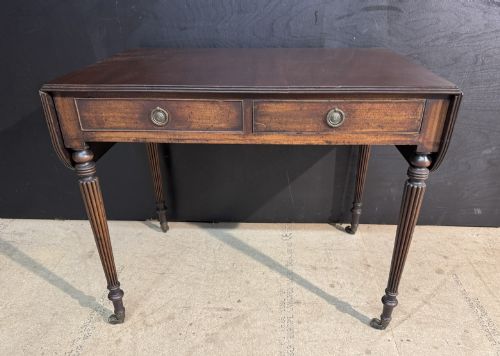
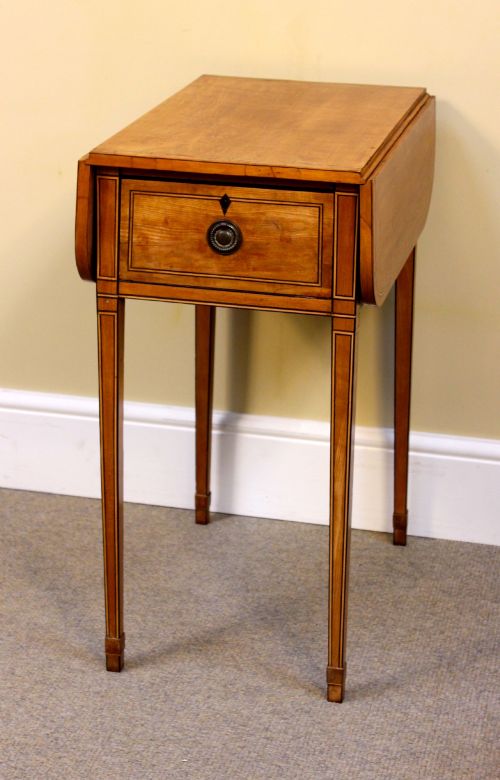
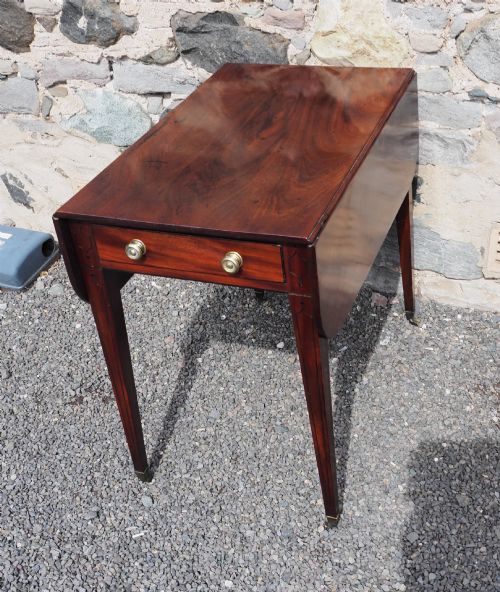
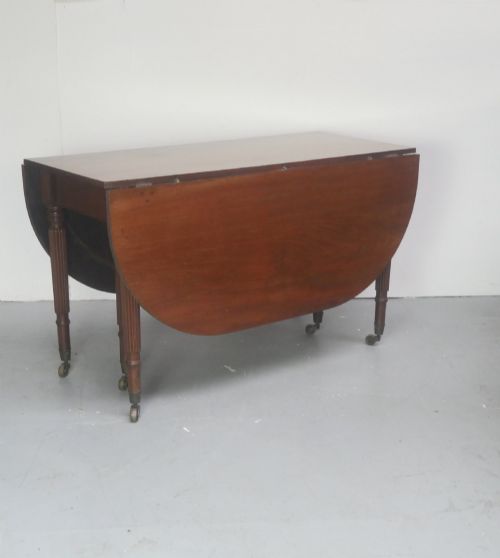
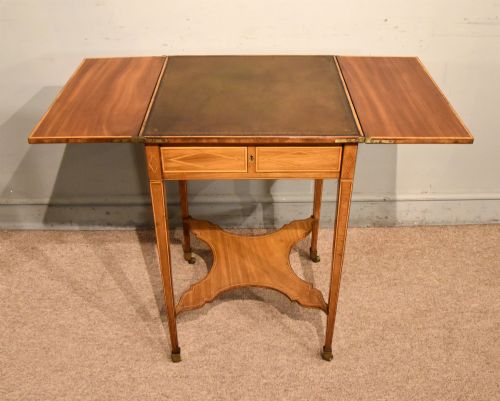
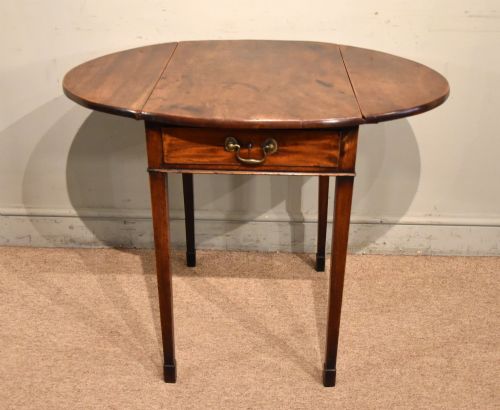
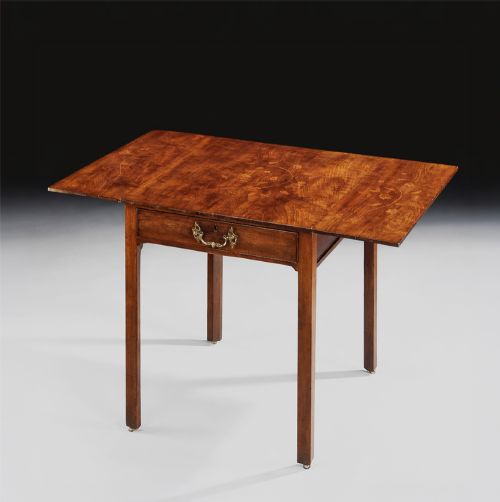
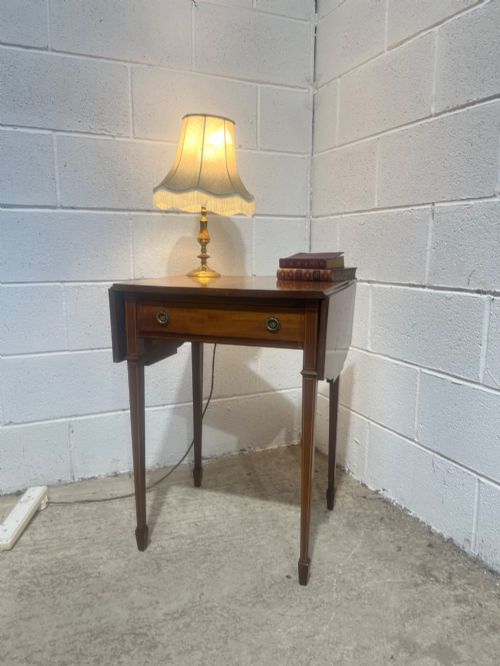
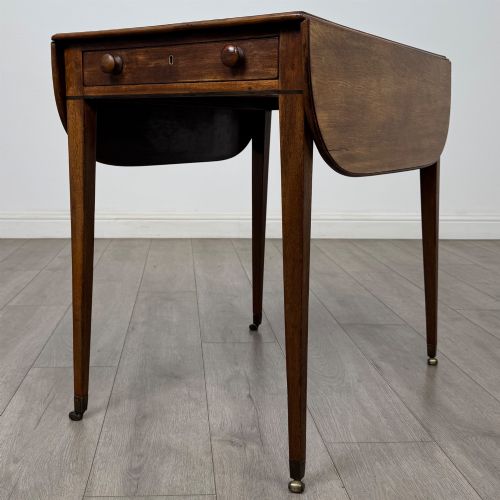
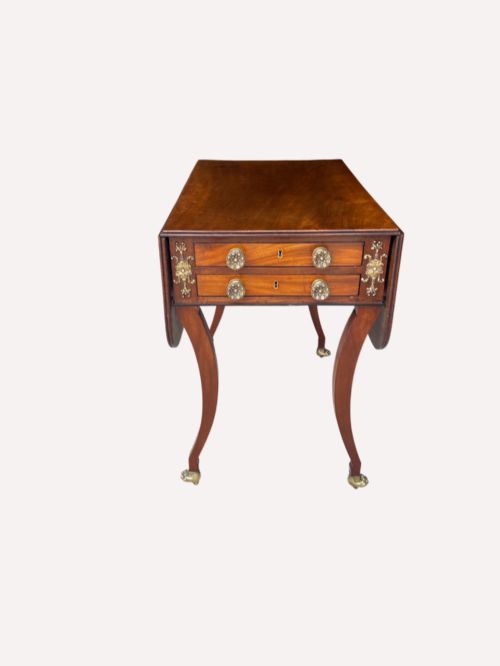
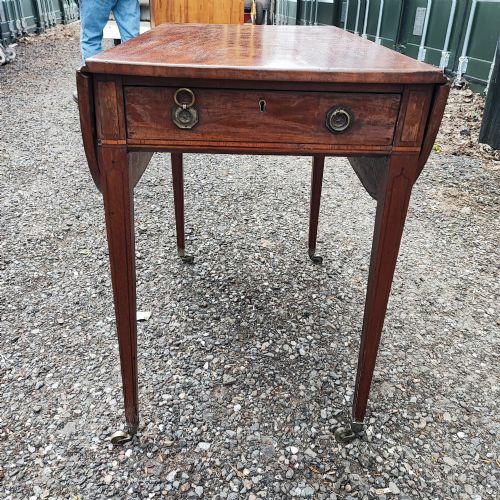
A Pembroke table is a small four-legged table with two hinged side flaps and a frieze drawer, made to be carried to a chair for breakfast, tea, writing or work, then folded away.
What Is A Pembroke Table?
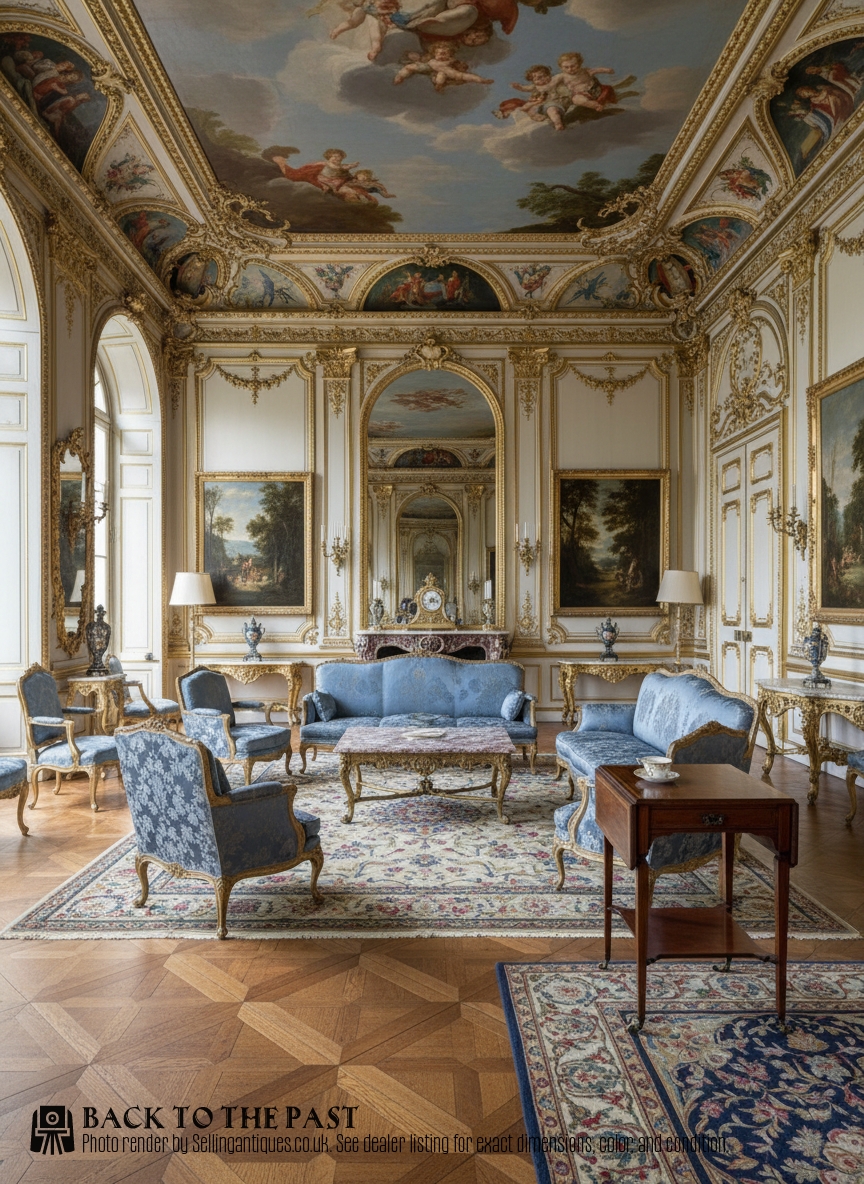
The form appeared in Britain in the middle of the eighteenth century as a light, movable table. Two hinged boards fold down at the sides, so it sits narrow against a wall and opens out when needed. It stayed in production, with legs and decoration changing, well into the twentieth century.
Mahogany is close to a defining condition of the category. Of 849 titles on Sellingantiques, 606 name it, and every other timber together makes up a small remainder. The commonest listing you will meet reads simply as a Georgian, Regency or Victorian mahogany Pembroke table, sometimes with a use attached: side, dining, work, lamp, occasional, supper, sofa or breakfast.
Dealers place these in the long Georgian span. Georgian is used 166 times, Regency 144, 18th Century 113, against Victorian 57 and Edwardian 18. Those are period words rather than years, and only 173 listings carry a clean date. Where a year does appear the field runs 1750 to 1930, clustering around 1800 to 1830.
Beyond the plain mahogany bulk sit several smaller groups: inlaid, crossbanded and marquetry pieces; satinwood and rosewood, with kingwood, harewood, yew and sycamore among them; work, lamp and sewing tables built on the same shape and often called small or baby; and later revivals alongside country oak, pine, elm and fruitwood.
Where The Range Widens
Timber does most of the work. Satinwood, named in 62 titles, sits at the top of the range, and satinwood combined with marquetry or harewood accounts for the very top of it. Mahogany with a named figure, fiddleback, plum pudding or flame, follows behind. Plain oak and pine examples sit at the bottom.
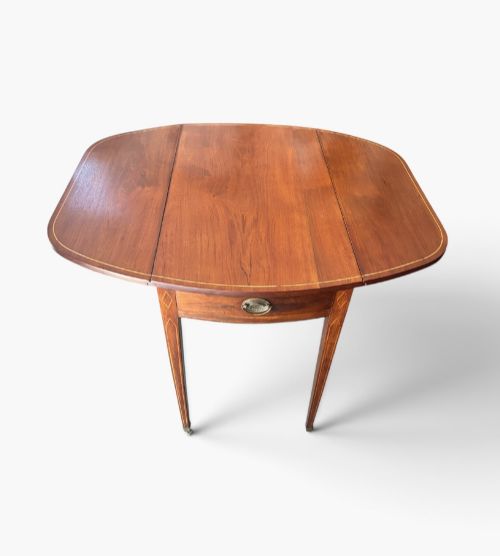
Decoration pushes the same way. Inlaid appears in 77 titles and clusters upward, along with crossbanding in kingwood or partridge wood, painted satinwood and brass inlay. The listings at the other end are described only as mahogany Pembroke tables, with no decoration term at all.
Shape and label matter too. Oval tops are named 53 times, with serpentine, bow-end and the wing-outlined butterfly appearing disproportionately among the higher listings, while plain rectangular tops carry no term. An 18th Century or George III label reads high; Victorian, Edwardian and the 1920s-dated pieces read low. Titles that name a maker or hedge one, stamped, labelled or in the manner of, sit well above the middle, and matched pairs higher still.
Retail Price Guide 2026
Typical UK retail prices for pembroke tables, calculated from the Sellingantiques database of over a million retail prices indexed since 2003. This retail price guide relies exclusively on Sellingantiques data; no external sources or auction records are used, so the figures do not describe the wider market.
The top sale of the last year on Sellingantiques was a satinwood Pembroke table, sold in December 2025.
The Antique Pembroke Tables Glossary
- Drop leaf
- The two hinged side boards that fold down. Titles write it as drop leaf, dropleaf or drop flap, and the words are used interchangeably with Pembroke itself.
- Frieze drawer
- A drawer in the rail below the top. Twenty-five titles name a drawer, and some describe two or three.
- Crossbanding
- A border of veneer laid across the grain around the edge of the top. Listings spell it cross banded or crossbanded.
- Stringing
- Fine inlaid lines set into the surface, described in titles as black and white stringing or ebony line inlaid.
- Butterfly top
- A shaped top whose leaves give a wing-like outline. It turns up 13 times across the whole archive.
- Baby Pembroke
- Trade term for the smallest examples, sitting alongside petite, miniature and small proportions. Seventy-six titles say small.
Frequently Asked Questions
What wood are Pembroke tables usually made from?
Mahogany, overwhelmingly. It is named in 606 of 849 titles, and everything else together accounts for the rest.
The pale timbers are the interesting minority: satinwood in 62 titles, rosewood in 26, with kingwood, harewood, yew, burr yew, sycamore and coromandel appearing in smaller numbers. Oak, pine, elm and fruitwood cover the country end.
How old is a typical Pembroke table?
Dealers use period words more often than years. Georgian appears 166 times, Regency 144, 18th Century 113, with Victorian and Edwardian well behind.
Only 173 listings carry a clean year. Where one is given the field runs from 1750 to 1930, with a visible cluster around 1800 to 1830 and a thin tail into the 1900s and 1910s.
Why are some called work or lamp tables?
Because the same folding shape was put to different jobs. Work appears in 51 titles and lamp in 33, with sewing, secretaire and tea-caddy variants alongside them.
These are often the smaller ones, paired in the title with small or baby. Other use-words attached to the form include side, dining, occasional, supper, sofa and breakfast.
What does butterfly mean on a Pembroke table?
It describes a shaped top whose leaves give a wing-like outline when open. The word turns up 13 times across the archive.
Other named top shapes are oval, used in 53 titles, plus serpentine, bow-end and d-ended. A plain rectangular top gets no term at all.
Are pedestal Pembroke tables different?
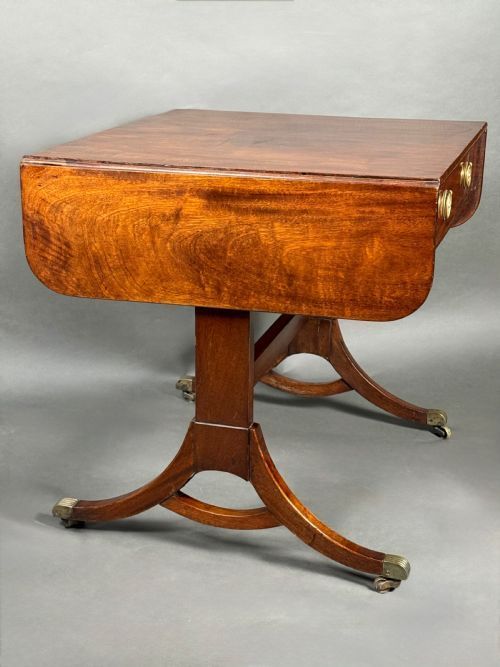
Yes. Instead of four legs they stand on a centre column with splayed feet. Twenty-eight titles say pedestal, and a few use pillar or quadruped.
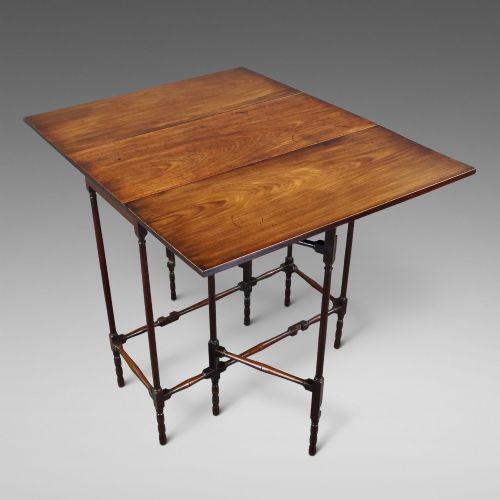
At the other extreme sit spider-leg examples, with very slender turned legs. Those appear only a handful of times.
Do Pembroke tables ever come as pairs?
Rarely. Only three sampled listings offer two tables together, and one of those is a pair of Pembroke book tables.
Odd variants surface now and then too: a metamorphic games table, a deception table, a secretaire work table with its key, a child's Pembroke and a reader's table.