


Antique Drum Tables
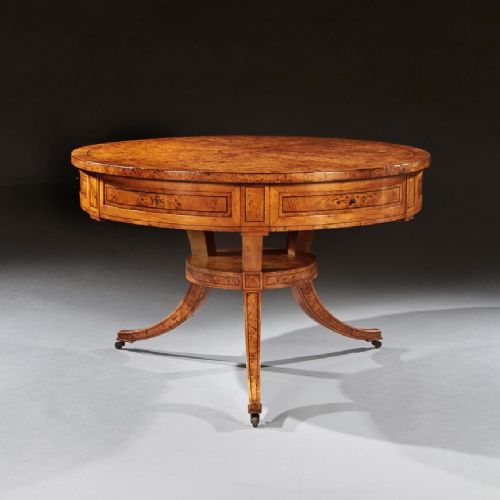
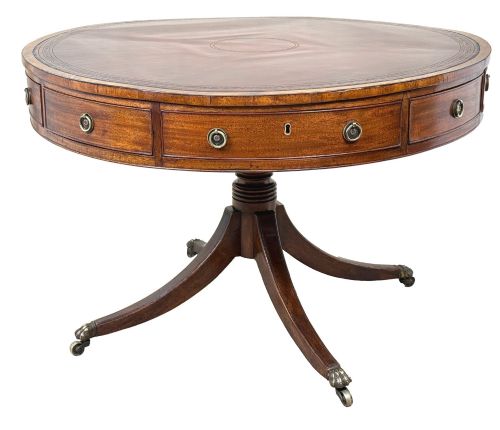
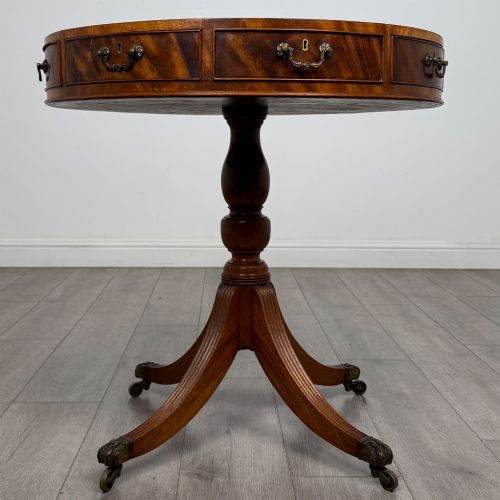
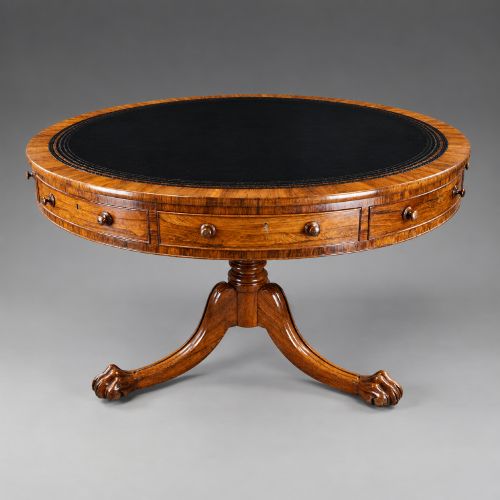
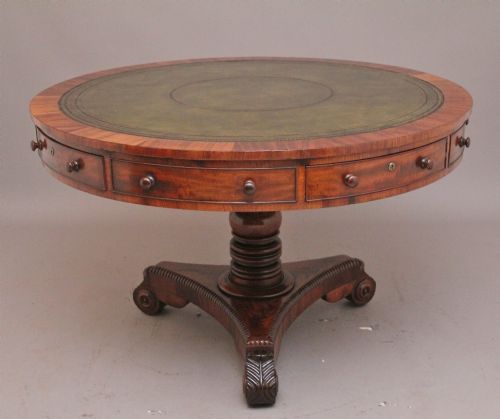
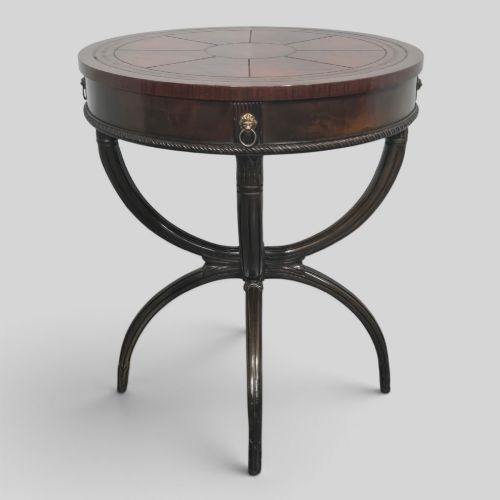
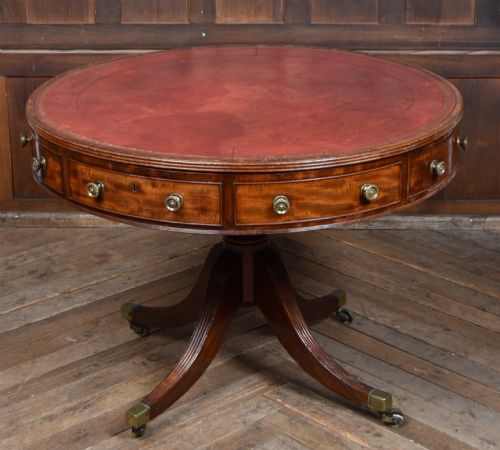
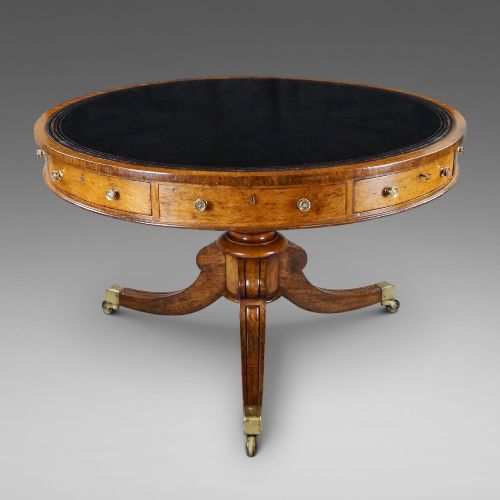
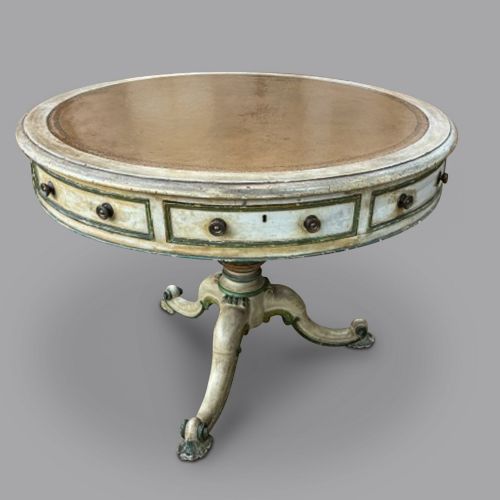
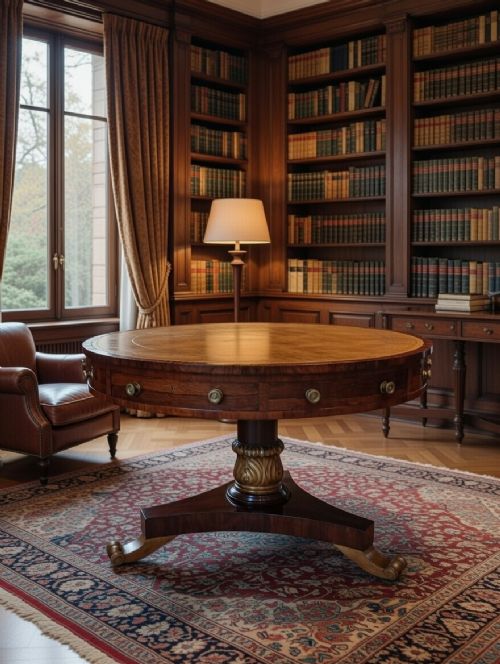
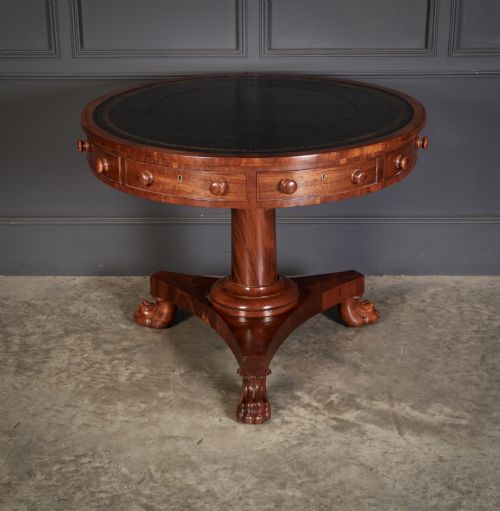
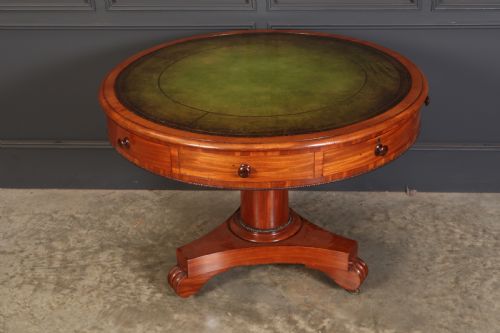
A drum table is a round-topped table on a central pedestal, its deep frieze fitted with drawers all round so it could be worked at from any side of a library.
Antique Drum Tables
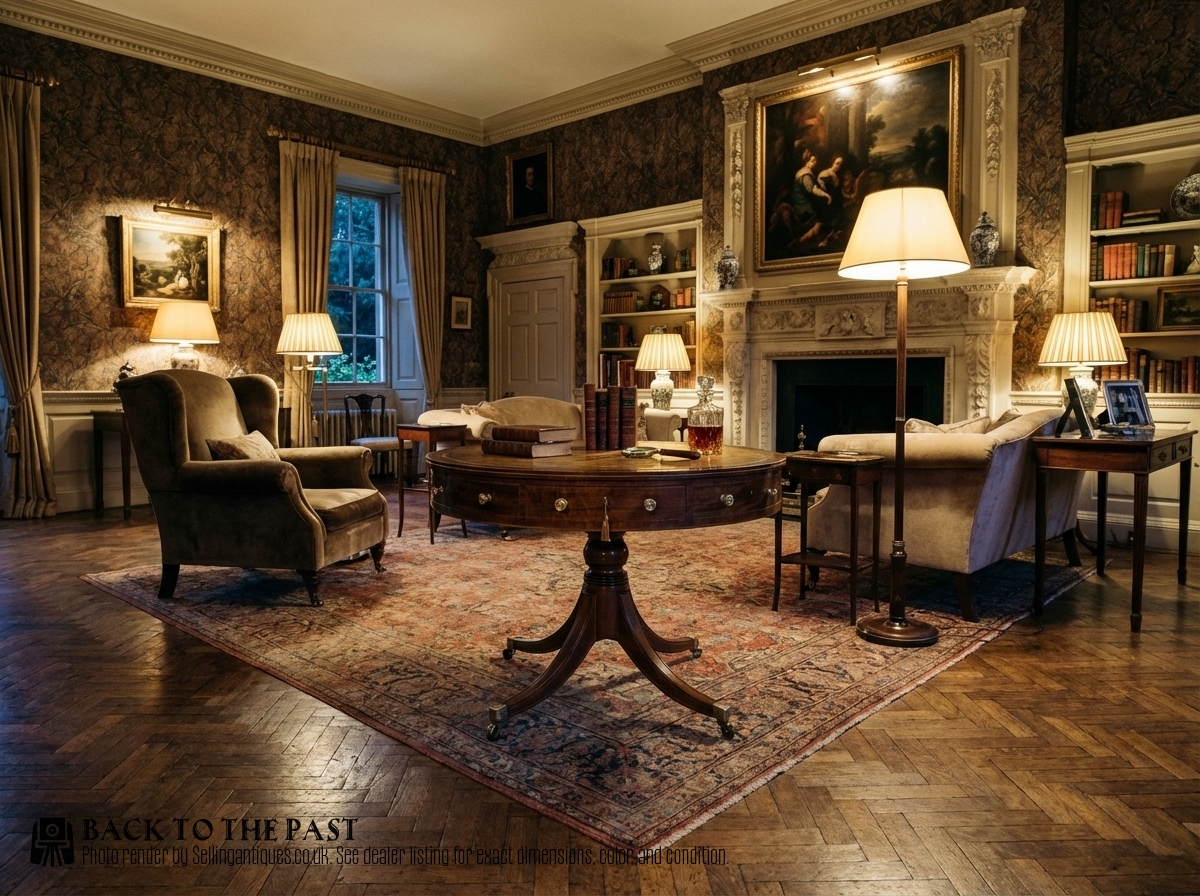
The form came out of Britain in the later eighteenth century as a round writing and reading table for the library. Drawers set into the deep band beneath the top meant a reader could sit anywhere round it. The shape kept going through the Regency and was revived again and again into the twentieth century.
What you'll meet on Sellingantiques is overwhelmingly English mahogany. Mahogany is named in 192 of 300 titles, and Regency in 81, so a circular mahogany table on a pedestal base with frieze drawers is the default. An inset leather writing top is named in 20 titles, common without being standard, and a revolving top that turns to bring each drawer round is named in 10.
Around the core sit the other branches. Victorian and Edwardian drum and library tables come through in oak and walnut as often as mahogany. Titles reading Regency Style or Georgian Revival, mostly dated to the 1920s and 30s, make up roughly a tenth. A smaller run is neither English nor mahogany: Maltese olivewood four times over, plus Anglo-Chinese, Swedish, French and giltwood pieces.
Dating is broad rather than exact. Only 94 of 300 listings carry a clean year, and those run from 1800 to 1930. Regency gets used loosely, with several so-tagged titles describing the piece as William IV or George IV, and 19th Century covers anything from about 1800 to about 1900.

What Separates Them
Period against revival does most of the work. Georgian and Regency-period pieces, and those named for George III or George IV, run to the top of the range, while the interwar Regency Style and Georgian Revival tables in the same shape sit at the bottom. The silhouette is nearly identical; the date is what moves.
Then timber and figure. Plain mahogany is the baseline at 192 titles, so anything called out separately is doing something the baseline doesn't: flame and figured mahogany, rosewood, burr walnut, burr and pollard oak, satinwood, partridge wood, olivewood. A single giltwood table sits alone at the very top of the archive.
Scale and decoration finish the picture. Small occasional-sized drum tables cluster low, large library examples high. Inlay lifts a table above its neighbours, whether brass inlay, marquetry, ebony stringing or the zodiac signs set round the top that turn up four times. So does a name: the handful of titles carrying or attributing a maker all sit above the middle.
Antique Drum Tables Retail Price Guide 2026
Typical UK retail prices for drum tables, calculated from the Sellingantiques database of over a million retail prices indexed since 2003. This retail price guide relies exclusively on Sellingantiques data; no external sources or auction records are used, so the figures do not describe the wider market.
About 33 drum tables are listed on Sellingantiques each year, and 90 different dealers have handled one.
Gillows
The Antique Drum Tables Glossary
- Frieze drawers
- The drawers set into the deep band under the top. Titles specify two, four or eight, and the count is usually given.
- Leather top
- An inset writing surface of leather, named in 20 titles. Where a listing doesn't mention it, the top is generally timber.
- Pedestal
- The central column and the splayed or tripod base that carries the top. Named outright in 11 titles, implied in most of the rest.
- Revolving top
- A top that turns on the pedestal so each drawer comes round to the sitter. Only 10 titles say so.
- Rent table
- A drum table with drawers lettered or numbered for estate collections. Four appear in the archive, in oak, walnut or flame mahogany.
- Sabre leg
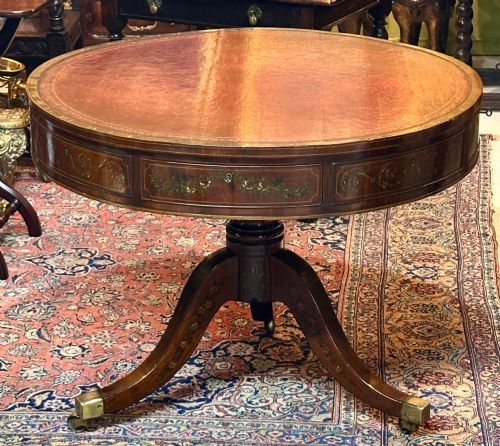
- The outward-curving Regency leg, seen with reeding and brass-capped castors.
Antique Drum Tables: Frequently Asked Questions
Are drum tables always round?
Almost. The circular top dominates the category by a wide margin.
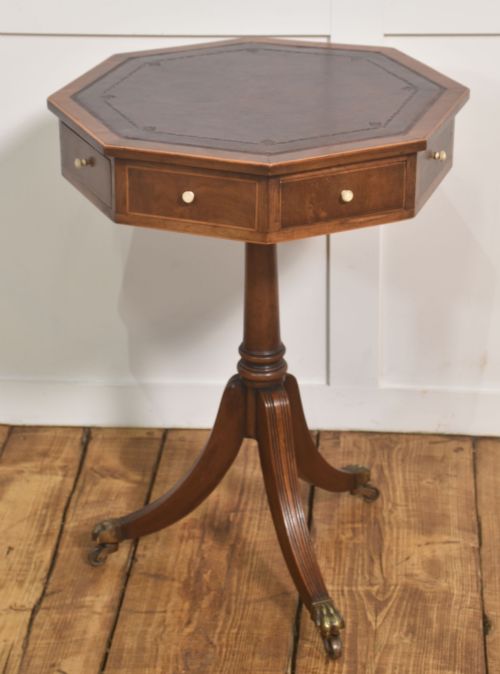
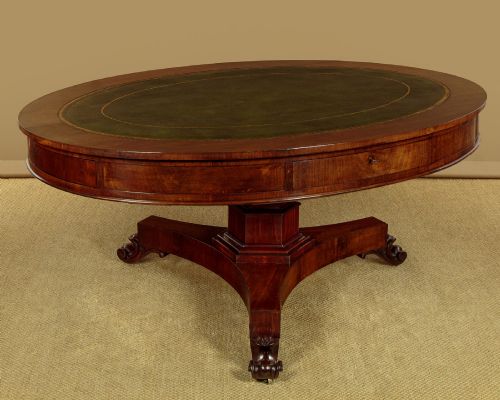
Octagonal tops appear five times across 300 listings and oval tops five times, so they turn up, but rarely enough that a title will make a point of saying so.
What wood are they usually made from?
Mahogany, named in 192 of 300 titles. It's close to a default for the form.
Rosewood, oak and walnut are the only other timbers appearing in any quantity, with oak and walnut showing up more in the Victorian and Edwardian library tables. Olivewood, satinwood, partridge wood, teak and burr root maple each appear once or twice.
Do all drum tables have a leather top?
No. Leather is named in 27 titles and a leather top specifically in 20, so it's a recurring feature rather than a rule.
Plenty are listed with a polished timber top, often crossbanded or with a figured veneer.
What does Regency mean on these listings?
It's used loosely. Several tables tagged Regency are described in their own titles as William IV or George IV.
The same goes for 19th Century, which covers roughly 1800 to 1900 in this archive. Treat both as broad labels rather than dates.
How often do drum tables come up for sale?
Around 33 are listed a year on Sellingantiques.
Ninety different dealers have handled one, which tells you it's a form almost every furniture dealer meets, and none of them stocks in depth.
Is a zodiac drum table a recognised type?
It's a recurring pattern rather than a one-off. The signs of the zodiac are inlaid round the top.
Four appear across the archive, enough to be a named type in dealer titles and nowhere else in the category's vocabulary.