


Antique Writing Tables
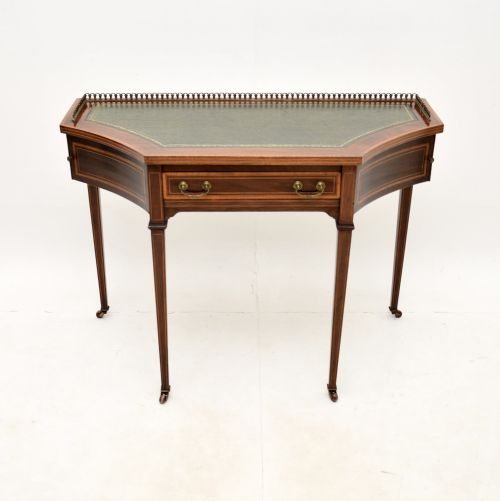
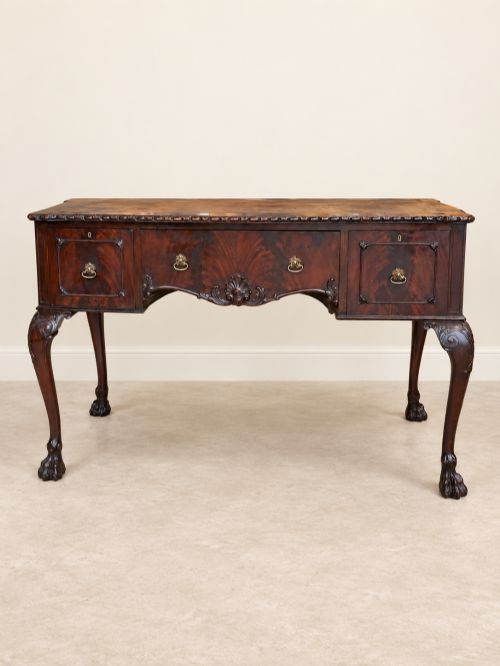
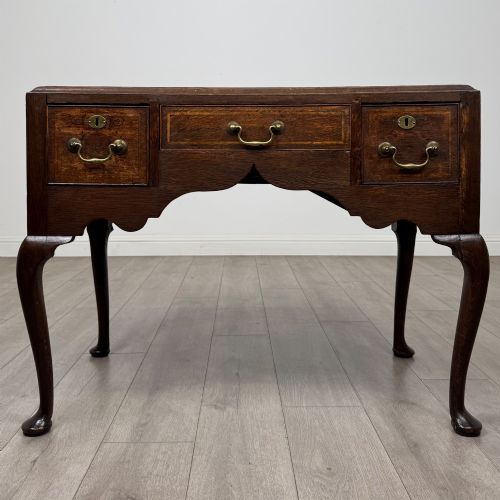
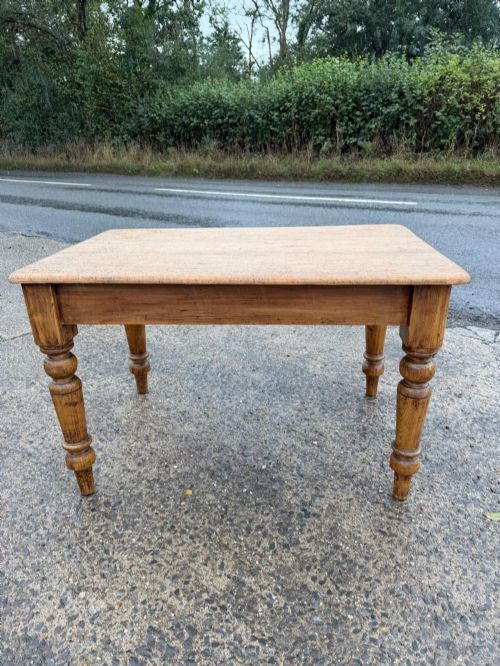
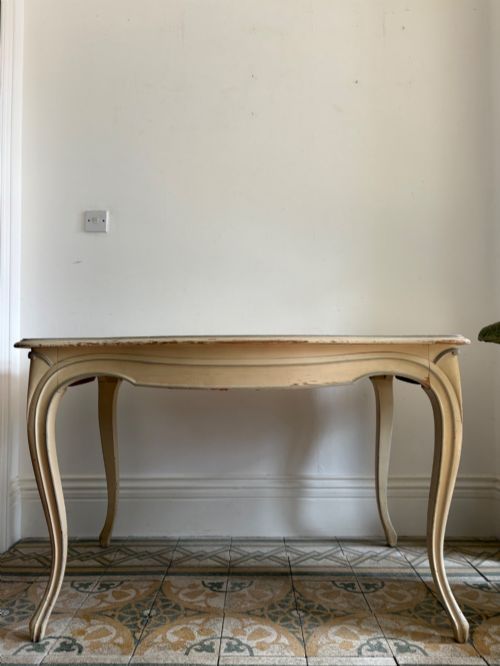
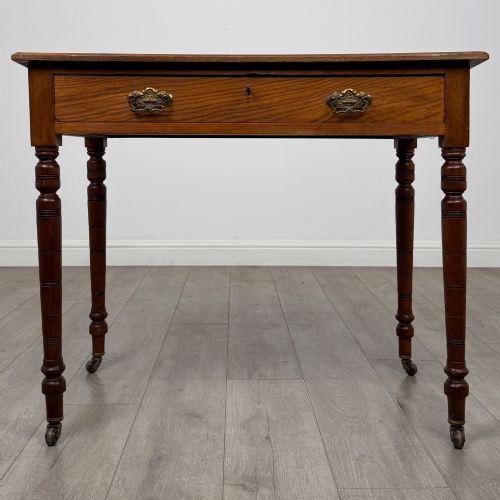
A flat-topped table made for writing, with a working surface and shallow frieze drawers, and none of the superstructure or pedestals that make a desk.
What Are Writing Tables?
The writing table emerged as its own piece of household furniture in the 18th century, once letter-writing and private study became ordinary domestic habits. By the 19th century it was made in every grade, from plain painted pine to veneered cabinet work. What holds the family together is the form: a flat top, one to six drawers in the frieze, nothing above the surface.
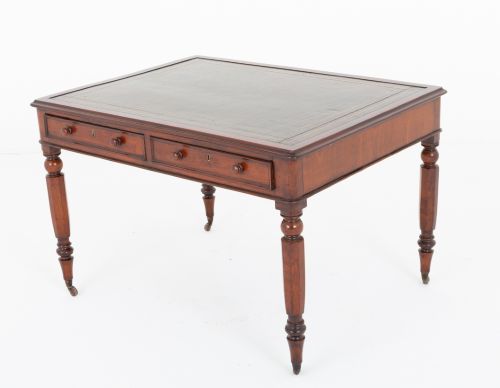
The version you are most likely to meet is English, mahogany, and Victorian, with two frieze drawers on turned or reeded legs. Mahogany dominates the material vocabulary on Sellingantiques, running more than three times ahead of walnut behind it, and a quarter of titles say Victorian. Oak and rosewood follow.
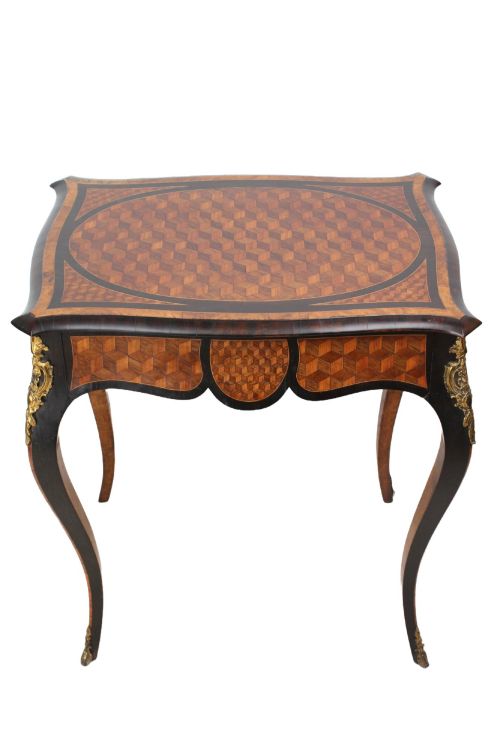
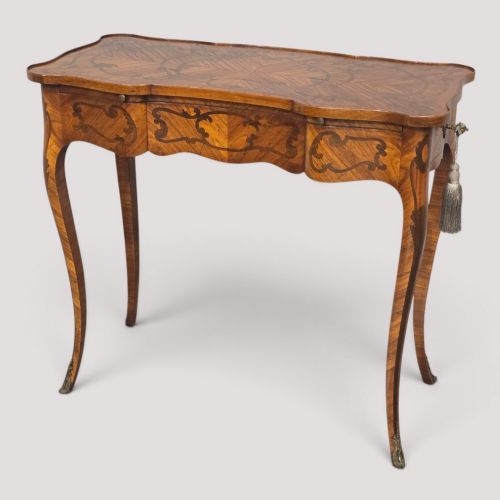
Around it sit four other groups. Library and partners tables are bigger and made to be seen from all sides, the partners form drawered on both long sides so two people can work facing each other. Regency and Georgian tables, often rosewood, make up roughly a fifth. French bureaux plats and Continental pieces are under one in ten. Then the decorative small tables: kidney-shaped tops, burr walnut, inlay.
Headings shade into one another, and the same piece is often titled side or writing table, writing table or desk. Dating is loose too. Two in three listings carry only a period label, so treat Victorian, Regency and 19th Century as dealer shorthand for a broad window rather than a year.
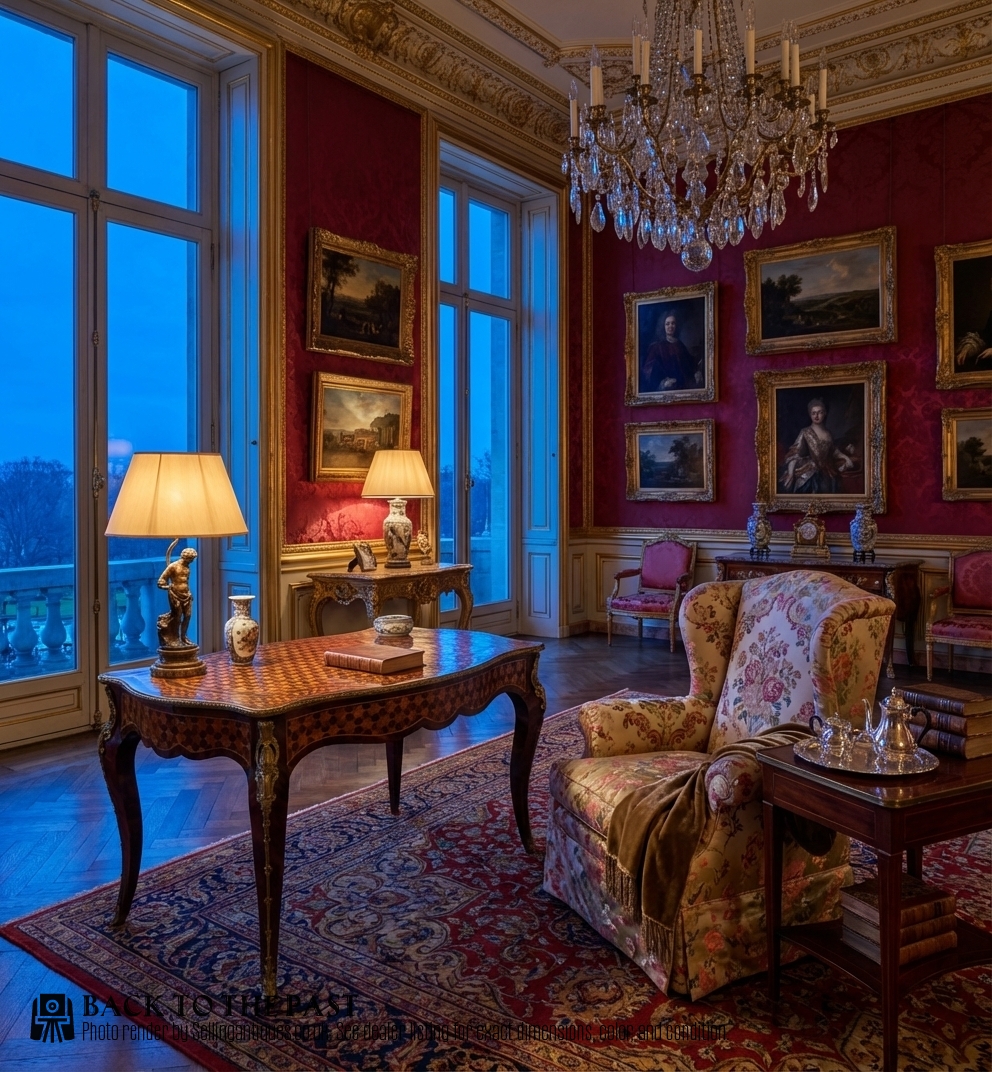
What Sets Them Apart
Timber and figure do most of the work. Plain pine, painted or bare, sits at the bottom of the range and turns up in only a scattering of titles. Burr walnut, burr and pollard oak, birdseye maple, satinwood and kingwood cluster at the other end, where the veneer is chosen for its figure rather than its steadiness.
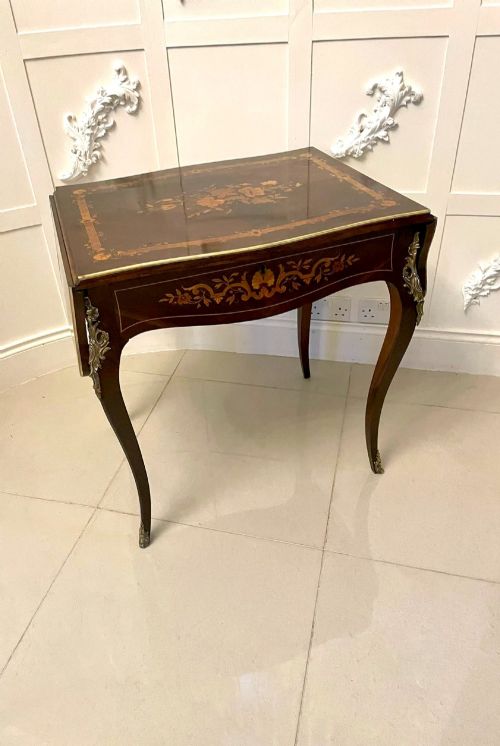
Scale and decoration push in the same direction. Large freestanding library tables and double-sided partners tables, some five and six feet long with six drawers, hold the upper part of the range. So does applied ornament: marquetry, parquetry and ormolu mounts, mostly on the French pieces. Shaped tops, kidney, serpentine or bow-front, sit above plain rectangular ones.
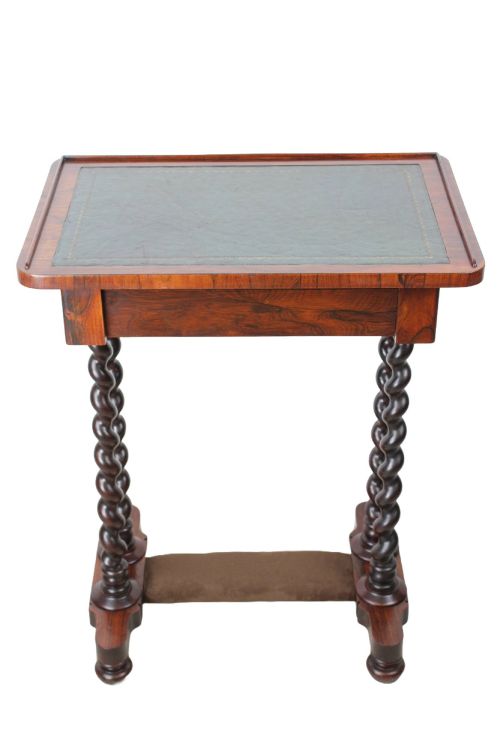
A name lifts a table above its neighbours, though named makers appear in only a small fraction of titles. Gillows is the one with real breadth, and it recurs at the top of the range whether stamped, attributed or given as 'in the manner of'. An inset leather writing surface is a feature of a minority, not the norm.
Retail Price Guide 2026
Typical UK retail prices for writing tables, calculated from the Sellingantiques database of over a million retail prices indexed since 2003. This retail price guide relies exclusively on Sellingantiques data; no external sources or auction records are used, so the figures do not describe the wider market.
19th Century is the period label used most on Sellingantiques for writing tables, with Victorian next and Regency third.
Gillows of Lancaster·James Shoolbred·Heal & Son·Edwards & Roberts·Holland & Sons·Hindley & Sons·Maple & Co·Maison Millet
The Antique Writing Tables Glossary
- Writing table
- Flat-topped table with a writing surface and frieze drawers, no superstructure and no pedestals. That absence is what separates it from a bureau or a desk.
- Bureau plat
- The French flat writing table, usually with a leather top and a shaped frieze. Seventy-odd titles use the term.
- Partners table
- Double-sided, with drawers along both long sides so two people can work facing each other. Larger than the standard frieze-drawer table.
- Library table
- A bigger freestanding writing table, finished so it can stand in the middle of a room and be seen from every side.
- Leather top
- A skiver or hide panel set into the top as the writing surface. Roughly one title in twenty mentions one.
- Kidney shaped
- A top curved into a concave-fronted kidney outline. A persistent oddity in the archive, far outnumbered by plain rectangular tops.
Frequently Asked Questions
What is the difference between a writing table and a desk?
A writing table is flat-topped. No stack of drawers above the surface, no pedestals below it, just shallow drawers in the frieze and legs.
Dealers on Sellingantiques often blur the line, titling the same piece writing table or desk, and side table or writing table. The description tends to settle which form it actually is.
Which wood is most common?
Mahogany, by a wide margin. It runs to well over three times the count of walnut in second place.
Oak and rosewood follow, with rosewood clustering in the Regency and Georgian end of the archive. Pine turns up in only a small number of titles, at the bottom of the range.
Do all writing tables have leather tops?
No. Roughly one title in twenty mentions a leather top, so the inset hide panel is a minority feature rather than the standard.
It is more usual on French bureaux plats, where a leather surface and a shaped frieze go together.
How many drawers do they usually have?
Anywhere from one to six in the frieze. Two is the count that recurs most in titles, written either as 2 drawer or two drawer.
The larger drawer counts belong to library and partners tables, where four and six drawers spread across a double-sided carcass.
Are French writing tables common on Sellingantiques?
Thinner on the ground than the English ones. French pieces make up a small share of titles, and the bureau plat term appears in about seventy.
Other Continental origins are rarer still. Swedish, Spanish, Dutch, Italian, Hungarian, Anglo-Indian and Chinese pieces appear once or twice each across the whole sample.
Can you find a matching pair?
Rarely. A pair of matching writing tables shows up only a couple of times across hundreds of listings.
The form was made as a single piece for a single writer, so pairs were never the normal output.