
Antique Gateleg Tables
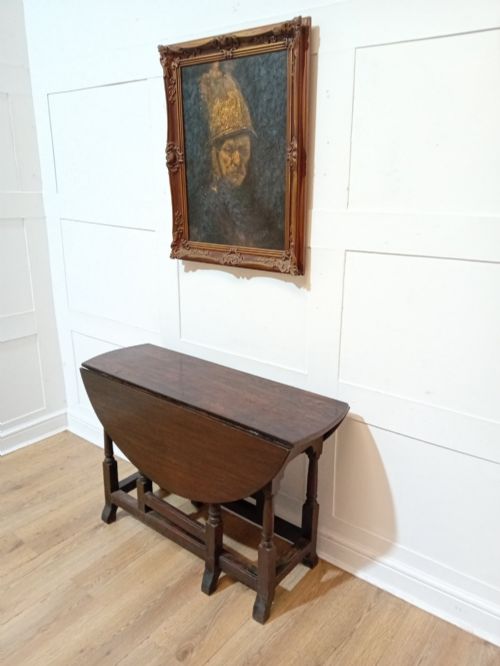
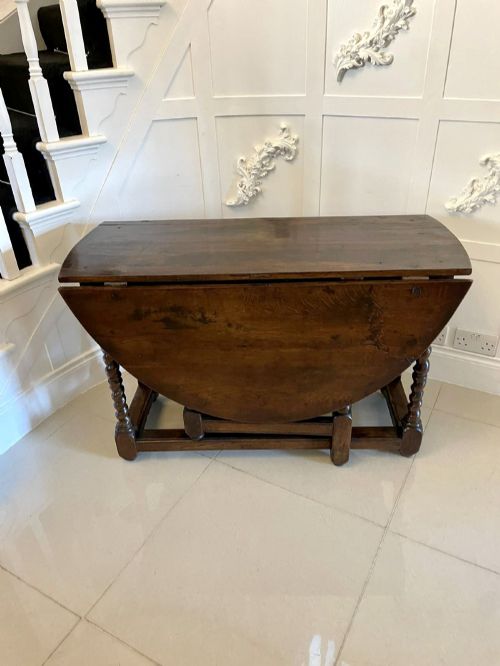
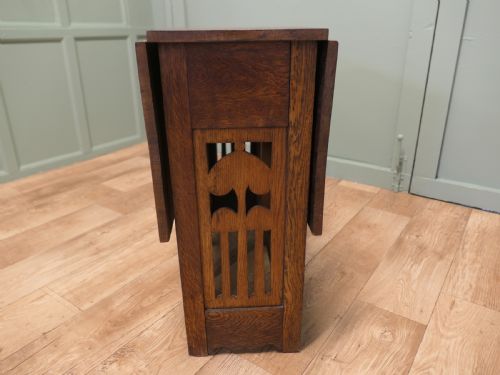
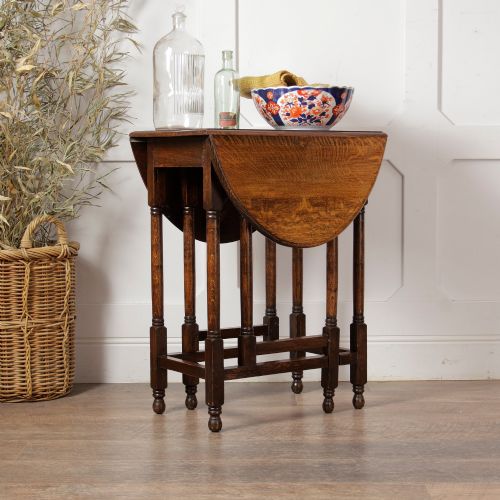
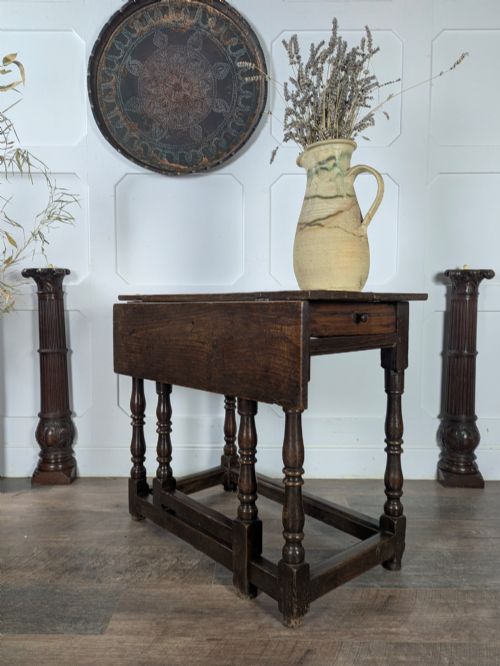
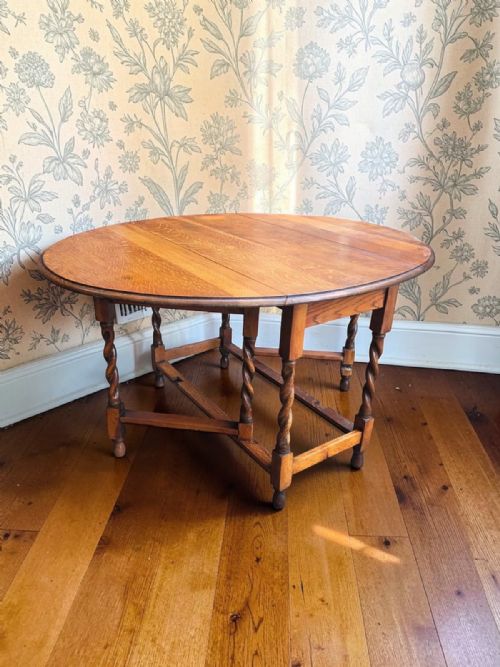
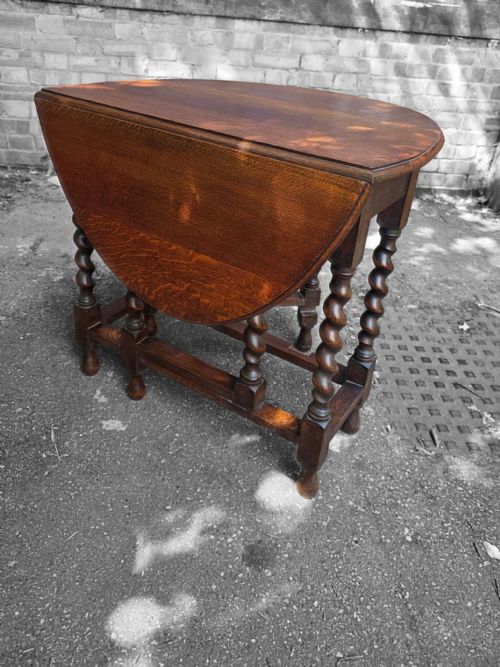
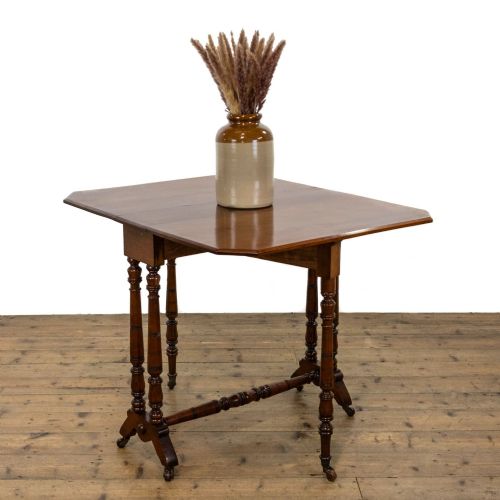
A drop-leaf table whose hinged leaves are held up by pivoting gate frames of turned legs and stretchers, so it folds to a narrow slab against a wall and opens to a round or oval dining top.
Antique Gateleg Tables
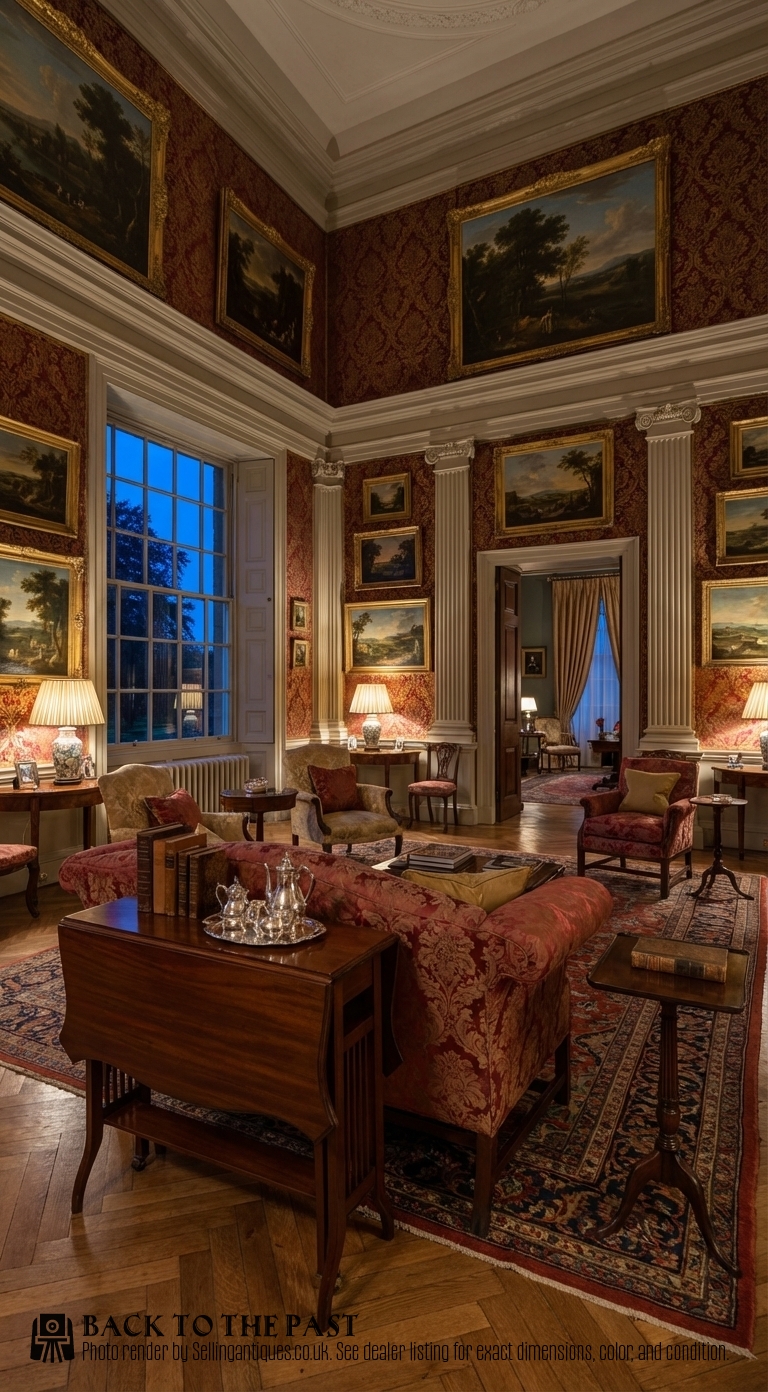
The form developed in 17th-century Britain and northern Europe as a table that could be folded away, its leaves carried on pivoted gate-shaped leg frames rather than fixed brackets. It stayed in use for dining and for occasional work, and was revived again and again in later centuries.
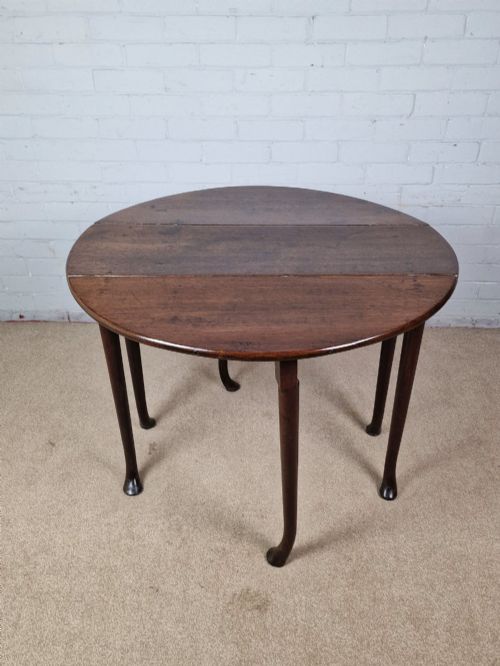
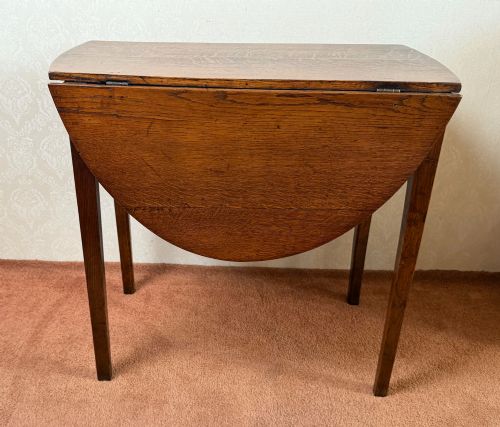
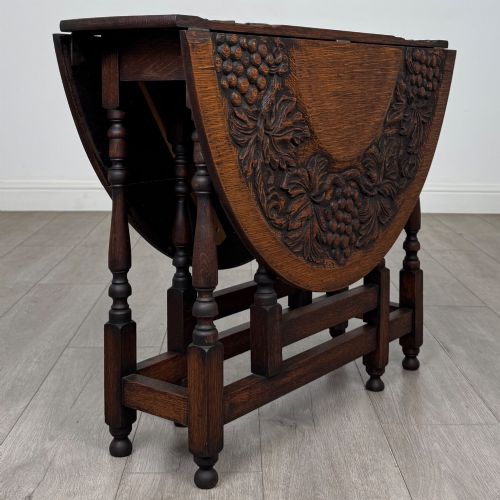
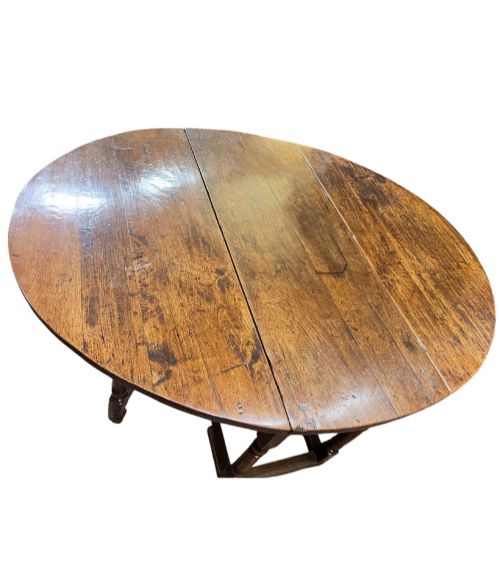
Oak dominates. It names 322 of the 547 titles on Sellingantiques, and the version you'll meet most often is a turned-leg country oak table with an oval or rounded drop-leaf top, described as dining or as occasional. Bobbin and baluster turning run through the early oak, with elm, ash, pine, yew and fruitwood appearing only in ones and twos.
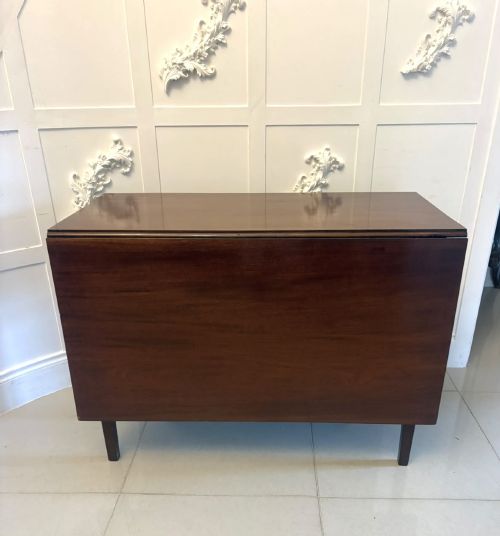
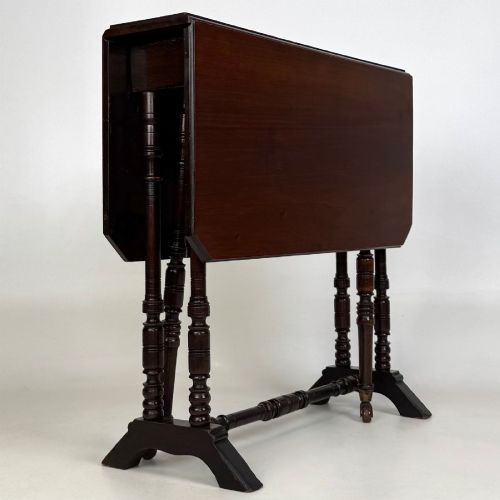
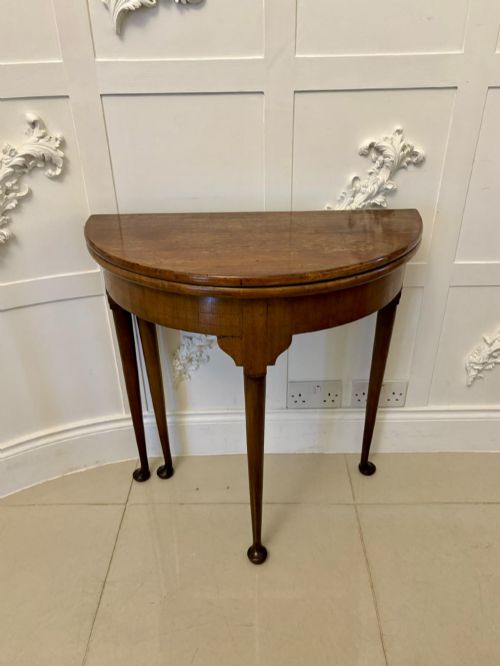
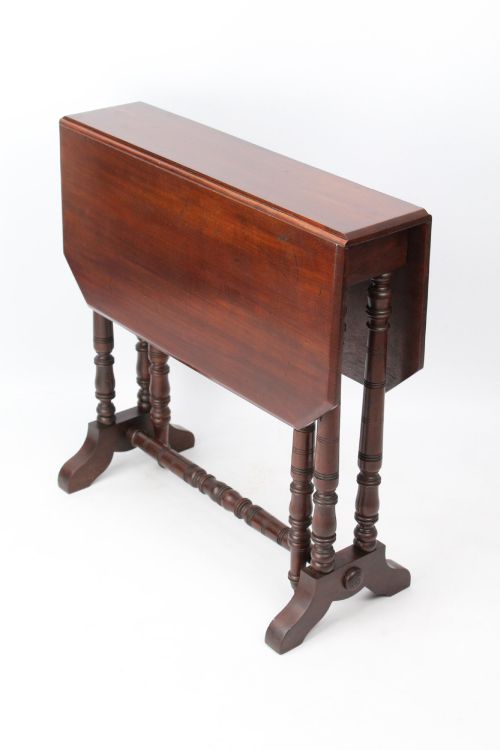
Behind the oak sit two smaller groups. Mahogany accounts for 108 titles and walnut 42, largely Georgian drop-leaf tables with pad feet, and within that the narrow two-flap Sutherland table takes 48 titles of its own, usually Victorian or Edwardian. Slender spider-leg tables are a smaller but distinct branch, most of them mahogany.
Dating is broad by nature. The dated field spans 1680 to 1960, but only 175 listings carry a clean year, and the two largest buckets are the vague 18th Century and 17th Century. Titles hedge accordingly, with wordings like late C17th/early C18th or c.1690-1730, and 1920s oak in 17th-century style is openly dated as such.
Where The Range Splits
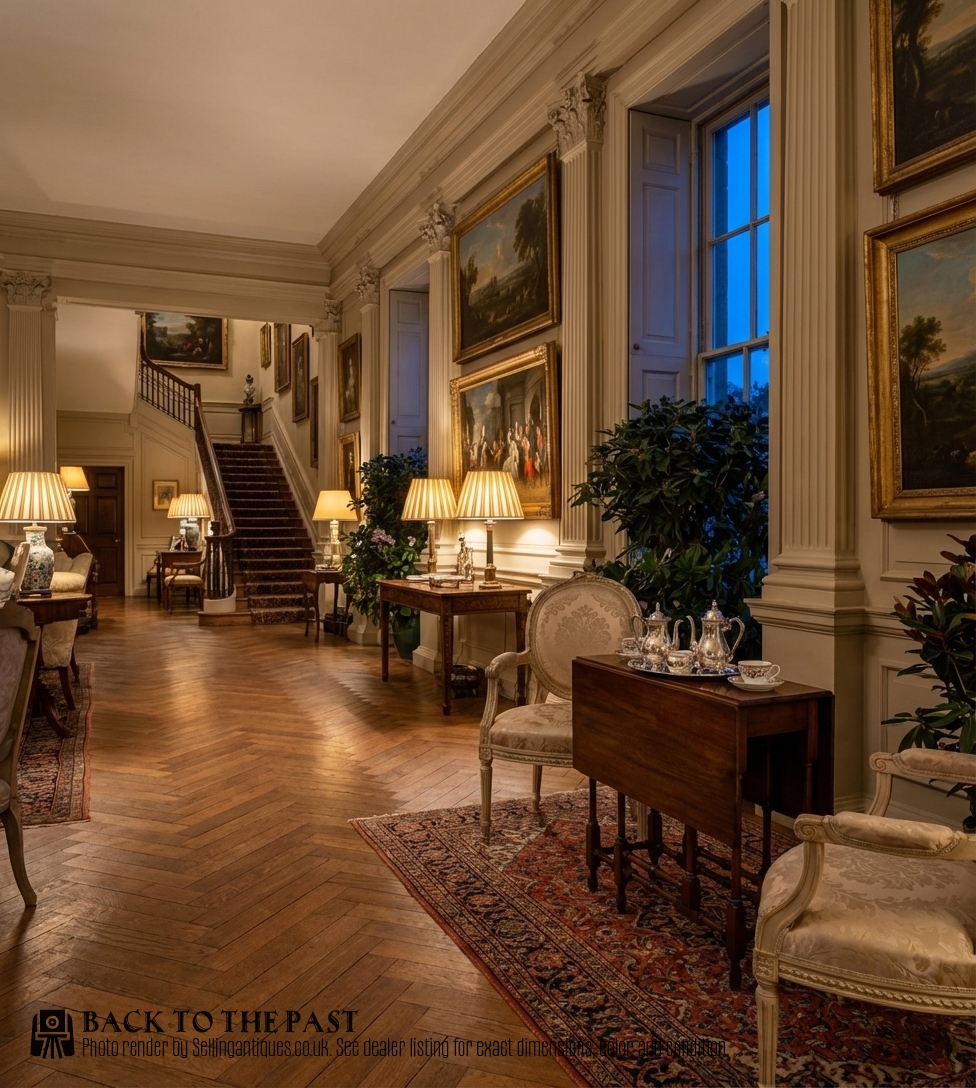
Timber does most of the work. Yew is the scarcest wood in the archive and every yew table sits in the upper reaches; burr walnut, solid walnut and Cuban or Honduras mahogany follow. Plain oak and the light golden oak occasional tables sit at the lower end.
Date and scale pull the same way. Tables described as 17th century cluster in the upper half, while 1920s and 1930s oak and Edwardian pieces gather at the bottom. Large is claimed in 78 titles, and the eight- and ten-seaters, along with the 13 double gatelegs carrying two gates a side, appear well up the range.
Surface counts for a lot, and dealers say so: patina turns up in 16 titles, as faded patina, good colour, original patina. Size cuts both ways. Small proportions on a late-17th-century oak table reads as a virtue and sits high; a plain small Edwardian or 1920s occasional table sits lowest.
Antique Gateleg Tables Retail Price Guide 2026
Typical UK retail prices for gateleg tables, calculated from the Sellingantiques database of over a million retail prices indexed since 2003. This retail price guide relies exclusively on Sellingantiques data; no external sources or auction records are used, so the figures do not describe the wider market.
Gateleg tables have been listed on Sellingantiques since 2009, with over three hundred passing through in that time.
The Antique Gateleg Tables Glossary
- Gateleg
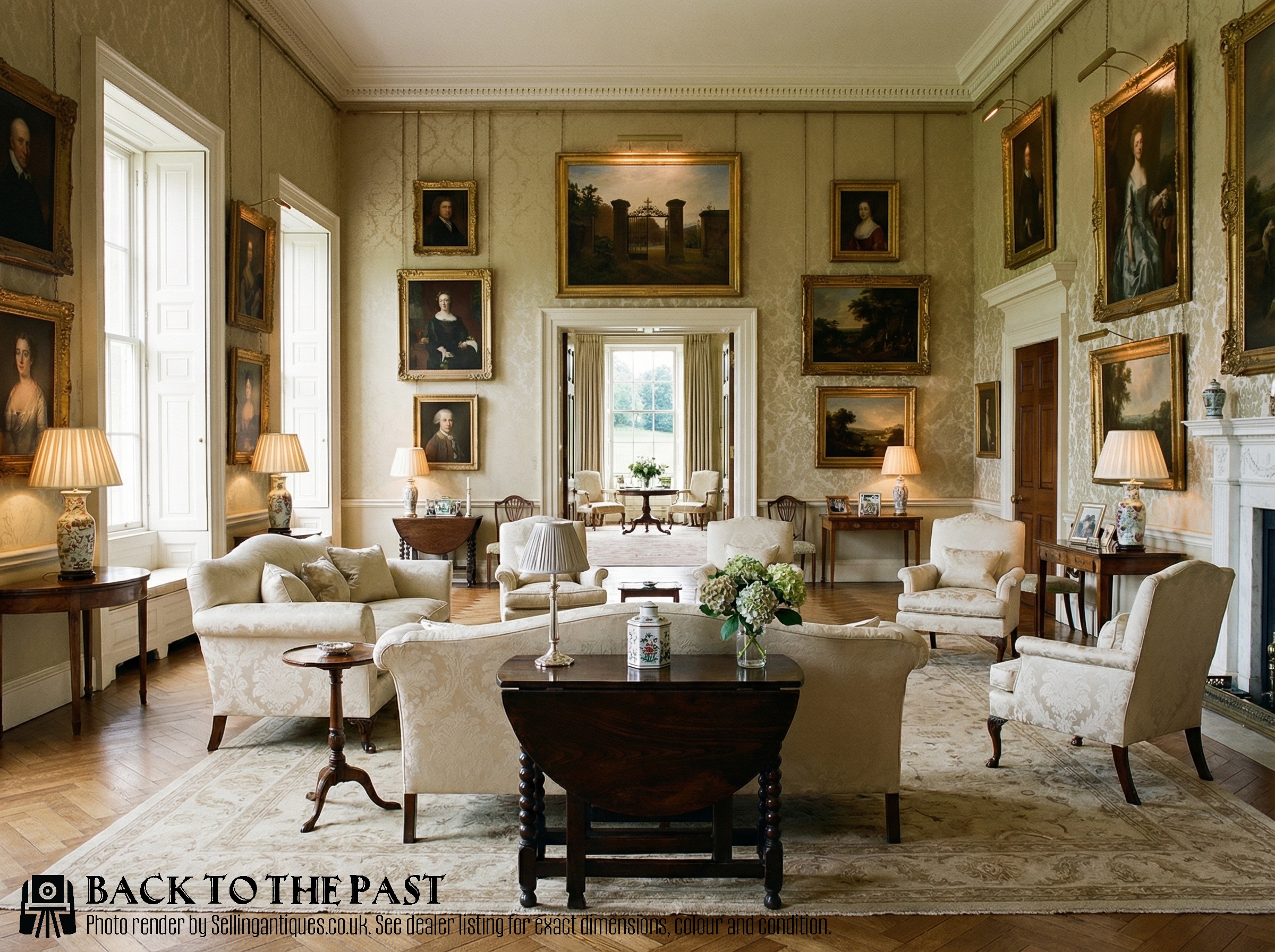
- The pivoting frame of leg and stretchers that swings out to hold a raised leaf. Thirty-five titles say gate and 29 gate leg.
- Drop leaf
- The hinged side of the top that hangs down when the table is closed; 105 titles use leaf, and some say drop flap instead.
- Double gateleg
- Two gates a side rather than one, giving a wider opened top. Thirteen titles use it, usually on the larger eight-seaters.
- Sutherland table
- A narrow-topped two-flap gateleg occasional table, usually Victorian or Edwardian, and named in 48 titles, a dozen of them mahogany.
- Bobbin turned
- Legs turned as a row of beads or spools, common on the 17th-century oak. Baluster legs, vase-shaped, appear on several early oak tables too.
- Sledge base
- Runner-like feet in place of separate turned feet. It shows on two early oak tables only, one of them the archive's earliest attribution.
Antique Gateleg Tables: Frequently Asked Questions
How common are gateleg tables on Sellingantiques?
Around 61 are listed a year, and 147 different dealers have handled them. That makes it a form almost every general furniture dealer touches sooner or later.
The archive runs to 547 titles in total, so there is a steady flow rather than an occasional appearance.
Are these dining tables or occasional tables?
Both, and the split is close. Small appears in 81 titles and large in 78, so the category is as much about compact occasional and coffee tables as about dining furniture.
Dining is named in 159 titles. At the top of the size range sit a ten-seater measured at 228cm wide and an Irish wake table at 235cm, the largest figures anyone states.
What is a Sutherland table?
A narrow-topped gateleg occasional table with two flaps, usually dated Victorian or Edwardian. It takes 48 of the titles in this archive.
Burr walnut and satinwood-inlaid examples turn up, along with baby and three-quarter sizes.
Which woods turn up most?
Oak, by a wide margin: 322 of 547 titles. Mahogany follows at 108 and walnut at 42, with burr walnut named in a dozen.
Elm, ash, pine, yew and fruitwood appear only in ones and twos. Yew is the scarcest of them all.
Were gateleg tables made outside Britain?
Rarely, on the evidence here. Origins are almost entirely English.
The rest amounts to a single Swedish slagbord, one Swedish base with a later wash, one French dining table, one Italian painted example, and a scattering of Welsh, Scottish and Irish attributions.
Do unusual variants of the form come up?
Occasionally. Forms that surface once and nowhere else include a corner gateleg, a D-end gateleg, a trifold games table and a box table.
An envelope or handkerchief tea table and a chinoiserie lacquer drop-flap table also appear as one-offs. Spider-leg tables are a small but recurring branch, some of them titled Pembroke.