

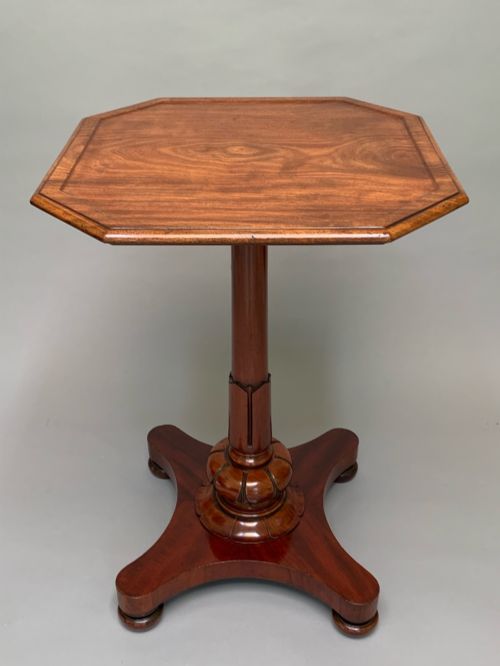
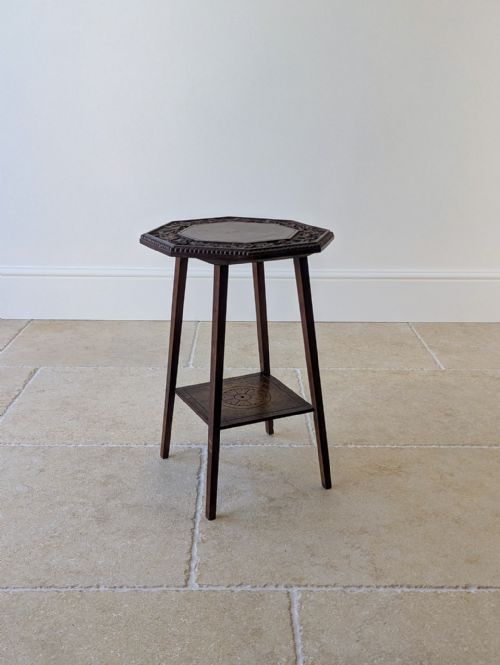
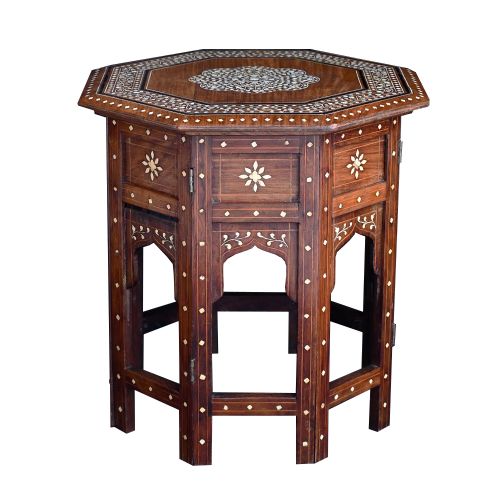
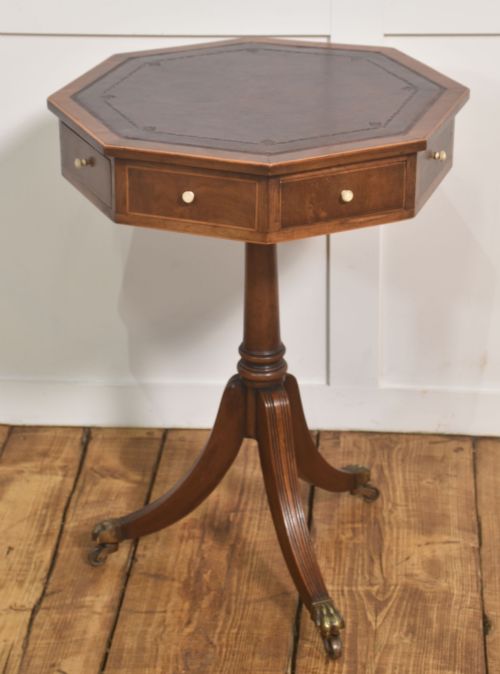
Antique Octagonal Tables
A small free-standing table with an eight-sided top, made for a lamp, a drink, a book or the middle of a room.
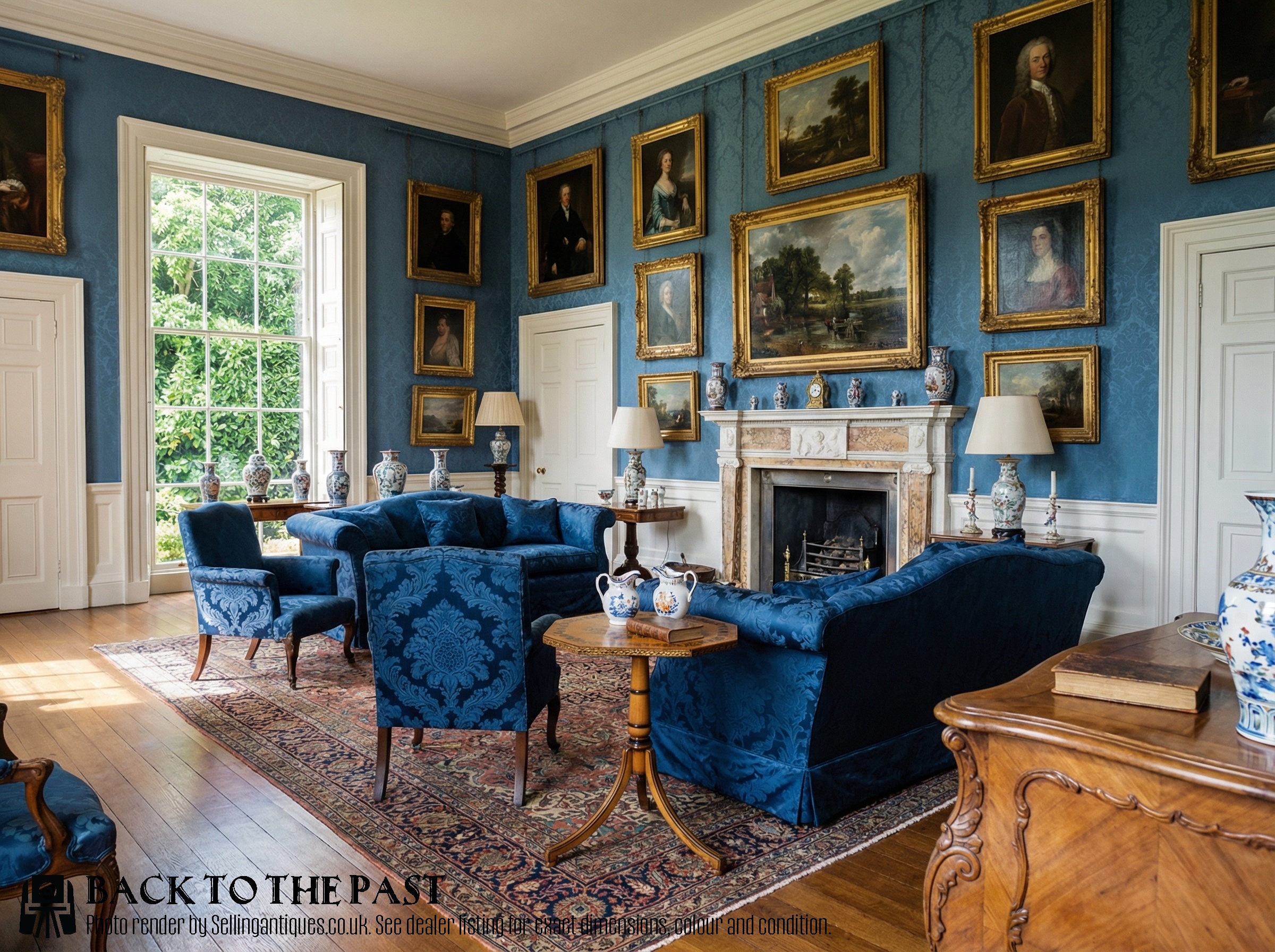
Antique Octagonal Tables
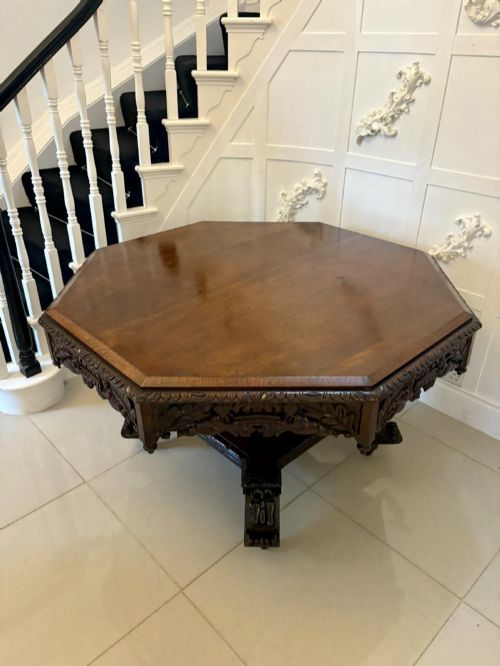
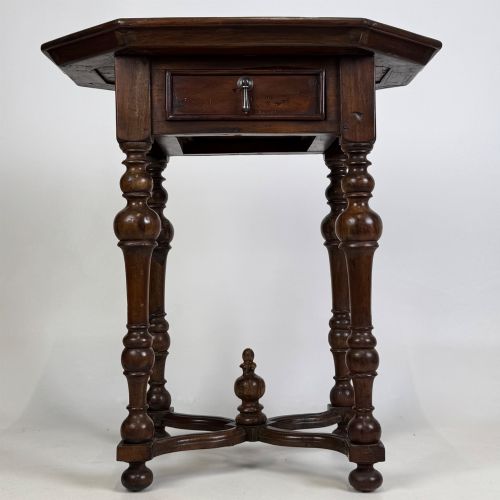
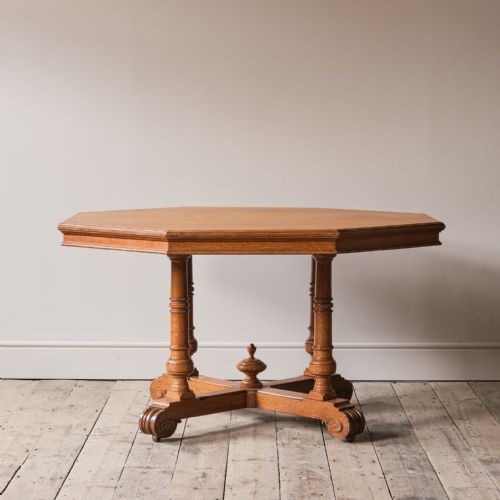
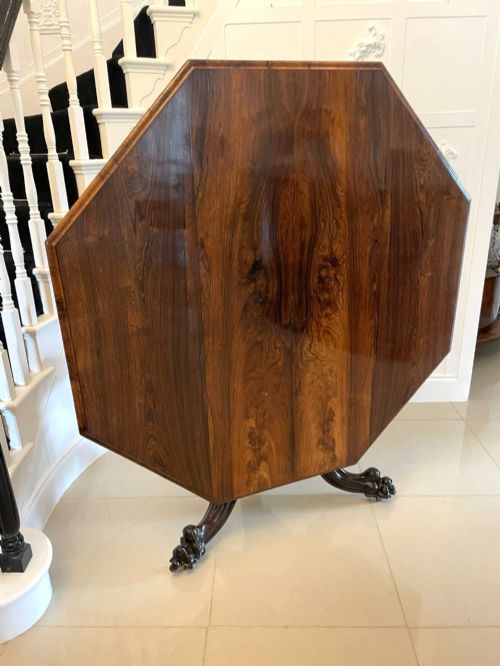
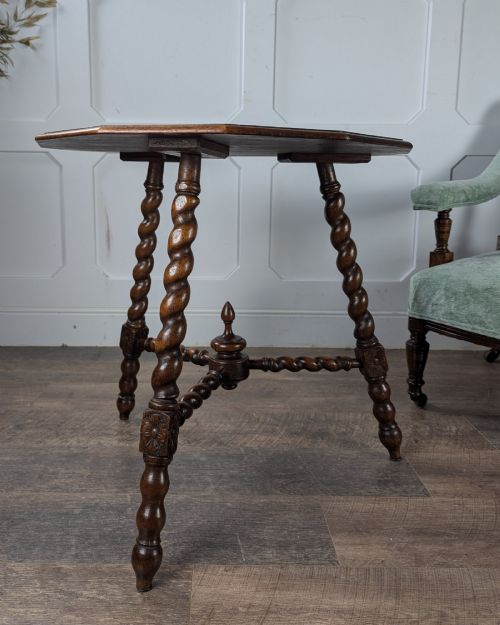
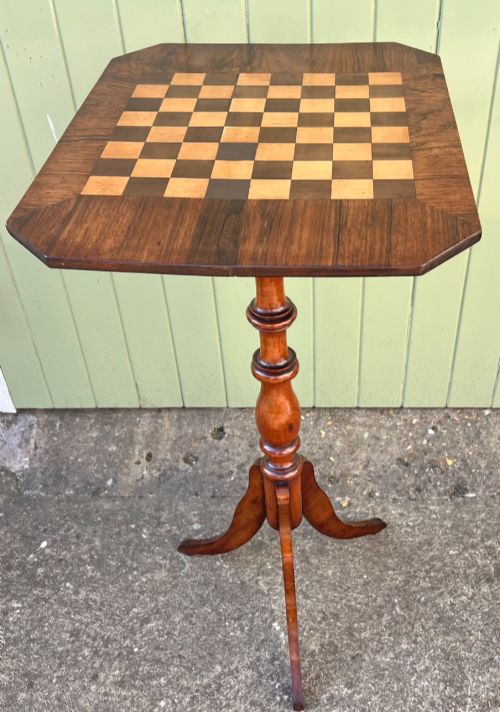
Octagonal tables are grouped by the shape of the top, not by any one furniture type, so the heading gathers occasional, centre, side, lamp and wine tables together. The archive is dominated by 19th and early 20th century British cabinet work in mahogany, walnut, oak and rosewood, with sizes running from wine-table scale up to octagonal dining and library tables of four-seat proportions.
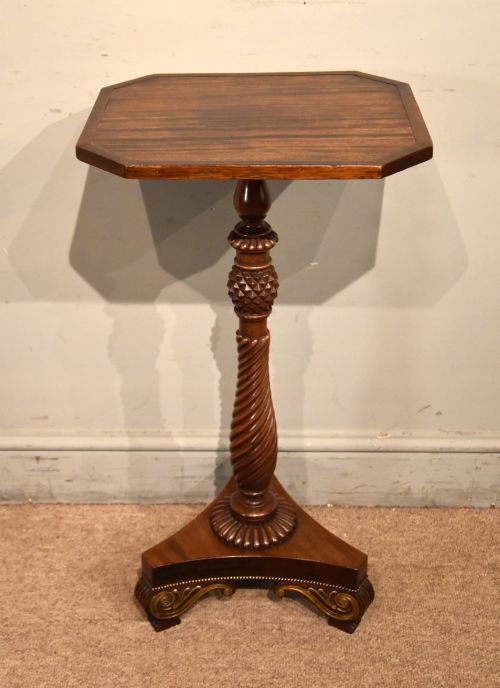
The version you'll meet most often is a late Victorian or Edwardian occasional, side or lamp table in mahogany or walnut, frequently inlaid. Victorian appears in 122 of the titles, inlaid in 104, mahogany in 104. Wording like "Antique Edwardian Mahogany Octagonal Occasional Table" repeats almost word for word across different dealers.
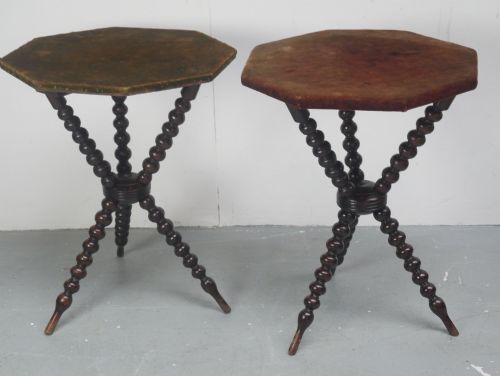
Alongside that sits a substantial second population of Indian, Anglo-Indian and Levantine tables, carved and inlaid, many on folding bases. Hoshiarpur is named in 24 titles, more often than any English maker. Moorish, Syrian and Damascus work with mother-of-pearl inlay forms a smaller steady slice, and elephant and camel supports turn up on a handful of Anglo-Indian pieces.
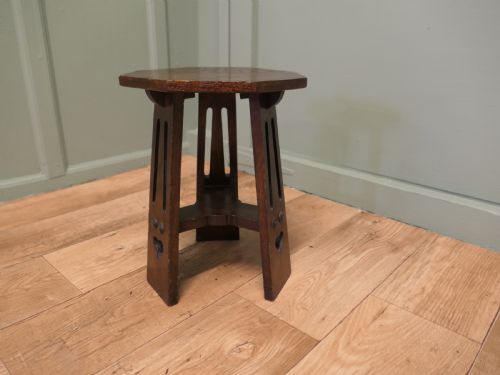
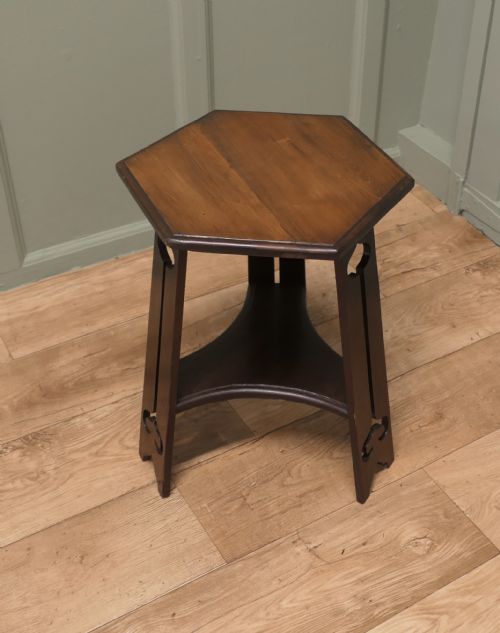
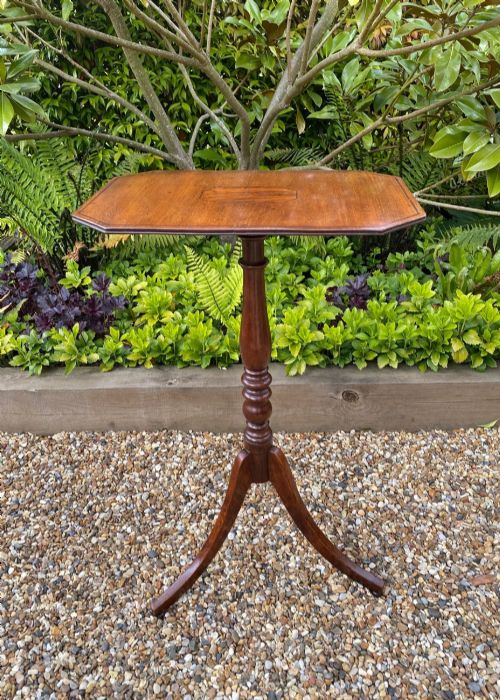
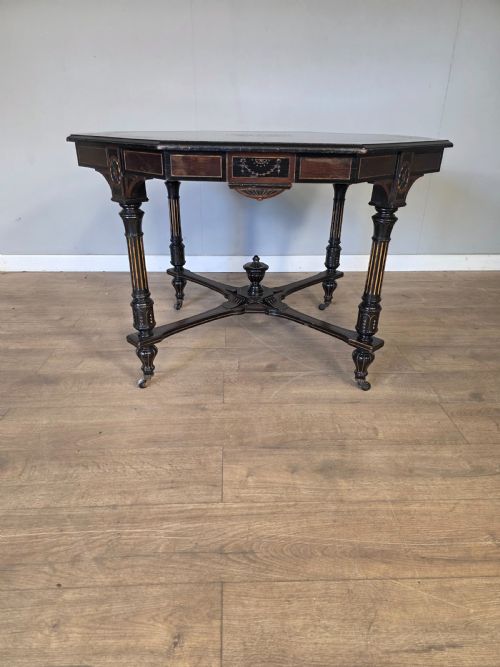
Two further branches account for roughly one in ten each: Aesthetic Movement, Arts and Crafts and Gothic Reform designs, often ebonised, and Georgian and Regency tripod, wine and snap-top tables. Dating is loose at the front of the archive, with "19th Century" the single commonest label; where decades are given they cluster in the 1880s to 1900s.
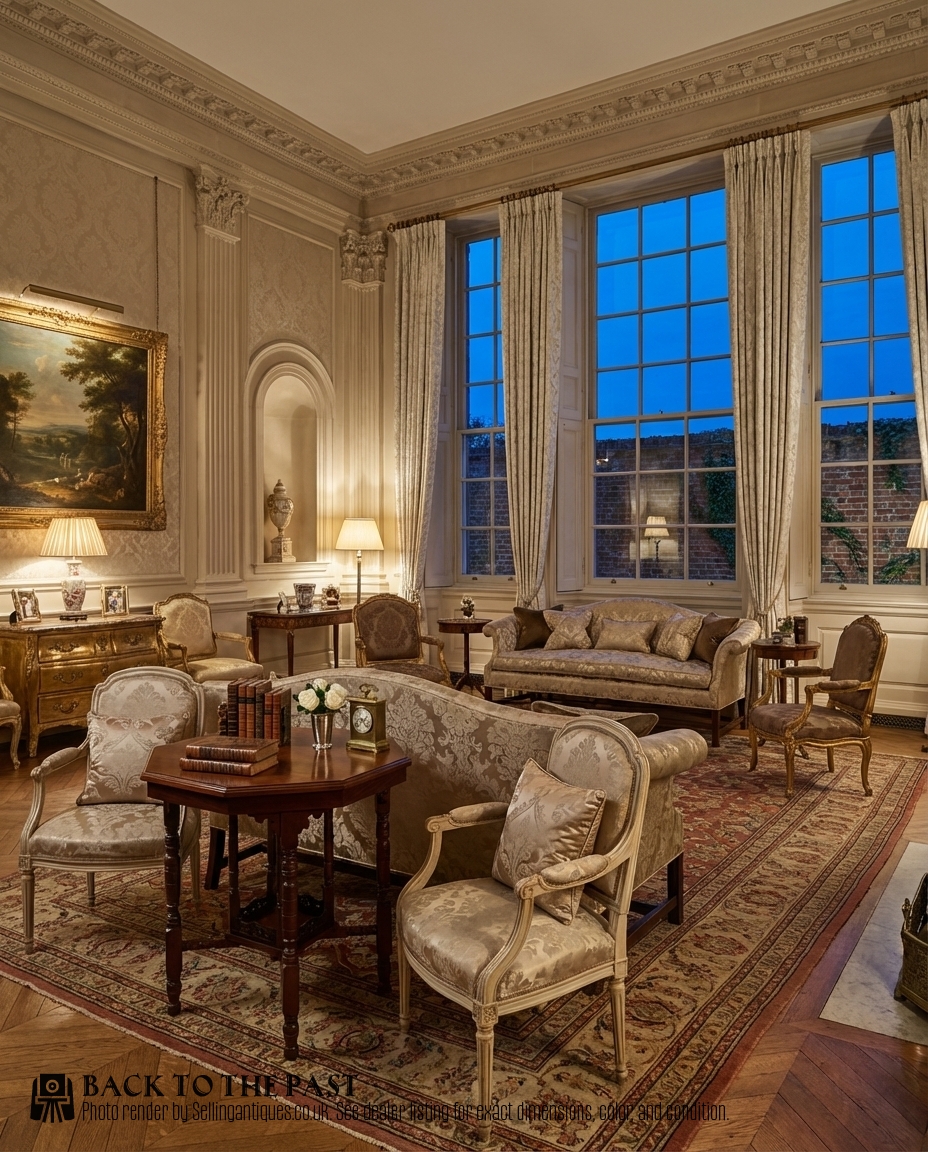
The Range
Inlay does most of the work. A plainly inlaid mahogany occasional table sits at the bottom of the range, while titles reading profusely inlaid, ivory inlaid or bone inlaid shisham climb well above it. Hoshiarpur and Sorrento marquetry carry the strongest examples, and specimen wood tops move a table up again.
Scale is the other lever. Small appears in 14 titles, large in 22, and the octagonal dining, rent, drum and library tables sit at the top, one given as 120cm across and another top at 136.5cm. Specimen marble and pietra dura tops appear only in the upper part of the range.
After that it comes down to names and numbers. An attributed workshop lifts a table above an anonymous one of the same form, though attributions are thin on the ground in this category. Pairs, matched and near pairs, and nests of three and five all sell above singles.
Antique Octagonal Tables Retail Price Guide 2026
Typical UK retail prices for octagonal tables, calculated from the Sellingantiques database of over a million retail prices indexed since 2003. This retail price guide relies exclusively on Sellingantiques data; no external sources or auction records are used, so the figures do not describe the wider market.
19th Century is the period label used most on Sellingantiques for octagonal tables, with Victorian next and the 1890s third.

Gillows
The Antique Octagonal Tables Glossary
- Occasional table
- A small movable table with no fixed job. It's the commonest label in the category, in 90 titles.
- Centre table
- Meant to stand in the middle of a room rather than against a wall, so finished on all sides. Named in 89 titles.
- Tilt top or snap top
- The top is hinged to a block on the pillar so it can be turned upright and stood aside. Sixteen titles say tilt top.
- Hoshiarpur
- A town in north India whose inlaid work is named in 24 titles, usually on shisham, the Indian rosewood.
- Burr
- Figured veneer cut from a growth on the trunk, giving a swirled pattern. Thirty-one titles, 23 of them burr walnut.
- Bijouterie table
- A small table with a glazed lid over a shallow lined well, made for displaying trinkets. Appears a handful of times.
Antique Octagonal Tables: Frequently Asked Questions
What woods were octagonal tables made from?
British examples run heavily to mahogany, walnut, oak and rosewood, with mahogany and walnut leading the titles. Burr walnut turns up regularly on the more decorative centre and work tables.
The Indian and Anglo-Indian branch uses shisham, teak and padauk. Ebonised finishes cluster on the Aesthetic Movement pieces, and single oddities include Ceylonese ebony and Jerusalem olive wood.
How old are most octagonal tables on the market?
The dated field runs from 1760 to 1940. Nearly a third of the archive carries only a century or a reign, with "19th Century" the commonest label of all, followed by Victorian.
Where a decade is given it tends to sit late: the 1890s, 1900s and 1880s account for the biggest clusters. Georgian and 18th century examples exist but are a small minority.
Do octagonal tables fold?
Some do. Folding and collapsible bases appear in 20 titles, and they are almost all Indian, Syrian, Damascus or Islamic tables where the eight-sided top lifts off or the base collapses flat.
British examples in the archive almost never fold. The nearest equivalent is the tripod table with a tilt top, which turns upright against a wall instead.
Are octagonal tables Art Deco ever found?
Yes, though in small numbers. The 1920s and 1930s together account for 53 listings, and the latest dated piece in the sample is a 1940 oak occasional table.
So Art Deco octagonal work is a real presence in the category, just a thin one beside the Victorian and Edwardian bulk.
Which makers are named on octagonal tables?
Very few. Only one name clears three dealers across the whole archive, and that is Gillows. Every other name in the sample is a single dealer's attribution.
Attributed pieces run above anonymous equivalents of the same form, but the category is largely unmarked work. Hoshiarpur, a place rather than a firm, is the most specific origin named of all.
How big do octagonal tables get?
Most sit at occasional, lamp or wine-table scale. Small appears in 14 titles, large in 22.
At the upper end there are octagonal dining, rent, drum and library tables of four-seat proportions, one recorded at 120cm across and another top at 136.5cm.