
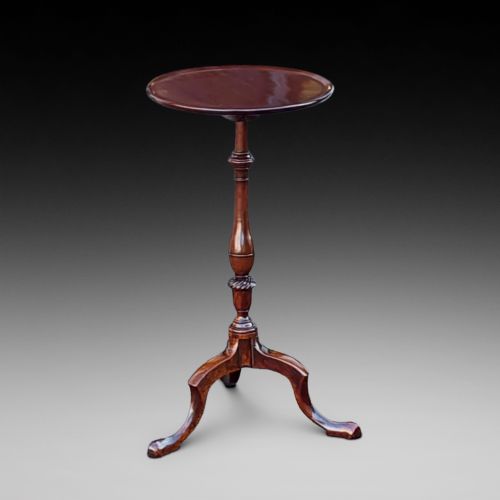
Antique Occasional Tables
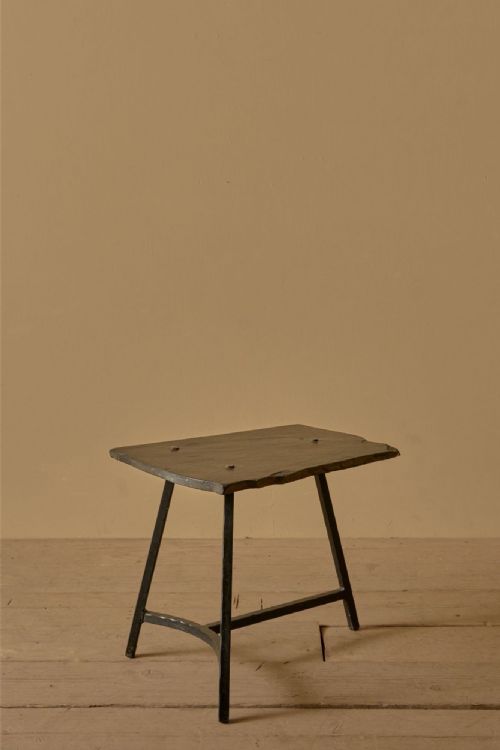
A catch-all trade heading for small movable tables, the ones set down beside a chair to hold a candle, a glass, a workbox or a tea tray.
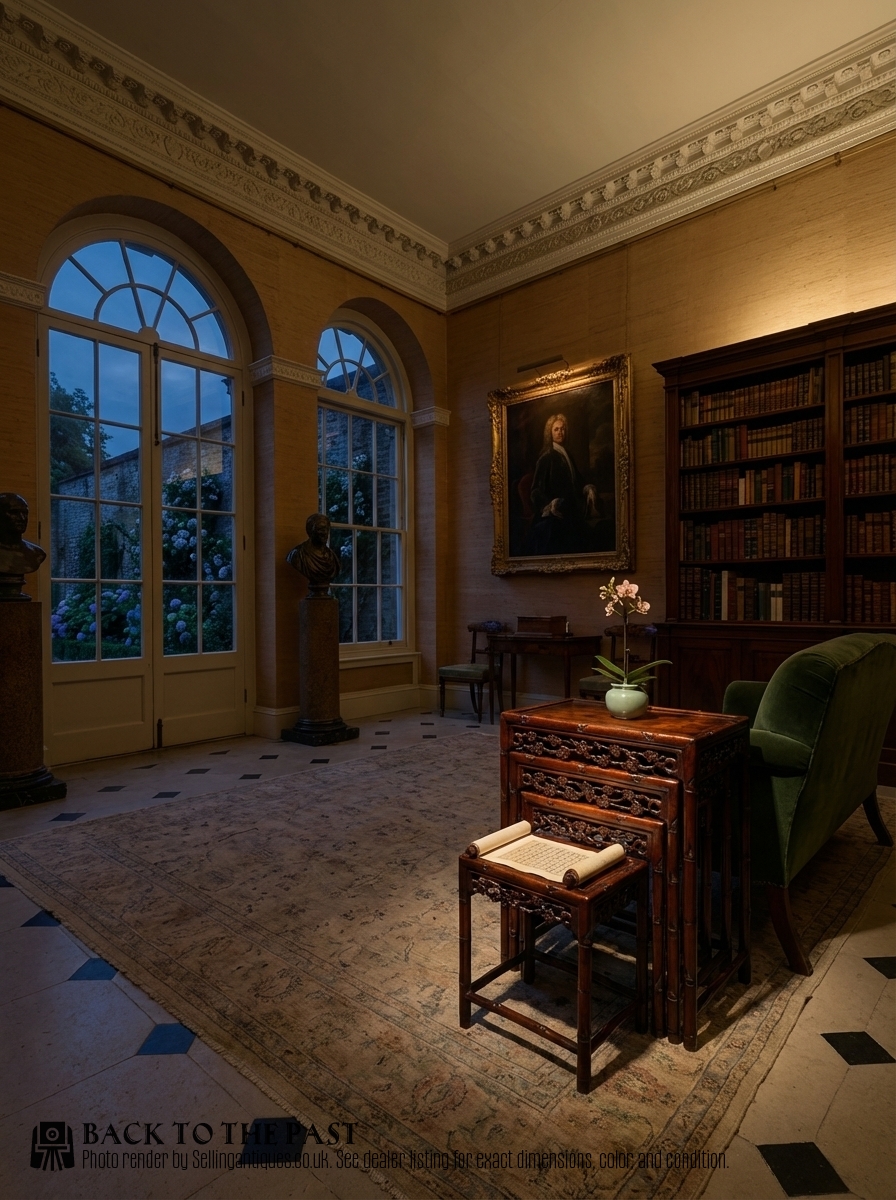
Antique Occasional Tables
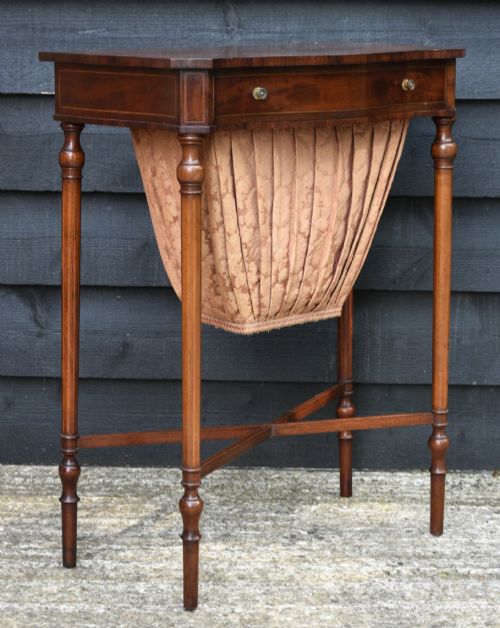
The heading covers side, lamp, wine, centre, Pembroke, Sutherland, tripod, work and nesting tables. What binds them is scale: small enough to be carried to where they were wanted. They became a distinct furnishing type in the 18th century as rooms grew more specialised, and multiplied through the 19th, when one drawing room might hold several.
Timber does the talking. Mahogany names three in ten titles, more than walnut, oak and rosewood put together, with satinwood, burr walnut and marble tops running as smaller streams. The version you'll meet most often is a plain polished mahogany table on a turned pillar or tripod, frequently inlaid, and labelled Georgian, Victorian or Edwardian.
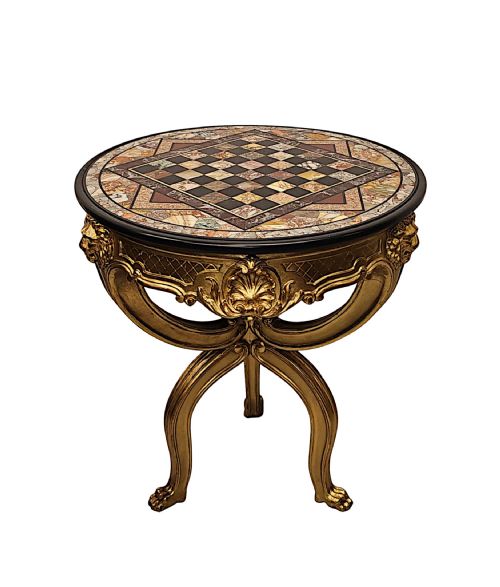
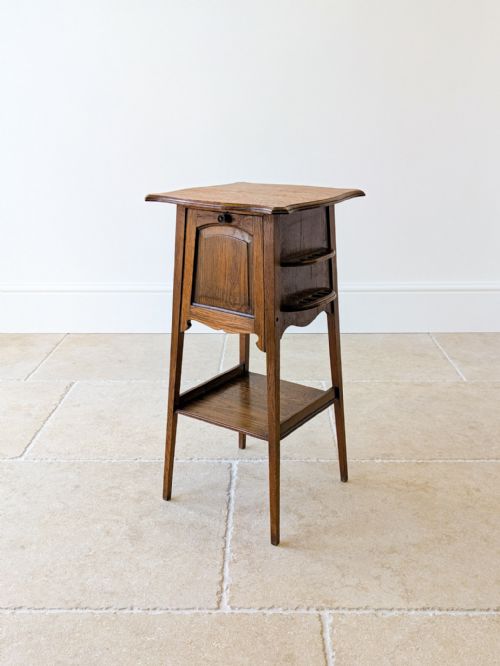
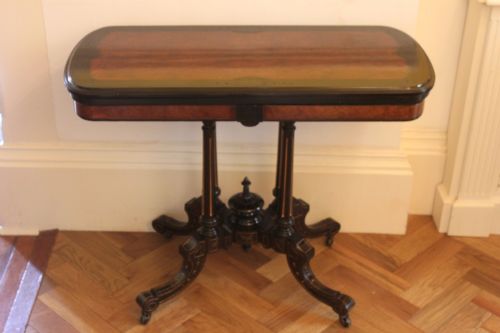
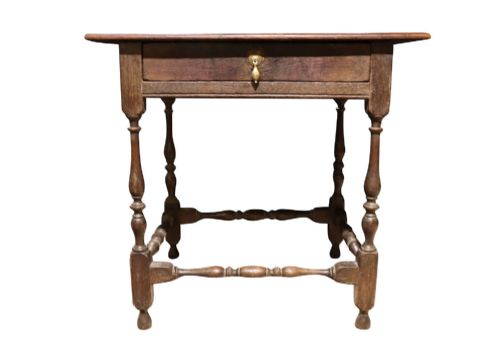
Around that mainstream sit four other groups. Figured and inlaid walnut, burr walnut and rosewood tables make up much of the upper range. Oak country pieces bring cricket tables, gatelegs, barley twist and Arts and Crafts work. French and Continental decorative tables carry gueridons, ormolu, marble and marquetry, and an Anglo-Indian and Oriental stream runs through with Hoshiarpur, Bombay, Burmese, Syrian and Chinese hardwood examples. Nests, pairs and multi-tier tables account for about one listing in twenty.
Dating is mostly loose by design. The dated field runs 1700 to 1960, but the largest single bucket is the unhelpful '19th Century', followed by reign labels rather than years. Pre-1700 pieces appear only as isolated examples, and the twentieth-century end is carried mainly by Art Deco. Around 529 come to market in a year on Sellingantiques, listed by 370 different dealers.
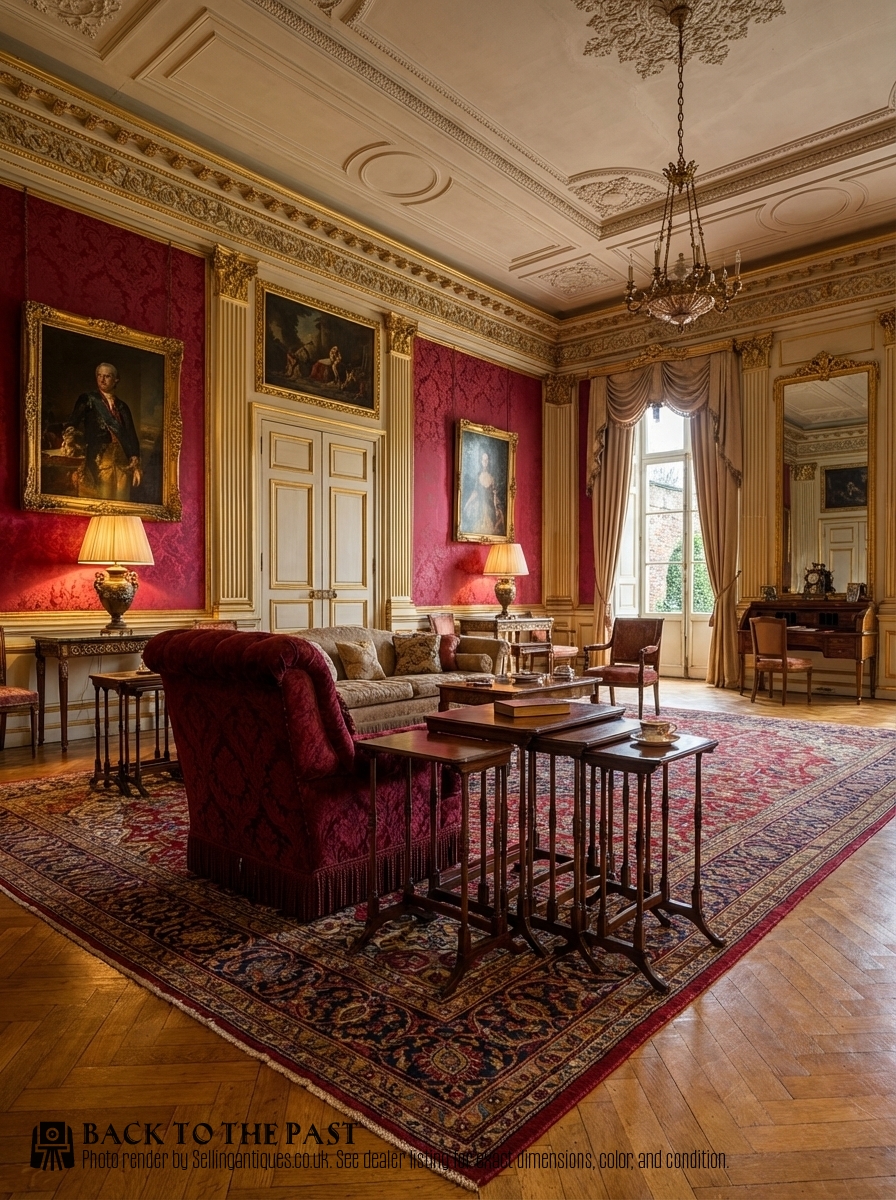
What Sets Them Apart
Timber and surface decide most of it. Plain oak and pine sit at the bottom of the range; figured and exotic woods climb from there, and the upper reaches carry amboyna, calamander, kingwood, coromandel, pollard oak, satinwood and specimen tops laid up as samplers. Burr figure alone names nearly three hundred titles, most of it burr walnut.
Decoration works the same way. Inlay is common enough to be ordinary, but marquetry, painted work, marble and ormolu lift a table well clear of it, and boulle, gilt-bronze mounted and silver-inlaid centre tables sit at the very top of what has been sold. French gueridons in marble and gilt bronze crown that end; plain oak tables of the 1920s and 30s anchor the other.
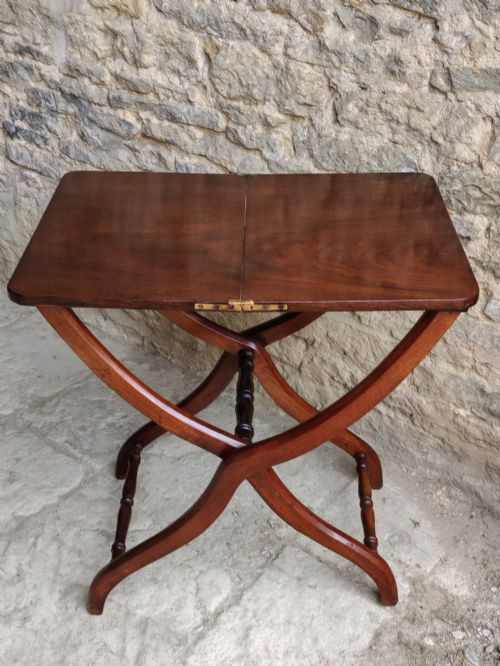
After that it's age, completeness and complexity. Eighteenth-century and Regency work sits above later revival pieces. A matched pair or a nest still complete counts for more than a single table, and mechanism or a job to do pushes the same way, so tilt tops, drop leaves, tiers, games, chess, work and writing tables run ahead of a fixed round top. A named maker or a firm attribution sits above an anonymous piece, and is uncommon.
Antique Occasional Tables Retail Price Guide 2026
Typical UK retail prices for occasional tables, calculated from the Sellingantiques database of over a million retail prices indexed since 2003. This retail price guide relies exclusively on Sellingantiques data; no external sources or auction records are used, so the figures do not describe the wider market.
The highest price of the last year went to a nest of three satinwood tables by Gillows, sold in October 2025.
Gillows·Edwards and Roberts·Maple & Co·Liberty & Co
The Antique Occasional Tables Glossary
- Occasional table
- Trade catch-all for any small movable table. Side, lamp, wine, centre and more all get sold under it, so the word tells you the scale rather than the form.
- Tripod
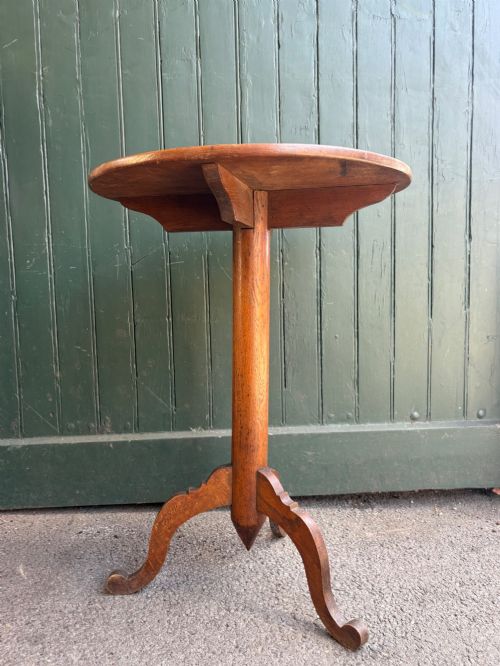
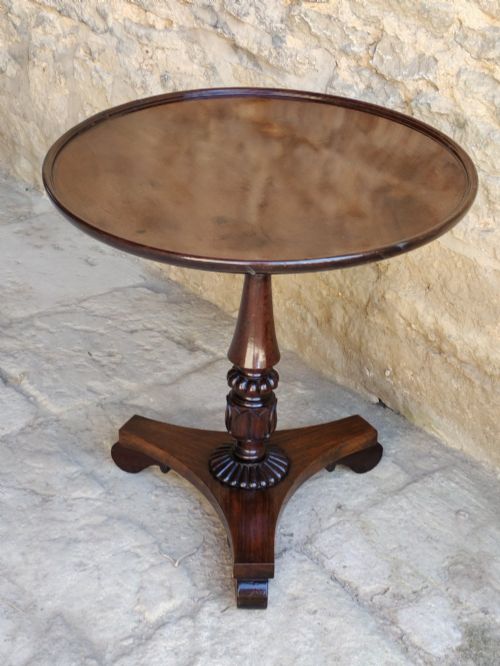
- Three splayed legs rising from a turned pillar, named in over three hundred titles. The standard support for a small round-topped table.
- Tilt top
- A top hinged to swing vertical so the table stands flat against a wall. Also called snap top, and named in 185 titles.
- Pembroke
- A rectangular or oval top with two hinged drop flaps and usually a drawer beneath. A Sutherland is the narrow-centred cousin, with gate supports, folding almost flat.
- Nest / quartetto
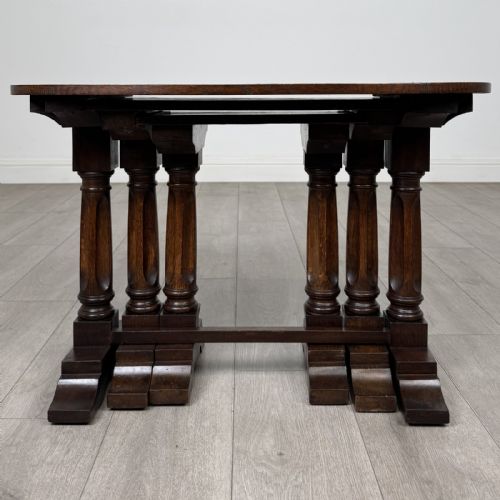
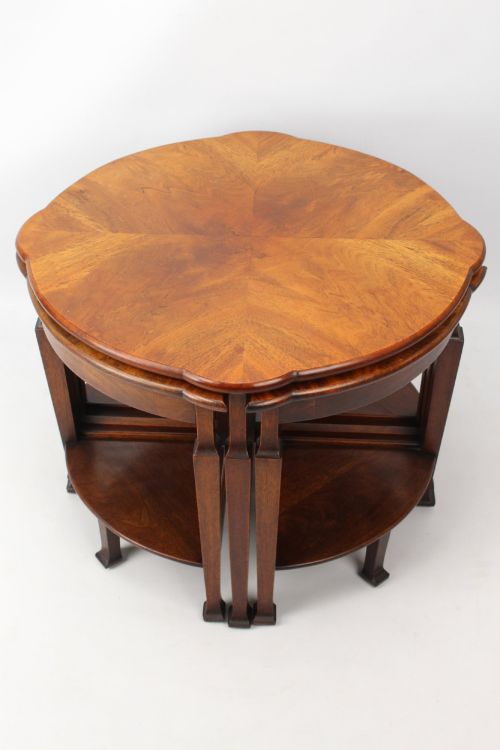
- A graduated set that stacks one table inside another. Trios are the norm, but sets of four and five turn up, in Chinese hardwood, walnut and mahogany.
- Birdcage
- The boxed block of small turned pillars set between pillar and top on some tripod tables, letting the top both tilt and rotate.
Antique Occasional Tables: Frequently Asked Questions
What wood are most occasional tables made from?
Mahogany names three in ten titles, more than walnut, oak and rosewood combined. Walnut comes next, then oak, then rosewood.
Smaller streams run through the archive as satinwood, burr walnut and marble-topped tables, with amboyna, calamander, kingwood, coromandel and pollard oak appearing at the upper end.
Which periods do these tables come from?
The dated field spans 1700 to 1960. Victorian and Edwardian label more of them than any other period, with Georgian and Regency close behind.
Much of the dating is era labelling rather than a year, and '19th Century' is the single largest bucket. Pre-1700 pieces turn up only as isolated examples, such as a 17th-century oak table and a William and Mary side table.
What is a wine table?
A small table with a circular top, usually raised on a pillar, meant to stand beside a chair with a glass on it. The word names 250 titles.
It sits in a whole family of tables named for what they carried: lamp tables, work tables, candle stands, kettle stands, urn stands, tea poys and bookstands.
Are occasional tables usually signed or stamped?
No. Only four maker names clear three dealers apiece across the archive, so an attributed occasional table is the exception.
Where a name does appear, it can be stamped, carried on a paper label, or offered only as an attribution or 'in the manner of'.
What are nests of tables?
Graduated sets that stack one inside another, named in 171 titles. Sets of three are the familiar version, sometimes called quartetto nests.
Sets of four and five are recorded too, in Chinese hardwood, walnut and mahogany. A complete nest sits above a single table in the range.
Do French and Indian examples turn up?
Both, steadily. French decorative tables account for roughly one listing in fifteen, bringing gueridons, ormolu mounts, marble tops and marquetry, alongside Swedish, Dutch and Biedermeier pieces.
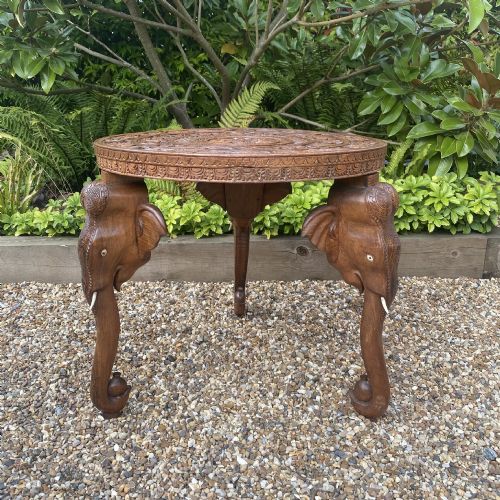
The Anglo-Indian stream has its own place-names, among them Hoshiarpur, Bombay Presidency, Burma and Ceylon, with elephant-carved and bone-inlaid tables recurring. Syrian, Damascus, Moorish and Chinese hardwood examples sit alongside them.