

Antique Pedestal Tables
A table whose top sits on a central column or pillar rather than corner legs, made from the 18th century onward for tea, wine, lamps, cards, writing and dining without a leg in the sitter's way.

Antique Pedestal Tables
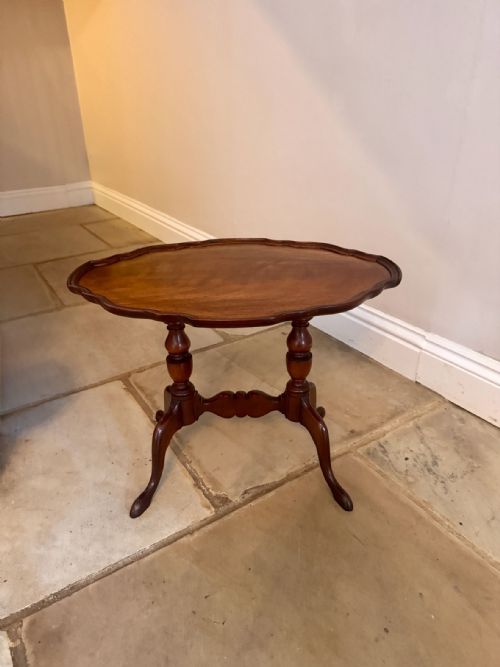
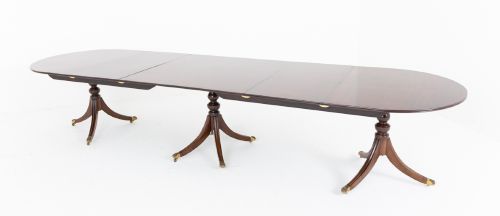
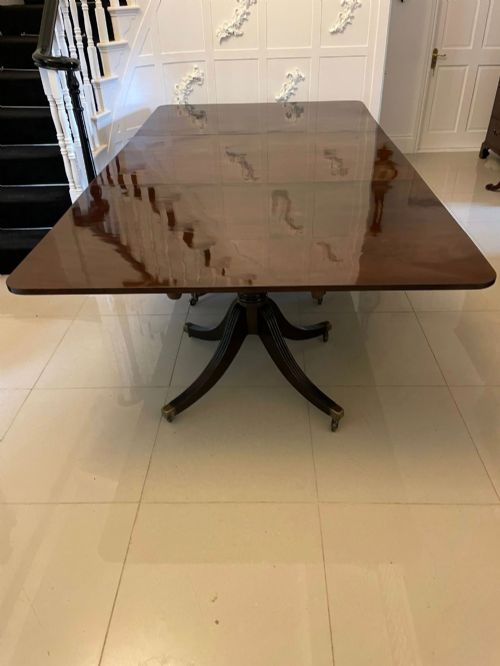
The support is the defining thing. A single turned column on three splayed legs or a platform base carries the top, and at the dining end of the category two or three of those pillars carry a long top between them. Britain took to the form in the 18th century, first for small tripod tea, wine and candle stands, then for dining tables built in pillar sections that could be joined or pulled apart.
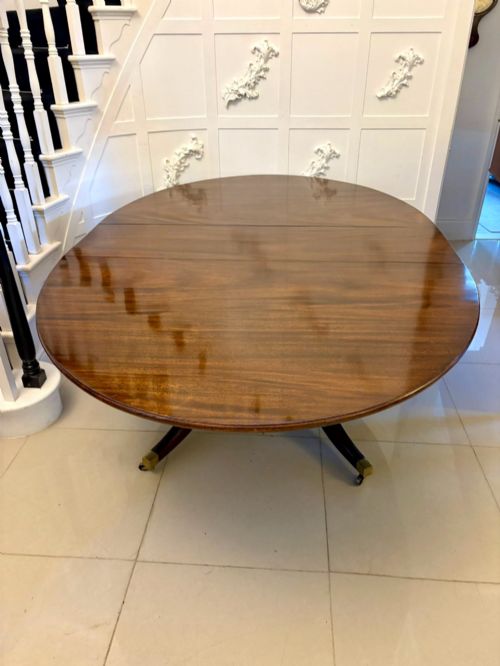
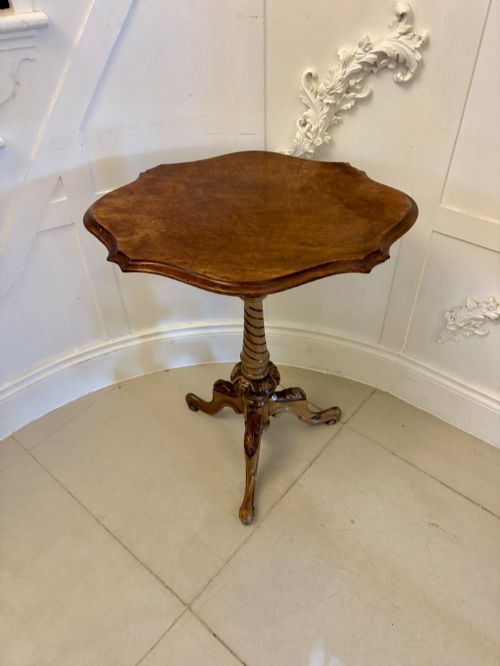
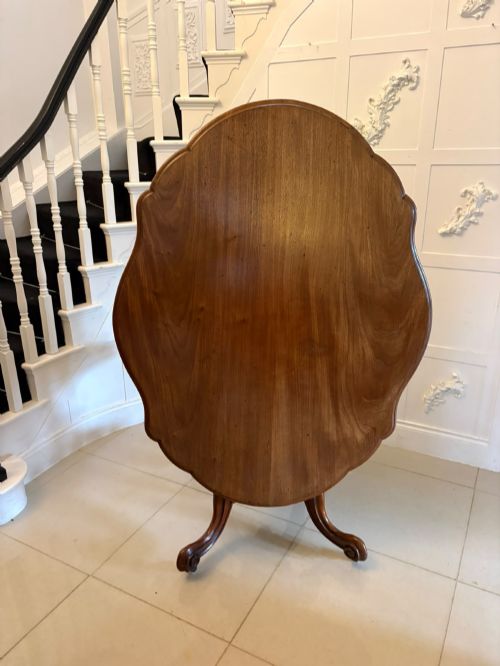
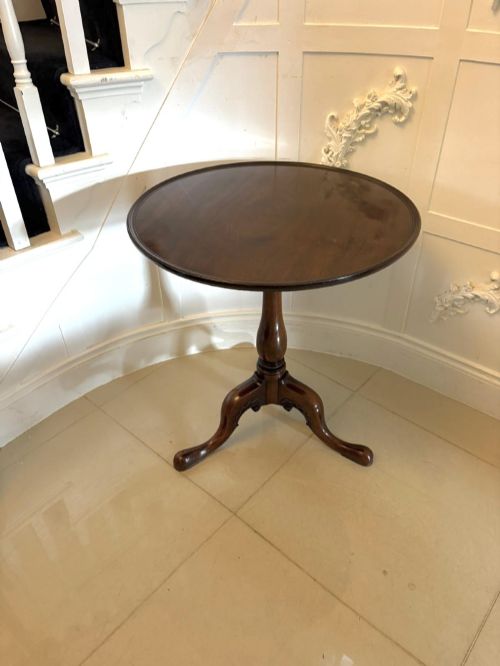
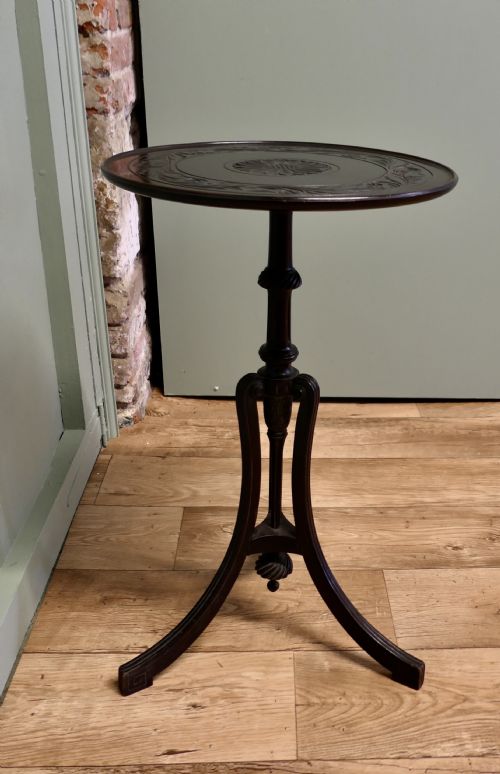
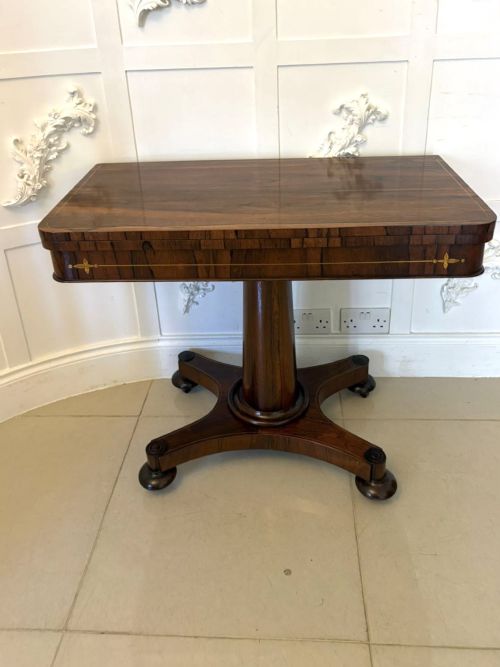
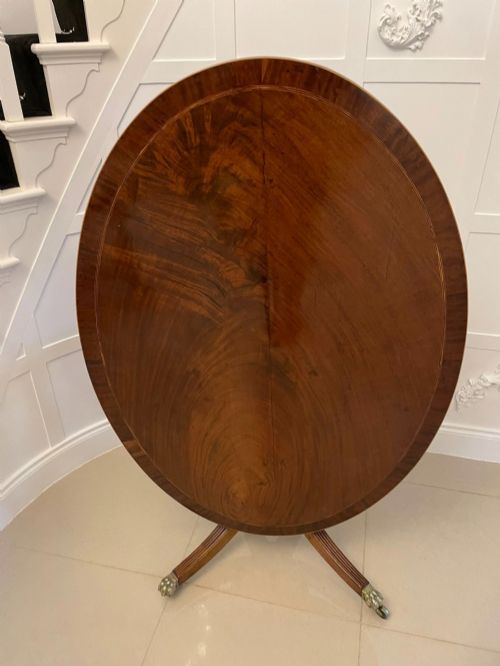
The one you are most likely to meet on Sellingantiques is a 19th-century mahogany table on a single turned pedestal or tripod base, listed as an occasional, wine, lamp or centre table. Mahogany is the default timber, with rosewood and walnut the two serious alternatives. Small-table words dominate: centre, occasional, tripod, wine, lamp, tilt top, circular.
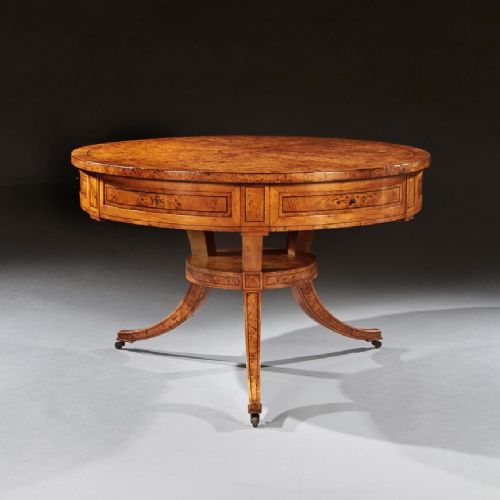
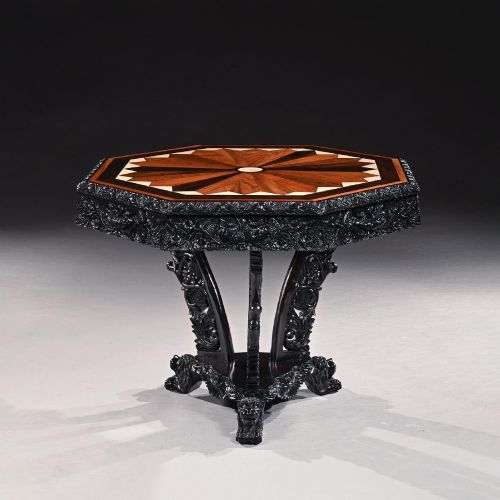
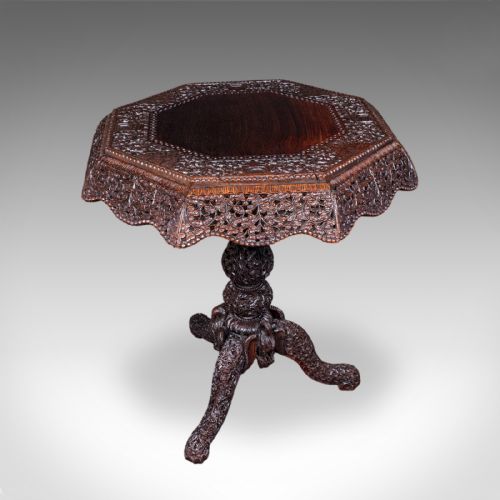
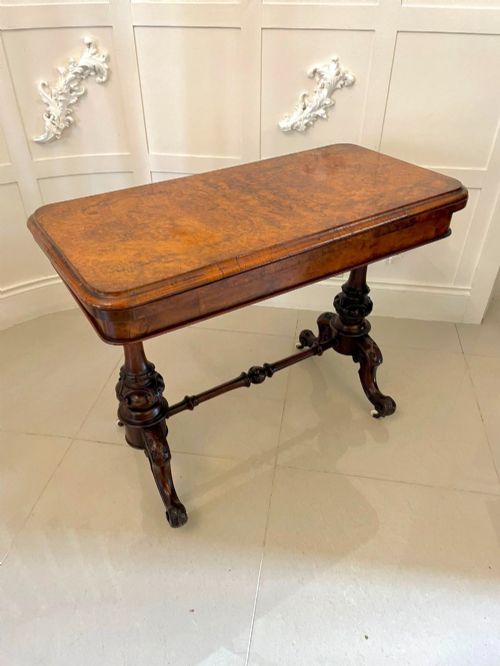
Beyond that core, the heading takes in anything carried on a central support. Fold-over card, tea and games tables. Work and sewing tables. Sofa and Pembroke tables on centre pedestals. Drum and library tables with a frieze of drawers. Continental and Asian pieces surface here and there, French gueridons with marble tops, Swedish burr birch, Sorrento marquetry, Chinese and Burmese hardwood, Anglo-Indian padouk.
Dating in the listings is period-label more often than year. '19th Century' is the largest single entry in the dealers' dated field, ahead of Regency, Victorian and Georgian, and the dated range stretches 1740 to 1940. Where decades are given they cluster mid-Victorian, with a 20th-century tail covering Regency- and Georgian-revival dining tables and Art Deco pieces. A bare 'Georgian' is a style claim as much as a date.

What Sets Them Apart
Timber and figure carry a lot of the difference. The bottom of the range is plain mahogany, oak and pine; the upper part reads figured mahogany, burr walnut, pollard oak, burr elm, satinwood, goncalo alves. Burr appears in 142 titles, most of it walnut, and 'figured' is a word dealers reach for when the veneer is doing the work.
Then scale and the number of pillars. Single small pedestals sit at the bottom, and the top of the range belongs almost entirely to twin- and three-pillar extending dining tables in figured mahogany, some running nine to eleven feet and seating sixteen or eighteen. Wide circular tops do the same job for round tables, and a one-piece top is worth a mention in a title.
Decoration on the top pushes a table upward too: inlay, marquetry, parquetry, specimen timbers, penwork, chequer banding, brass stringing, carved pie-crust rims. Marble tops, brass inlay and specimen tops each sit in a small minority of titles, so they are the exception rather than the pattern. A named or attributed maker lifts a piece as well, and those names cluster in the upper part of the range.
Antique Pedestal Tables Retail Price Guide 2026
Typical UK retail prices for pedestal tables, calculated from the Sellingantiques database of over a million retail prices indexed since 2003. This retail price guide relies exclusively on Sellingantiques data; no external sources or auction records are used, so the figures do not describe the wider market.
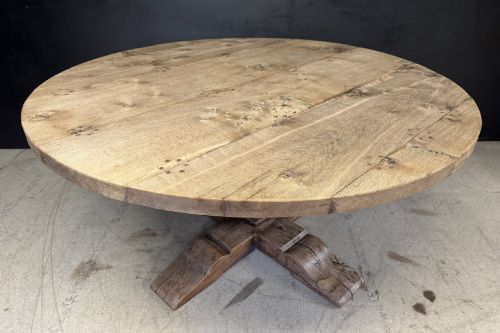
The widest top recorded on Sellingantiques is an eight-foot circular oak dining table standing on a cruciform base.
Gillows
The Antique Pedestal Tables Glossary
- Pedestal or pillar
- The single central support carrying the top, ending in feet or a platform base. Dealers use the two words interchangeably in titles.
- Tripod
- A pedestal ending in three splayed legs, and the commonest small-table base in this category at 205 titles.
- Tilt top
- A top hinged to swing vertical so the table stands flat against a wall. Tip-top and snap-top are the same idea in other words; tilt top alone appears in 158 titles.
- Twin or triple pedestal
- A dining table built on two or three pillars, often with extra leaves to extend it. Twin runs to 71 titles and extending to 70.
- Drum table
- A circular library table with a deep frieze of drawers on a central pedestal, 63 titles.
- Birdcage
- The boxed double-plate mechanism between top and pedestal on some tripod tables, letting the top both tilt and revolve.
Antique Pedestal Tables: Frequently Asked Questions
What's the difference between a wine table and a lamp table?
Very little. Both names turn up in exactly 154 titles, and often in the same title, so the trade treats one small single-pillar form under two use-names.
Both usually mean a small round-topped table on a turned pedestal. 'Occasional' gets attached to the same thing.
Which wood are most pedestal tables made from?
Mahogany, by a distance. It is the default timber of the category, running to well over a thousand of the titles on Sellingantiques.
Rosewood comes next, then walnut, with burr walnut making up a good part of the walnut. Oak, pine, satinwood, birch and padouk show up in smaller numbers.
How old is a table listed as Georgian or 19th Century?
Treat those as period-style labels rather than years. '19th Century' is the biggest entry in the dealers' dating field, and Regency, Victorian and Georgian all outnumber any single decade.
The dated field as a whole runs 1740 to 1940. Titles saying 'Georgian' or 'George III' often cover around 1800 as much as the 1700s, and 18th-century dating is a minority of the listings.
Are pedestal dining tables always extending?
Not always, but extension is the point of the multi-pillar ones. Twin and triple pedestal tables were built in sections with leaves that drop in between.
Single-pillar breakfast and centre tables of the same period are fixed-top, though many tilt vertical for storage.
What is a loo table?
A large Victorian tilt-top centre table, oval or circular, named after the card game played on it.
It sits on a single pedestal, usually with a platform base, and the top swings up so the table can stand against a wall between games.
Do Continental and Asian pedestal tables appear in this category?
Yes, though as a thin and steady stream rather than a branch of any size. French gueridons, often with marble tops, are the ones that recur.
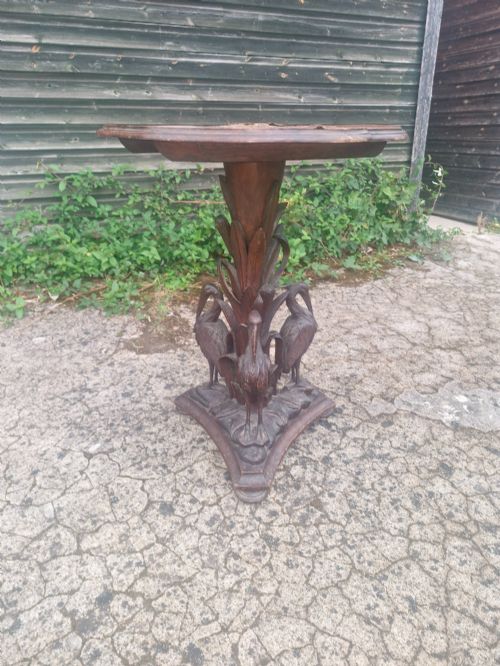
Also listed: Swedish and Scandinavian burr birch, Sorrento marquetry, Black Forest carving, Chinese and Burmese hardwood, Anglo-Indian padouk. Each is a handful of listings.