

Antique Marble Top Tables
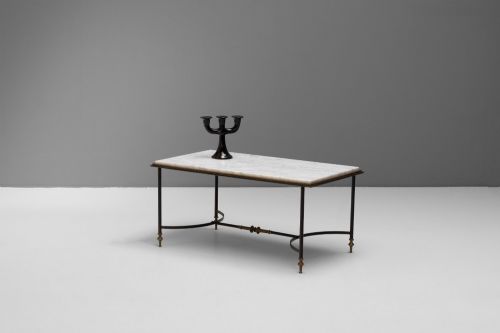
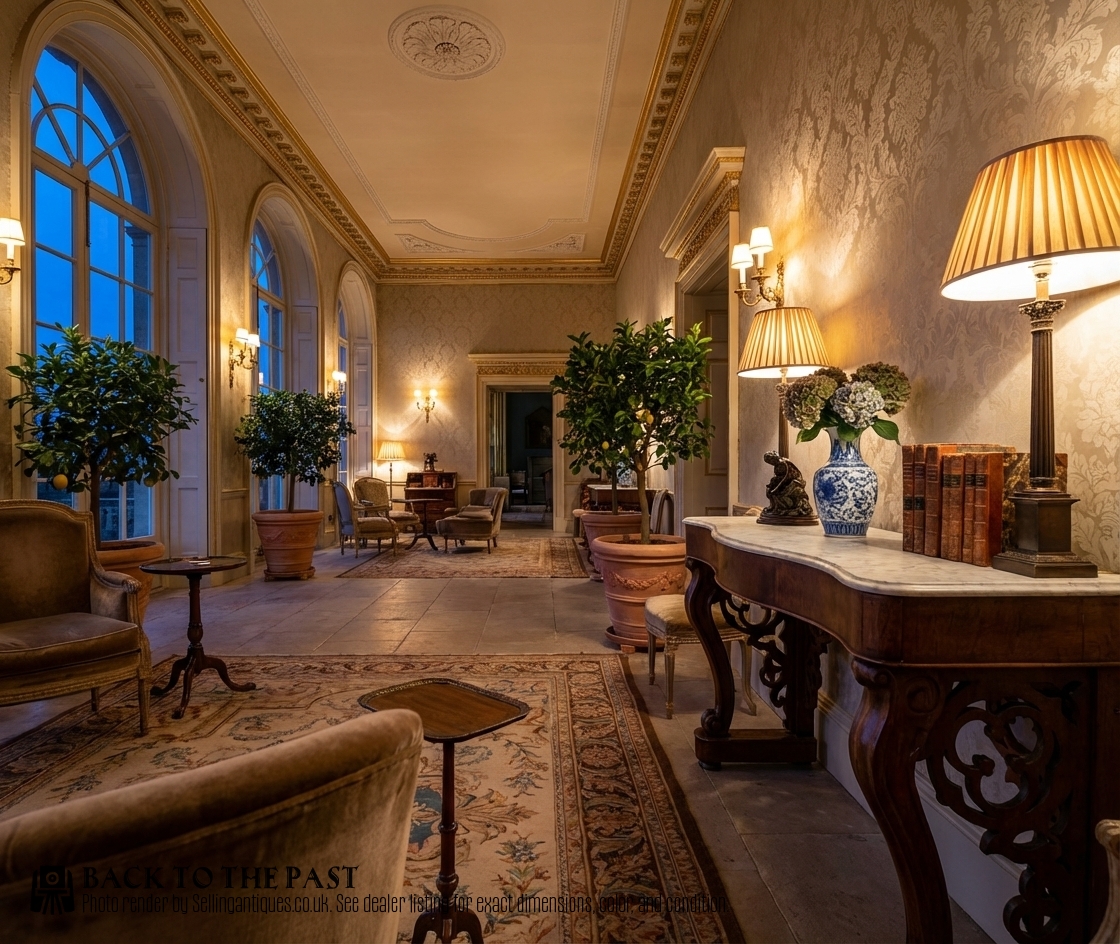
A table with a stone slab top, marble in most cases, set on a wooden or iron base, made for halls, walls and window piers where heat and water would spoil timber.
Antique Marble Top Tables
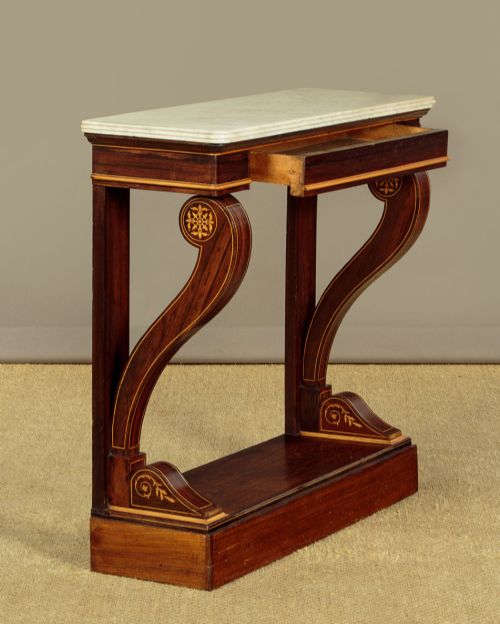
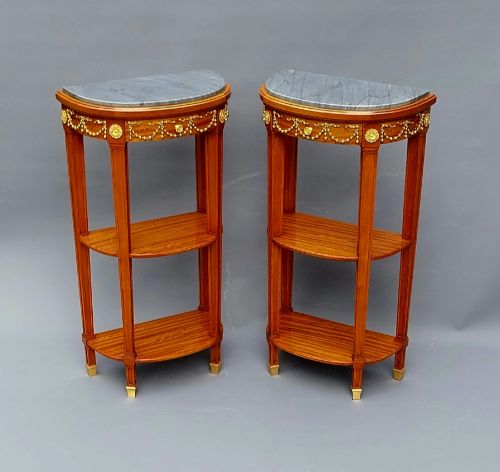
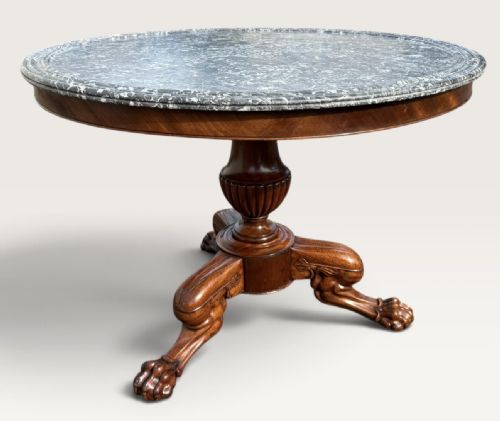
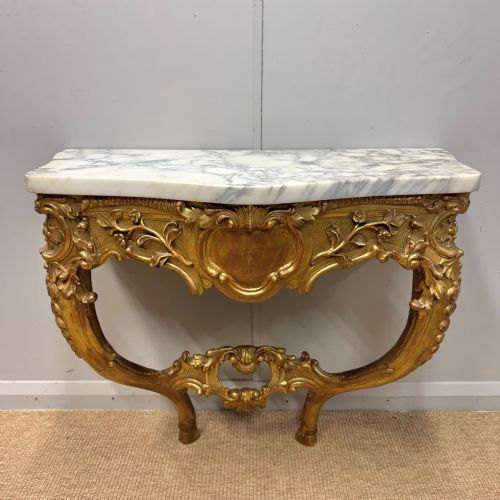
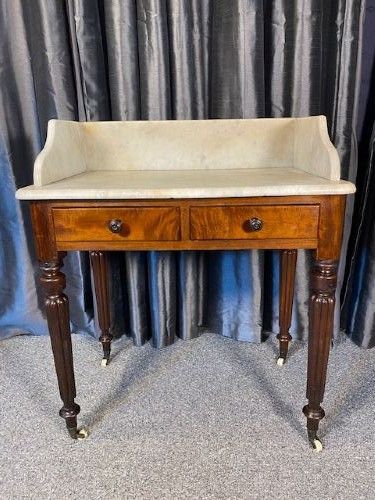
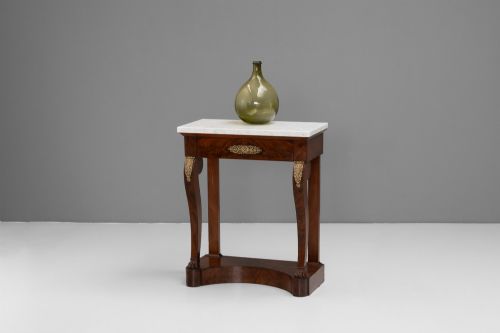
Stone-topped tables have been made since the Renaissance, and by the eighteenth and nineteenth centuries they were standard European furnishing. Marble resists heat, water and stains, which suited console tables, washstands, serving tables and café tables. The round pedestal guéridon and the wall-hung console both developed in France, and both were made in quantity through the nineteenth century.
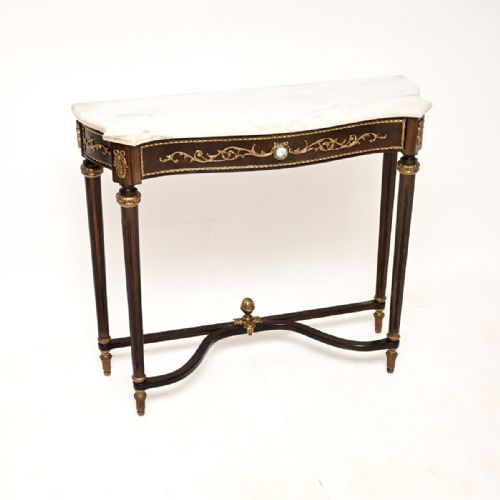
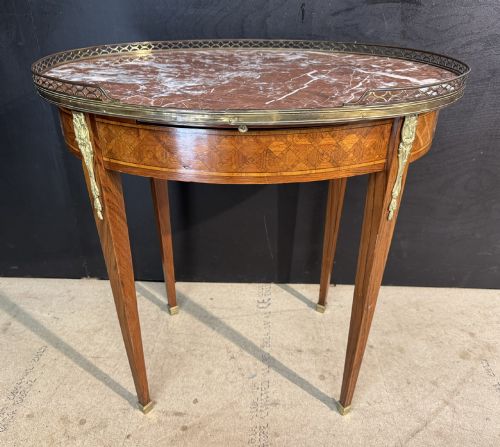
The console dominates on Sellingantiques: 'console' appears in 525 titles, more than a third of the archive, and 'french' in 510. Mahogany is the commonest named timber, then walnut, then giltwood. Round guéridon and centre tables form the clear second group, and the two names often describe the same object, with 47 titles saying 'gueridon centre' outright.
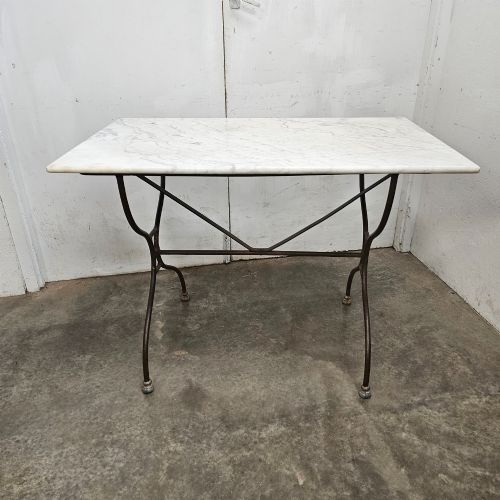
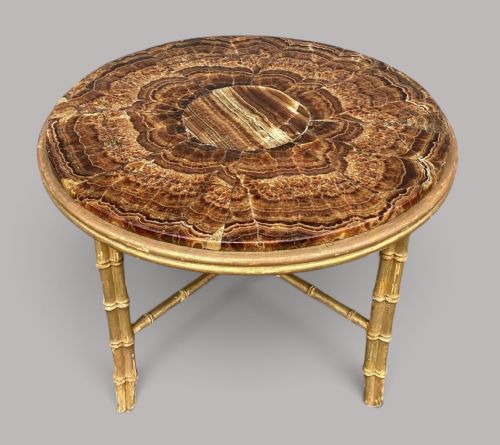
Beyond those two, smaller occasional forms account for roughly a quarter: side, coffee, wine, lamp and washstand tables, many titled simply as a French marble top coffee table. A distinct strand sits on cast or wrought iron, listed as bistro, café, pub, conservatory, orangery and garden tables. Specimen, pietra dura and inlaid stone tops turn up too, but thinly, at about one title in forty.
Dating is loose. The field runs 1690 to 1960, though fewer than half the listings carry a clean year, and one in three says no more than '19th Century' - a bigger bucket than every named Victorian decade combined. Where decades are given they cluster in the mid-to-late Victorian run and again in the 1900s to 1930s. Eighteenth-century pieces are present but thin.
Where The Range Splits
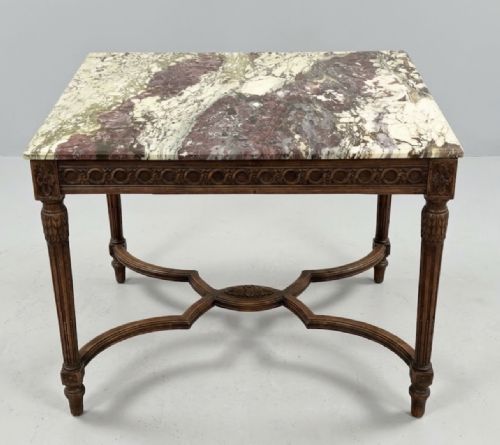
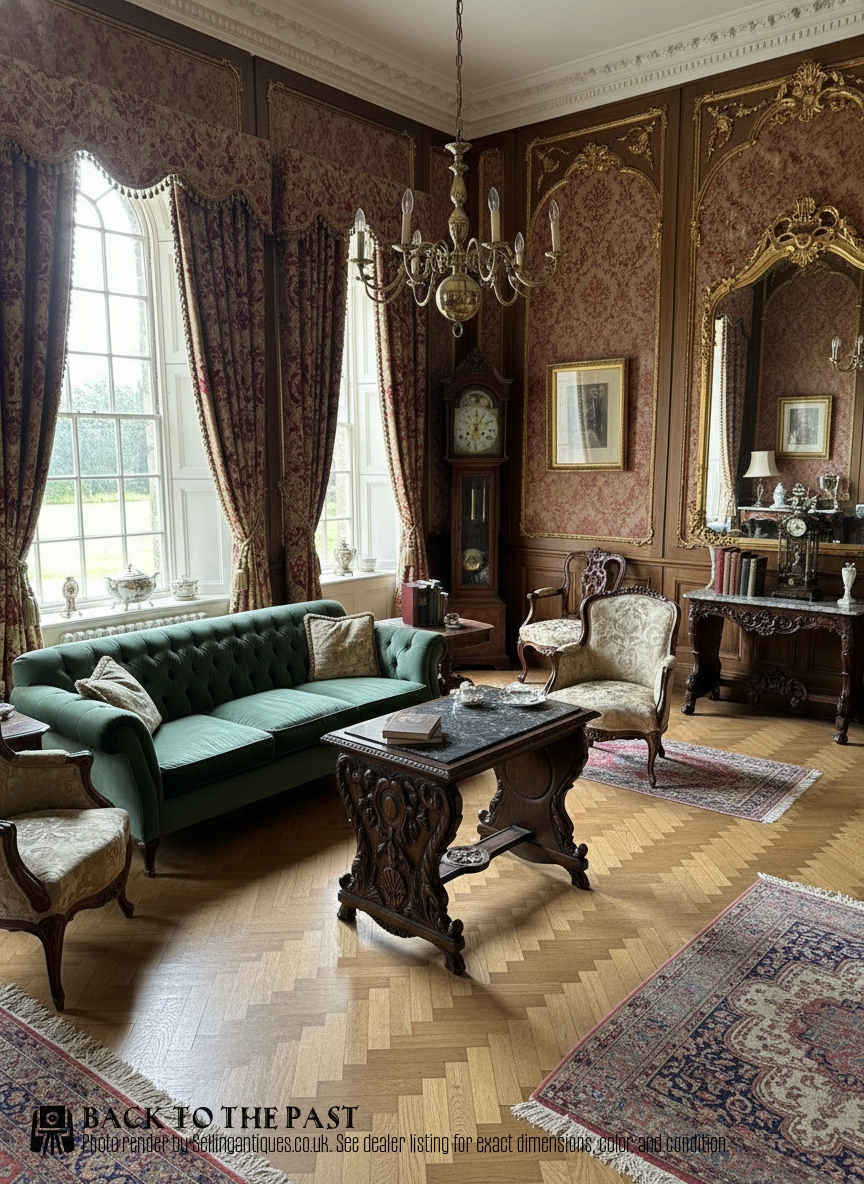
The top does most of the work. Specimen marble, pietra dura, micro-mosaic, Ashford marble and Derbyshire fossil sit at the upper end of what has sold, along with named stones like Carrara, rouge, breccia and porphyry. At the other end are plain slabs, slate and terrazzo, and tops frankly described as faux painted marble.
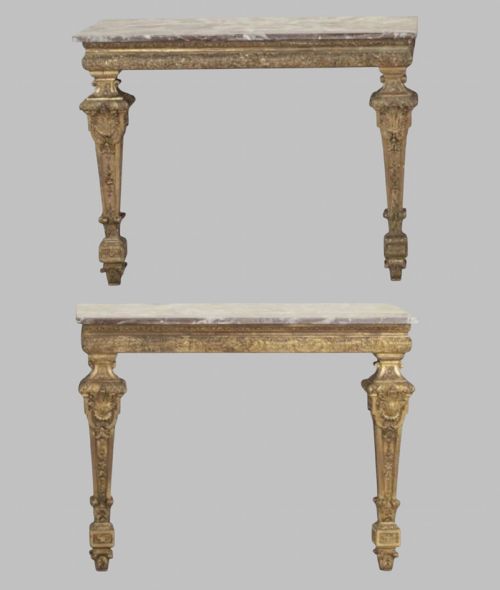
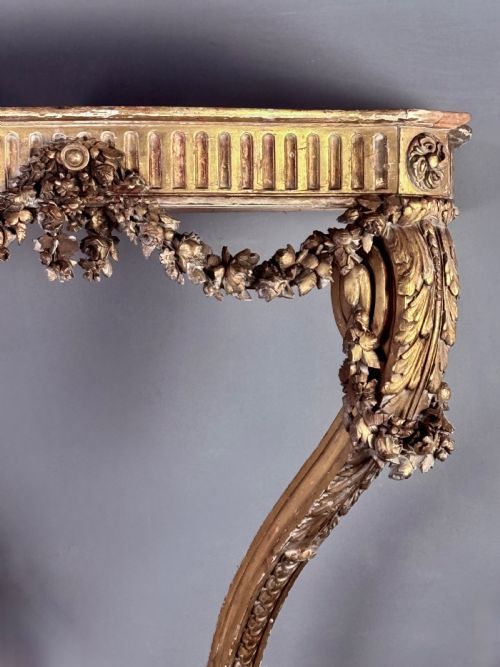
Then the base. Carved giltwood, parcel-gilt and ormolu-mounted frames run through the higher-priced titles, with 'gilt' in 126 and 'carved' in 90. Cast and wrought iron garden, bistro and pub tables gather at the cheaper end of the archive. Scale pulls the same way: large consoles and centre tables sit high, small consoles and wine tables low.
Two other things lift a listing. Pairs are uncommon at 95 titles, but matched consoles and side tables dominate the very top of the range and outnumber singles there. And period naming counts: eighteenth-century attributions, along with Empire, Louis and Regency descriptions, cluster at the top, with Italian and French giltwood consoles at the extreme.
Antique Marble Top Tables Retail Price Guide 2026
Typical UK retail prices for marble top tables, calculated from the Sellingantiques database of over a million retail prices indexed since 2003. This retail price guide relies exclusively on Sellingantiques data; no external sources or auction records are used, so the figures do not describe the wider market.
The largest tops recorded on Sellingantiques run a little over a metre across - a garden table base at 110cm and an orangery table at 106cm.
The Antique Marble Top Tables Glossary
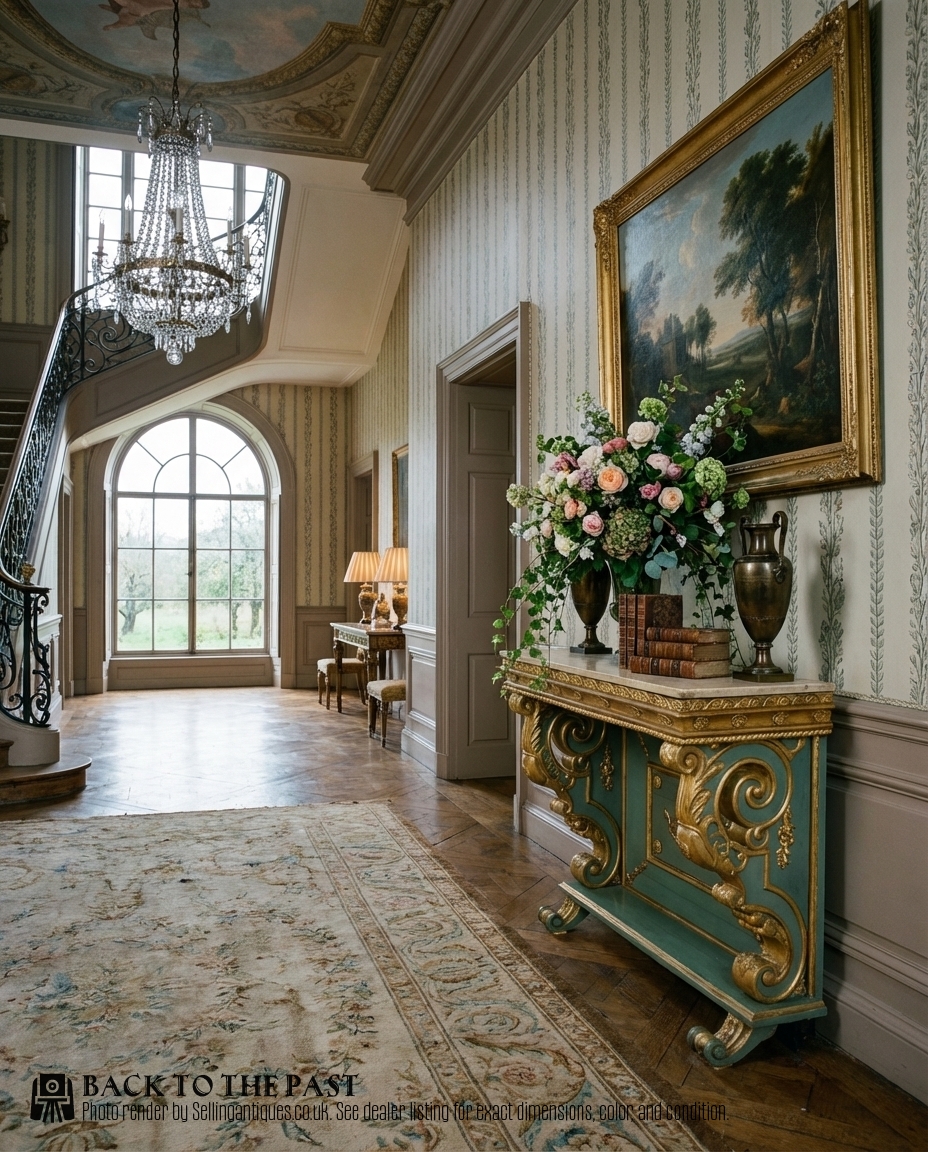
- Console table
- A table made to stand against a wall, often with a shaped front and only front legs or brackets. The commonest form in this category by a wide margin.
- Guéridon
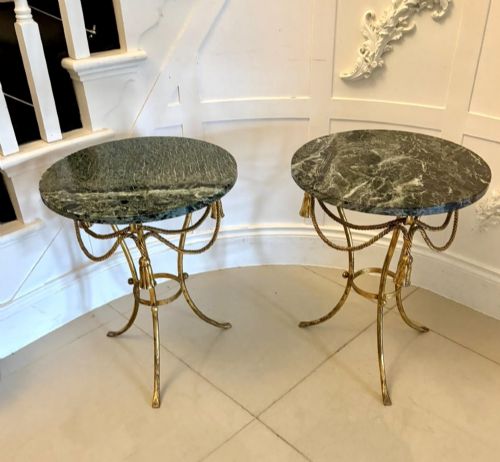
- A small round table on a central pedestal or three legs. Titles also spell it guerridon or guerdon.
- Centre table
- Finished on all sides so it can stand free in a room. In these listings it frequently describes the same object as a guéridon.
- Pier table
- A console-type table made for the pier, the stretch of wall between two windows.
- Specimen marble
- A top made up of many different marbles set together as samples. Used in 39 titles, mostly at the upper end.
- Bouillotte table
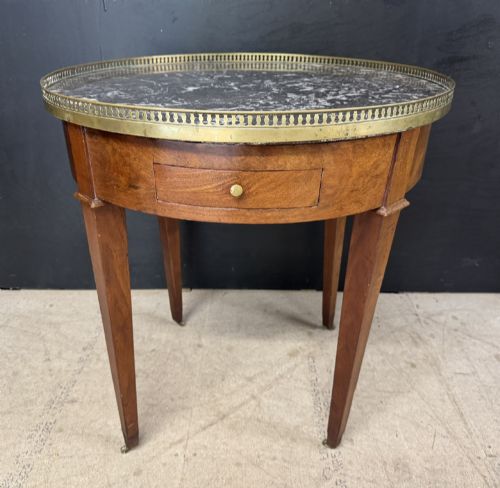
- A small circular French table, usually with a gallery, named after a card game. Appears several times with a marble top.
Antique Marble Top Tables: Frequently Asked Questions
Are marble top tables usually French?
Nationality is stated more often than any timber, form or maker in this category. The word 'french' appears in 510 titles, roughly a third of everything listed and sold on Sellingantiques.
Italian, Chinese and English pieces make up smaller identified strands. Plenty of listings name no country at all.
What does a bare 19th Century date mean?
It means a dealer's honest approximation rather than a year. Some 483 listings carry nothing more precise, which makes that bucket larger than every named Victorian decade combined.
Where decades do appear, they gather in the 1860s to 1890s and again across the 1900s to 1930s. Eighteenth-century entries exist but are thin, about 60 listings.
Is the top always marble?
No. Other stone runs quietly through the archive: onyx, granite, slate, terrazzo, quartz, porphyry and tesselated stone all appear in titles.
Some listings declare painted faux marble outright. Those, along with slate and terrazzo, sit toward the lower end of the range.
How many come up for sale each year?
About 155 a year on Sellingantiques, listed by 196 different dealers over the life of the archive.
That spread tells you something. This is a category almost every general furniture dealer touches, rather than a specialist's preserve.
Do pairs sell for more than single tables?
Pairs push upward. Only 95 titles mention a pair, so they are uncommon, but they crowd the very top of the range.
At that end matched consoles and side tables outnumber singles.
What are the more unusual forms?
The samples throw up a marble-topped sewing machine table, a table on Roman-style lion monopodia and a pair of side tables carved as seated hounds.
Also a rootwood stand with a deep quartz top, and a reclaimed railing turned into a console. Iron-based bistro, pub, conservatory and orangery tables form a steadier strand of their own.