
Victorian Dining Tables
Nineteenth-century British dining tables, led by mahogany wind-out extending tables with loose leaves, made so one table could be lengthened or shortened to suit the size of a meal.
Victorian Dining Tables
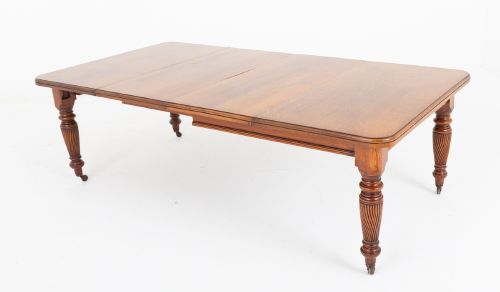
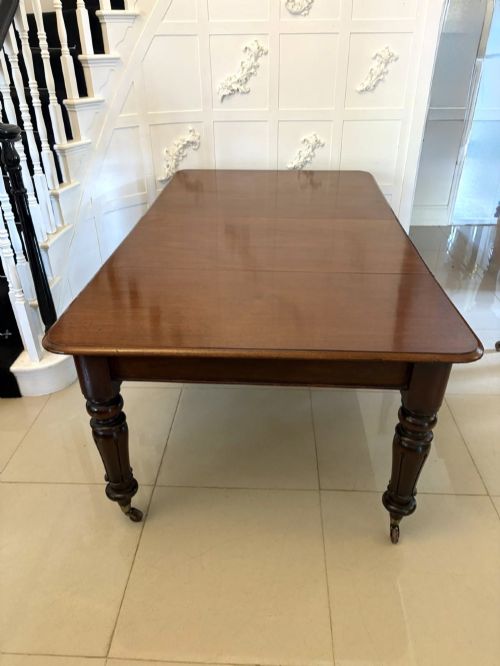
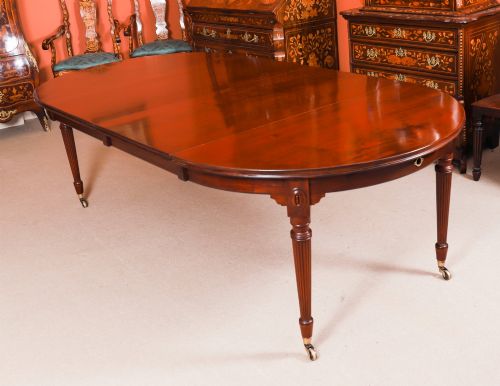
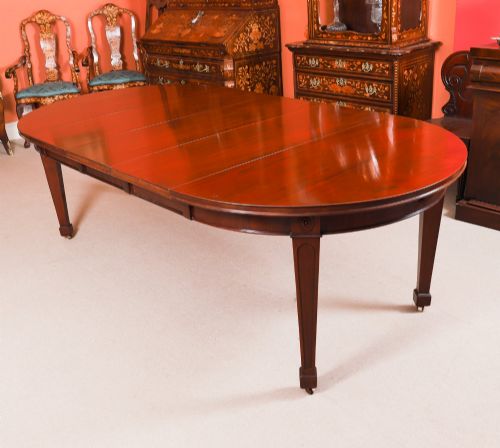
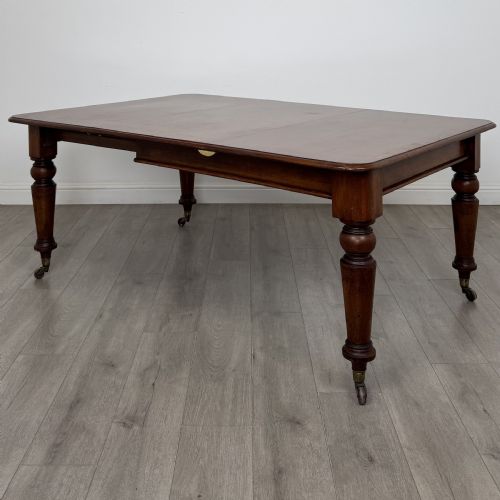
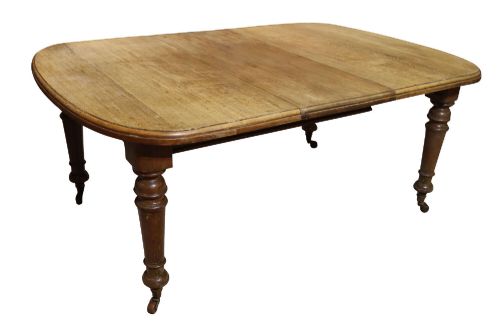
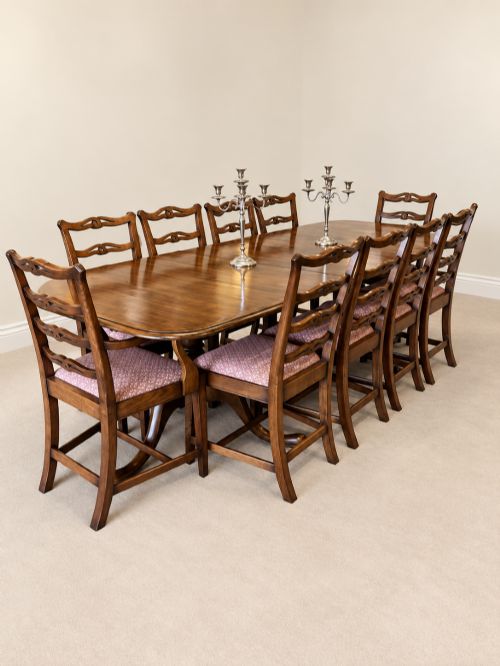
The table you'll meet most often is a mahogany extender. "Extending" appears in 697 of the 1,592 listings and "mahogany" in 774, and the two together in 315. Titles quote seating, leaf counts and length in feet, so a heading may read as eight seats, three leaves and 8ft. Extending tables with screw or telescopic action and loose leaves came in early in the century and became standard in middle-class dining rooms.
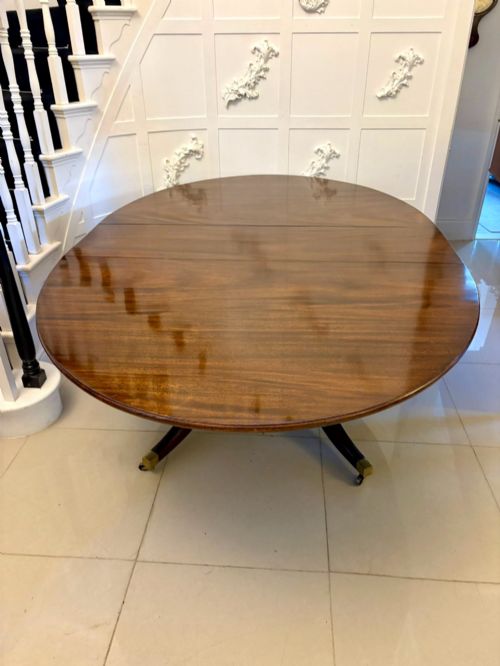
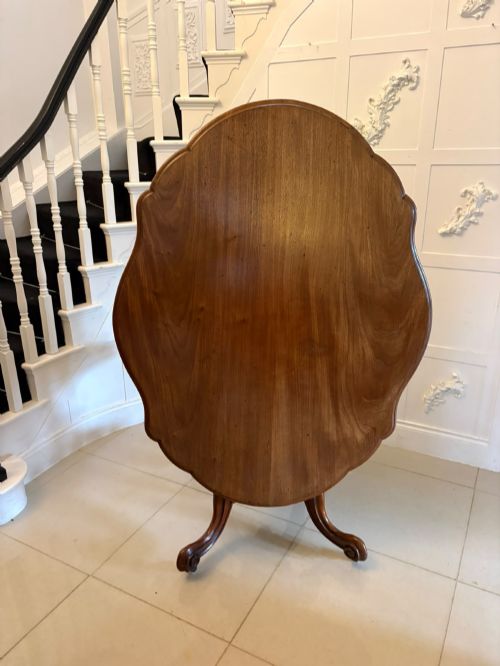
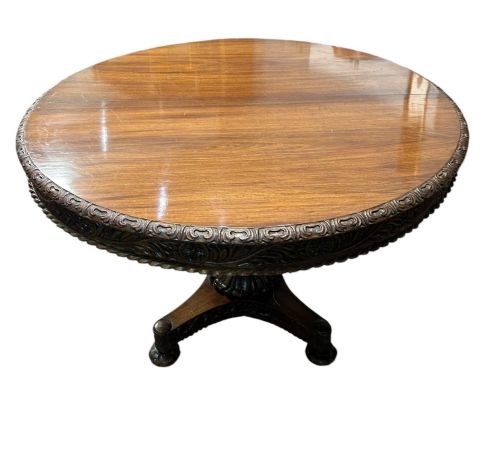
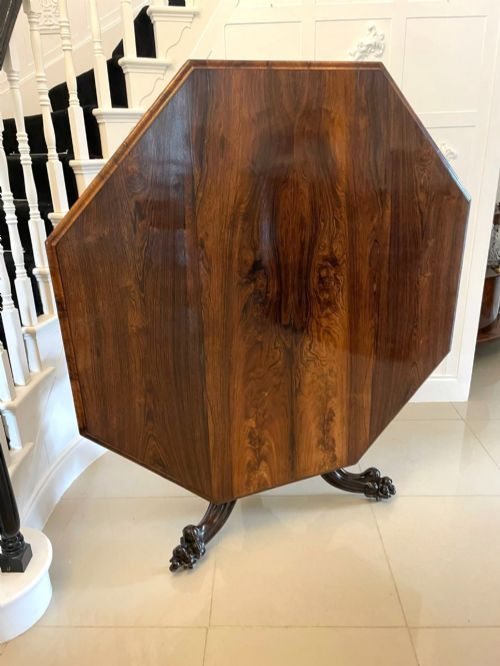
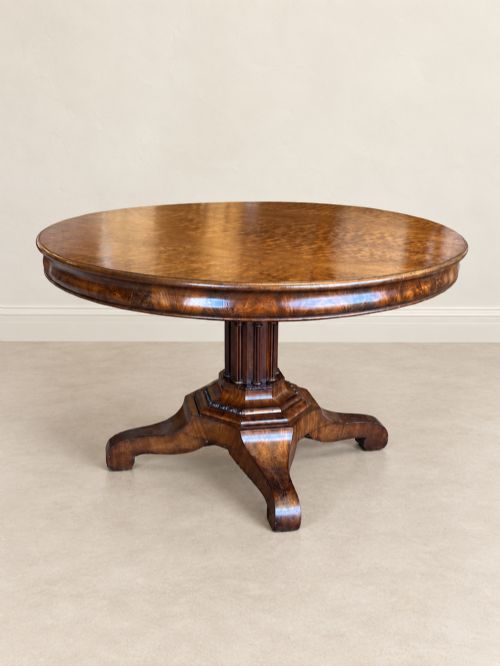
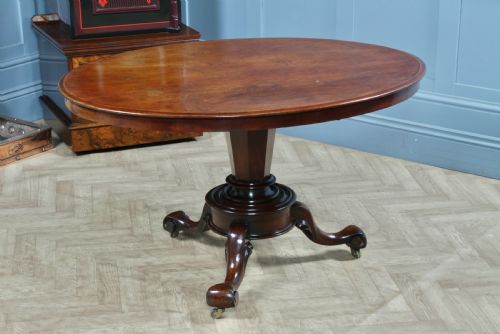
Round-topped work is a genuine second population. Oval appears in 104 titles, circular in 96 and tilt top in 57, taking in 61 breakfast tables and 35 loo tables. This is where burr walnut and rosewood concentrate. Centre tables are a third strand, 191 titles, often written as "Centre/Dining Table", and inlay and marquetry cluster among them.
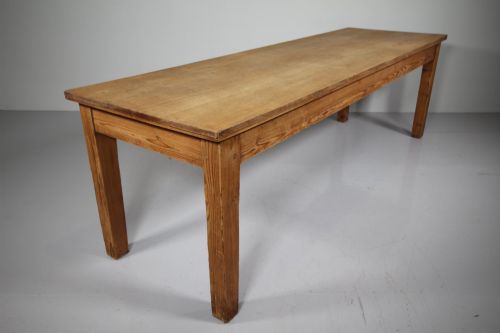
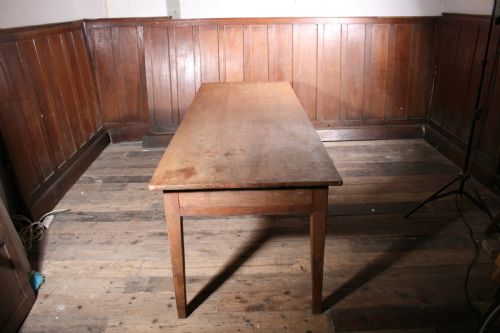
Then the kitchen end: 117 pine titles, 91 farmhouse, 85 kitchen and 75 refectory, with scrub tops, plank tops, original paint and drawers recurring. Pedestal and pillar bases run through the whole group, 39 pedestal titles plus two-pillar, twin, triple and cruciform bases in the samples.
Dating is broad. 576 listings say only "Victorian" and 244 only "19th Century", so 820 carry no decade at all. Where a decade is given the 1860s and 1850s lead. The dated field runs from 1800 to 1930, and sample titles also carry William IV, Regency, Georgian and Edwardian labels, so the group sits a good way either side of the reign.
Where The Range Sits
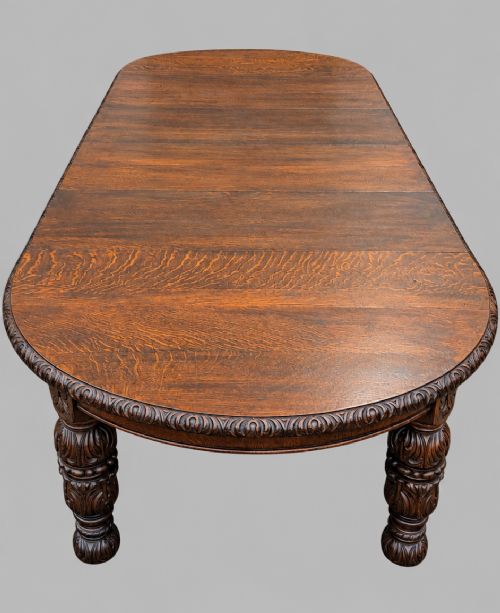
Size does most of the work. More leaves and greater length push a table up: the biggest recorded run to 15ft, 17ft, 18ft and a 20ft early Victorian oak table with seven leaves, with seating claimed at sixteen, eighteen and twenty. Small four-seaters and single-leaf tables sit at the other end.
Timber and figure separate two tables of the same shape. Figured appears in 96 titles, burr walnut in 103, figured mahogany in 76, and pollard oak, flame mahogany, satin birch, birdseye maple, coromandel and calamander show up only among the dearer examples. Plain pine and undescribed mahogany sit low.
After that it's decoration and base. Carved runs to 68 titles, inlaid 28, marquetry 22, and the marquetry and inlaid centre tables cluster well up. Pedestal, twin- and triple-pillar and cruciform bases concentrate in the upper half, and a named workshop lifts a table again.
Victorian Dining Tables Retail Price Guide 2026
Typical UK retail prices for victorian dining tables, calculated from the Sellingantiques database of over a million retail prices indexed since 2003. This retail price guide relies exclusively on Sellingantiques data; no external sources or auction records are used, so the figures do not describe the wider market.
Victorian is the period label used most on Sellingantiques for these tables, with 19th Century next and the 1860s third.
Gillows of Lancaster
The Victorian Dining Tables Glossary
- Extending
- The top opens on a mechanism or slides apart to take extra boards. It's the single most common word in these titles after the timber.
- Wind out
- Extends by turning a crank handle in a screw mechanism. Named in 84 titles, and it's the phrase dealers reach for most.
- Leaf, leaves
- Loose boards added to lengthen the top. Titles quote anything from one to eight.
- Seater, seats
- The dealer's stated capacity. In these listings it runs from four up to twenty diners.
- Tilt top, snap top
- The top hinges upright on its base so the table can stand against a wall. 57 titles say tilt top.
- Scrub top
- A pine top left unpolished and scrubbed rather than finished. Common on the farmhouse and kitchen tables.
Victorian Dining Tables: Frequently Asked Questions
What is a wind-out dining table?
One that extends by turning a crank handle in a screw mechanism, so the frame opens and loose leaves drop into the gap. The phrase appears in 84 titles.
Most extending tables here aren't described that specifically. The listings say "extending" in 697 of 1,592 titles without naming the action.
How many people do these tables seat?
Titles quote four at the small end and twenty at the top, with 121 saying "seater", 102 "seats" and 82 "seat".
Seating usually tracks leaf count and length. Leaves run from one to eight, and stated lengths reach 17ft, 18ft and a 20ft oak table.
Which woods turn up most?
Mahogany dominates the category, with walnut second, then oak, pine and rosewood some way behind.
Beyond those, elm, ash, sycamore, satin birch, birdseye maple, pollard oak, cherry, coromandel and calamander each appear once or twice.
Are loo tables and breakfast tables dining tables?
They're listed in this category, and they make up a real slice of it: 35 loo tables and 61 breakfast tables, alongside 104 oval and 96 circular titles.
Both are round or oval tops on a pedestal, often tilting upright on the base. Burr walnut and rosewood concentrate in this group rather than in the extenders.
Why do so many listings just say Victorian?
Because the dating in this category is broad. 576 listings give only "Victorian" and 244 only "19th Century", so 820 of 1,592 carry no decade.
Where a decade is named, the 1860s and 1850s lead, followed by the 1880s and 1870s.
Do pine farmhouse tables belong in this category?
Yes, and they're a sixth of it. Pine appears in 117 titles, farmhouse in 91, kitchen in 85 and refectory in 75.
These are plank-topped tables on end supports or square legs. Scrub tops, original paint and storage drawers recur, including an 18-seat pine farmhouse table.