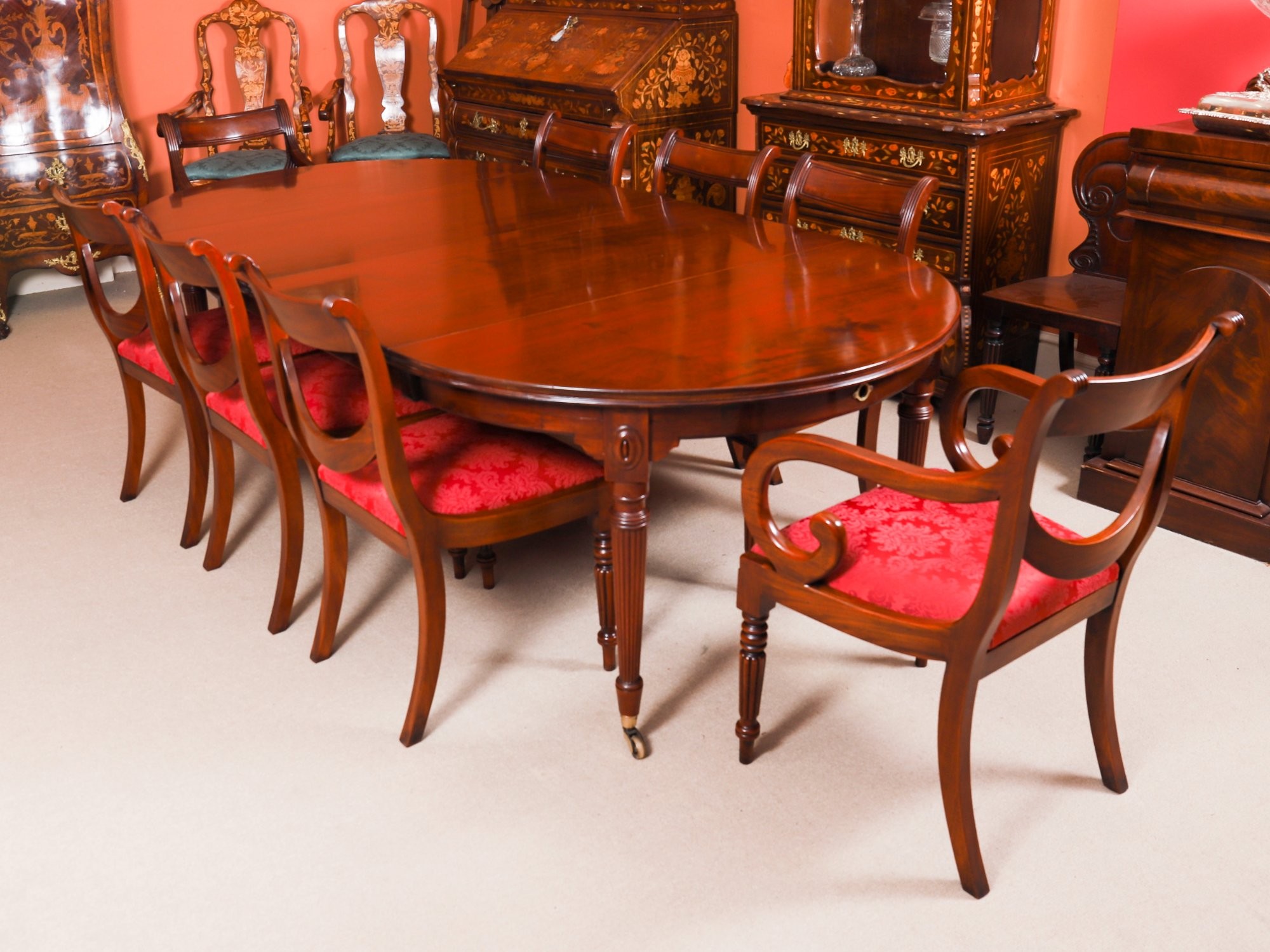
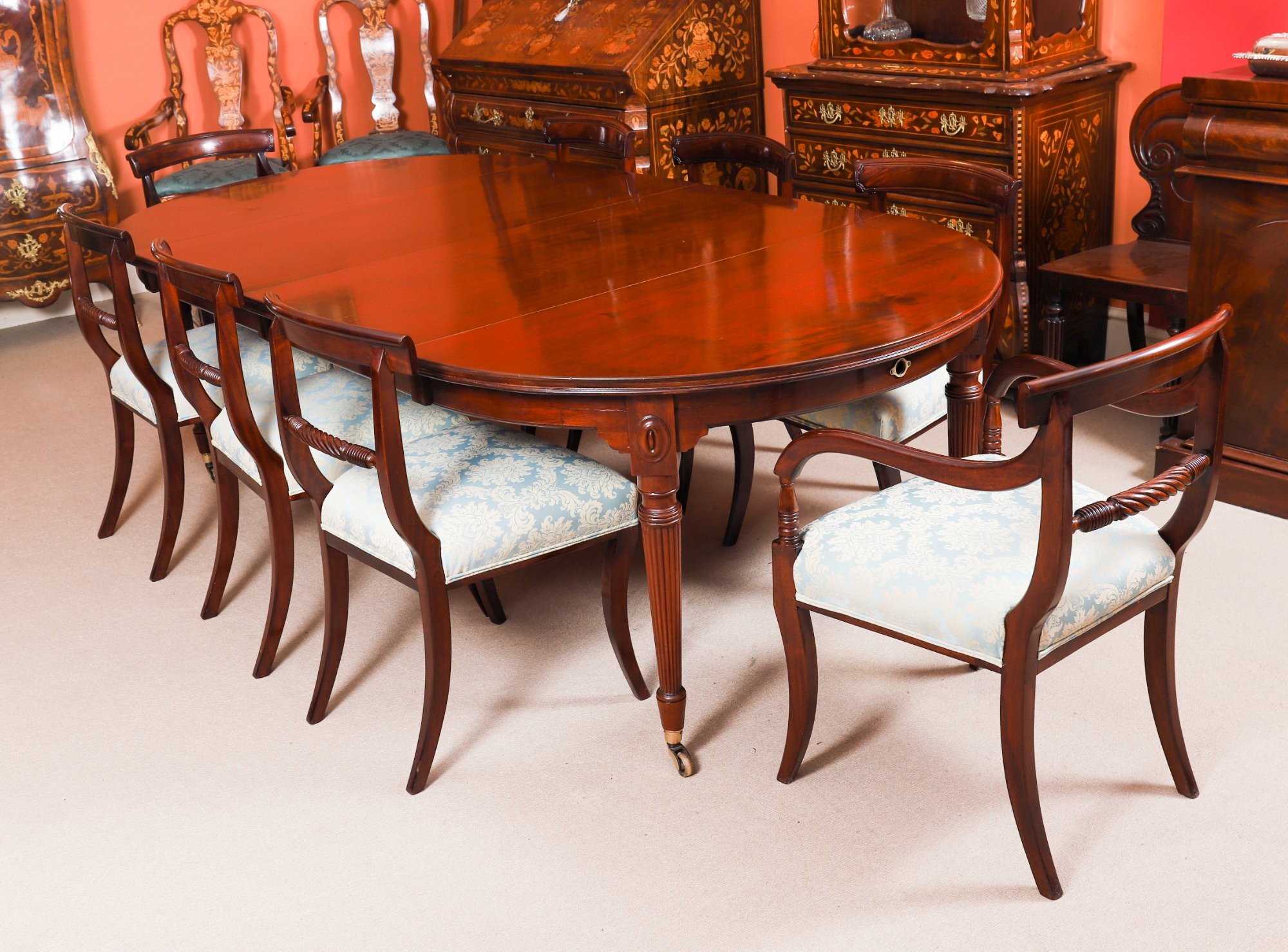
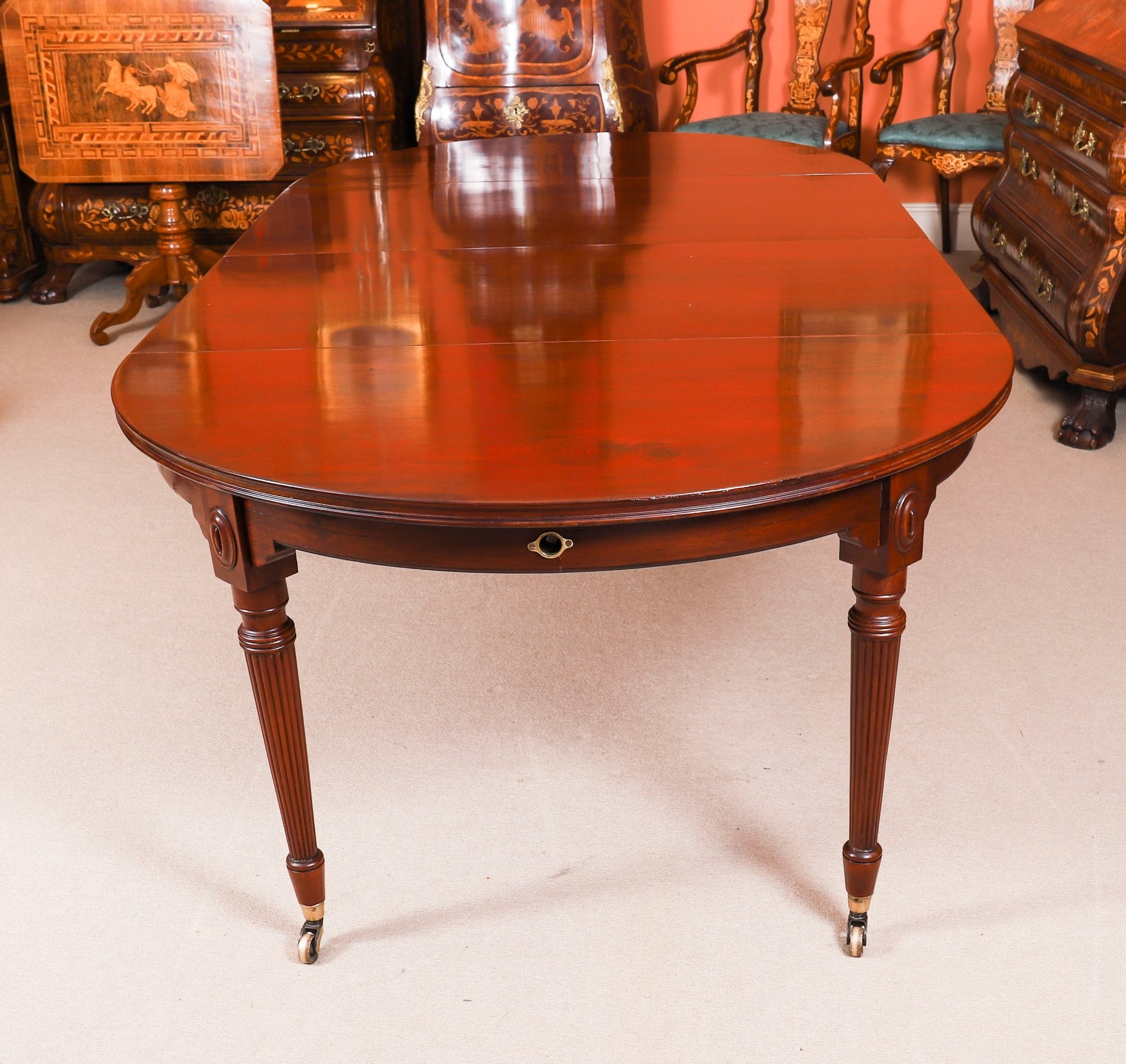
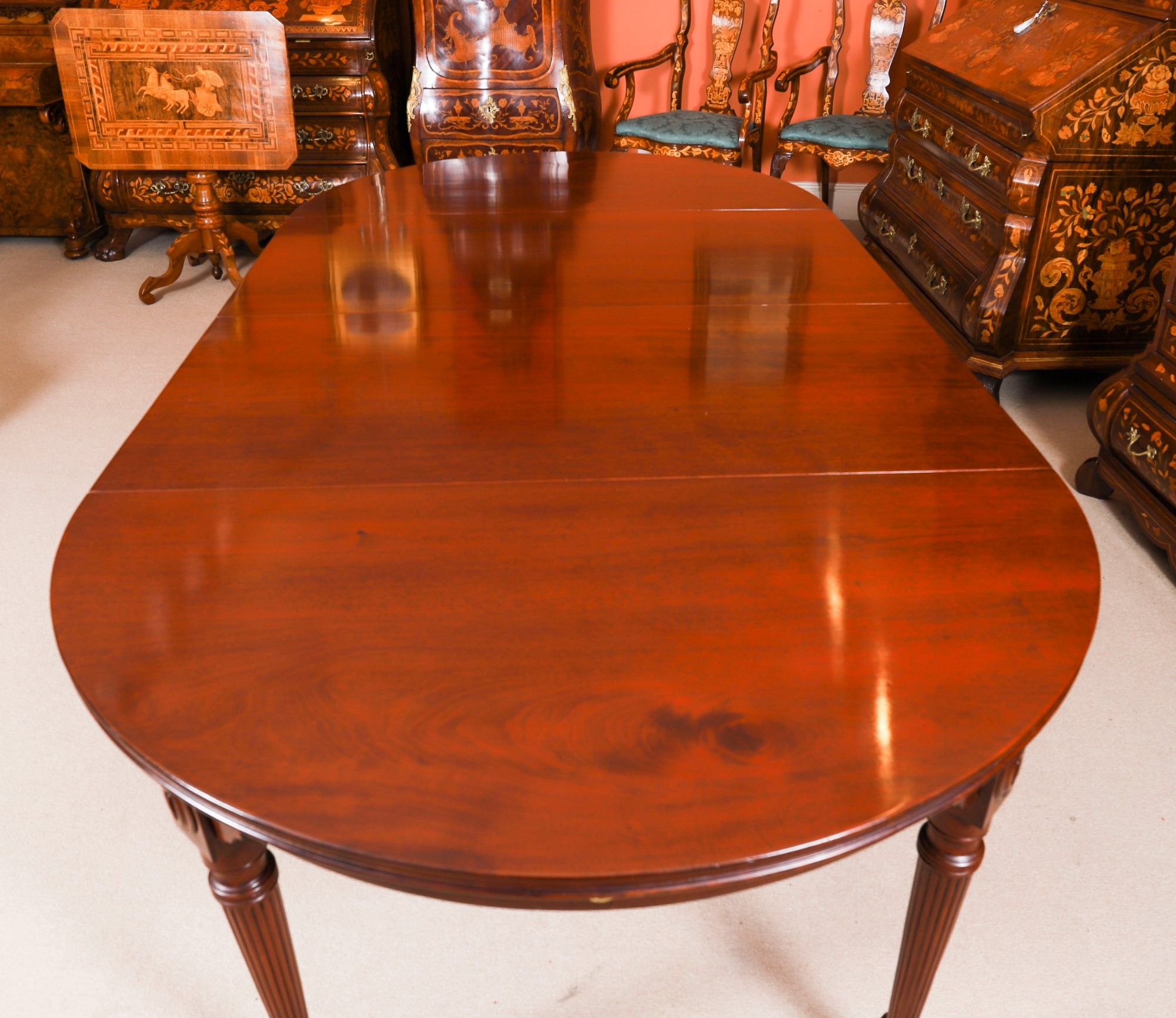
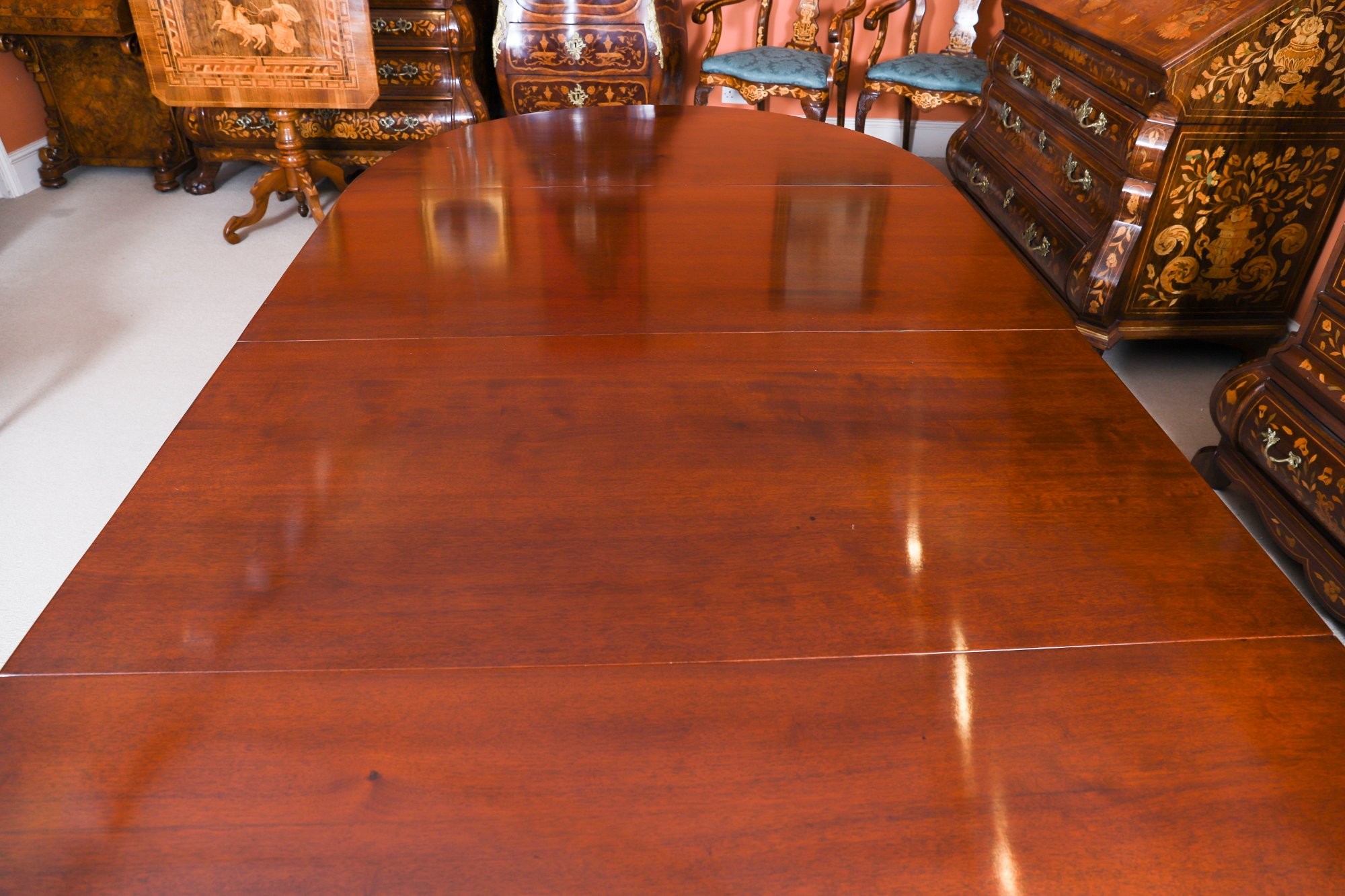
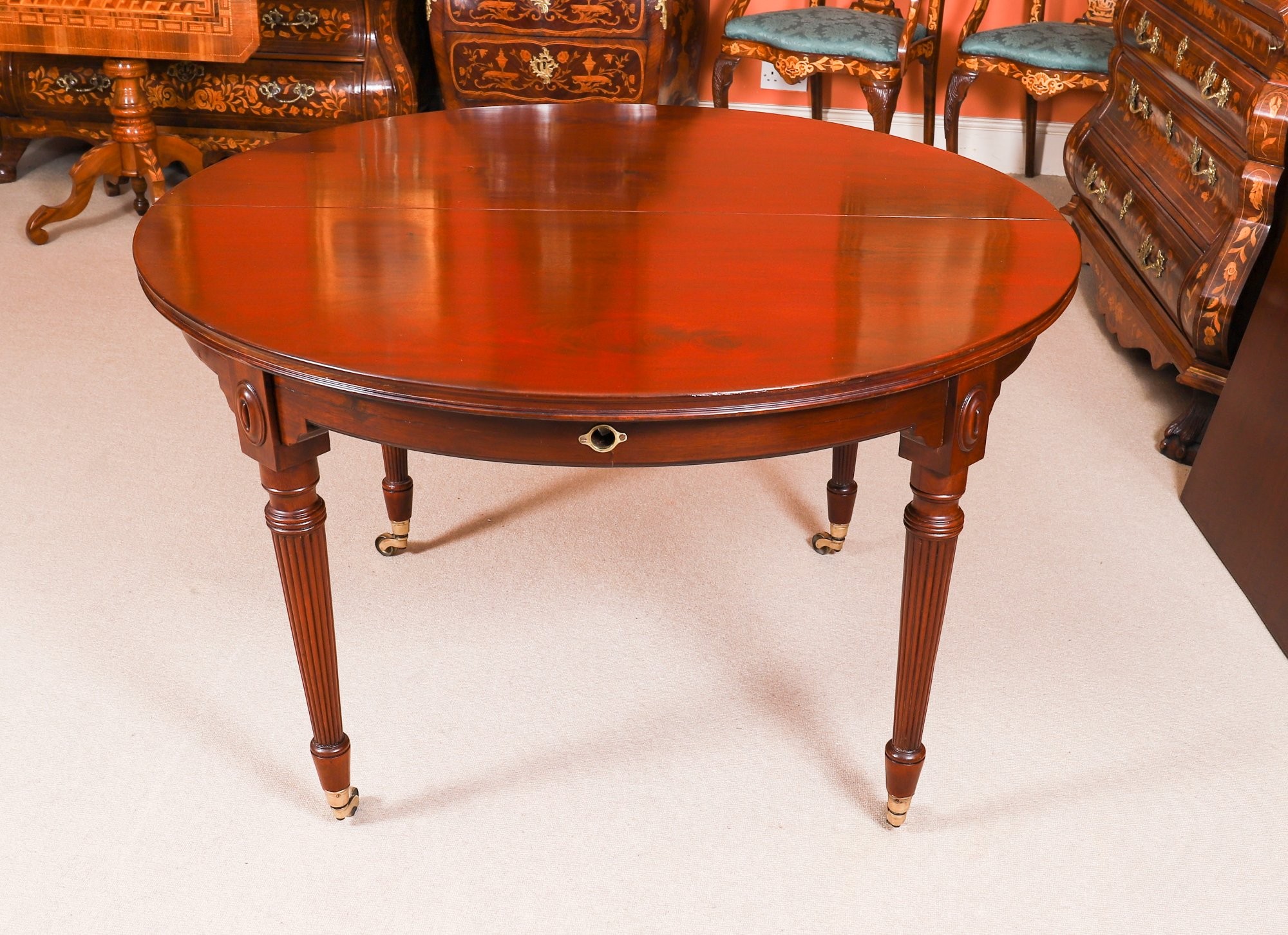
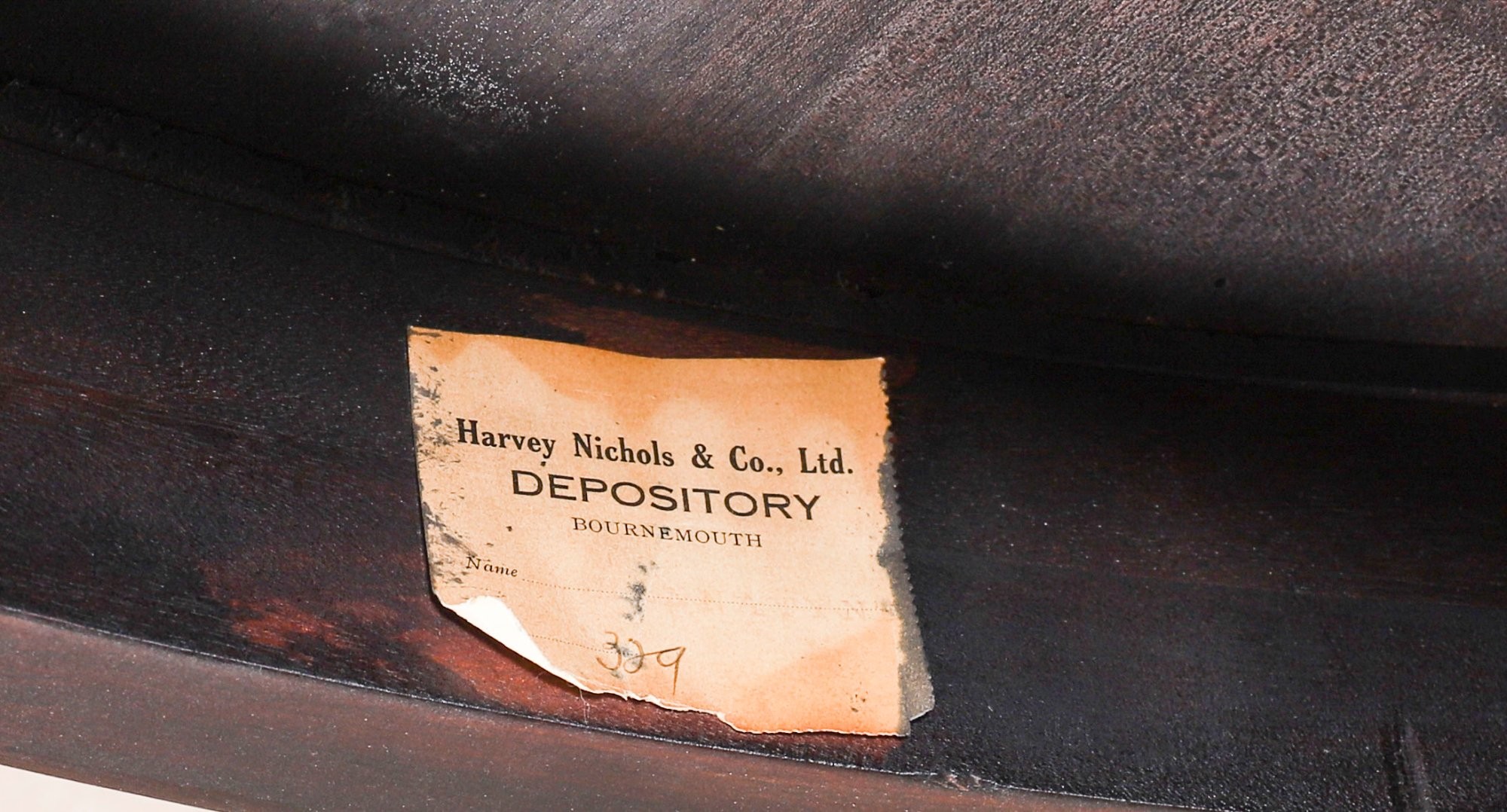
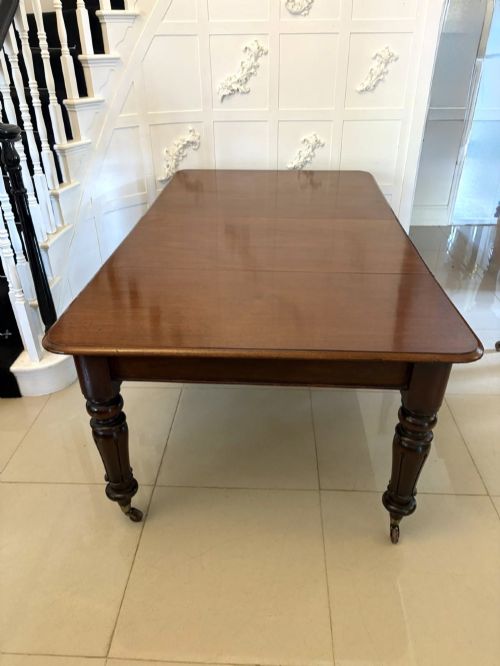
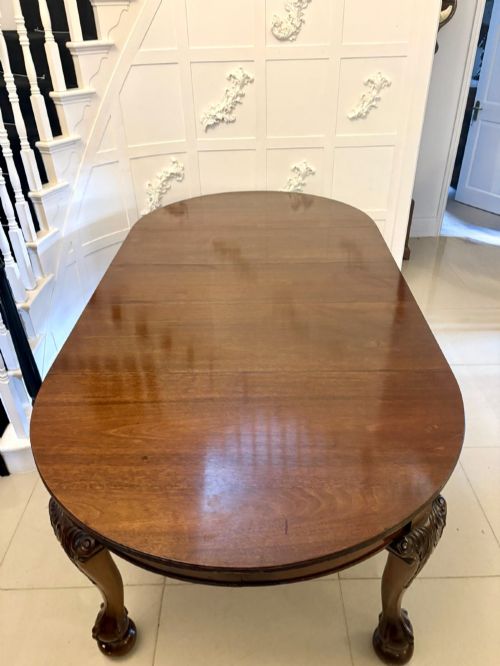
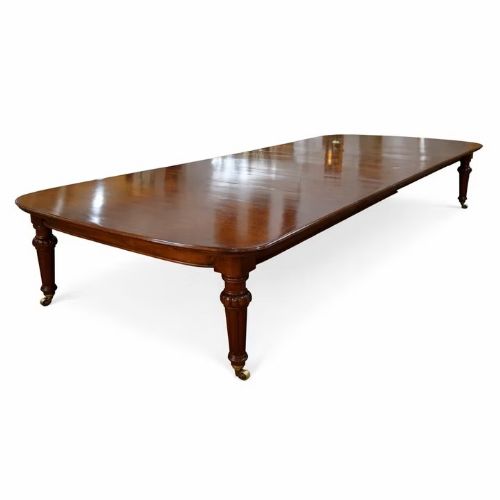
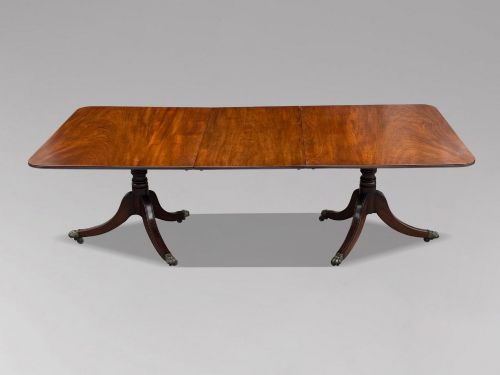
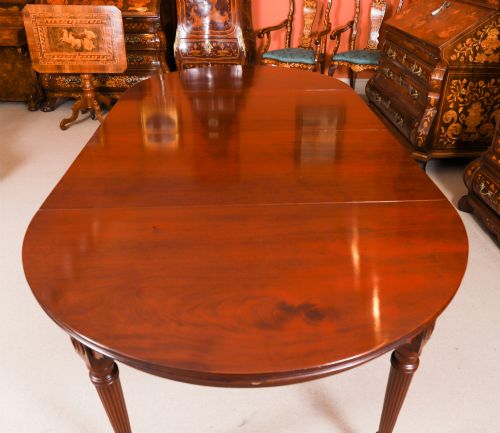
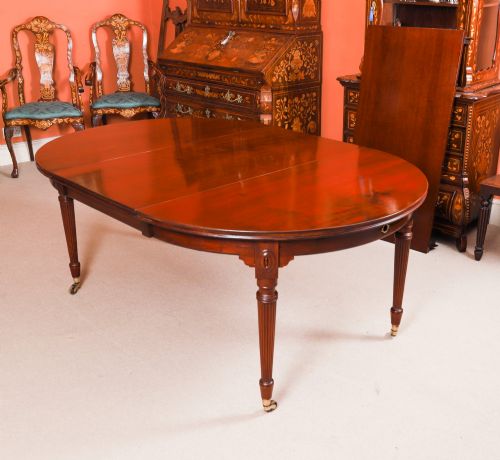
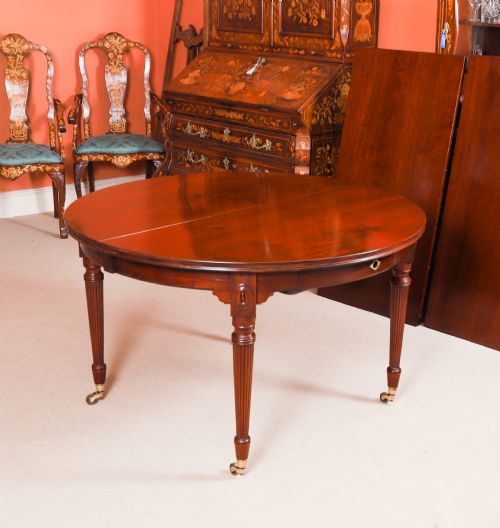
Regent Antiques has dated this Mahogany Extending Dining Table to the 1880s.
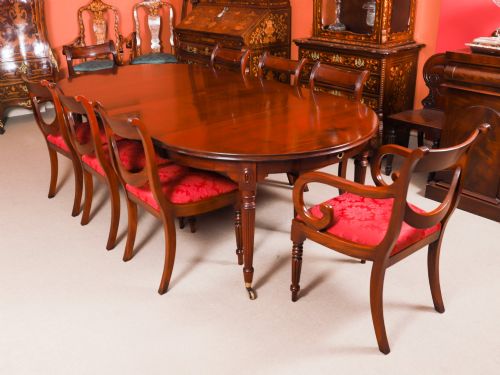
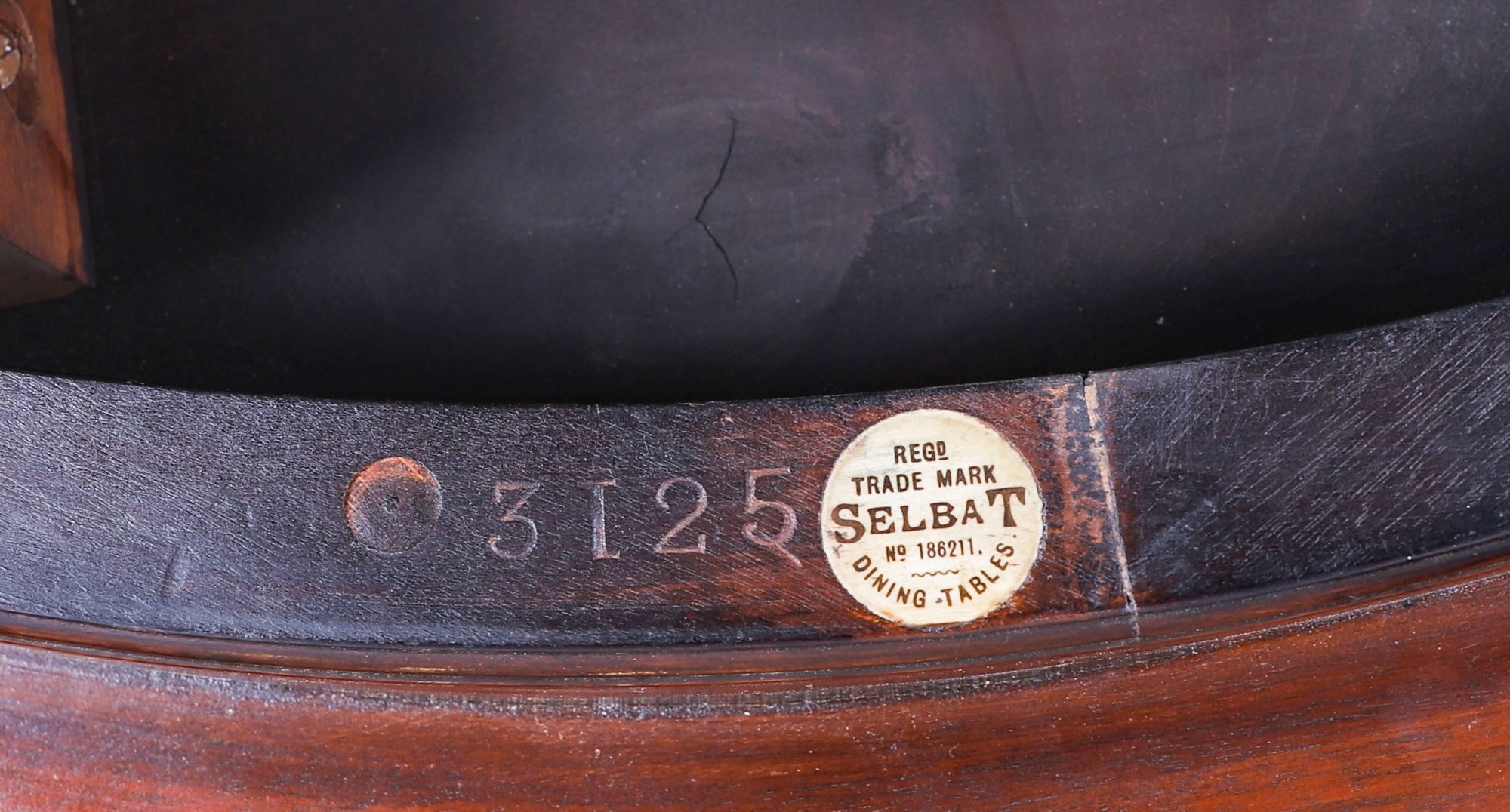
The table bears an inset maker's plaquette
'REGD TRADE MARK SELBAT NO 186211 DINING TABLES'
and is further stamped '3125'
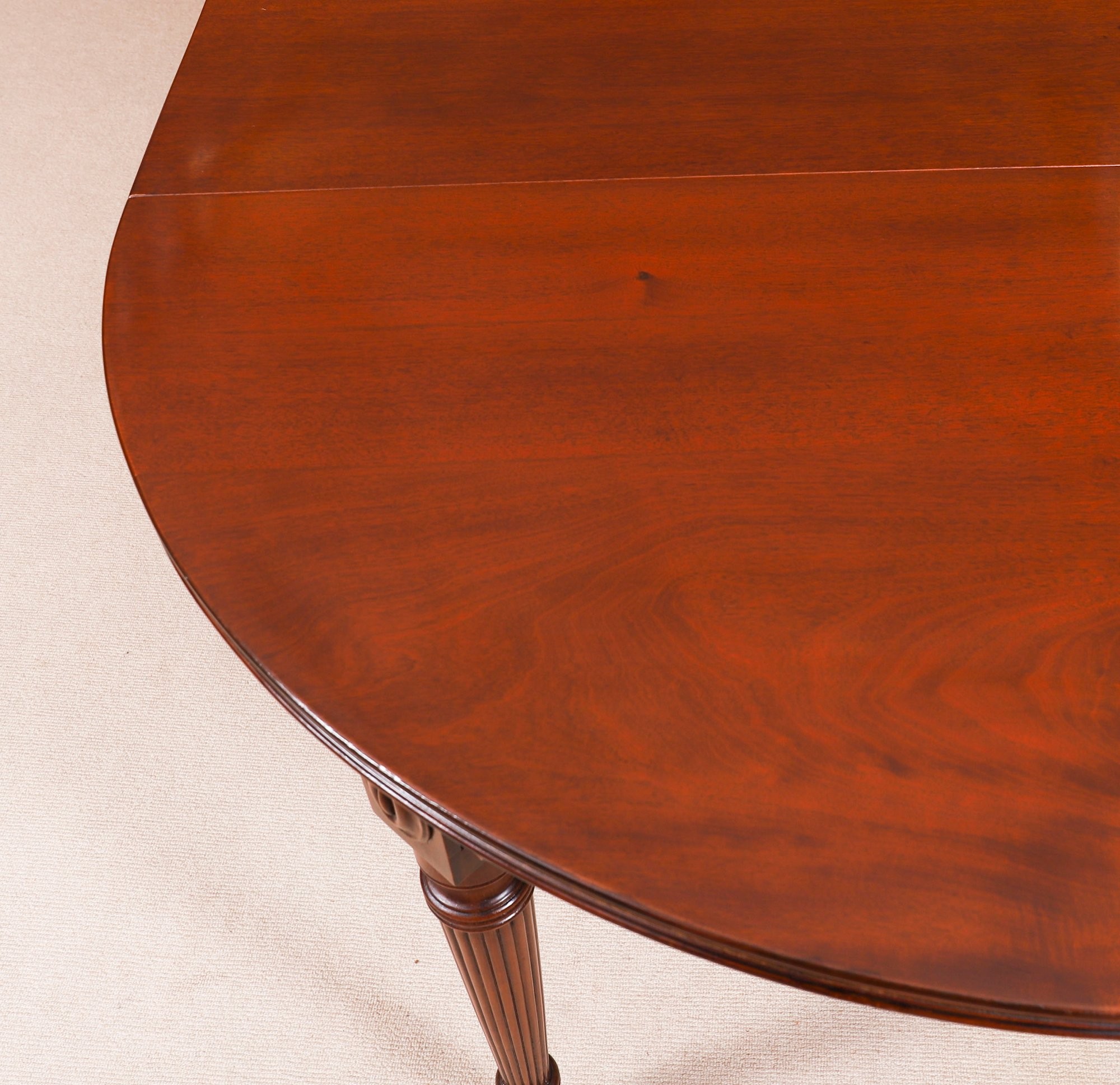
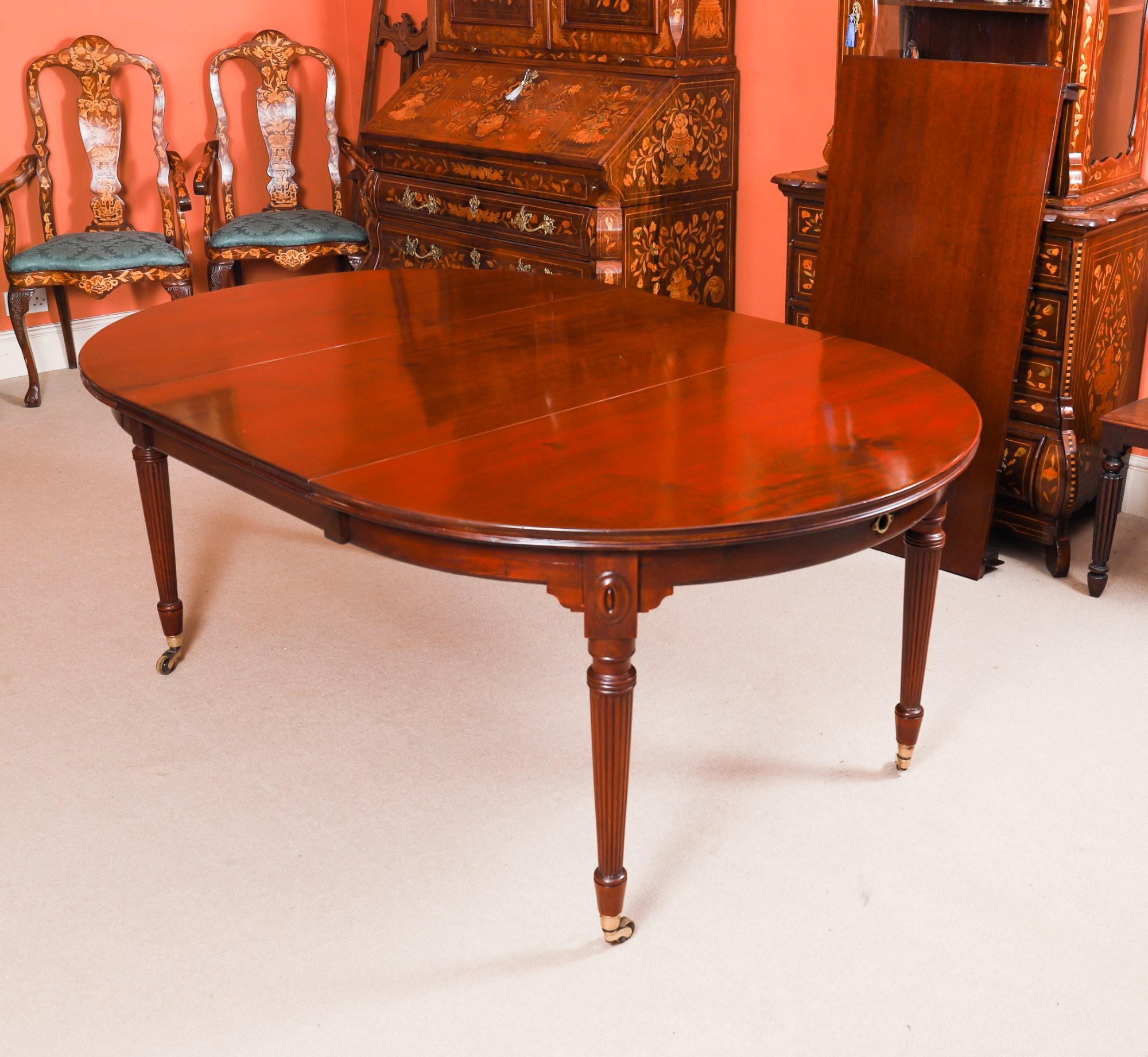
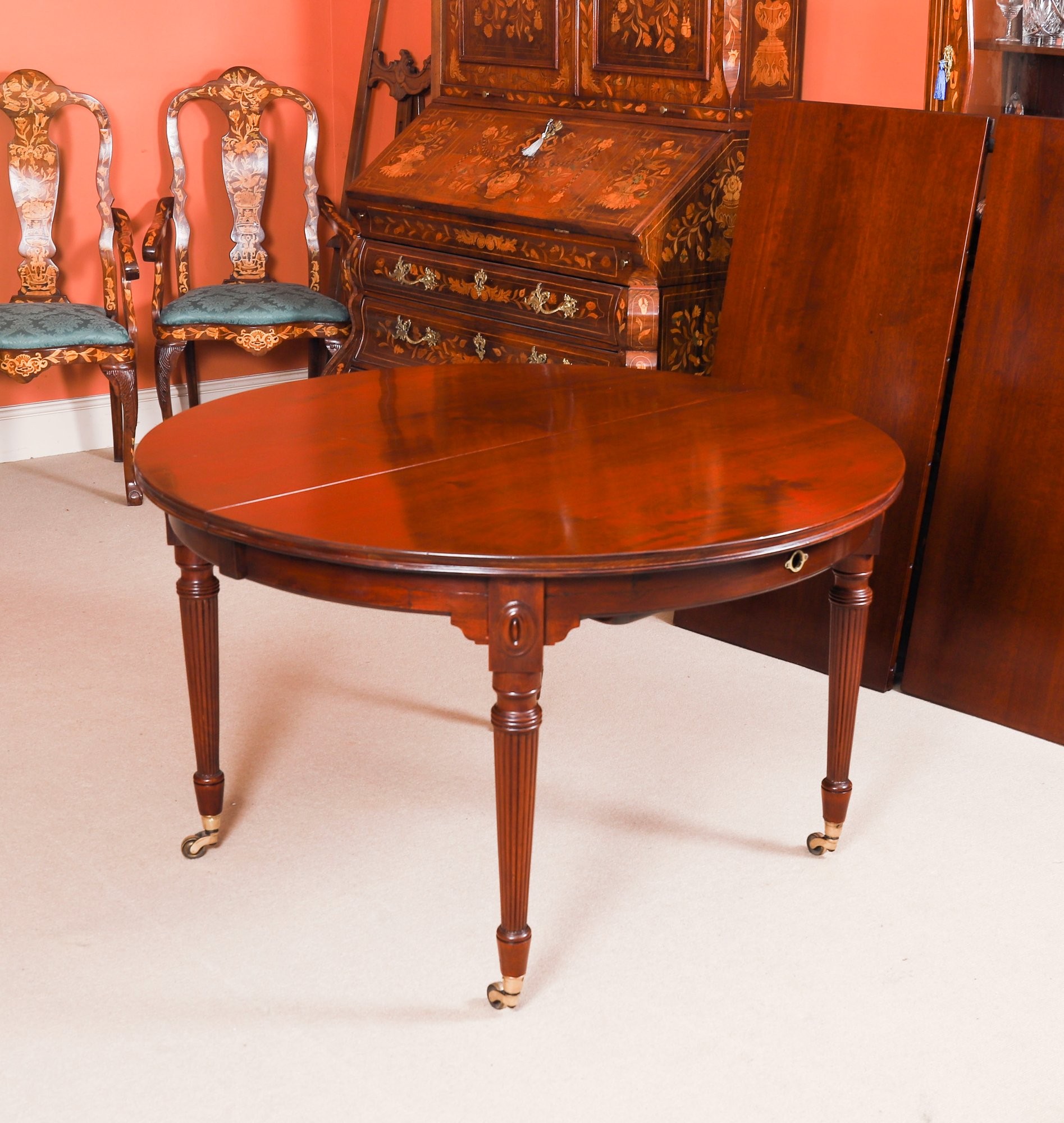
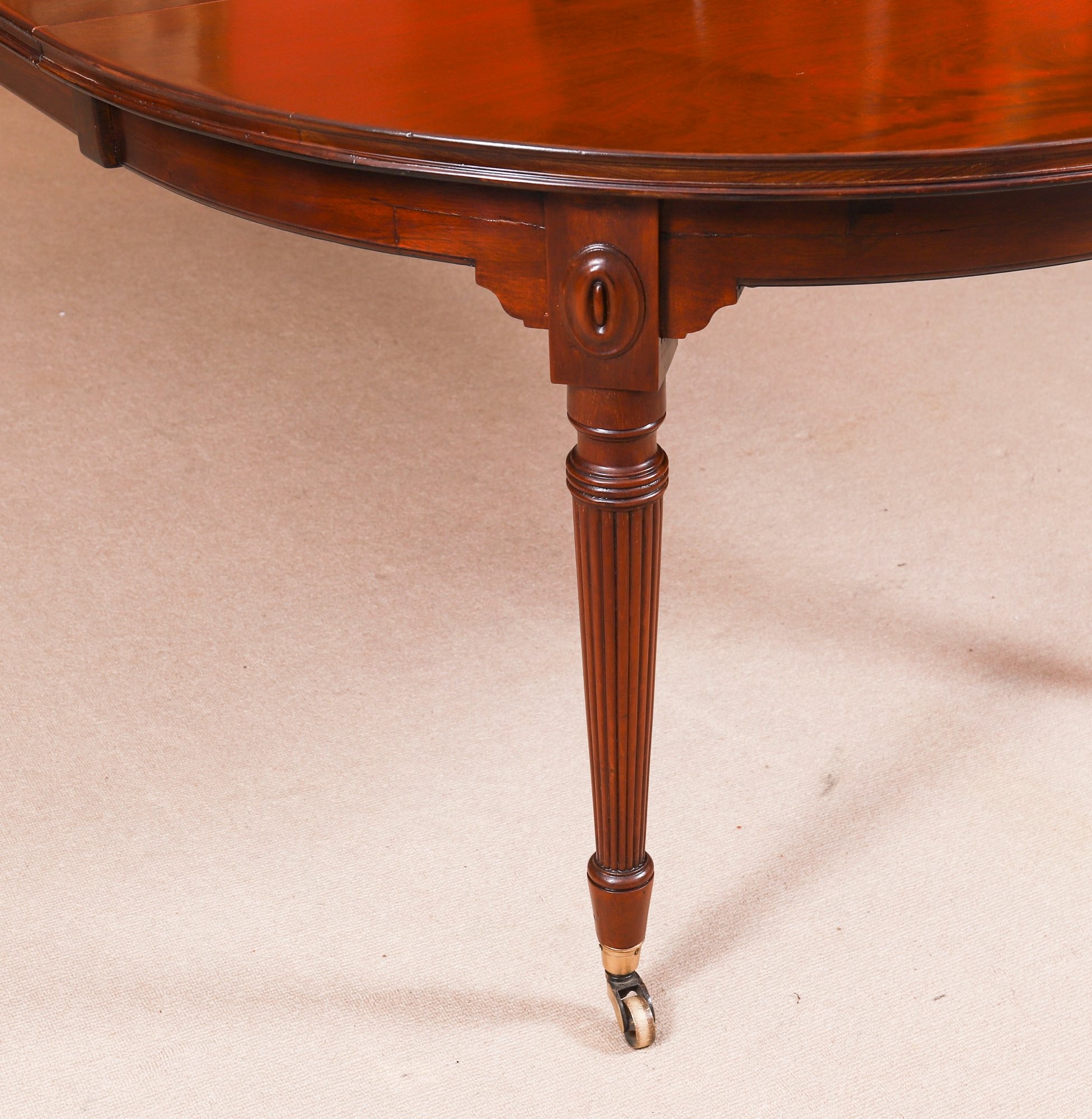
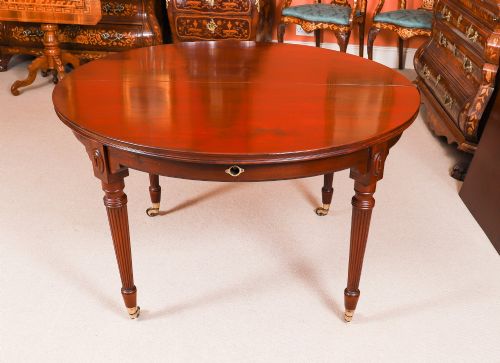
It has a moulded edge top and frieze and is raised on four carved and reeded tapering legs that terminate in their original and elegant brass cap castors.
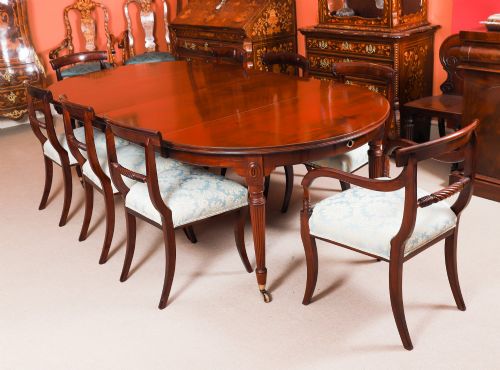
Condition:
In excellent condition having been beautifully cleaned, polished and waxed in our workshops, please see photos for confirmation.
Dimensions in cm:
Height 75 cm x Width 241 cm x Depth 121 cm - Fully extended
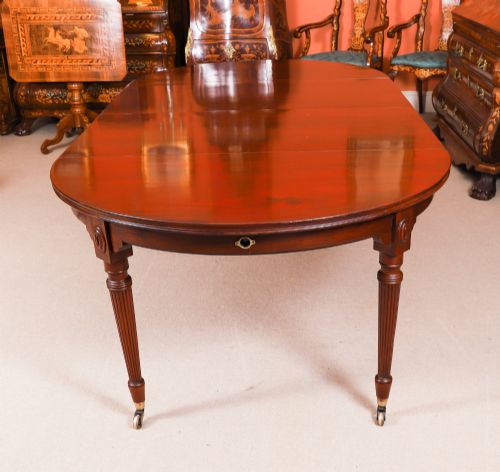
Height 75 cm x Width 120 cm x Depth 121 cm - With both leaves removed
Dimensions in inches:
Height 2 foot, 5 inches x Width 7 foot, 11 inches x Depth 4 feet - Fully extended
Height 2 foot, 5 inches x Width 3 foot, 11 inches x Depth 4 feet - With both leaves removed
Selbat
produced premium extending dining tables in the UK around the late 19th and early 20th centuries. They often used a registered trademark (such as No. 186211) and placed an ivorine or metal maker's label on the underside of the table frame.
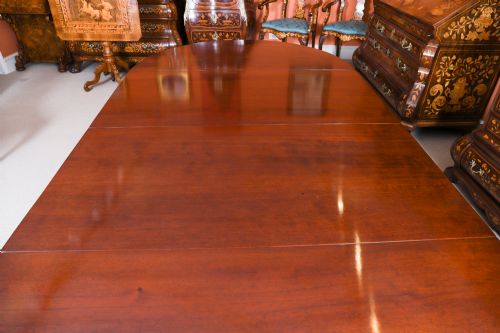
Commonly crafted from solid woods of the era, including quarter-sawn oak, rich mahogany, and walnut.
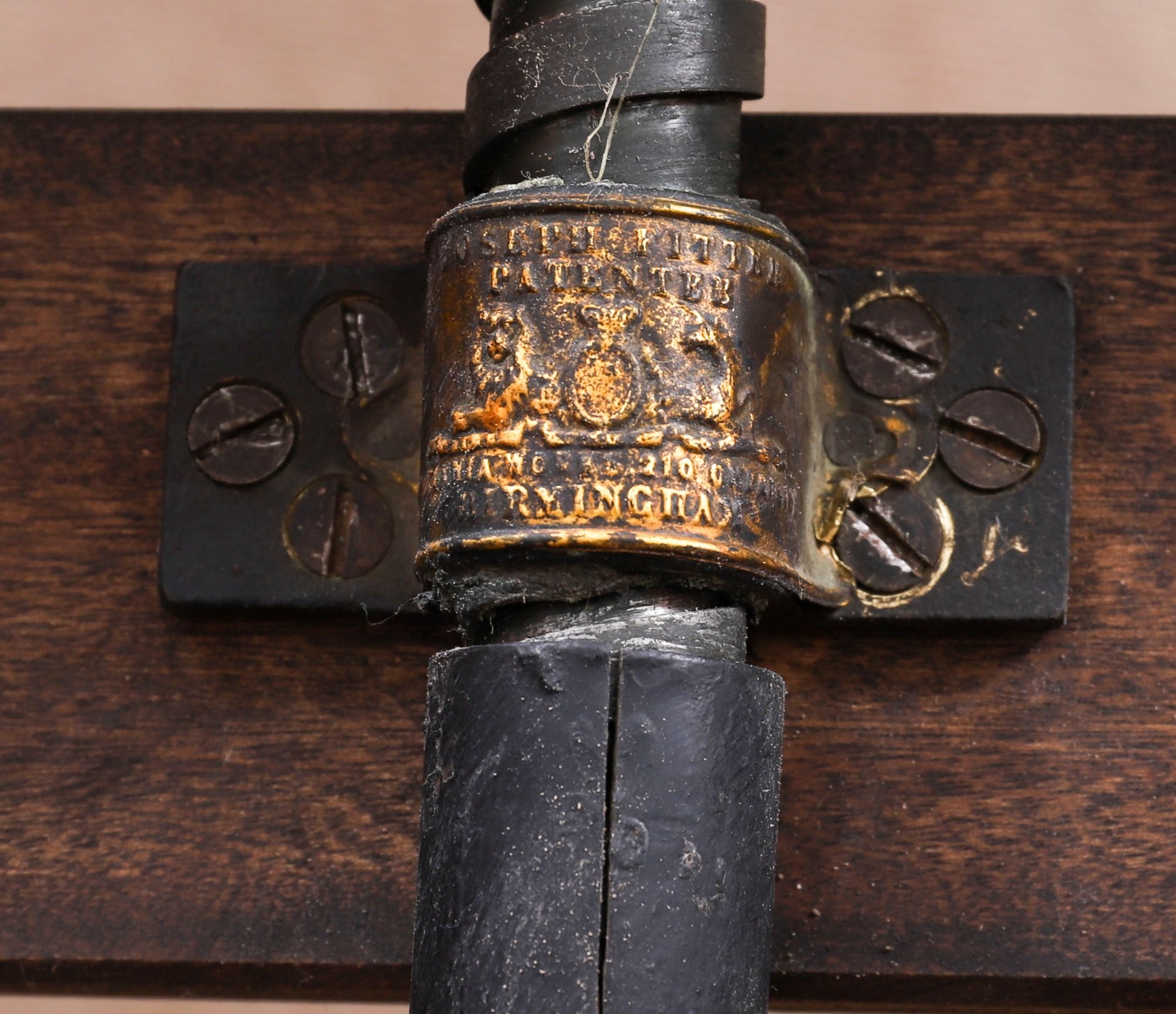
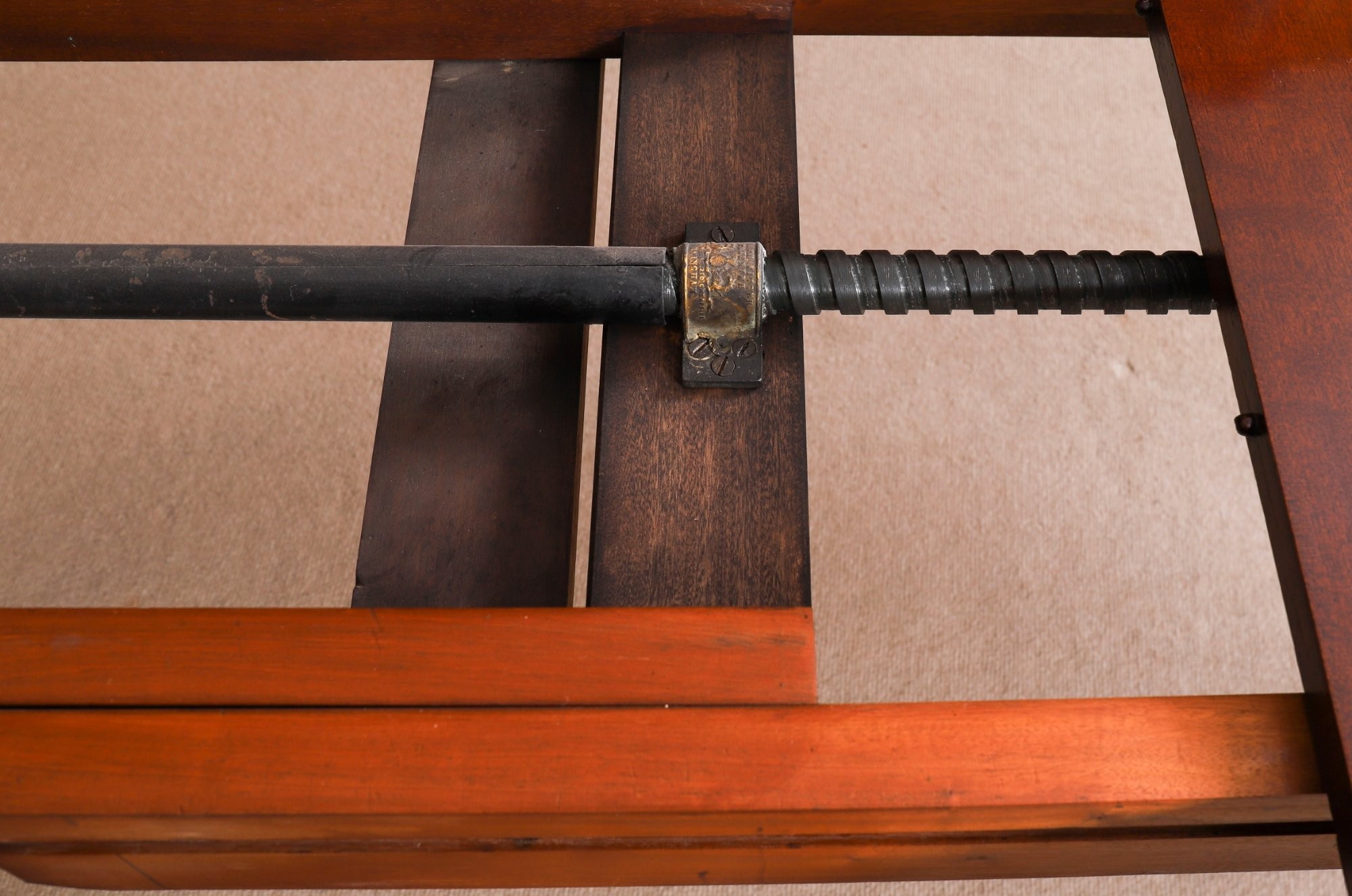
Many pieces feature smooth wind-out extension systems—such as Joseph Fitter screw-expander mechanisms—allowing extra leaves to be added easily with a winder key to accommodate larger groups.
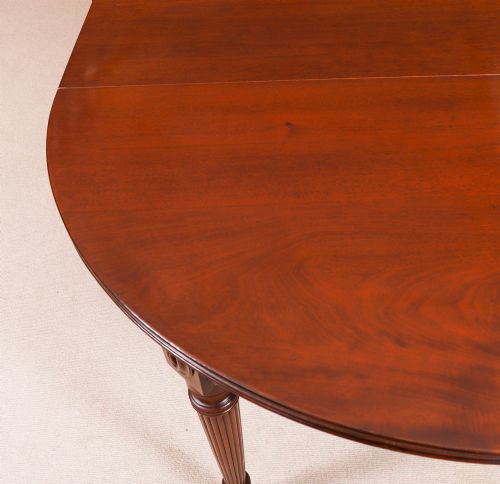
Ranging from classic Regency-style circular/oval tops to rectangular oak tables with turned, reeded, or tulip-shaped legs, frequently finished with brass or wooden casters.
Because Selbat tables are antique pieces, they are regularly bought and sold through specialist antique dealers, auction houses, and vintage marketplaces rather than standard retail furniture stores.
Winding Mechanism for extending tables
A man by the name of Samuel Hawkins applied for a patent on a screw expander on June 6th, 1861. Presumably, Mr Hawkins either died or retired because his business was taken over by a young machinist named Joseph Fitter in 1864.
Joseph Fitter operated a machinist shop where he produced winding mechanisms for extending tables as well as screw expanders for piano stools and other applications at 210 Cheapside, Birmingham England by the name of Britannia Works.
Flame Mahogany
Thomas Sheraton - 18th century furniture designer, once characterized mahogany as "best suited to furniture where strength is demanded as well as a wood that works up easily, has a beautiful figure and polishes so well that it is an ornament to any room in which it may be placed." Matching his words to his work, Sheraton designed much mahogany furniture. The qualities that impressed Sheraton are particularly evident in a distinctive pattern of wood called "flame mahogany."
The flame figure in the wood is revealed by slicing through the face of the branch at the point where it joins another element of the tree.
Our reference: A5351
Regent Antiques has dated this Mahogany Extending Dining Table to the 1880s.
We specialise in english and continental furniture, silver, porcelain and decorative items.
You can view the stock and full dealer information on the Regent Antiques Profile Page
Regent Antiques is a registered member of LAPADA CINOA
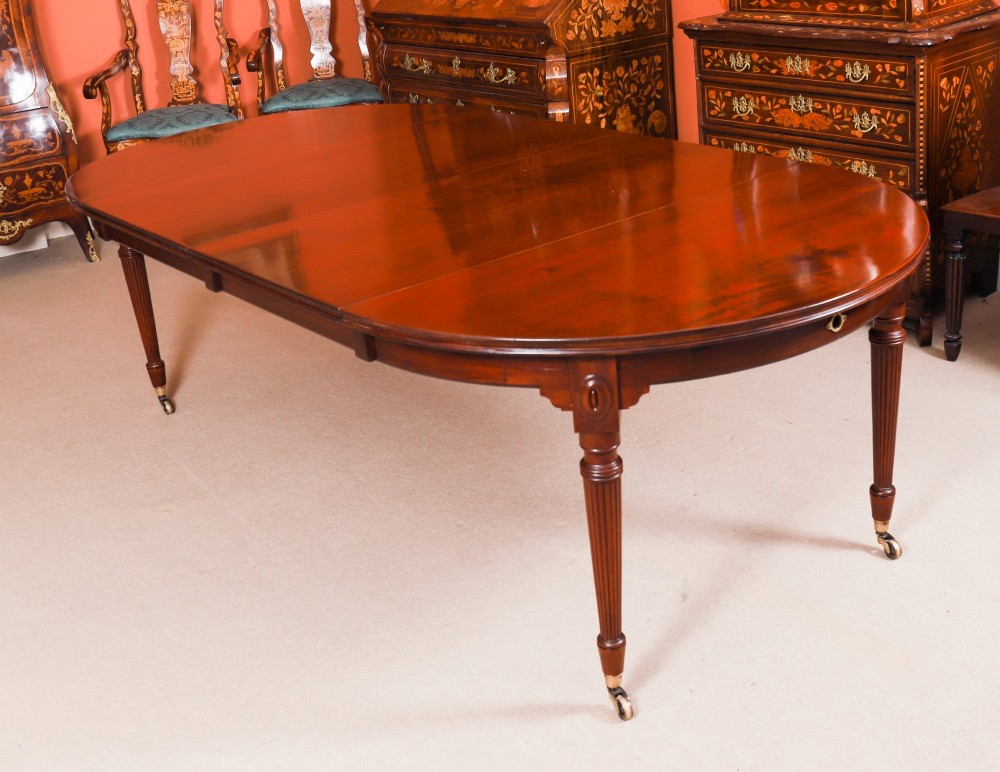
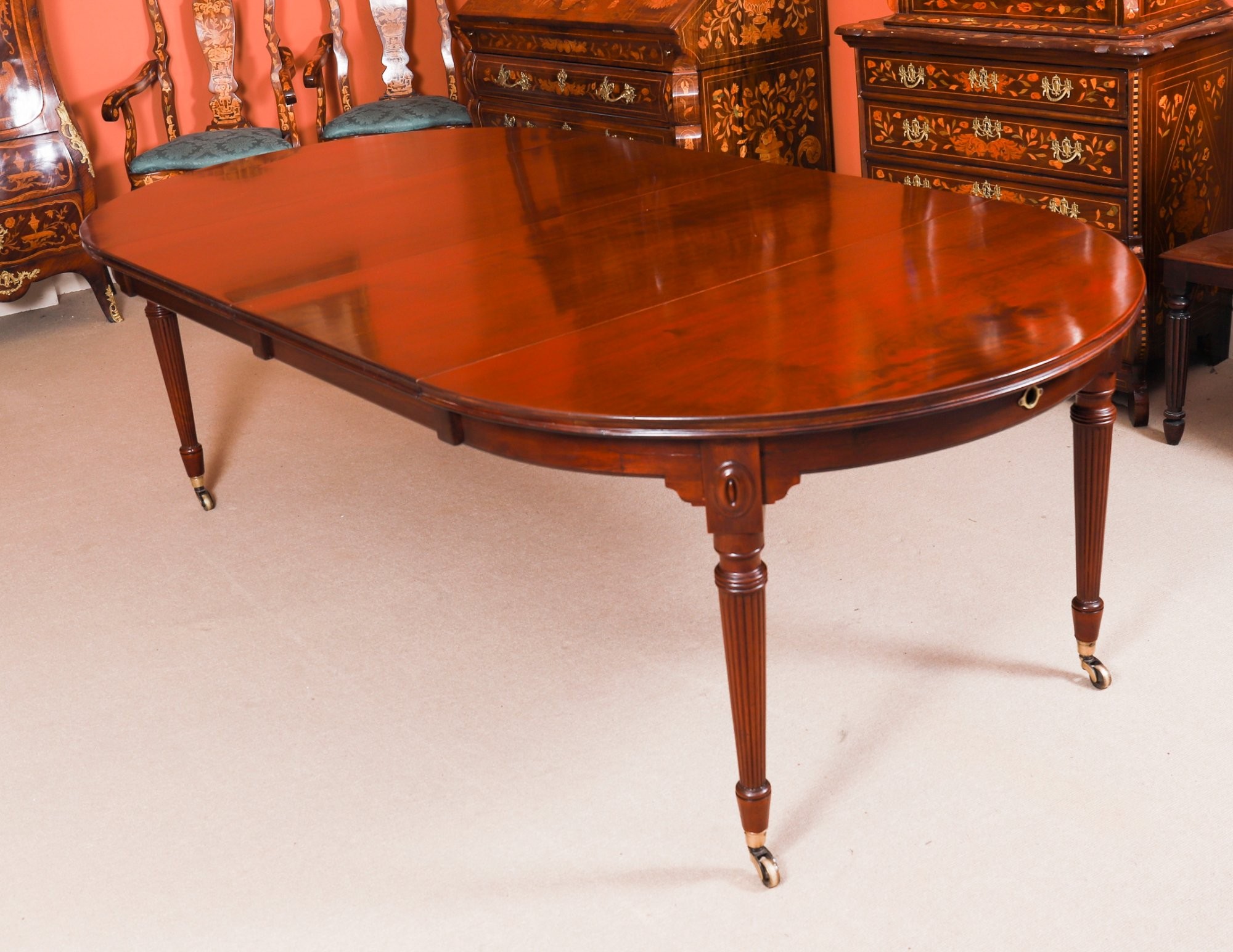
Antique Victorian Flame Mahogany Extending Dining Table by Selbat 19th C