
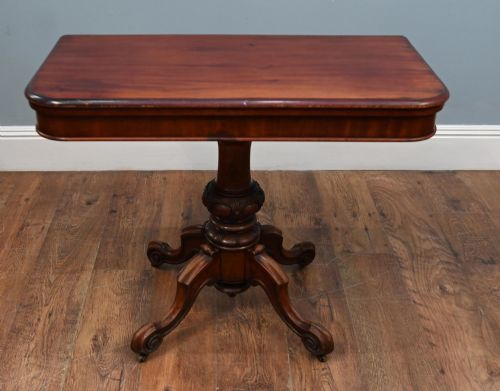
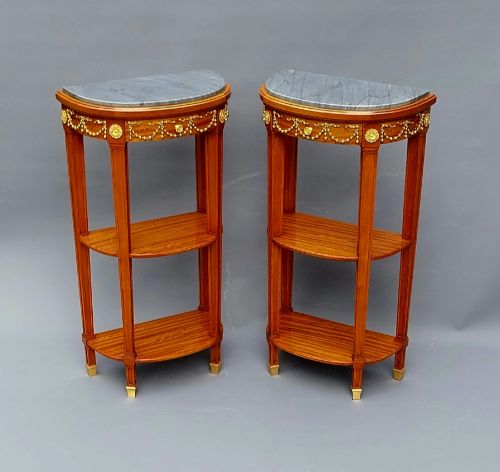
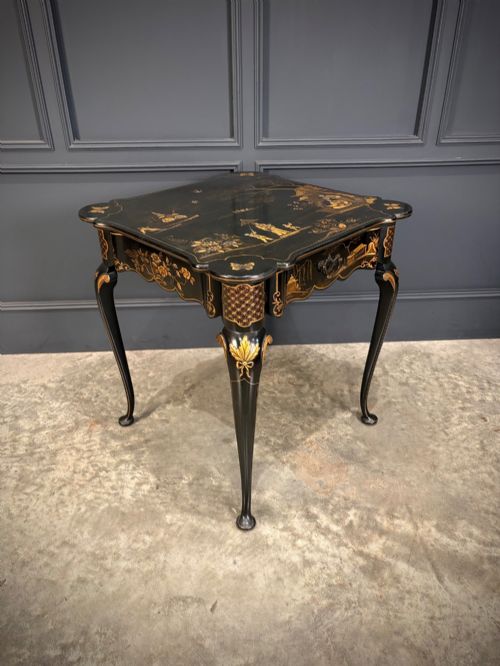
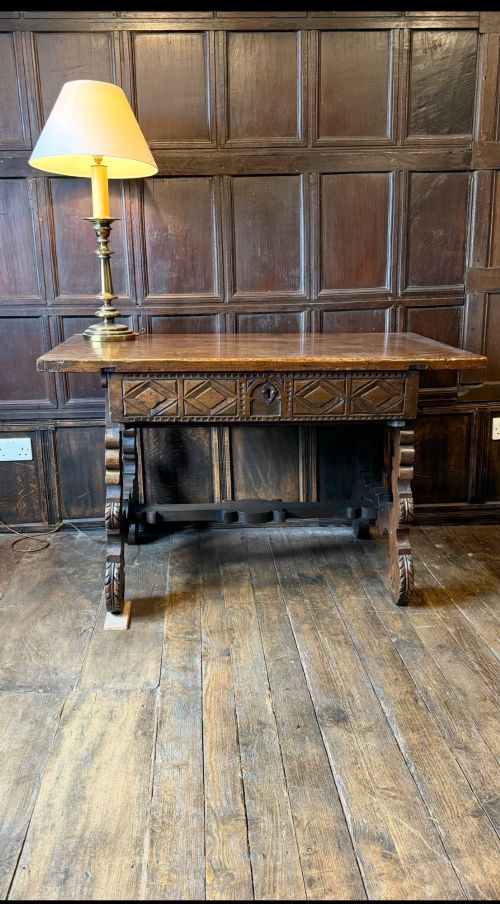
Antique Console Tables
A table made to stand against a wall rather than be sat at, carrying lights, a mirror above it or whatever a room's edge needs to hold.
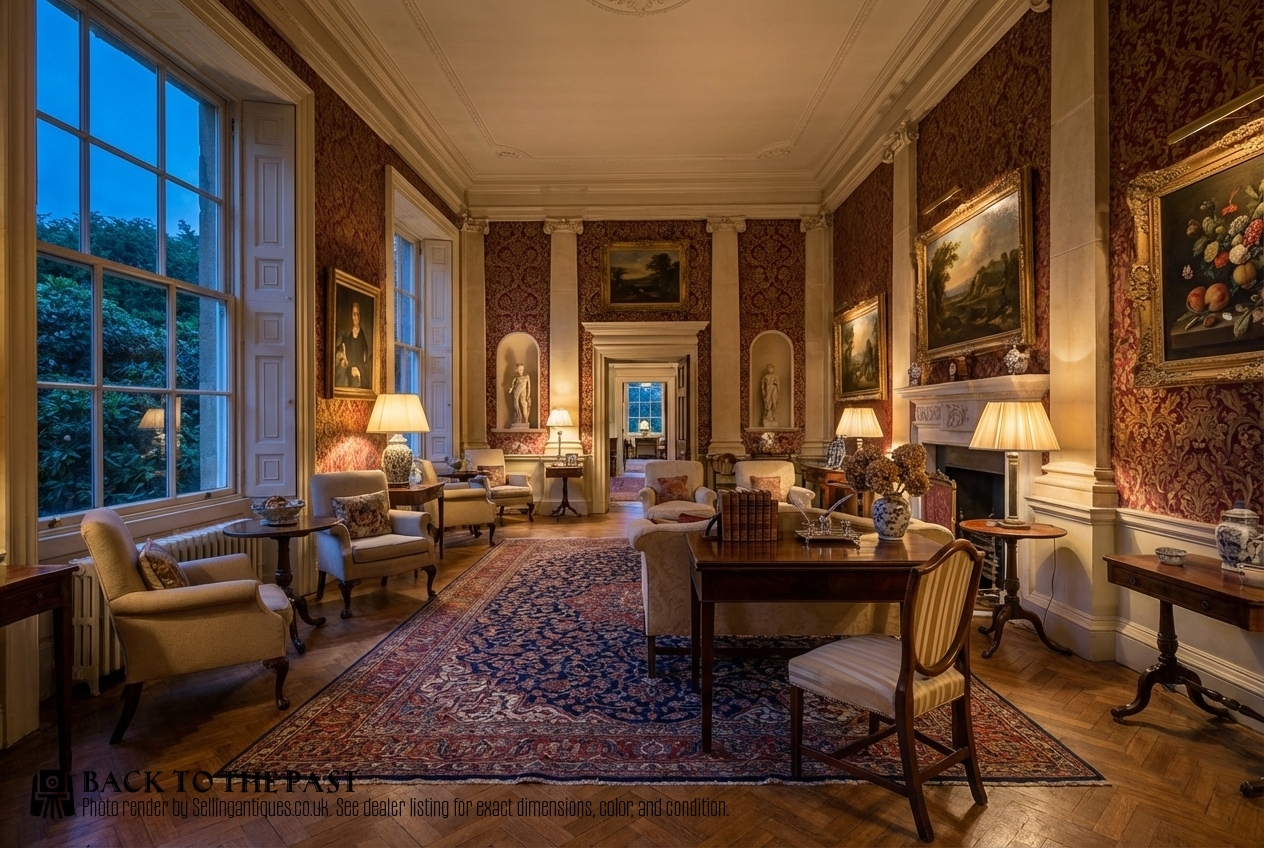
Antique Console Tables
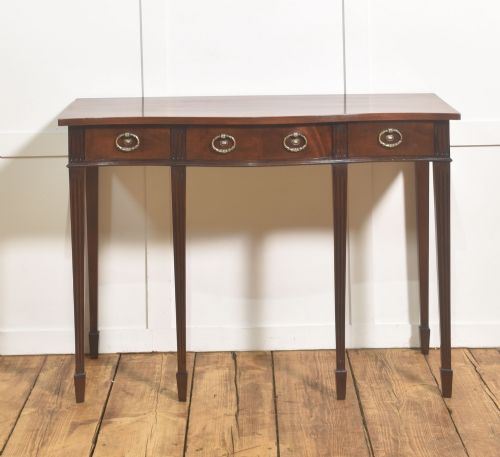
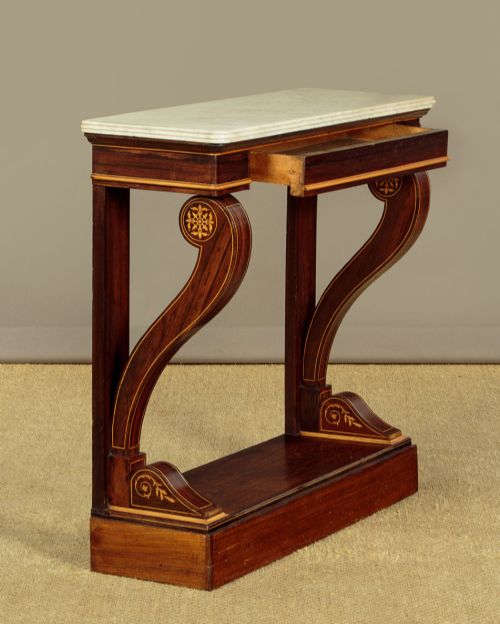
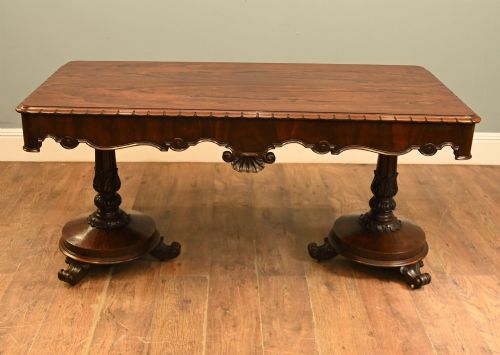
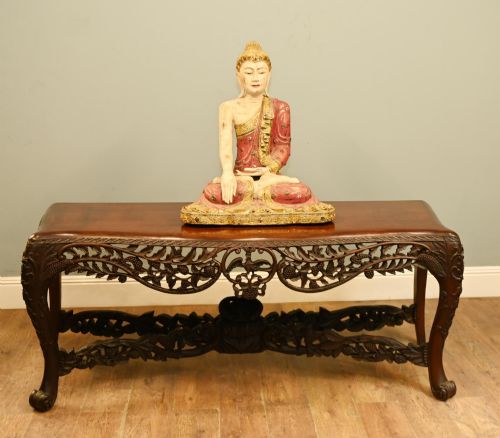
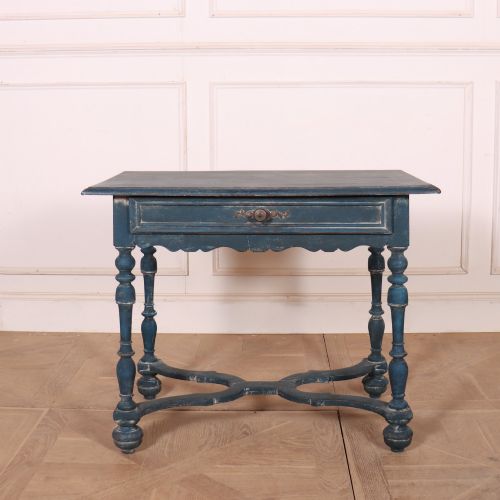
The heading is a broad one. In practice it covers almost any table meant to work against a wall or at a room's edge: side tables, hall tables, half-round demi-lunes, marble-topped pier consoles, fold-over card and tea tables, serving and sofa tables. The form itself grew up in late 17th- and 18th-century Europe, some early examples bracketed or fixed to the wall, which is where the name comes from.
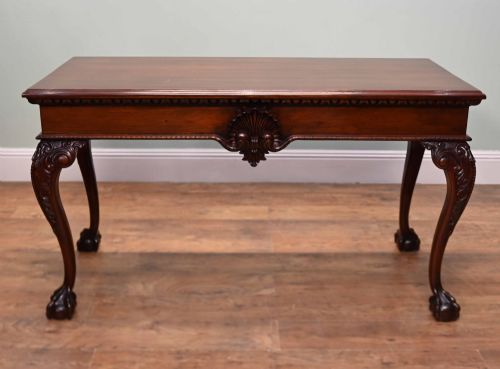
Mahogany leads the material vocabulary by a long way, with walnut, oak and rosewood behind it. The table you're most likely to meet is a single mahogany side or hall table, English, and dated by the dealer to the 18th or 19th century. Period labels run heavily to 19th Century, then 18th Century, Georgian, Regency and Victorian, with decade labels from the 1880s through the 1930s alongside them.
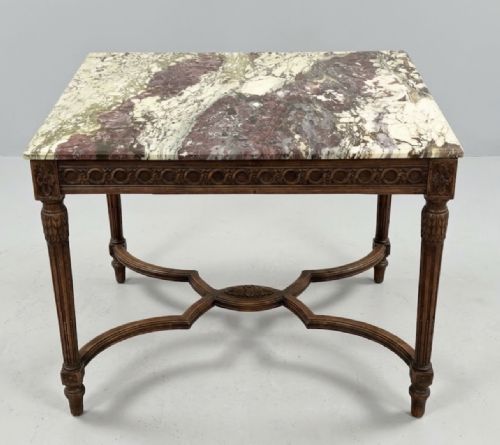
Origins run well past England. French appears in a good many titles and Italian in a fair number, and the samples also turn up Swedish, Spanish, Dutch, Irish, Scottish, Hungarian, Anglo-Indian, Kashmiri and Chinese altar tables. Marble tops appear in around one title in ten, gilt and giltwood in a smaller slice.
The half-round demi-lune is the one named shape with real weight, at roughly one listing in fourteen, often in mahogany and often sold as a pair. Pairs matter throughout: about one listing in eight is two tables rather than one. Fold-over card, tea and games tables filed here as consoles make up another sizeable group.
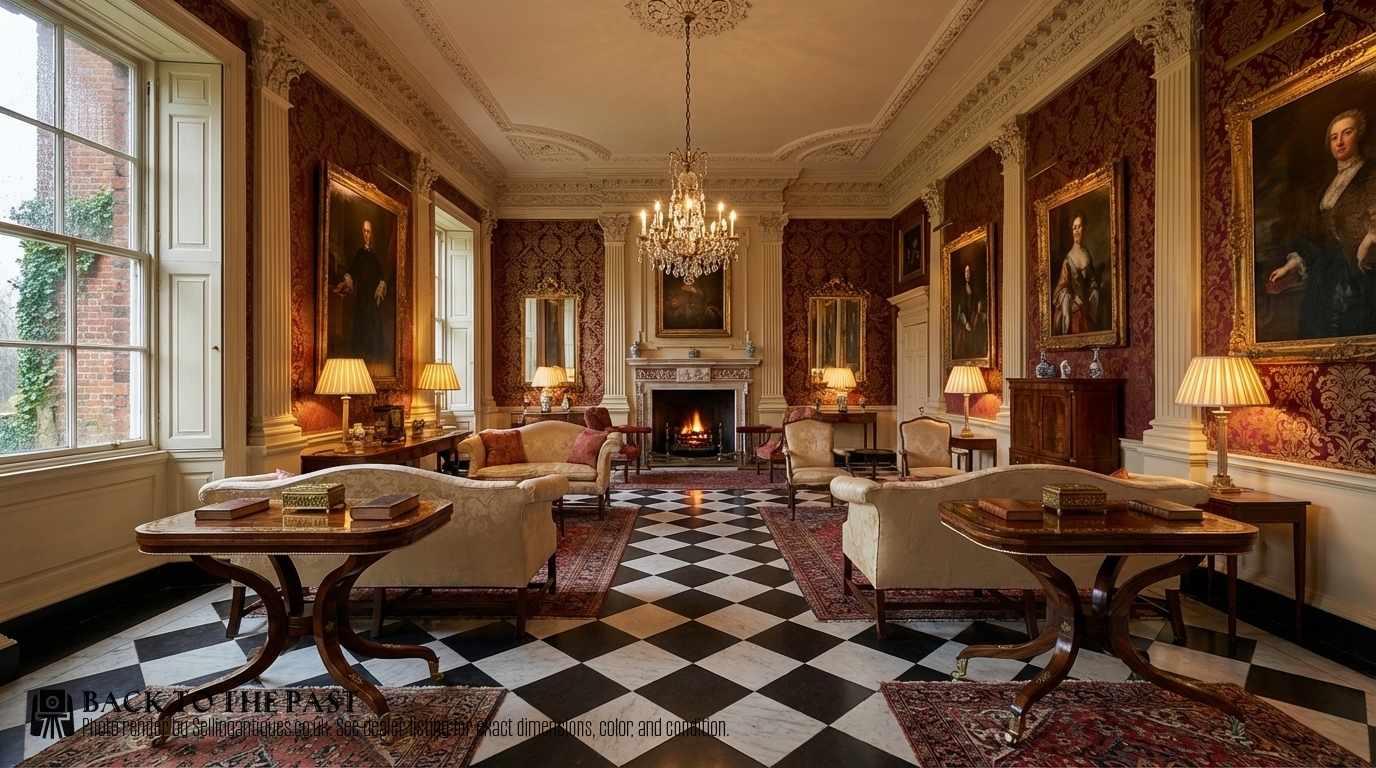
Top And Bottom
Pairs sit at the top. A matched pair of Georgian mahogany demi-lunes, or Italian giltwood and Empire consoles two by two, reaches higher than any single of the same type, and the upper end of the range is dominated by them. The bottom is plain oak and pine, and small Edwardian side tables.
Timber and figure do the next most work. Burr and figured veneers, satinwood and rosewood recur through the dearer titles, while plain oak and pine cluster at the cheap end. Marble slabs and carved giltwood push upward too, and dealers naming the quarry are usually naming something worth naming.
Then there's period against revival. Titles separate Sheraton Revival, Chippendale Style, Georgian Style and Regency Revival from period George III and Regency entries, and the distinction shows in the range. Attributions and firm names lift a piece as well, whether stamped or offered as in the manner of.
Antique Console Tables Retail Price Guide 2026
Typical UK retail prices for console tables, calculated from the Sellingantiques database of over a million retail prices indexed since 2003. This retail price guide relies exclusively on Sellingantiques data; no external sources or auction records are used, so the figures do not describe the wider market.
Roughly one console table listing in eight is a pair rather than a single. Half-round mahogany consoles are the commonest matched offering.
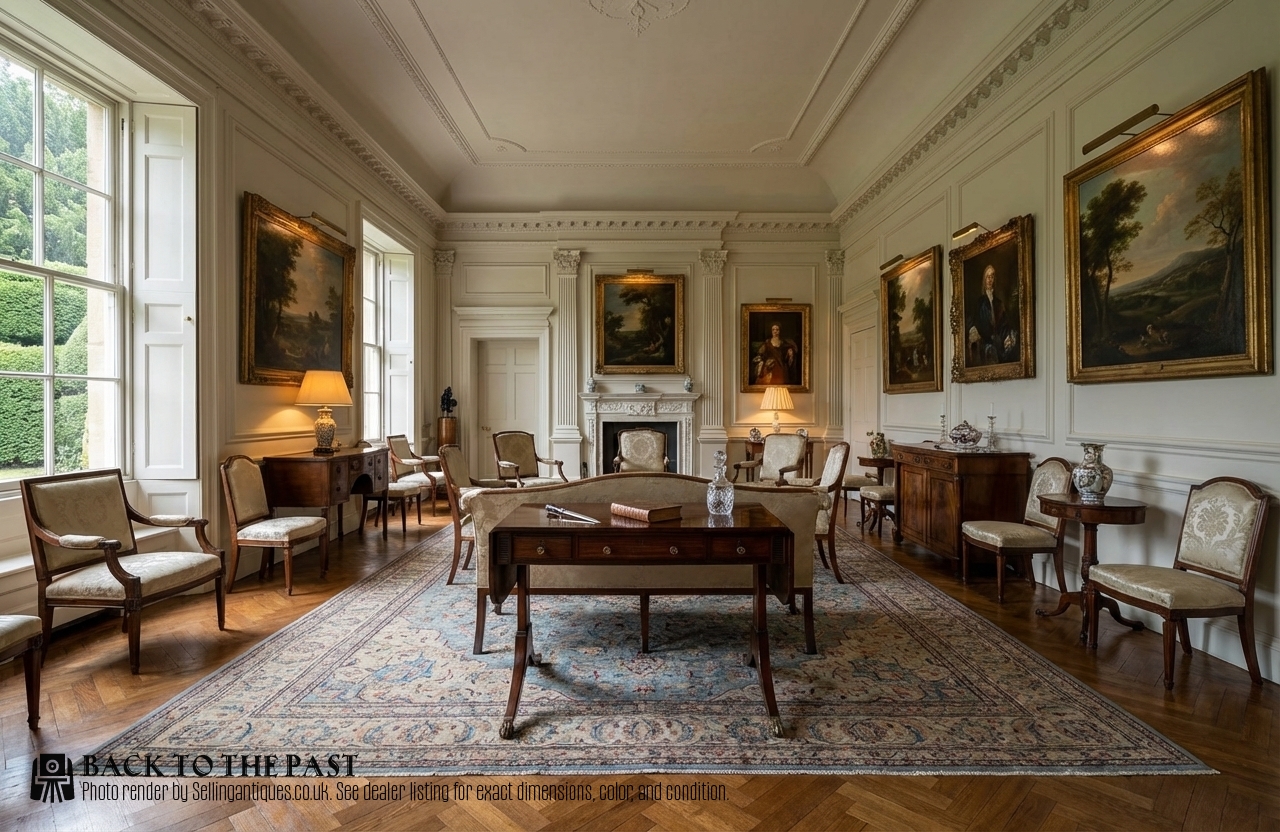
Gillows·Edwards & Roberts·Hille
The Antique Console Tables Glossary
- Demi-lune
- Half-round top with the flat edge to the wall. Dealers spell it demi lune, demi-lune, demilune and half moon, so all four are worth knowing.
- Pier table
- A console made for the pier, the wall between two windows, often with a mirror above or behind it.
- Fold-over
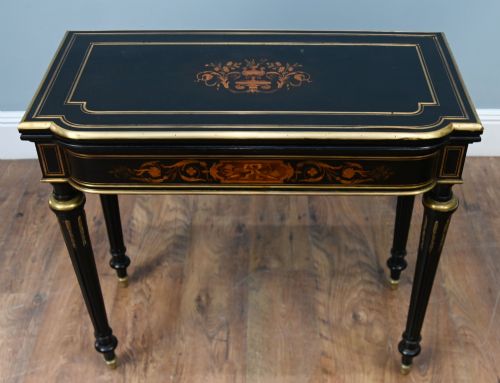
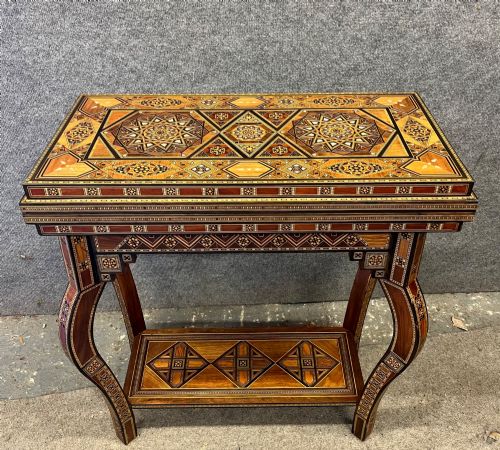
- A hinged top that opens on a swing or concertina action, as on card and tea tables. Closed, they read as consoles.
- Marble top
- A separate stone slab. Dealers occasionally name the quarry, and rouge Languedoc, Breccia di Seravezza, Sienna and pink Salome all appear.
- Serpentine
- A front shaped in a shallow S-curve. Bow front is the simpler alternative, a single outward curve.
- Sutherland table
- Narrow drop-leaf table that folds almost flat, recurring in walnut and oak.
Antique Console Tables: Frequently Asked Questions
Why are so many console tables sold in pairs?
Pairs are characteristic of the form. Consoles were made to flank a fireplace, a doorway or a pair of windows, so they left the workshop two at a time.
On Sellingantiques about one listing in eight is a pair rather than a single, and pairs of half-round mahogany consoles are the commonest matched offering.
What wood are they usually made from?
Mahogany leads, appearing in roughly a third of titles. Walnut, oak and rosewood follow it.
Beyond those, satinwood, burr walnut and flame mahogany veneers turn up regularly. Cast iron, wrought iron, steel, slate, granite and pietra dura all appear too, though wood accounts for the overwhelming bulk.
How old are most console tables on the market?
The dated field runs from 1700 to 1960. Nineteenth Century is the single biggest label, with Eighteenth Century behind it.
Style and reign labels sit alongside the centuries, Georgian, Regency and Victorian among them, and decade labels from the 1880s to the 1930s. Treat any of these as the range the dealer chose rather than a precise dating.
The edges stretch further: 17th-century oak and Spanish walnut at one end, 1930s Art Deco and a French ebonised pair of the 1960s at the other.
Do console tables always have marble tops?
No. Marble turns up in around one title in ten, so the wooden top is far more usual.
Where marble does appear it's often on French or Italian consoles, and named marbles like rouge Languedoc or Sienna show up occasionally.
Is a card table the same as a console table?
Not the same thing, but the two overlap in listings. A fold-over card table closed up stands flat against a wall and does a console's job, so dealers catalogue it here.
Card, tea and games tables together account for roughly a tenth of titles, and a larger share of current stock.
What does demi-lune mean?
Half-round. The top is a semicircle with the straight edge set against the wall.
It's the one named shape with real weight in this category, about 396 listings, and it's very often mahogany and very often a pair.