
Antique Refectory Tables
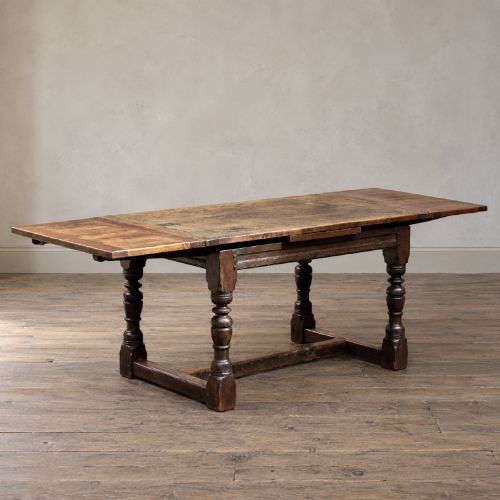
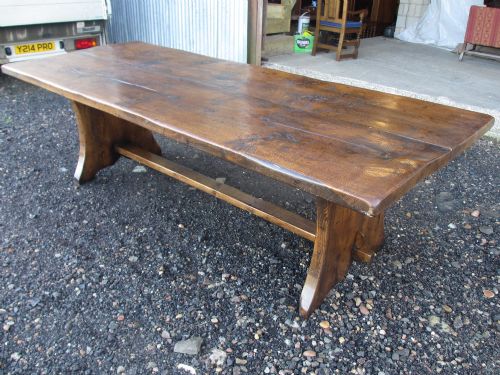
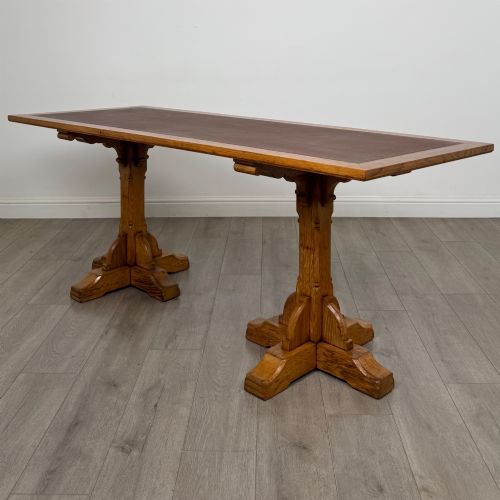
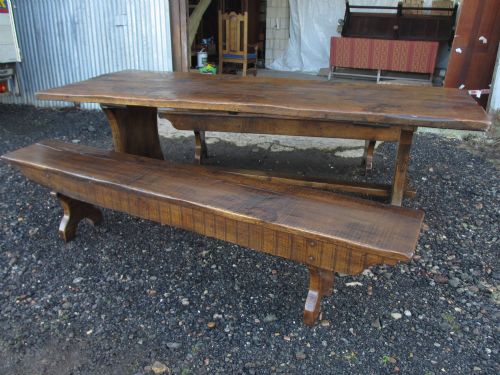
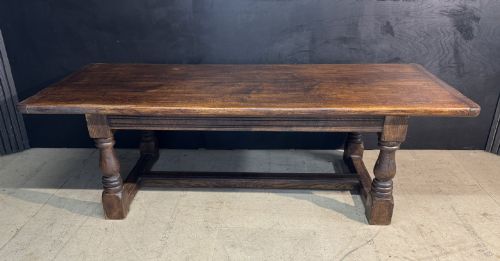
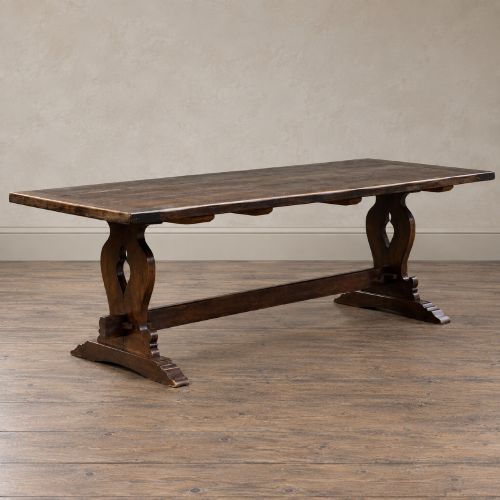
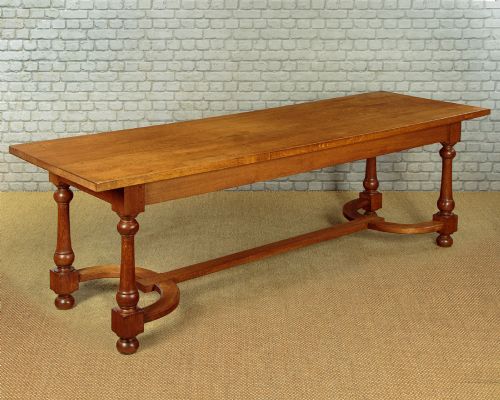
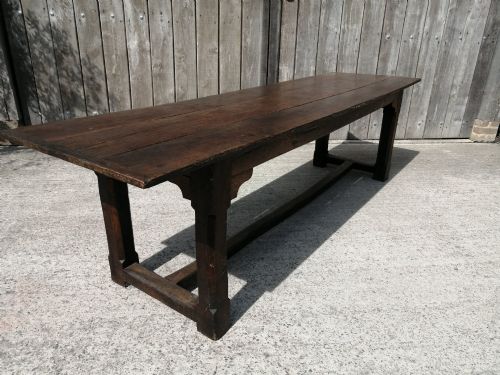
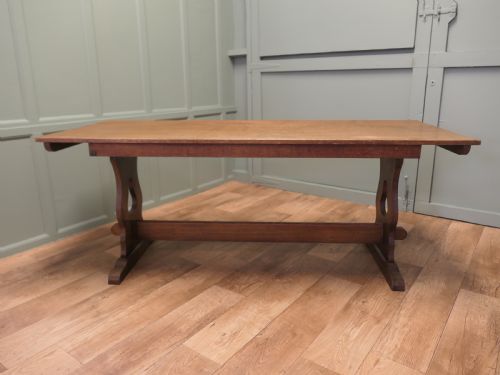
A long rectangular dining table on trestles, baluster or turned legs, named after the monastery dining hall where one board seated a whole community.
What They Are
The heading covers three labels dealers use interchangeably: refectory, farmhouse and kitchen table. All describe the same long rectangular form on either a trestle base or heavy legs. Oak dominates, in 1,178 of 1,697 titles, with pine, elm, cherry, walnut, ash, chestnut, fruitwood, sycamore and beech behind it. Nearly half the titles say dining table.
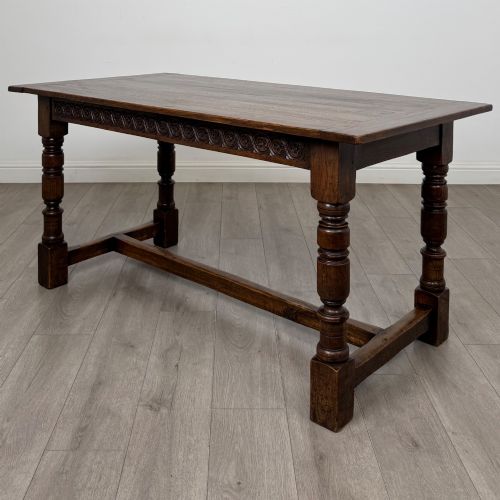
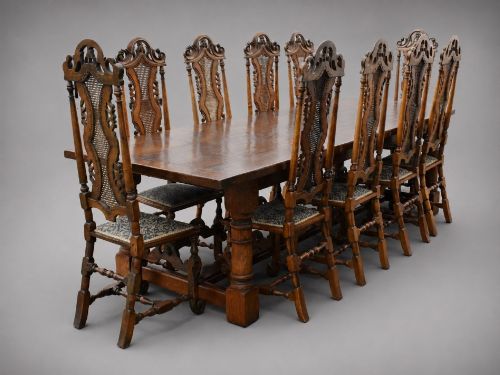
The version you're most likely to meet is an oak table of early 20th-century date, titled simply "Oak Refectory Table". The 1920s alone account for 315 dated listings, with the 1910s, 1900s and 1930s close behind, so roughly 740 of the 948 cleanly dated pieces sit in the first four decades of the century. Many carry style names rather than dates: Jacobean Style, Elizabethan Style, 17th century style, all dated by the dealer to 1900-1930.
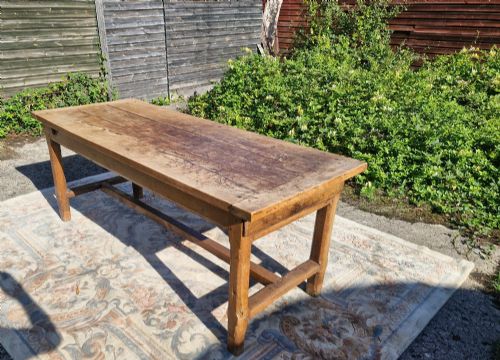
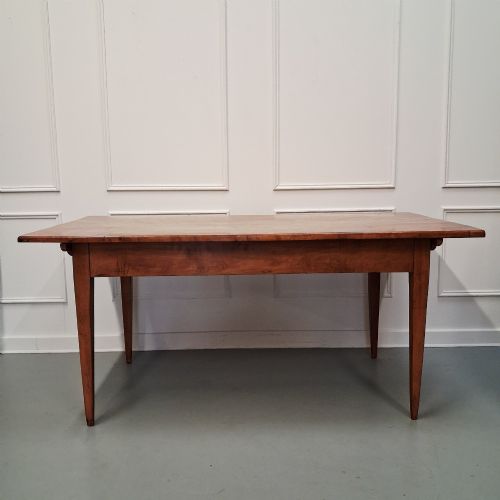
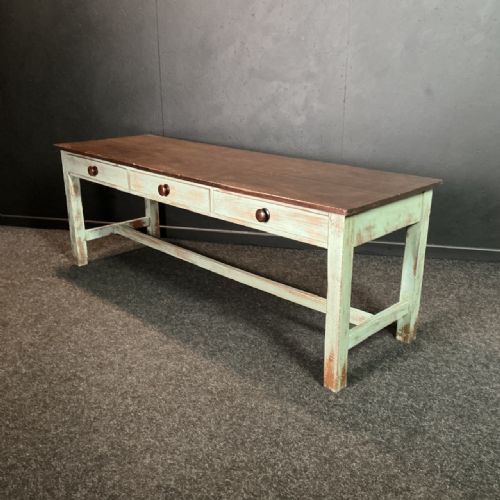
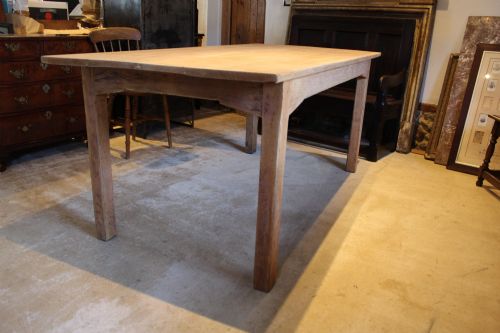
Country tables make up the next large body. Farmhouse appears in 510 titles and kitchen in 122, often with scrubbed or scrub tops. French country tables run to about one in seven, in oak, cherry, elm, chestnut and fruitwood, and turn up as Table Monastère, French harvest, Normandy and Breton. Arts and Crafts and Cotswold-school oak forms a smaller group, and genuine 17th and 18th-century plank-top tables under a tenth.
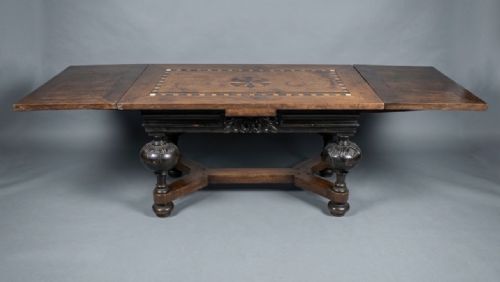
The dated field runs from 1690 to 1960. Dating is often deliberately loose: "19th Century" is the second largest bucket, and Georgian, 18th Century and Edwardian are period labels rather than years, so a table given as 19th century may sit anywhere in a hundred-year span. Draw-leaf and extending versions account for a small slice, around 79 and 56 titles.
Where The Range Splits
Size is the widest variable in the category, and length pushes hardest at the top. Large appears in 252 titles. The bottom of the range holds an apprentice miniature and a small four-seater; the top holds a 12.5-foot pine community harvest table, an eighteen-seat pine kitchen table, a four-metre French oak table and a very large 18th-century trestle-ended oak table.
Date does the other heavy lifting. A Tudor-period table put at c.1590-1630, a late 17th-century oak trestle dated 1690, a Charles II oak refectory table: these sit high. The many Jacobean and Elizabethan style tables dated 1900 to 1930 sit through the lower and middle bands, whatever the carving on their baluster legs.
After that it comes down to top and timber. Fewer, wider boards read better than many narrow ones, and titles sell on it, specifying two plank, three plank, or a one-piece top. Pine and deal sit toward the bottom; walnut, Spanish walnut, burr oak, elm, yew and sycamore cluster higher. A named workshop or an institutional provenance adds to that.
Retail Price Guide 2026
Typical UK retail prices for refectory tables, calculated from the Sellingantiques database of over a million retail prices indexed since 2003. This retail price guide relies exclusively on Sellingantiques data; no external sources or auction records are used, so the figures do not describe the wider market.
The largest to pass through Sellingantiques include a four-metre French oak table, a twelve-and-a-half-foot pine harvest table and an eighteen-seat pine kitchen table.
Heal's of London
The Antique Refectory Tables Glossary
- Refectory table
- A long communal dining table. On Sellingantiques the term is used broadly for any long table on a trestle or heavy leg base.
- Farmhouse table
- The same long form as a country kitchen table, often in pine, elm or fruitwood. It appears in around 510 of the titles.
- Plank top
- A top made from a small number of wide boards. Titles specify two plank, three plank, four plank, and occasionally a one-piece top.
- Draw leaf
- An extending mechanism where leaves pull out from beneath the top, named in 79 titles.
- Trestle
- A base of two end supports joined by a stretcher, rather than four corner legs.
- Scrub top
- A top left unpolished and repeatedly scrubbed, giving a pale bleached surface. Bleached and limed oak describe a similar look.
Frequently Asked Questions
Are refectory tables always oak?
Oak accounts for 1,178 of the 1,697 titles, so it's the timber you'll meet most often. The rest spread across pine, elm, cherry, walnut, ash, chestnut, fruitwood, sycamore and beech.
Beyond those, single titles record satin birch, yew, London plane, teak, apple wood, red walnut, burr oak, deal and pitch pine. One table is given as birch and elm together.
How old are most of them?
The weight sits in the early 20th century. The 1920s carry 315 dated listings, with the 1910s, 1900s and 1930s close behind, so roughly 740 of the 948 cleanly dated pieces fall between 1900 and 1939.
Nineteenth century is the next largest bucket at 273, followed by Victorian and the 1880s. Genuine 17th and 18th-century tables account for under a tenth of the archive.
What does Jacobean Style mean in a title?
It describes the pattern, not the date. Titles reading Jacobean Style, Elizabethan Style, 17th century style or 18th Century Style are dated by dealers to roughly 1900 to 1930.
These revival tables were made in the old manner, with baluster or barley twist legs and heavy stretchers. They sit through the lower and middle bands of the range.
Where do French refectory tables come from?
French appears in 248 titles, about one in seven, in oak, cherry, elm, chestnut, apple and fruitwood. Regional names in titles include Normandy, Breton and Bretagne.
Some are listed as Table Monastère, the French dealer term for a monastic-pattern long table, or as French harvest tables.
Do any carry a maker's name?
Rarely. Heal's of London is the only retailer name to reach a meaningful number of dealers, appearing in 41 titles, some noted as labelled and a few under the Tilden model name.
Other names turn up as one-offs: Cotswold School attributions, small Yorkshire and Norfolk workshops, a Ludlow maker. They're single occurrences rather than a category.
Which sizes turn up?
Size is the category's widest variable. Titles run from an apprentice miniature and a small four-seater up to a 12.5-foot pine community harvest table and a four-metre French oak table.
Large appears in 252 titles and seats in 46. There's no standard length for the form, so the stated measurements in a listing do the work.