


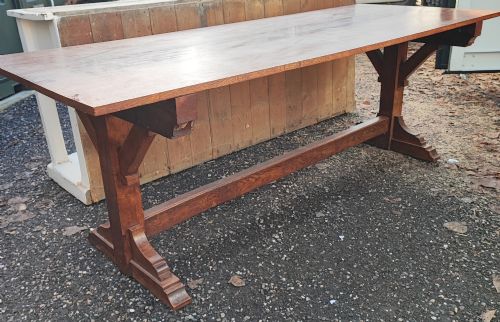
Antique Dining Tables
A dining table is a large wooden table made for eating at, and on Sellingantiques that means everything from polished Victorian extending tables in mahogany to scrubbed oak farmhouse and refectory boards.

Antique Dining Tables
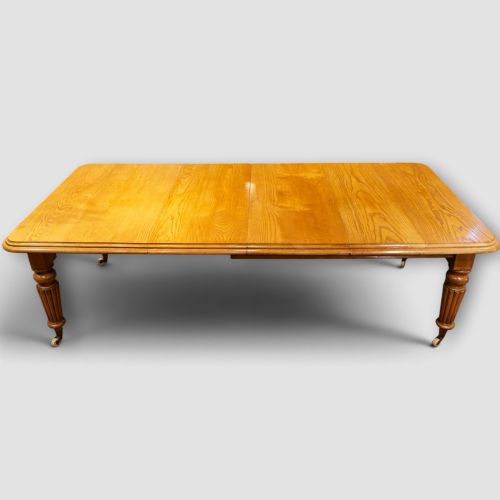
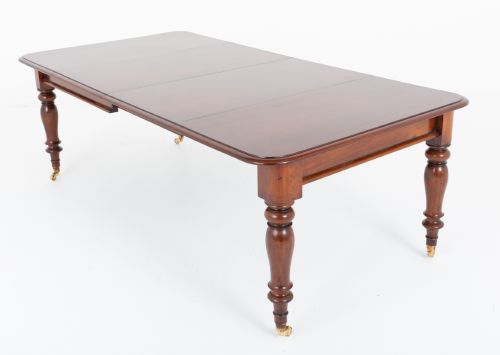
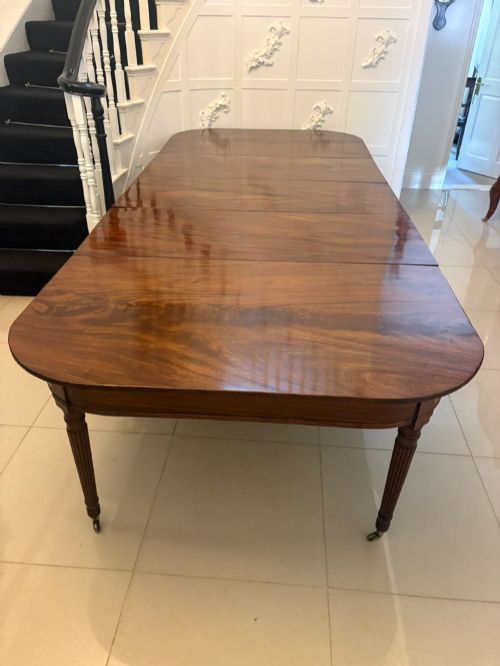
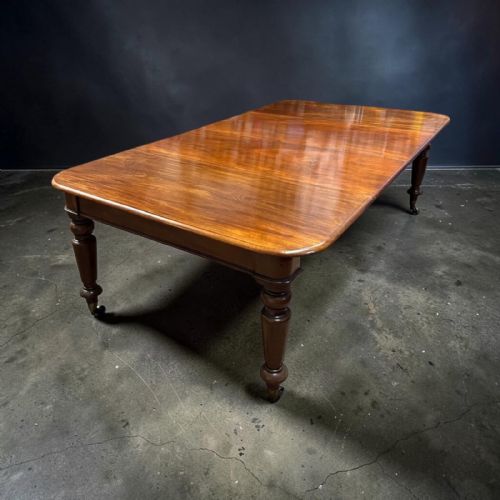
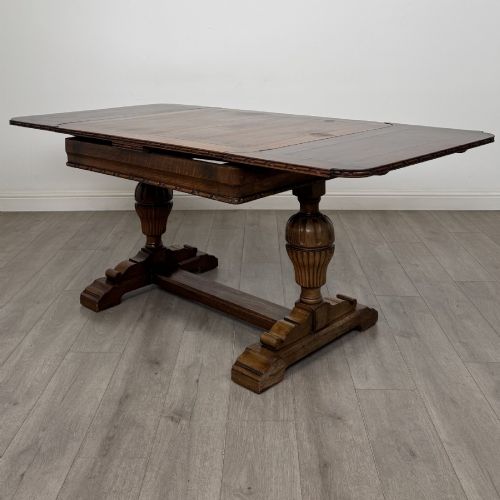
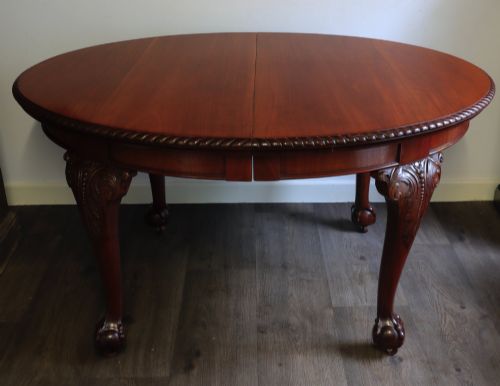
Two timbers dominate. Mahogany accounts for around a third of titles and oak for a quarter, and they split the category between them: mahogany carries the extending, pillar and tilt-top forms, oak carries the refectory and farmhouse ones. The single most likely table you'll meet is a 19th-century English extending table in mahogany, and such titles habitually state a seating count and a leaf count.
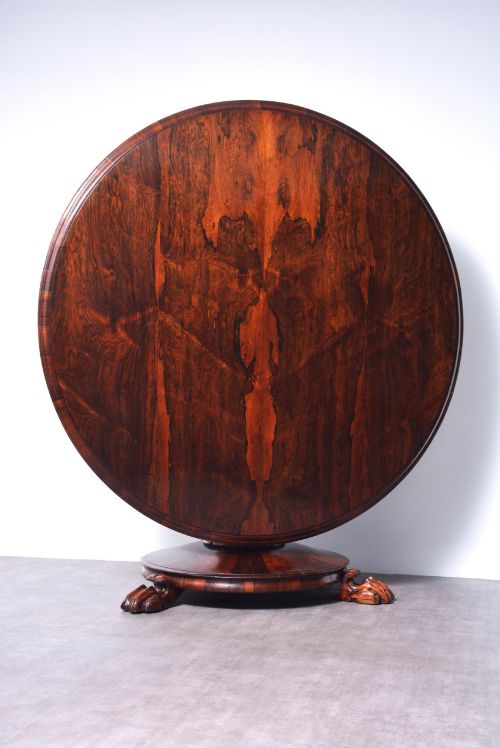
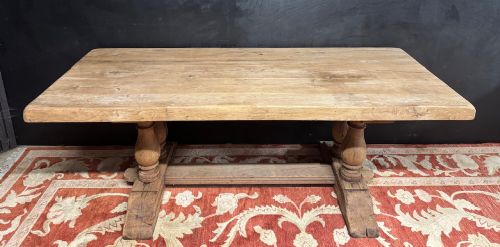
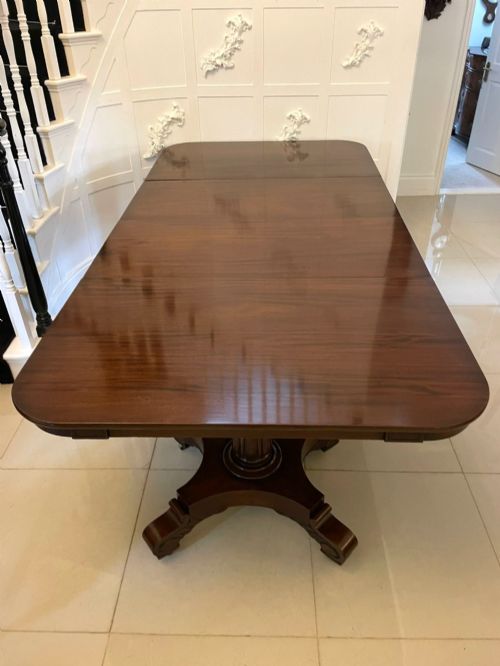
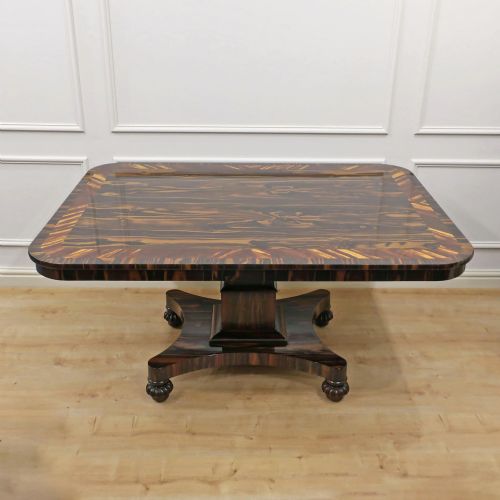
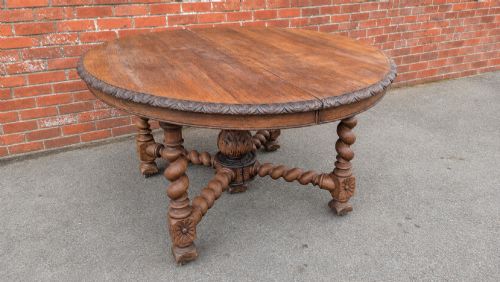
Extending tables run to about a quarter of the archive, described as wind-out, draw leaf, pull out or simply as having two leaves, four leaves, six. Oak refectory and farmhouse tables make up a comparable block, often plank-topped and sold as kitchen tables. A third group is round or oval on a pillar or pedestal, listed as breakfast or centre tables and doing double duty; rosewood concentrates here, in loo and snap-top forms.
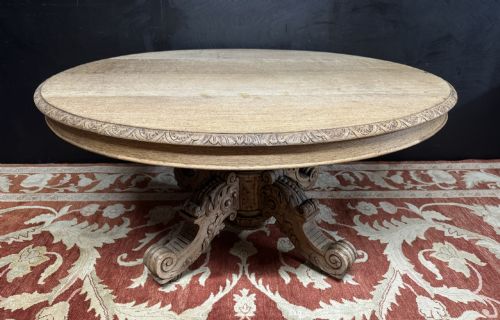
French and Continental country tables are roughly a tenth, with vendange, monastère, Normandy and chateau tables among them, and bleached oak almost entirely a French farmhouse thing. Early oak gateleg and drop-leaf tables are a smaller seam, and that's where the 17th- and 18th-century dated entries cluster.
Dates in listings run from 1690 to 1960, though fewer than half carry a clean year. "19th Century", "Victorian", "Regency" and "Georgian" are period labels rather than dates, and the same dealer will write "Victorian" on one table and "1860" on the next. The 1920s bucket is large: a great many oak refectory, farmhouse, bleached oak and burr walnut Queen Anne-style tables are early 20th century, and "style", "revival" and "manner of" appear across the whole range.
What Separates Them
Timber and figure set the floor and the ceiling. A plain oak or pine table sits at the bottom; figured mahogany, flame, burr walnut, Cuban mahogany, pollard oak, satinwood, padauk and lacewood all push a table upward. Pollard oak turns up only a handful of times in the whole archive, and every sampled example sits in the upper reaches.
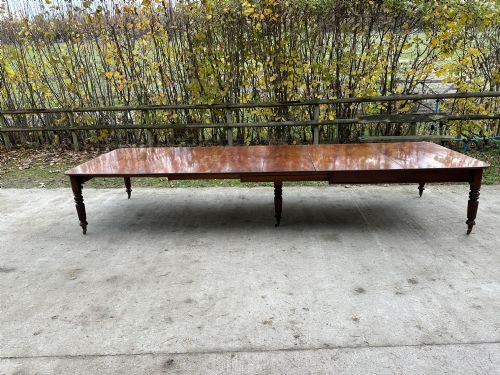
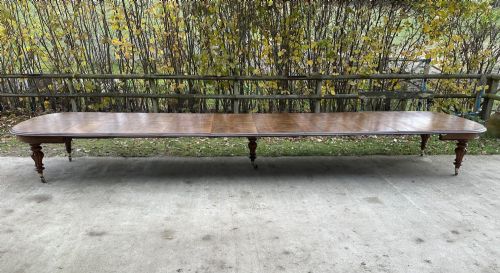
Size does most of the rest of the work. Titles escalate from a four-seat supper table through seats twelve and seats fourteen to a twenty-eight-seater on six pillars at 609cm, and length in metres or feet gets quoted freely at the large end. Twin pillar gives way to three, four and six; a sixteen-foot mahogany extending table on ten legs sits near the top.
On extending tables, completeness of the set matters, which is why leaves get counted in the title and why a leaf carrier or leaf storage sideboard gets its own mention. Named mechanisms carry weight too: concertina, patent action, metamorphic. Plain draw-leaf and single-flap tables sit lower. A named or labelled maker lifts a table, and dealers separate "by Gillows" from "Gillows style" or "manner of" for good reason.
Antique Dining Tables Retail Price Guide 2026
Typical UK retail prices for dining tables, calculated from the Sellingantiques database of over a million retail prices indexed since 2003. This retail price guide relies exclusively on Sellingantiques data; no external sources or auction records are used, so the figures do not describe the wider market.
One-offs recorded in the archive include a vendange table for the grape harvest, a draper's table, and a tavern table carrying period graffiti.

Gillows·Maple & Co·Heals·Harry and Lou Epstein
The Antique Dining Tables Glossary
- Extending / wind-out
- A table whose frame opens on a screw or slide so extra leaves drop in. "Wind out" describes the crank-driven version.
- Leaf / leaves
- The removable boards that lengthen an extending table. Titles give the count, from "one leaf" up to "having 6 extra leaves".
- Draw leaf
- Leaves stored under the top that pull out from each end, common on the oak refectory-style tables in this category.
- Refectory
- A long fixed-top table on turned or carved legs joined by stretchers, and in this archive almost always oak.
- Scrub top
- A bare, unpolished top that has been scrubbed rather than finished. Dealers use it as a positive descriptor.
- D end
- A semicircular end section from a sectional dining table, usable on its own as a side table.
Antique Dining Tables: Frequently Asked Questions
What wood are antique dining tables usually made from?
Mahogany and oak between them cover the greater part of the category. Mahogany appears in around a third of titles and oak in a quarter.
Walnut, rosewood and pine follow behind, with rosewood concentrated in round and oval tilt-top forms. Figured, burr and named timbers such as Cuban mahogany, flame, pollard oak, satinwood and padauk are called out in titles when they're present.
How does an extending dining table work?
The frame opens on a screw or slide mechanism and extra boards, the leaves, drop into the gap. Crank-driven versions are described as wind-out.
Other systems turn up throughout: draw leaf, where leaves pull out from under the top at each end, pull out, concertina and named patent actions. Titles almost always state how many leaves come with the table.
What's the difference between a refectory and a farmhouse table?
Refectory describes a long fixed-top table on turned or carved legs joined by stretchers, and in this category it's nearly always oak.
Farmhouse is the country kitchen version, often plank-topped and scrubbed rather than polished. The two words overlap in listings, and a fair number of titles use both.
How old are most antique dining tables for sale?
Dated listings run from 1690 to 1960, but fewer than half carry a clean year. The largest bucket is the broad "19th Century", followed by the 1920s and "Victorian".
Read "Georgian" and "Regency" as period ranges rather than dates. Georgian is a small share of the whole; Victorian is far more common.
A great many oak refectory, farmhouse, bleached oak and burr walnut tables are early 20th-century work in earlier styles.
Are dining tables sold with a seating capacity?
Stating seats is a habit in this category. Sampled titles run from a four-seat supper table up to a twenty-eight-seater on six pillars measuring 609cm.
Length gets quoted freely at the large end too, in metres or feet: three metres, four metres, nineteen feet. A sixteen-foot mahogany extending table on ten legs is among them.
Do many antique dining tables carry a maker's name?
Most don't. Across 334 dealers, only four names clear three dealers each, and the great majority of titles name no maker at all.
Where a name does appear it may be stamped, labelled, or given as an attribution. Dealers distinguish "by Gillows" from "Gillows style" and "manner of Gillows", and the qualified forms are a lesser claim.