
Antique Breakfast Tables
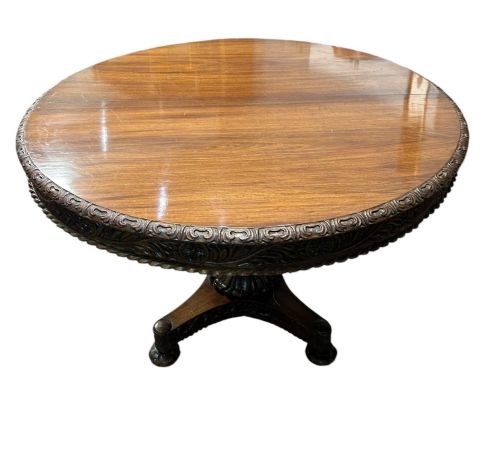
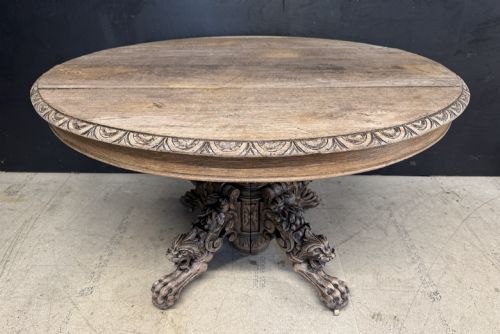
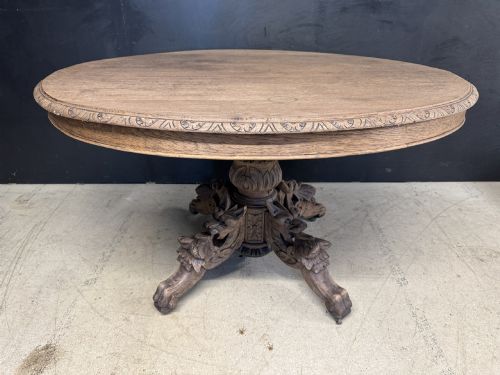
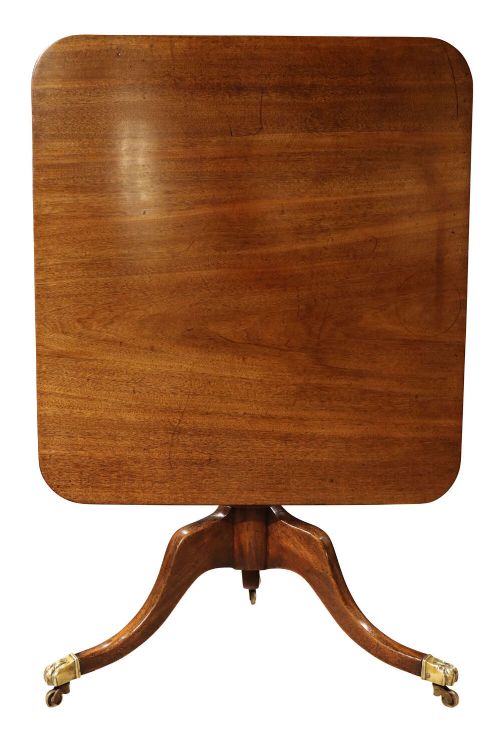
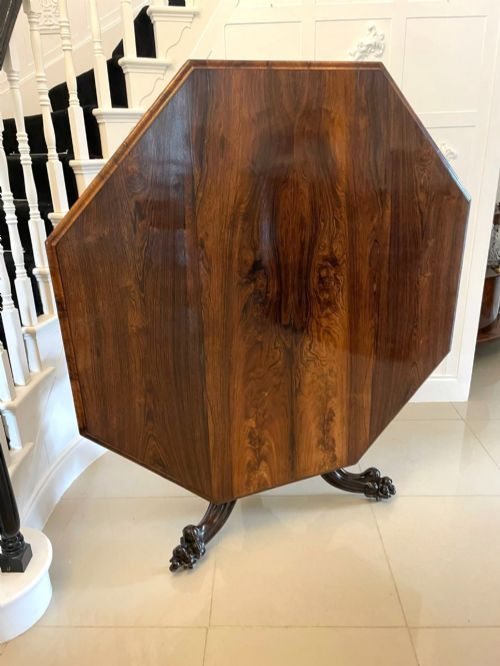
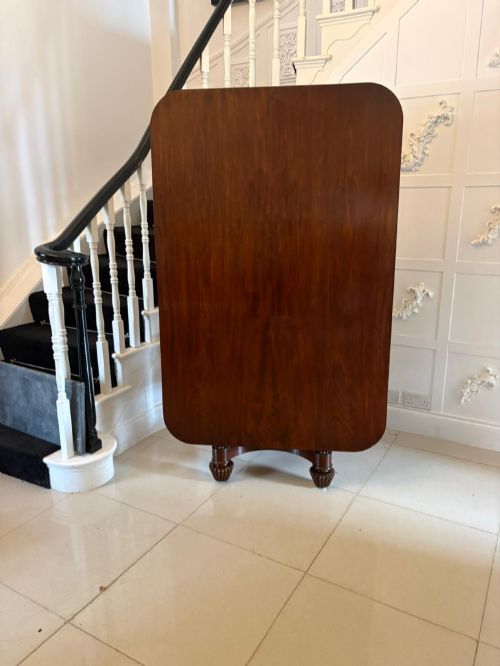
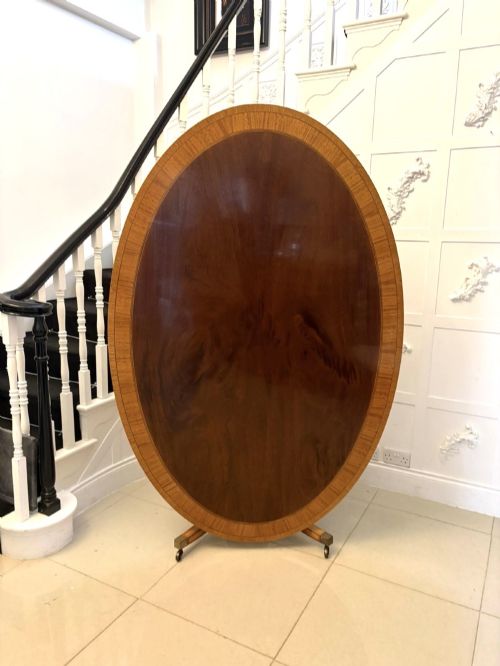
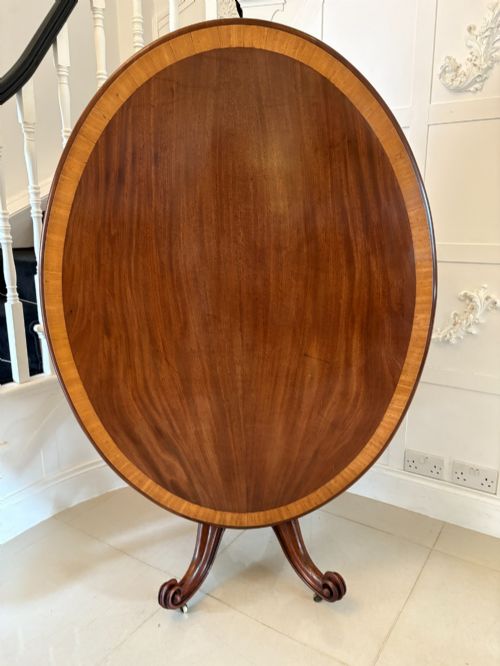
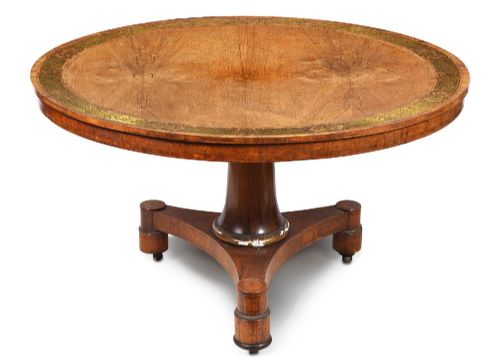
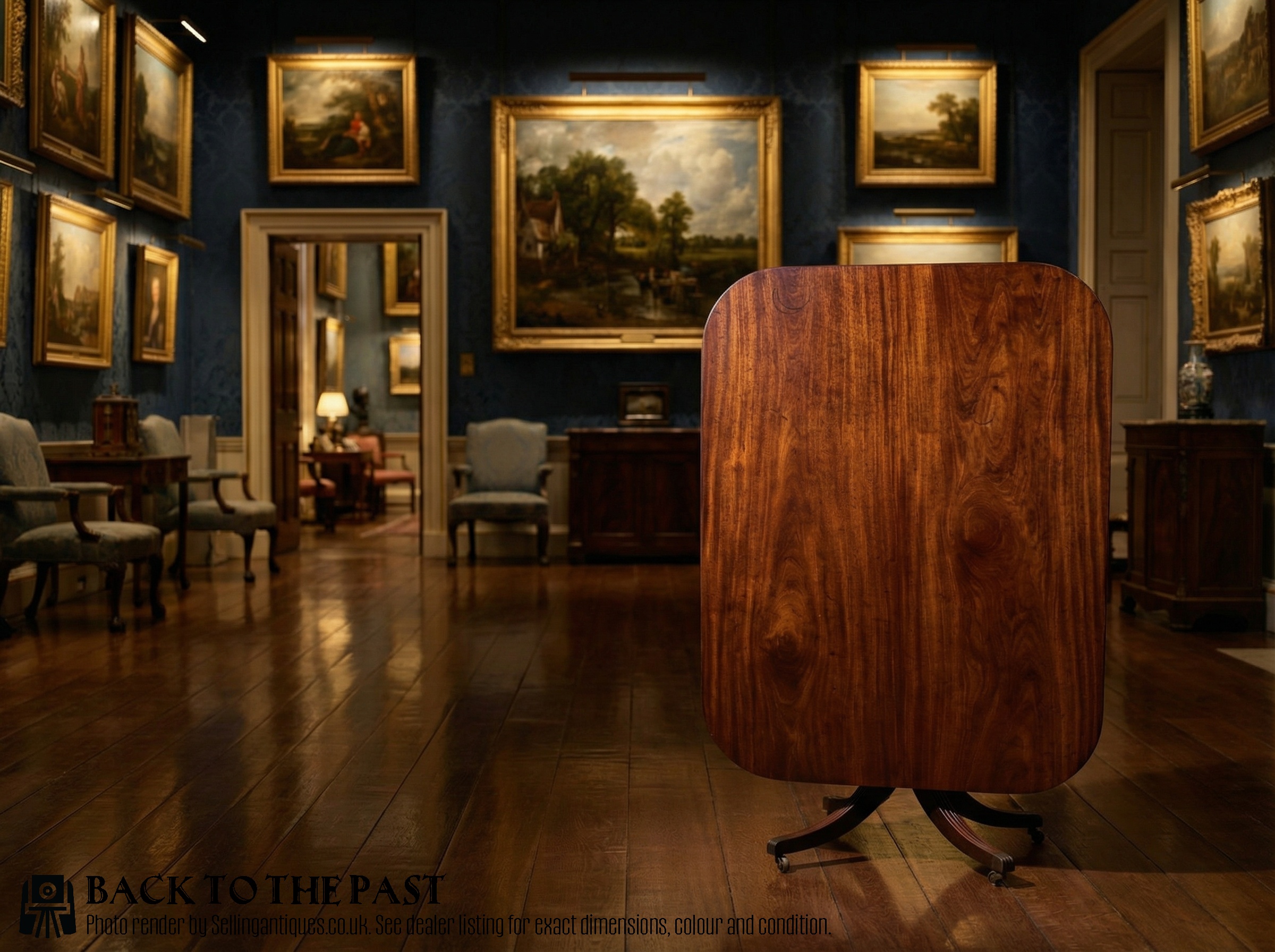
A single-pillar table with a top that tilts up vertical, made from the late Georgian period onward for informal meals and general use in a smaller room.

Antique Breakfast Tables
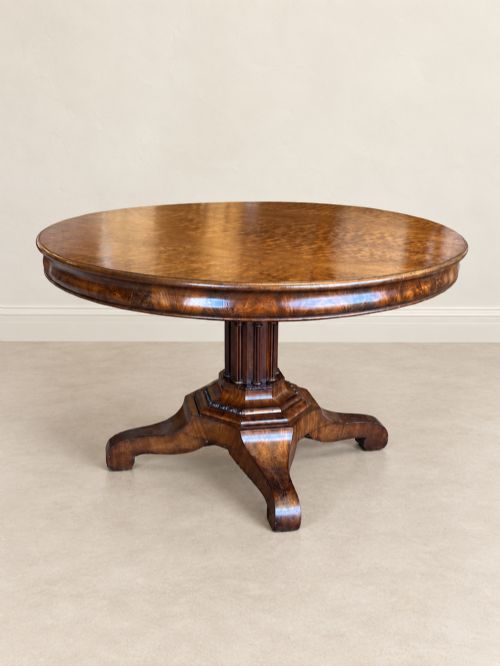
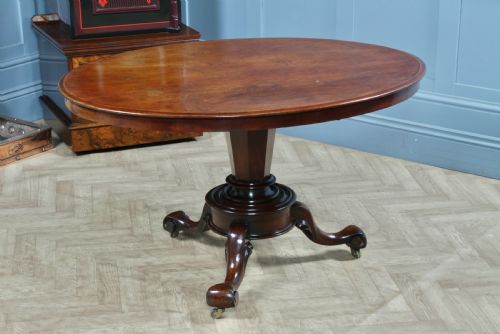
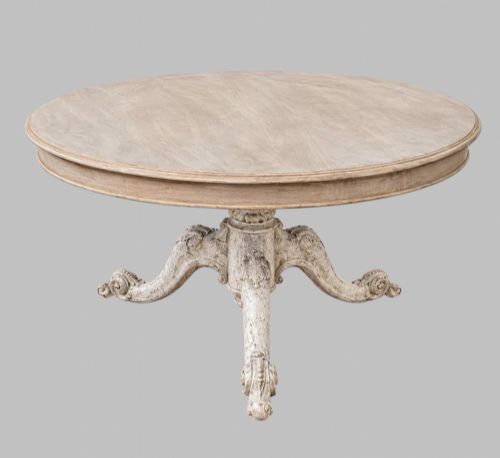
The breakfast table appeared in Britain in the eighteenth century as a small table for meals taken away from the formal dining room. By the Regency it had settled into the form you'll meet again and again: one central column on splayed legs or a platform base, with a top that snaps upright so the table can stand aside against a wall.
Mahogany and rosewood carry the category between them, 427 titles and 219 of the 973 in the archive. Shape is close to an even split, 116 circular against 109 oval, with rectangular tops a small group. Catalogue dates fall mainly under Regency, William IV and Victorian, and 'tilt top' alone appears in 160 titles.
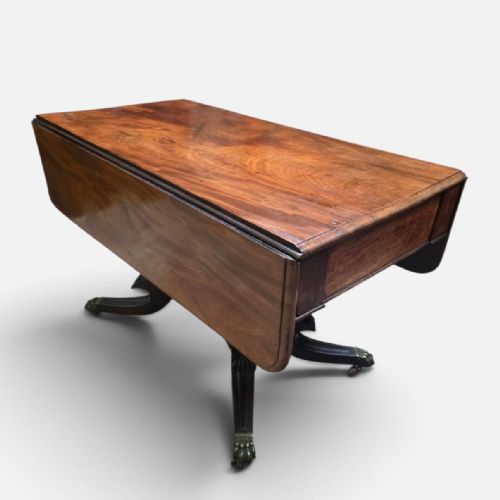
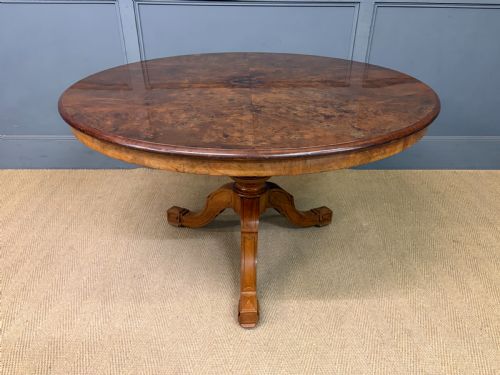
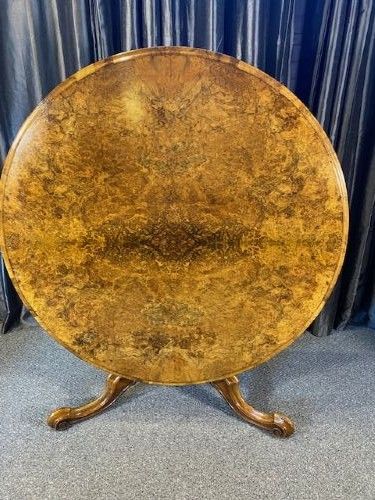
The heading also absorbs neighbouring forms. Centre tables run to 174 titles and loo tables to 49, both the same tilt-top pedestal build, and dealers often write 'centre/breakfast table' as one thing. Pembroke and other drop-leaf tables account for 68, commoner in live stock than in the archive. Victorian burr walnut, frequently oval and inlaid, makes up its own recognisable branch.
Dating needs both fields read together. '19th Century' alone covers 259 listings, and only 224 carry a clean year. William IV turns up constantly in titles yet barely as a dated value, so much of it sits inside the Regency or Victorian buckets. Where a title says 'Regency Style' or 'Regency Revival', the dated field is often 1900 to 1930.
Where The Range Splits
Timber does most of the work. Plain mahogany and softwood sit at the bottom, and the tail of unusual woods sits at the top: amboyna, coromandel, macassar ebony, satinwood, birdseye maple, satin birch, pollard oak, padauk. Each of those surfaces only once or twice in the whole archive, which is part of why they read as they do.
Decoration follows the same line. Undecorated tables dominate the lower reaches, while marquetry, 22 titles, and brass-inlaid rosewood cluster at the upper end. The Victorians account for the heaviest concentration of it, with 80 burr walnut titles and 59 of those named as Victorian.
Size and period do the rest. 'Large' appears in 62 titles, and where a listing states a diameter or a seat count it tends to sit well up the range, against the miniature and small tables low down. Period pieces stand above the revivals, and a named attribution, hedged or stated, pushes a table up.
Antique Breakfast Tables Retail Price Guide 2026
Typical UK retail prices for breakfast tables, calculated from the Sellingantiques database of over a million retail prices indexed since 2003. This retail price guide relies exclusively on Sellingantiques data; no external sources or auction records are used, so the figures do not describe the wider market.
About 96 breakfast tables are listed on Sellingantiques each year, and 197 different dealers have handled one.
Gillows
The Antique Breakfast Tables Glossary
- Tilt top
- A top hinged to the pedestal block so it swings up vertical for storage. The commonest single description in the category, in 160 titles.
- Snap top, tip top, flip top
- Dealers' alternatives for the same tilting action, released by a catch. The archive describes it in at least six different ways.
- Pedestal, pillar
- The single central column carrying the top, standing on splayed legs or on a platform base.
- Loo table
- A Victorian card-playing table of the same tilt-top pedestal form, and listed under this heading 49 times.
- Bird-cage
- A boxed double-plate block set between top and pillar, letting the top both tilt and rotate. One William IV table is recorded with one.
- Plum pudding
- One of the words used for mahogany figure, this one dappled, alongside flame and figured for a flaring or striped grain.
Antique Breakfast Tables: Frequently Asked Questions
What wood are breakfast tables usually made from?
Mahogany and rosewood between them cover most of the archive, at 427 and 219 titles. Walnut follows at 124, with burr walnut accounting for 80 of those.
After that the list thins fast. Oak runs to 27 titles, and woods like amboyna, coromandel, satin birch and pollard oak appear only once or twice each.
Why are centre tables listed as breakfast tables?
They share the form. Both are a tilt-top pedestal table, and dealers use the two words interchangeably, often writing 'centre/breakfast table' in a single title.
Centre tables run to 174 titles under this heading, and the share is rising in live stock. Loo tables, another 49, are the same build again.
How old are most of these tables?
The dated field spans 1740 to 1950, but only 224 of 973 listings carry a clean year. Most dating is by reign or century, with '19th Century' alone accounting for 259.
Regency, Victorian and Georgian follow, and 18th Century covers just 31 listings. William IV appears constantly in titles while barely registering as a dated value.
Are breakfast tables round or oval?
Almost an even split. Circular appears in 116 titles and oval in 109, with rectangular a much smaller group at 20.
One hexagonal eight-seater and one D-shaped metamorphic table turn up once each in the whole archive.
Do these tables carry maker's names?
Rarely. Only Gillows clears three dealers, from six mentions across 973 listings, and it appears as often hedged as stated, as 'attributed to', 'in the manner of' or 'likely by'.
A few other firms surface in single titles, mostly well up the range. This is not a category read through makers.
What sizes do breakfast tables come in?
Wide range. Several titles describe a miniature or 'super wee' table, while the larger end includes a 48-inch single-piece top and a 130cm circular one.
Most listings don't state a measurement at all. 'Large' appears in 62 titles, and some give a seat count instead, 'seats 8' or '6 seater'.