



Antique Sutherland Tables
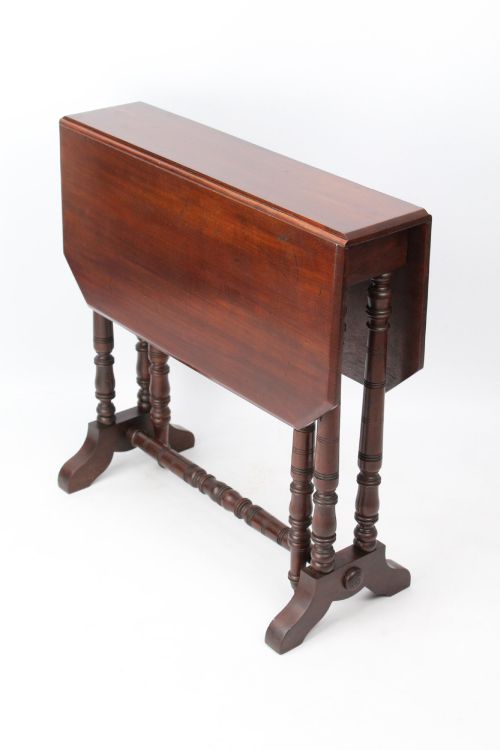
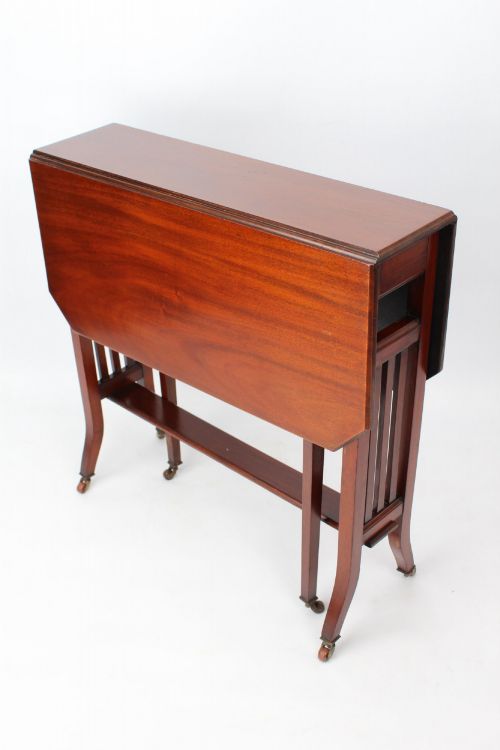
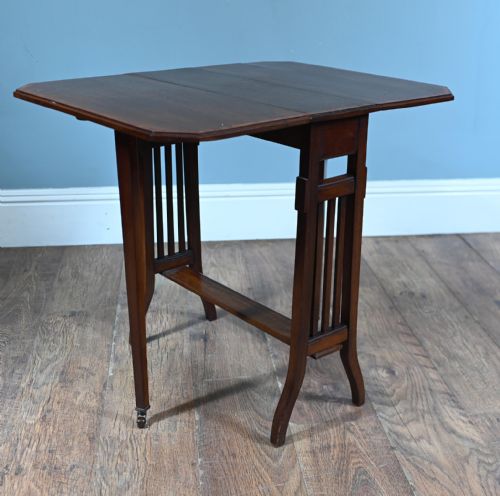
A Sutherland table is a narrow drop-leaf occasional table on swing-leg supports, made from the mid-nineteenth century to stand almost flat against a wall and open out for tea or cards.
What They Are
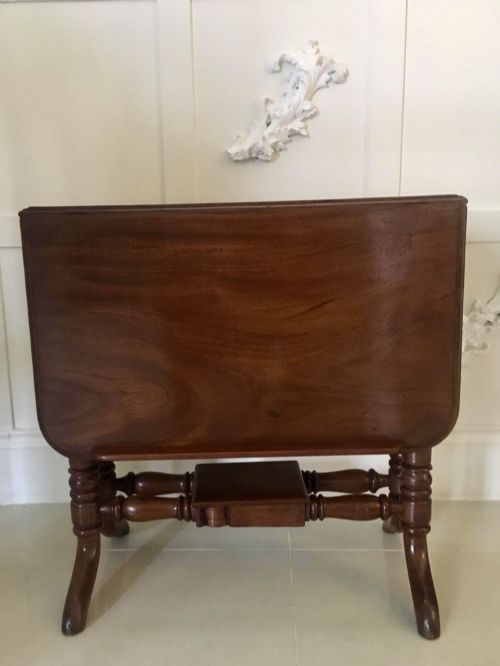
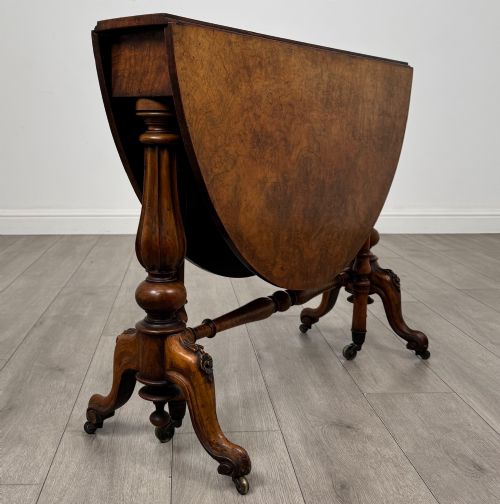
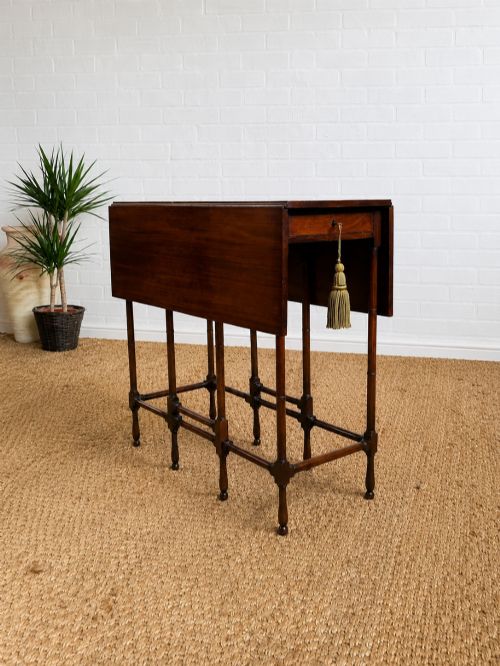
The form is British and Victorian in origin, a space-saving side table with flaps that drop nearly to the floor. Closed, it takes up a few inches of wall; raised on its gates, it gives a small oval or rectangular top.
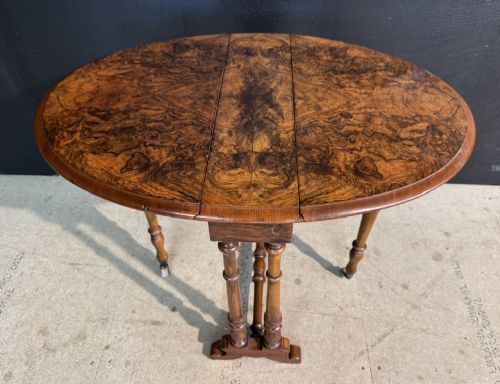
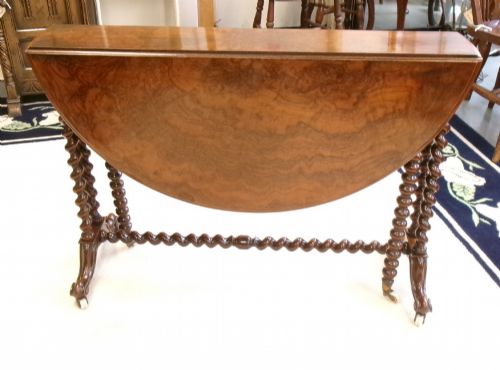
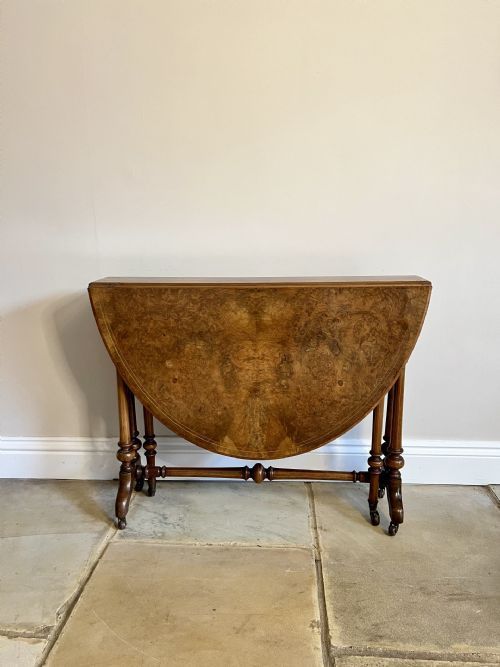
Walnut defines the category. Of 402 titles on Sellingantiques, 216 name walnut and 144 specify burr walnut, so a burr-figured top is what you will meet more often than anything else. Mahogany follows at 96 titles, frequently Edwardian and frequently inlaid. Rosewood, oak and satinwood appear in smaller numbers, with amboyna, burr yew, thuya and goncalo alves surfacing once each.
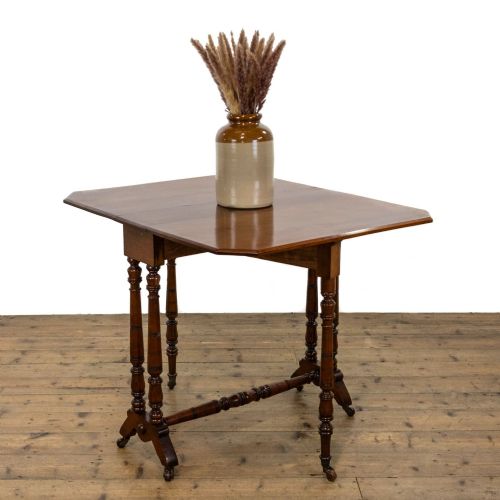
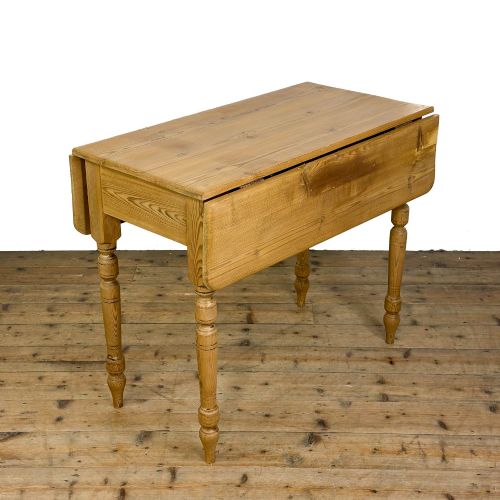
Small is the norm. 88 titles call the table a "baby", 32 "small" and 10 "miniature", against 16 described as large. The single commonest thing offered is a Victorian burr walnut baby Sutherland, often inlaid. Only twelve titles mention an oval top, so the shape many people picture is a minority; rectangular, D-ended, canted and "butterfly" outlines all turn up.
Dating runs from 1840 to 1930, with 164 listings carrying a clean year. Much of it is loose: 141 say only Victorian and 41 only 19th Century, with 37 Edwardian. The 1880s and 1900s are the fullest decade buckets. A few sampled titles claim Regency, William IV or Georgian dating, but they sit well outside the bulk.
Where The Range Splits
Timber does most of the work. Burr and strongly figured walnut sit at the top of the range, and the plainer end is mahogany and oak with nothing much happening in the grain. Between the two, figured walnut without a burr appears in a handful of titles and behaves as you would expect.
Decoration is the other real divider. 86 titles say inlaid, and the marquetry, parquetry and crossbanded tops cluster among the higher-priced entries, with satinwood and kingwood borders recurring. Plain bobbin-turned oak and mahogany sit at the bottom. Supports follow the same pattern: cabriole and shaped legs upward, simple turning downward.
Size runs against the usual logic. The smallest tables are the ones that sit high, with baby and miniature burr walnut examples recurring through the top of the range. Unusual forms do the same in smaller numbers: double Sutherlands, two-tier versions, D-ended and butterfly tops, a swivel top, a specimen-wood top.
Retail Price Guide 2026
Typical UK retail prices for sutherland tables, calculated from the Sellingantiques database of over a million retail prices indexed since 2003. This retail price guide relies exclusively on Sellingantiques data; no external sources or auction records are used, so the figures do not describe the wider market.
Small sizes dominate on Sellingantiques. Eighty-eight titles call the table a baby, 32 small and 10 miniature, against 16 described as large.
The Antique Sutherland Tables Glossary
- Sutherland table
- Narrow drop-leaf table whose flaps fall almost to the floor, leaving a very slim closed profile against a wall.
- Baby Sutherland
- Trade term for the smallest examples, used in 88 titles on Sellingantiques and often swapped for miniature or petite.
- Drop leaf
- The hinged side flaps that fold down; 52 titles use drop leaf, others write dropleaf or drop flap.
- Gate leg
- Swinging leg frame that pivots out to carry a raised flap. Sampled titles use it of the support, and of one hand-painted version.
- Burr walnut
- Figured veneer cut from a burr growth on the tree, and the commonest surface in the category at 144 titles.
- Parquetry
- Geometric veneer patterning, recorded on a small number of burr walnut tops, as against the floral and pictorial shapes of marquetry.
Frequently Asked Questions
What wood are they usually made from?
Walnut. It appears in 216 of 402 titles, and 144 of those specify burr walnut, which makes a burr-figured top the standard surface in this category.
Mahogany is second at 96 titles, often Edwardian and often inlaid. Rosewood, oak and satinwood follow in smaller numbers, with occasional one-offs in amboyna, burr yew, thuya and goncalo alves.
Why are so many called baby Sutherland tables?
Because small is the norm for the form. 88 titles use "baby", 32 say "small" and 10 "miniature", against 16 described as large.
The term is trade shorthand rather than a fixed measurement, and it sits with miniature and petite in the same listings. Baby and miniature burr walnut examples recur through the upper end of the range.
How old is a typical Sutherland table?
The dated field runs 1840 to 1930. 164 listings carry a clean year, with the 1880s and 1900s the fullest decades, then the 1870s and 1860s.
The rest is dated by reign or century: 141 say only Victorian, 41 only 19th Century and 37 Edwardian. So roughly half the archive is placed loosely rather than to a decade.
Are Sutherland table tops always oval?
No. Only twelve titles mention an oval top, so the shape most people associate with the form is far from the majority.
Rectangular tops are common, and sampled titles also record D-ended, canted-corner and "butterfly" outlines.
What does inlaid mean on these tables?
Contrasting woods let into the surface, usually the top. 86 titles say inlaid, making it the single most common decorative note after the timber itself.
It covers a spread: floral marquetry, geometric parquetry, and crossbanded borders in satinwood or kingwood. These sit at the upper end of the range, while plain bobbin-turned oak and mahogany sit at the bottom.
Do Sutherland tables carry maker's names?
Not in this archive. No maker or retailer emerges as a presence in the category, and the tables are described by timber, size and decoration instead.
National origin barely features either. Eight titles say English, and no other country appears anywhere in the sample.