



A 2026 Guide by Sellingantiques

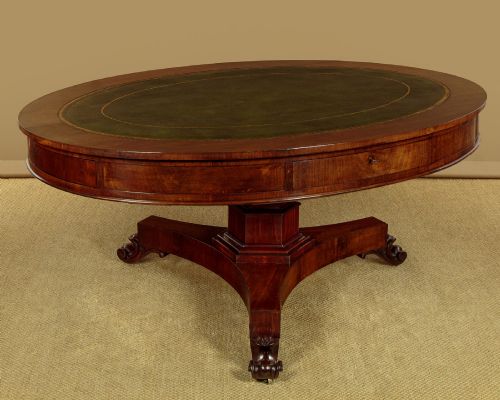
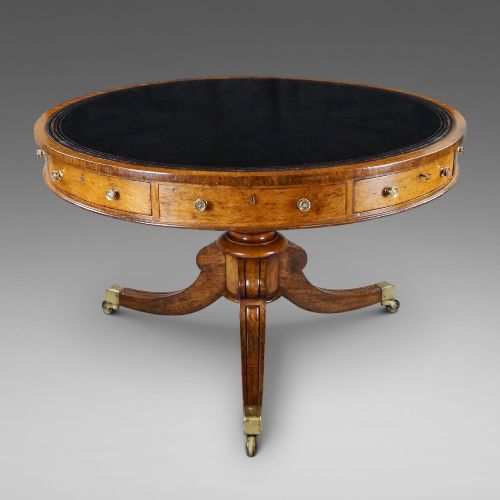
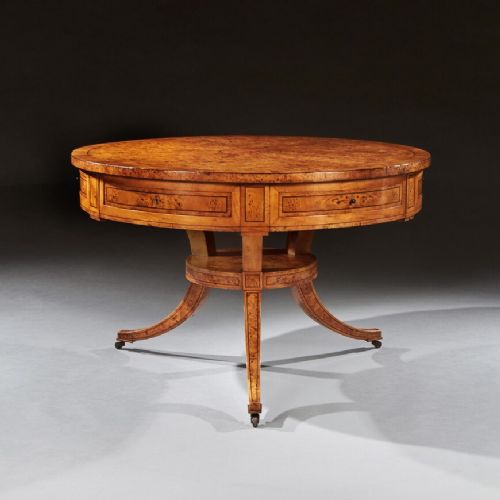
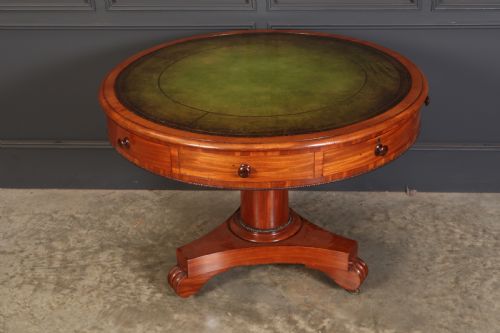
A Fine Regency Rosewood Drum Table, Regency
Priced at £6,750 from W.J. Gravener Antiques Ltd.
They first appeared in English libraries during the late eighteenth century.
Estate managers often used them to collect tenant payments. Hence the alternative name, rent tables.
Look at the top. Some early antique drum tables feature a revolving top to bring the required drawer to the user.
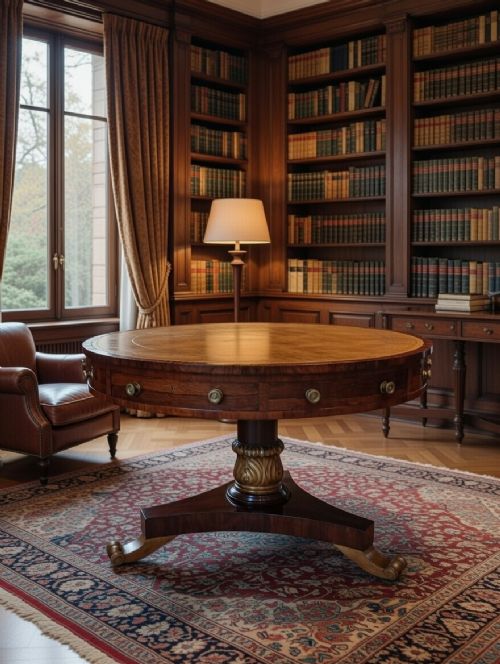
Demand peaked during the Regency period. They became standard fixtures in large country houses, sitting squarely in the middle of the room rather than against a wall.
Thomas Chippendale supplied several drum-style library tables during his later career in the 1770s.
Gillows of Lancaster and London made excellent mahogany drum tables between 1790 and 1830. Their stamp sometimes appears on the drawer edges.
Many provincial makers built these without leaving a mark. Regional trade directories show cabinetmakers offering round library tables well into the Victorian era.
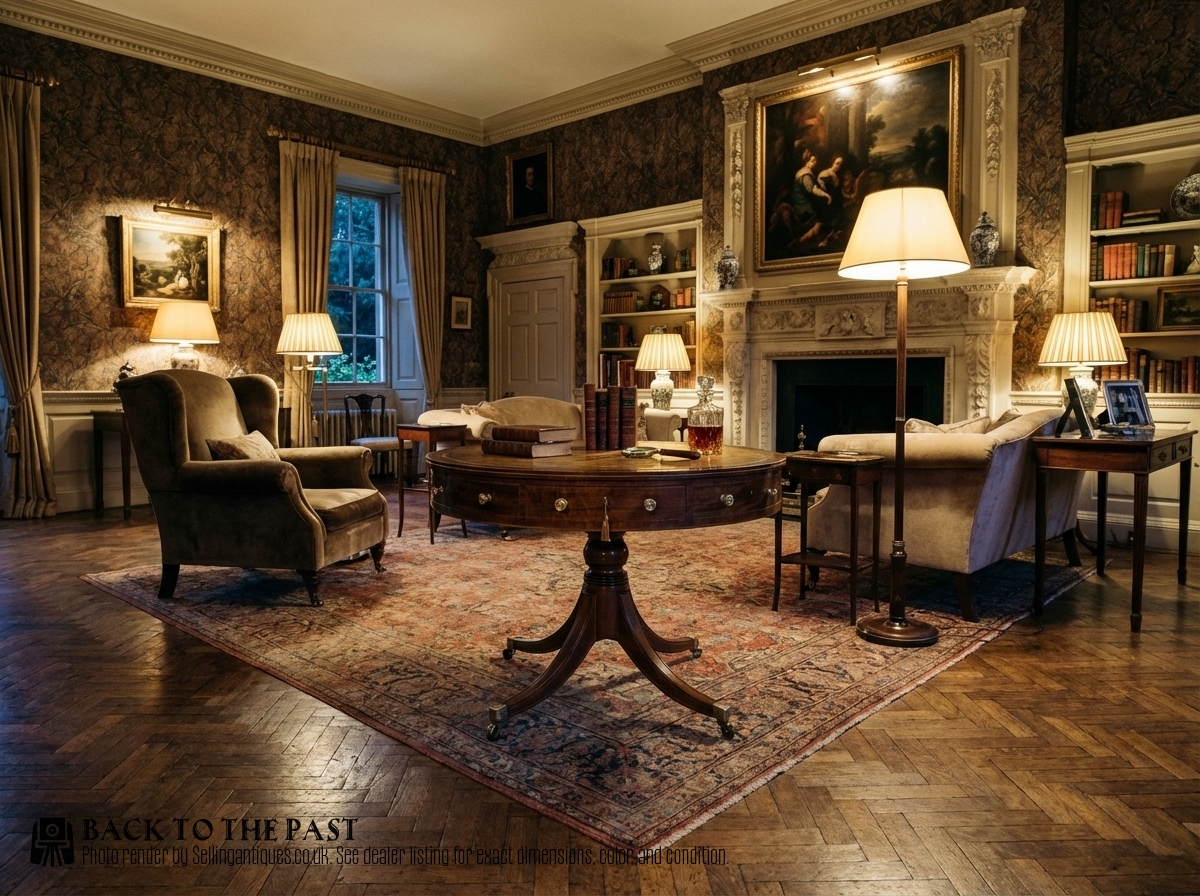
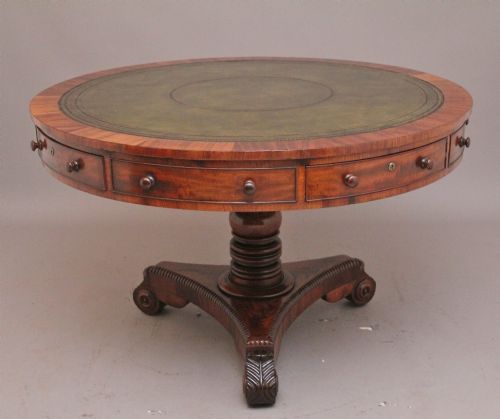
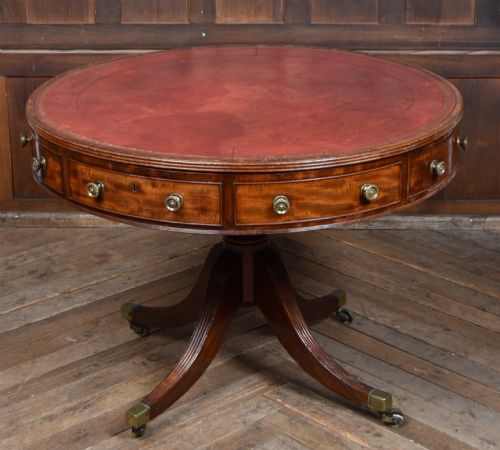
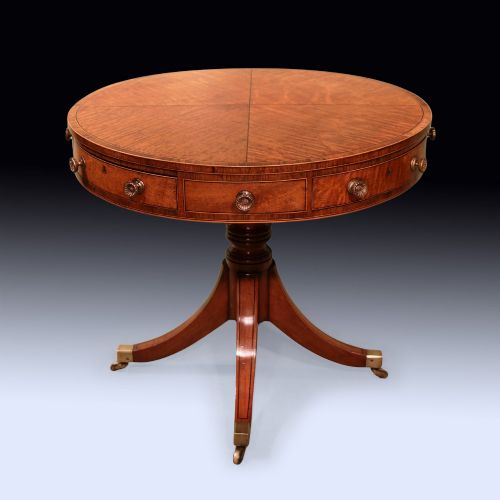
An Elegant Georgian Mahogany Drum Table, Georgian
Priced at £4,950 from W.J. Gravener Antiques Ltd.
The 2026 retail price guide for Antique Drum Tables is drawn from a proprietary archive of over 1.1 million retail prices indexed by Sellingantiques since 2003. This guide relies exclusively on their own internal data; no external sources or auction records are used.
Analysing nearly 25 years of UK antique market history alongside current retail values, the data indicates that typical UK retail prices for Antique Drum Tables range between £1,500 and £8,500. Entry-level prices generally fall under £1,500 and premium examples upwards of £8,500.
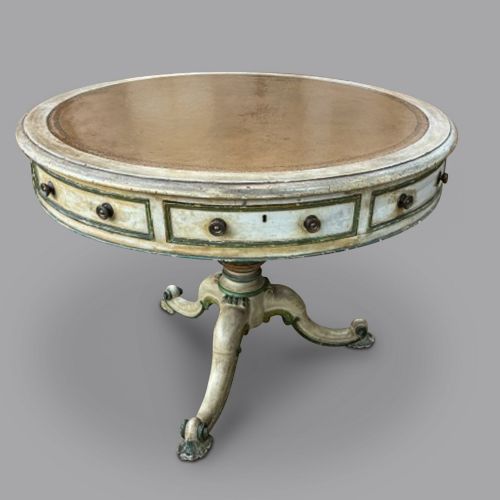
A deep circular frieze is the defining feature. It houses alternating real and dummy drawers to maintain a symmetrical look.
Check the base. A stout turned column usually supports the heavy top, resting on splayed legs ending in brass castors.
Inlaid lettering or ivory plaques occasionally mark the drawers of these tables.
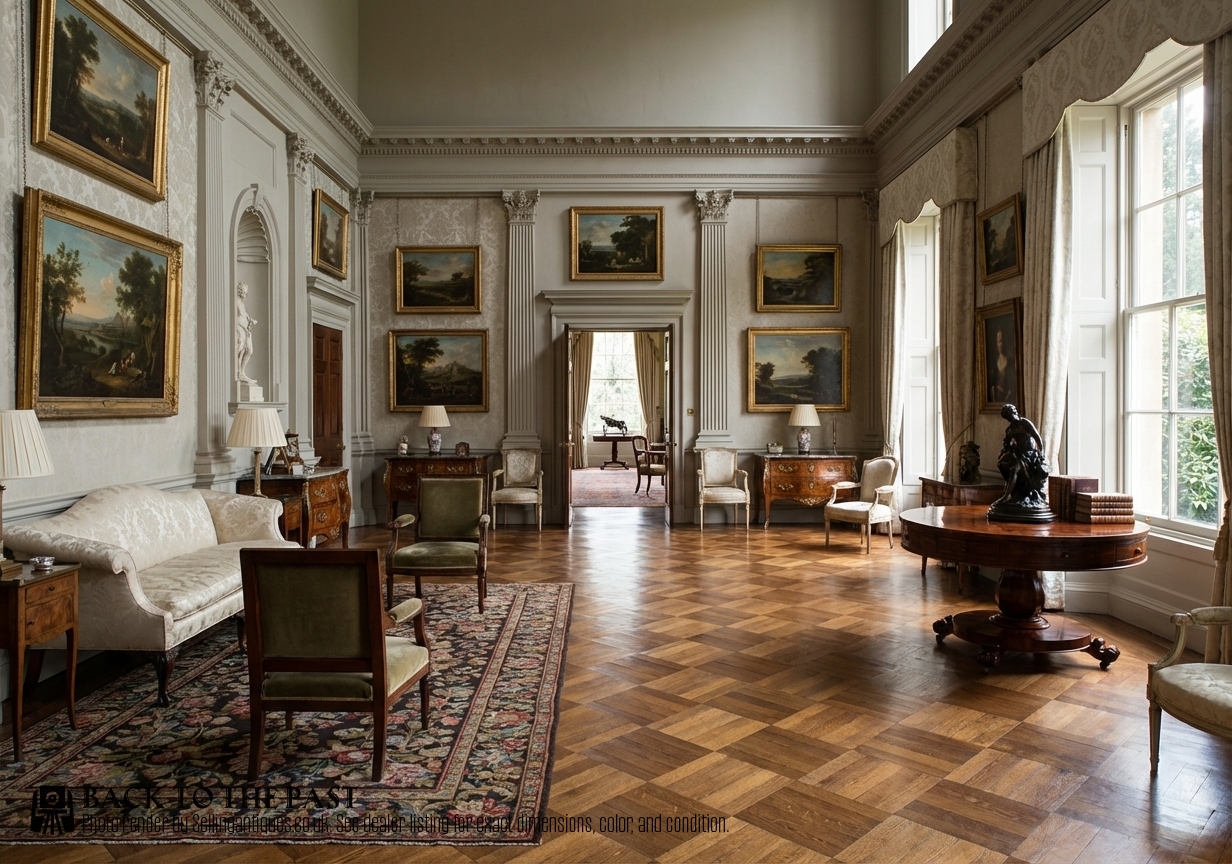
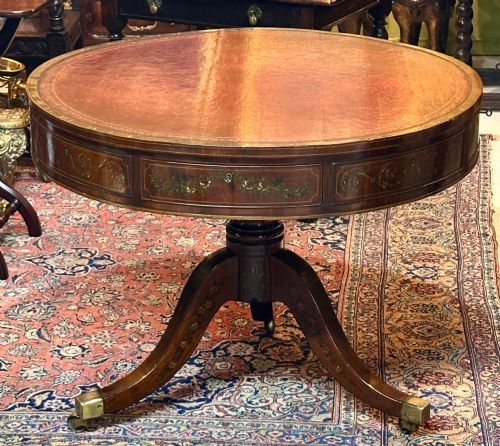
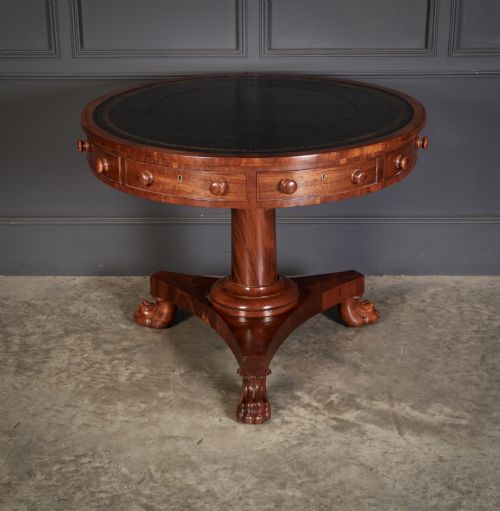
William IV Mahogany Drum Table, 19th Century
Priced at £2,650 from LTANTIQUES.CO.UK
Early makers built the circular frieze from pine blocks. They then applied expensive mahogany veneers to the outside curve.
Look at the drawer fronts. Cabinetmakers had to steam and bend the wood or cut it from solid timber to match the sweep.
Later nineteenth-century tables often feature thicker, machine-cut veneers and heavier carvings on the central column.
"They sometimes house hidden compartments. Cabinetmakers occasionally built secret document spaces into the dead areas behind the dummy drawers."
"The central space isn't always empty. A few rare examples feature a central well accessed by lifting a panel in the leather top."
Based on almost 25 years of Sellingantiques UK antique market data, Antique Drum Tables appeared 830 times (out of 1,100,000 antiques) which gives it a rarity score of 85/100.
This score measures scarcity within the Sellingantiques archive only and is not a survey of the entire antiques market, so these statistics may not be indicative of the general availability of Antique Drum Tables elsewhere.
Dust it with a dry cloth first. A soft brush helps clear dirt from any gold tooling around the edges.
Use a specialist leather cream sparingly if the surface feels dry. Buff it off quickly so the wax doesn't build up in the blind tooling.
Not necessarily. While people call them rent tables, the revolving top was just a practical feature. It saved users from walking around the table to find the right drawer.
Many sat in private libraries for general correspondence. The design suited country house management, but it wasn't restricted to collecting tenant money.
Those are dummy drawers. The circular frieze needs them to keep the pattern consistent.
The internal carcase blocks certain sections. Fixing a fake front over these parts solves the visual problem.
Yes, you can detach the top. Most antique drum tables separate into two main parts for transport.
Look under the tabletop for large screws or a wooden block holding the frieze to the pedestal. Once you undo the fixing mechanism, the heavy top lifts straight off the base.
Please note: This Antique Drum Tables guide and its associated pricing data are provided for general informational purposes only. It does not constitute formal financial, investment, or appraisal advice and should not be relied upon as the sole basis for any commercial activity, purchasing, or sales decisions. Sellingantiques.co.uk accepts no liability for any actions taken in reliance on this information. Always consult with a qualified professional or independent appraiser.
