

A 2026 Guide by Sellingantiques

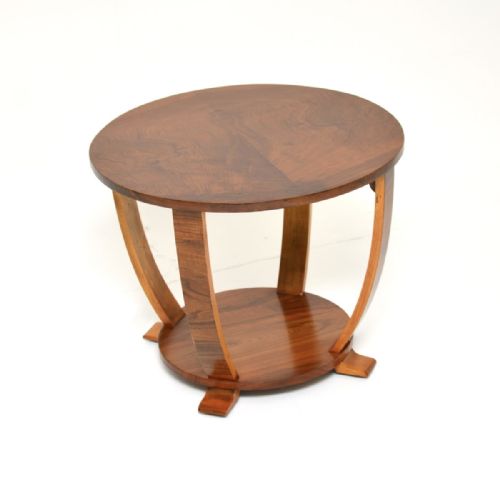
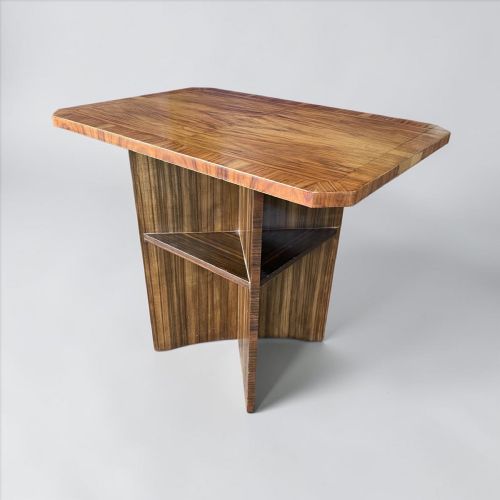
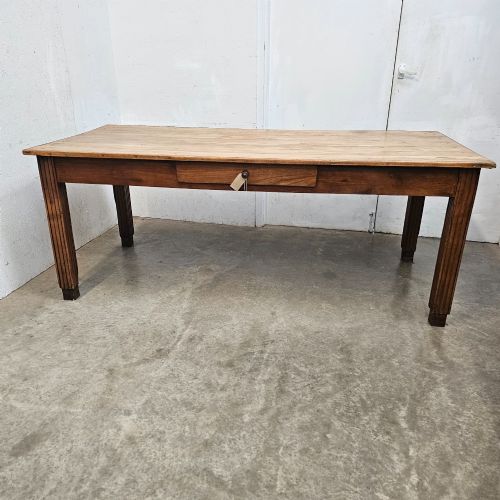
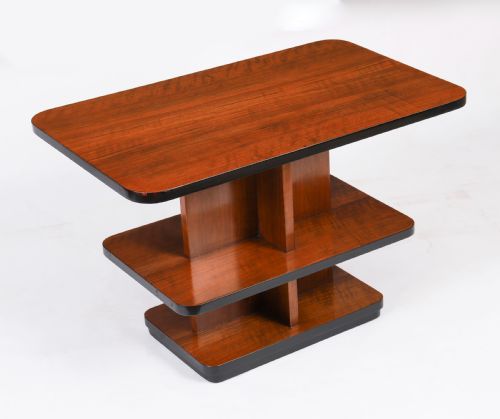
Antique C.1920 Rectangular Oak Occasional Table – Quality Art Deco, 1920
Priced at £836 from Prior and Willis
Born after the First World War. Tastes shifted away from heavy ornamentation.
The 1925 Paris exhibition gave the style its name. It introduced a much leaner silhouette to an eager global market.
Look at how Art Deco tables transitioned. Early luxurious Parisian forms eventually gave way to mass-produced modernist designs.
Hollywood film set designs fuelled demand for these sleek items across Europe and America.
Cocktail culture drove the invention of entirely new low forms during this period.
Émile-Jacques Ruhlmann designed some of the most precise pieces in Paris.
Jules Leleu ran a busy workshop. They didn't rely heavily on carved details, using subtle inlays instead.
The Betty Joel firm made solid, practical modernist designs for the British market using imported woods.

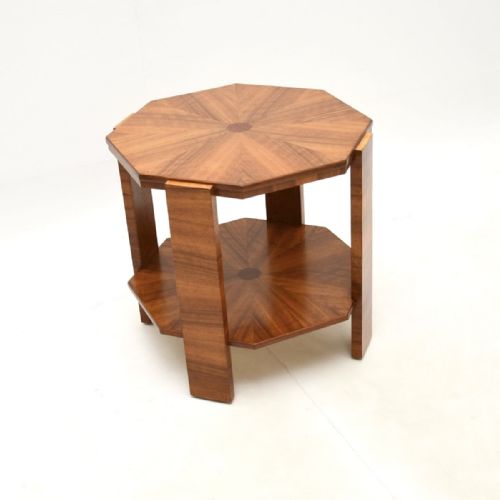
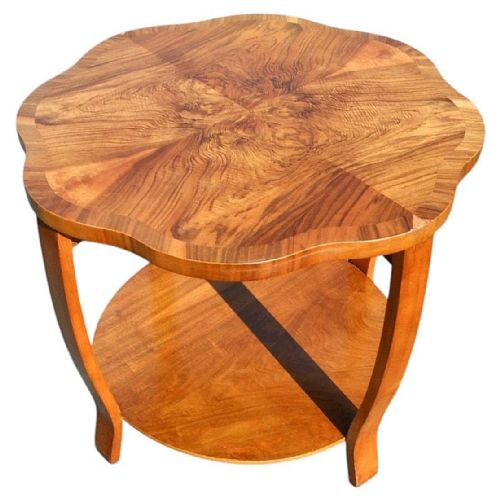
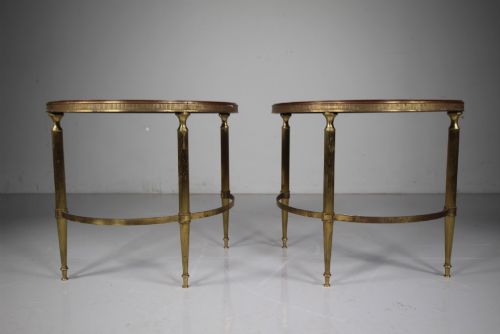
Antique Art Deco Burr Walnut Coffee Table Circa 1920, 1920
Priced at £1,350 from Regent Antiques
The 2026 retail price guide for Art Deco Tables is drawn from a proprietary archive of over 1.1 million retail prices indexed by Sellingantiques since 2003. This guide relies exclusively on their own internal data; no external sources or auction records are used.
Analysing nearly 25 years of UK antique market history alongside current retail values, the data indicates that typical UK retail prices for Art Deco Tables range between £400 and £2,500. Entry-level prices generally fall under £400 and premium examples upwards of £2,500.
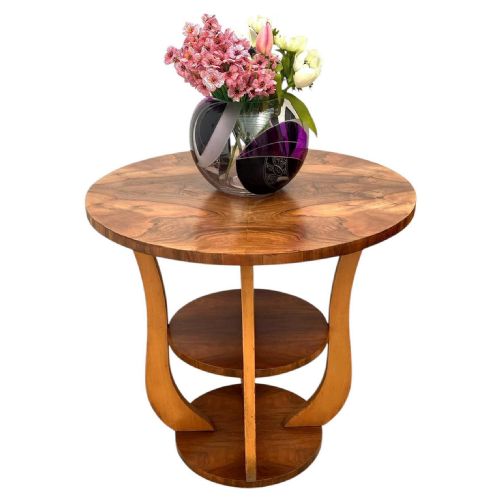
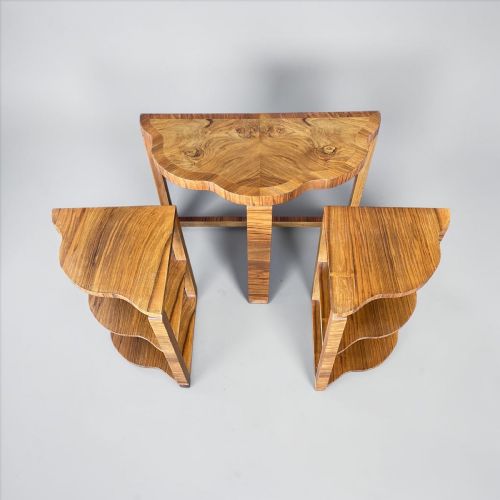
Geometric shapes dominate the basic profiles of most Art Deco tables. Think bold octagons, perfect circles and stepped tiers.
Contrasting wood banding often highlights the main surface edges, providing a sharp visual border.
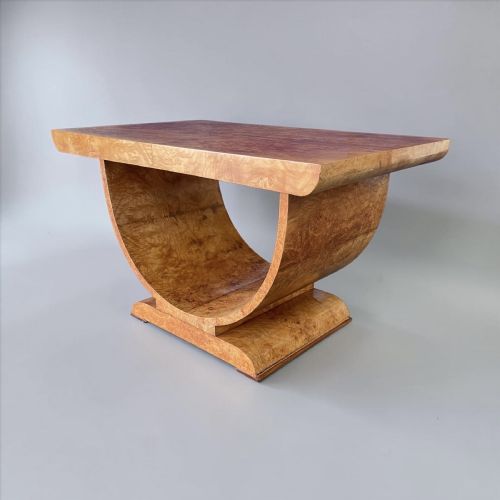
Notice the supports. Plinths and U-shaped bases frequently replace four standard vertical legs on dining models.

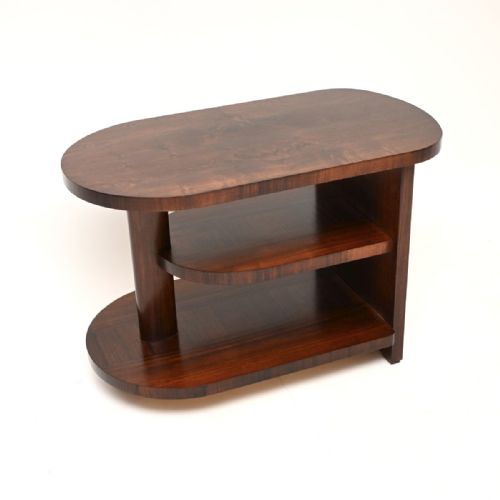
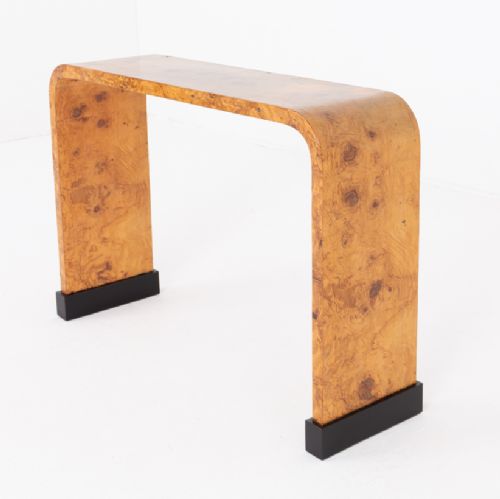
Art Deco Dining Table, 1920
Priced at £1,945 from Shackladys Antiques
Early workshop methods relied on traditional hand-cut joints beneath the modern exterior.
Machine routers allowed makers to cut precise recesses for glass tops and metal inlays.
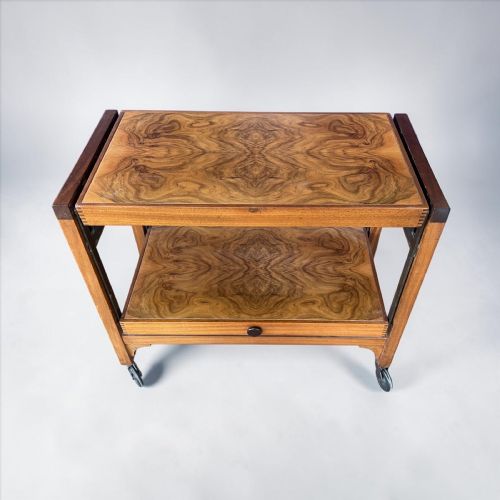
Observe the intricate veneering process. Craftsmen matched repeating grain patterns carefully across very wide expanses of flat carcase.
"Many extending dining versions actually hide their spare leaves deep inside the central pedestal. This trick helps maintain a clean external line when closed."
"The low coffee table form only became a standard living room fixture during this specific era."
"Shagreen and parchment were occasionally pressed onto the wood to create deeply textured surfaces."
Based on almost 25 years of Sellingantiques UK antique market data, Art Deco Tables appeared 5310 times (out of 1,100,000 antiques) which gives it a rarity score of 35/100.
This score measures scarcity within the Sellingantiques archive only and is not a survey of the entire antiques market, so these statistics may not be indicative of the general availability of Art Deco Tables elsewhere.
Solid plinths need internal weight to stop the top from tipping. Makers often hid cast iron or concrete blocks inside the wooden carcase.
Without four corner legs to distribute the load, a central pedestal has to do all the heavy lifting.
Those metal bands protect the timber from shoes and sweeping brushes. Dining chairs get pushed in and out constantly. Diners often rest their feet on the base during meals.
Makers added chrome or brass strips as a practical shield. They also offer a sharp visual contrast against the dark wood veneer.
Most Parisian workshops used traditional French polish.
Other factories sprayed early cellulose lacquers instead.
Yes, that rotation is intentional. You likely have a piece designed for serving drinks to people seated around it.
These revolving tops were popular additions to modern living spaces. The mechanism usually relies on a simple metal pin dropping into a socket on the base.
Please note: This Art Deco Tables guide and its associated pricing data are provided for general informational purposes only. It does not constitute formal financial, investment, or appraisal advice and should not be relied upon as the sole basis for any commercial activity, purchasing, or sales decisions. Sellingantiques.co.uk accepts no liability for any actions taken in reliance on this information. Always consult with a qualified professional or independent appraiser.
