

A 2026 Guide by Sellingantiques
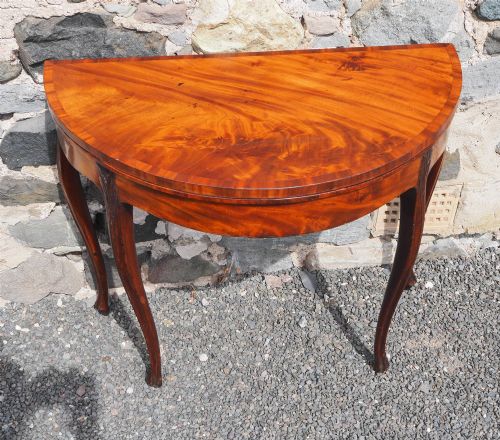
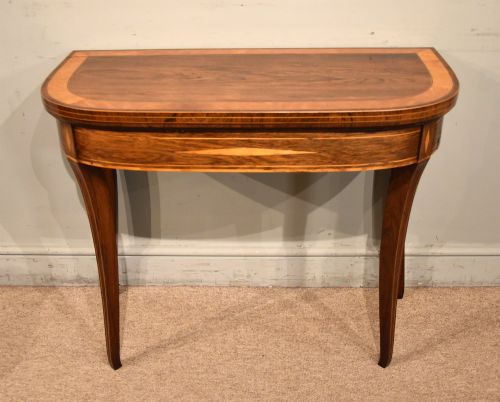
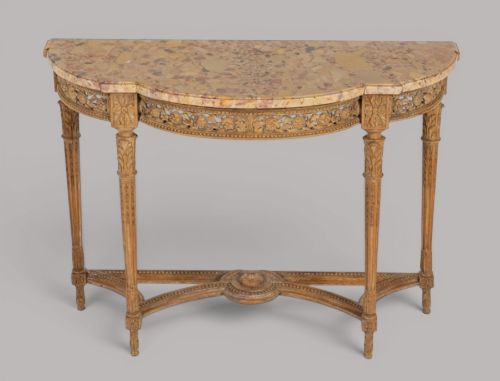
Superb Small Satinwood Console Table, Edwardian
Priced at £2,050 from Wayne Long Antiques and Interiors
Georgian cabinetmakers introduced the half-moon shape to fit narrow entrance halls and pier walls.
Many antique demilune tables originated as parts of larger dining sets.
Look at the back edge. A raw unfinished back means the piece was always meant to stand against a wall.
Folding versions emerging for card playing in the later eighteenth century.
Thomas Sheraton published influential designs for these forms. His drawing books popularised delicate painted and veneered styles.
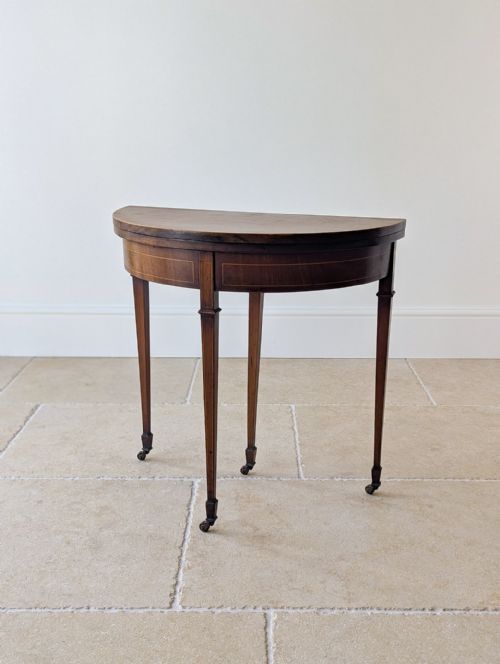
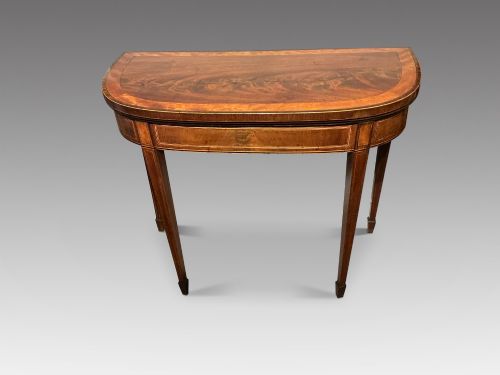
George Hepplewhite also featured semi-circular tables in his cabinet-maker's guide. The shield-leg and bellflower inlay are typical Hepplewhite motifs.
Provincial makers produced simpler solid oak or elm versions.

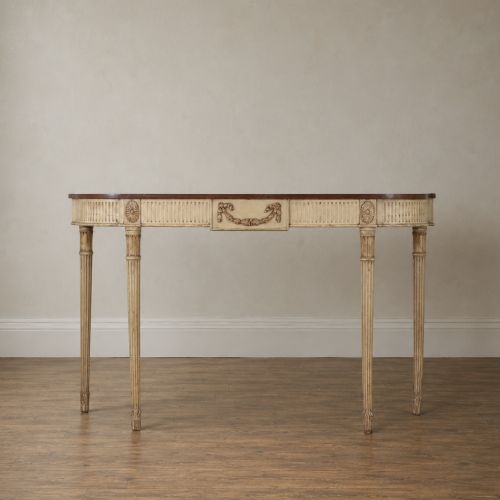
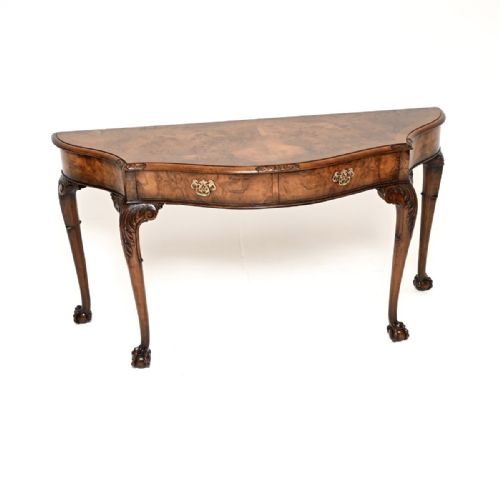
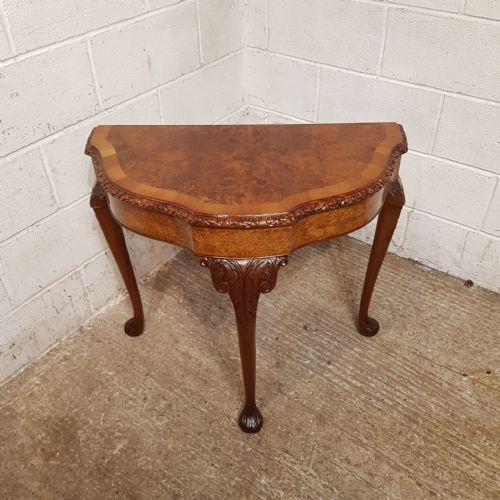
English 19thc Console Table, 1880
Priced at £1,450 from Millers Antiques
The 2026 retail price guide for Antique Demilune Tables is drawn from a proprietary archive of over 1.1 million retail prices indexed by Sellingantiques since 2003. This guide relies exclusively on their own internal data; no external sources or auction records are used.
Analysing nearly 25 years of UK antique market history alongside current retail values, the data indicates that typical UK retail prices for Antique Demilune Tables range between £800 and £5,400. Entry-level prices generally fall under £800 and premium examples upwards of £5,400.
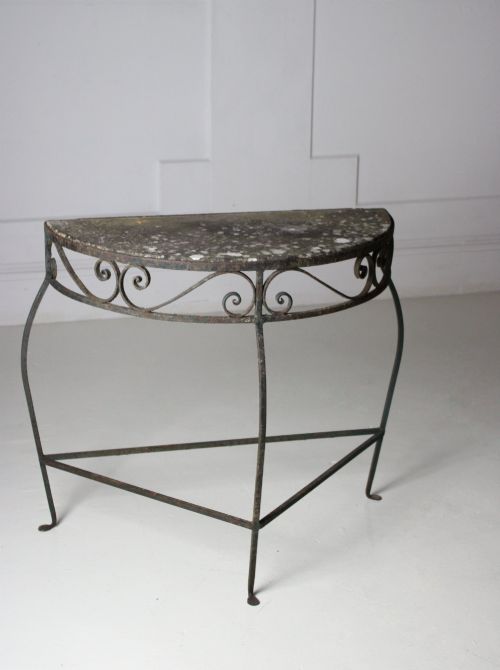
The semi-circular shape defines the form, allowing it to sit flush against flat architectural surfaces.
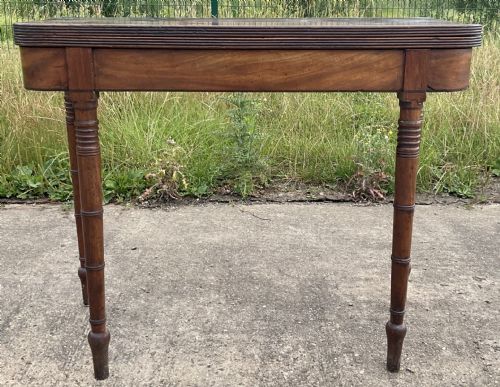
Tapering square or turned legs supporting the frieze.
Check the apron for concealed shallow drawers running on traditional wooden runners.
Early construction relied on solid timber curving. Cabinetmakers cut the semi-circular frieze from thick blocks of mahogany.
Brickwork construction becoming standard for later veneered aprons.
Notice the joinery. Mortise and tenon joints secure the front legs to the curved frieze rail.
"They often conceal secret compartments. Small swivel drawers hide behind the frieze rail on some sophisticated examples."
"Interlocking brass clips join two separate hall tables to form one circular centrepiece for entertaining."
"Painted decorations survive beneath later varnish. Original floral garlands sometimes emerge when a restorer cleans the dark surface."
Based on almost 25 years of Sellingantiques UK antique market data, Antique Demilune Tables appeared 416 times (out of 1,100,000 antiques) which gives it a rarity score of 92/100.
This score measures scarcity within the Sellingantiques archive only and is not a survey of the entire antiques market, so these statistics may not be indicative of the general availability of Antique Demilune Tables elsewhere.
They're usually stable. The three or four leg stance is inherently solid against a wall. Floorboards cause more rocking than the frame itself.
Older joints can loosen over time. If the glue fails at the top of the legs, the whole carcase starts to sway sideways.
Heat damages antique furniture. Radiators dry out the air, which shrinks the timber carcase and cracks the surface veneers. The hide glue holding the crossbanding will eventually crystallise and fail.
Solid wood frames fare slightly better than veneered ones. But any antique demilune table placed directly over a working radiator will warp or split. Keep them on a wall away from direct heat.
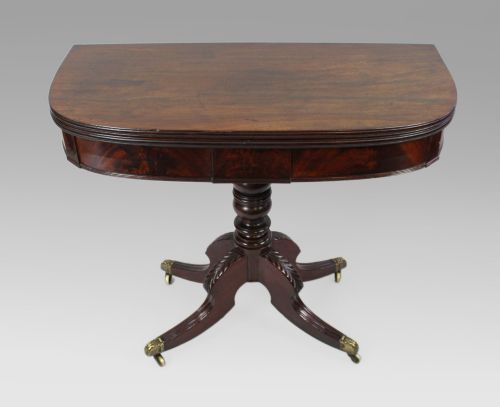
It's a hinged rear leg. You'll pull it out to support the folding top on a card table.
When closed, the leg sits flush with the back frame.
Replacing the baize is standard maintenance. Upholsterers strip the old fabric and scrape away the residual glue without harming the mahogany border.
New wool baize is then glued flat to the recess. The process restores the playing surface to how it looked when the table was first made.
Please note: This Antique Demilune Tables guide and its associated pricing data are provided for general informational purposes only. It does not constitute formal financial, investment, or appraisal advice and should not be relied upon as the sole basis for any commercial activity, purchasing, or sales decisions. Sellingantiques.co.uk accepts no liability for any actions taken in reliance on this information. Always consult with a qualified professional or independent appraiser.
