




A 2026 Guide by Sellingantiques

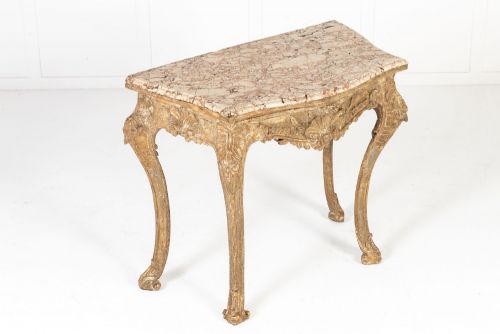
Antique George III Quality Carved Mahogany Irish Silver Table, Georgian
Priced at £3,650 from London City Antiques
Early Georgian makers developed the form for the rising tea fashion.
Displaying wealth meant leaving expensive tea equipage out in the sitting room permanently. Look closely at that social context.
Wealthy households needed dedicated surfaces for heavy metal sets. Antique silver tables provided a firm base with protective borders, ensuring valuable items stayed safe.
Production slowed by the late eighteenth century as larger dining habits shifted.
Thomas Chippendale produced designs for these, calling them china tables in his published directories.
William Ince and John Mayhew also supplied intricate gallery tables to aristocratic clients.
Most surviving antique silver tables carry no maker's mark and come from skilled regional cabinetmakers working from pattern books rather than prestigious London workshops.
The 2026 retail price guide for Antique Silver Tables is drawn from a proprietary archive of over 1.1 million retail prices indexed by Sellingantiques since 2003. This guide relies exclusively on their own internal data; no external sources or auction records are used.
Analysing nearly 25 years of UK antique market history alongside current retail values, the data indicates that typical UK retail prices for Antique Silver Tables range between £200 and £2,000. Entry-level prices generally fall under £200 and premium examples upwards of £2,000.
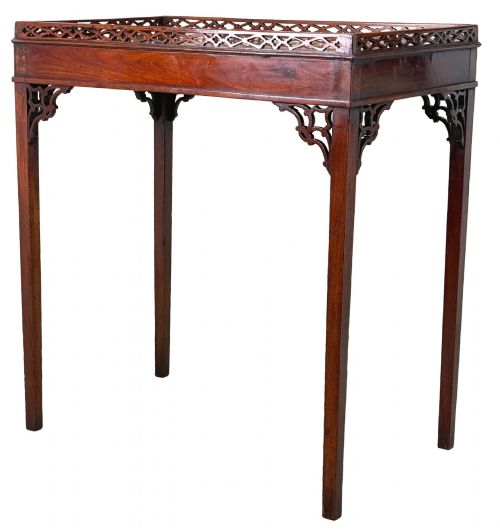
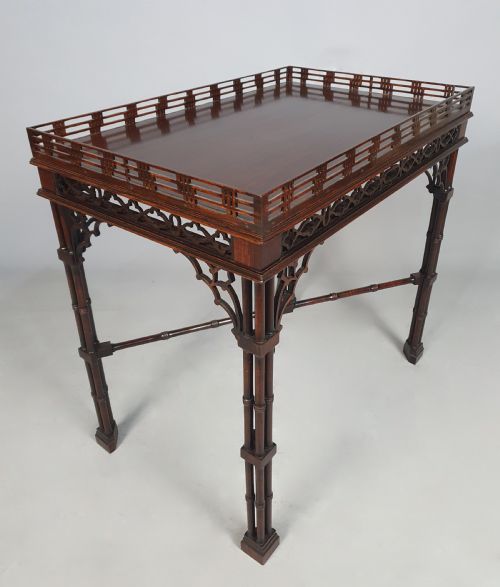
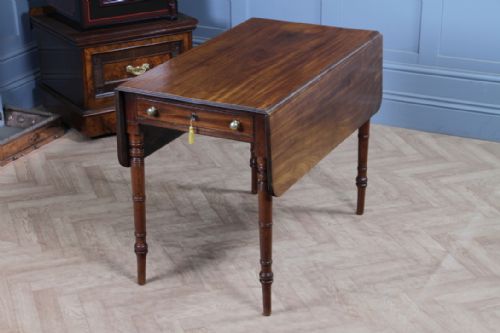
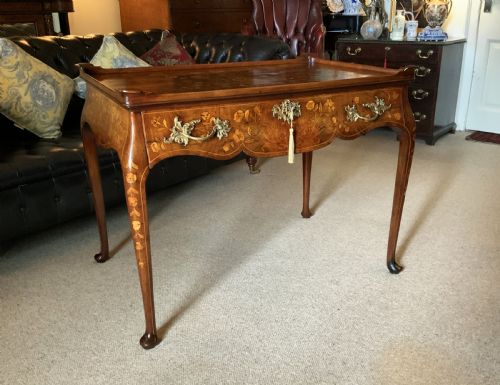
A raised lip or pierced gallery surrounding the entire top surface is the defining trait of antique silver tables.
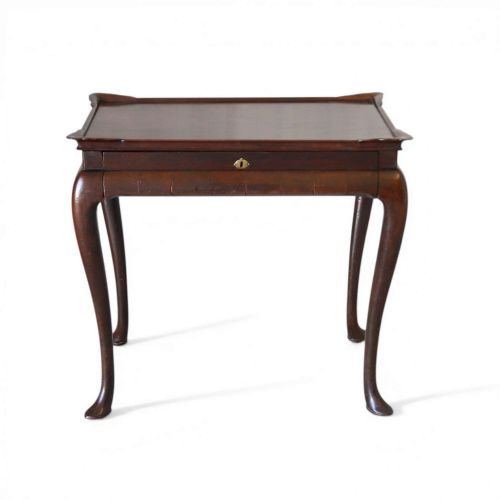
Check beneath the main tier. Many have small pull-out slides meant to hold a teapot.
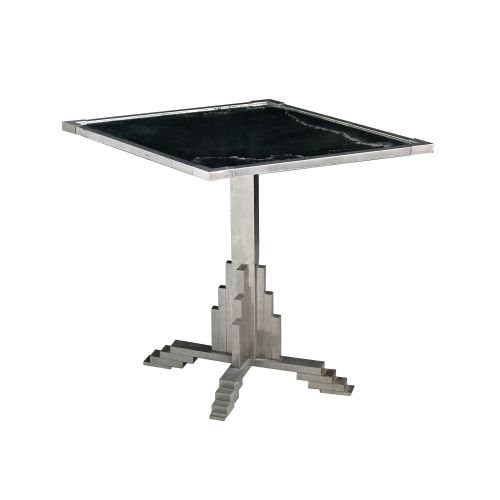
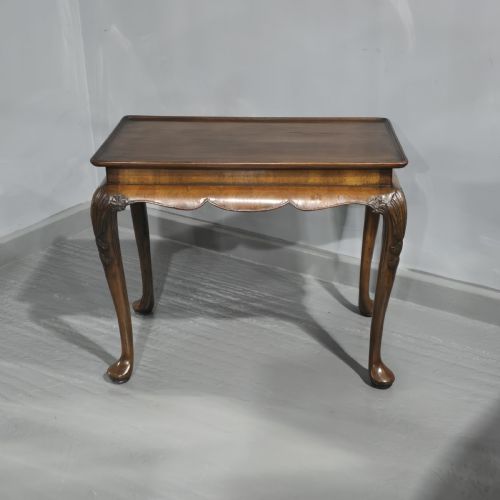
Slender supports are standard across the period. You will find plain cabriole legs on early pieces and clustered columns on later geometric forms.
Cabinetmakers glued three separate layers of mahogany together with alternating grains. This cross-banding technique stopped the delicate pierced galleries snapping when craftsmen cut out the complex shapes.
Corner joints rely on traditional mortise and tenon construction to handle the sheer top-heavy weight of the silver.
Later makers often abandoned timber rims entirely. They fitted metal galleries to save time and reduce breakages in the workshop.
"The intricate wooden galleries cast distinct geometric shadows across the table surface under evening candlelight."
"Surviving original leather castors meant these heavy loaded tables rolled silently across bare floorboards without scratching the surface."
"Proportions match modern seating heights well. They serve as practical side tables today, sitting comfortably next to contemporary sofas despite their age."
Based on almost 25 years of Sellingantiques UK antique market data, Antique Silver Tables appeared 6519 times (out of 1,100,000 antiques) which gives it a rarity score of 27/100.
This score measures scarcity within the Sellingantiques archive only and is not a survey of the entire antiques market, so these statistics may not be indicative of the general availability of Antique Silver Tables elsewhere.
Not usually. Many cabinetmakers offered cast brass galleries as an original option from the mid-eighteenth century onwards. They were more robust than timber fretwork.
Some wooden galleries were replaced with metal when the timber snapped. You need to check the fixing holes under the rim. If there are empty dowel holes beside the brass pins, the metal is later.
Yes, dealers call these dish-top tables. They serve the same function as pierced gallery tables but rely on a solid carved lip to stop items sliding off.
Carving a dish top involves wasting thick mahogany board just to leave the raised edge. It was an expensive technique, showing the original owner had plenty of money to spend on their tea equipage.
Thin legs followed the prevailing fashion for lighter drawing room furniture in the 1760s.
Cabinetmakers used dense imported mahogany for the carcase. This strong timber bears heavy weights even when turned down to narrow dimensions.
Central heating is the main cause. Solid timber tops dry out unevenly when placed near modern radiators. The wood fibres shrink and pull across the grain.
Antique silver tables spent most of their lives in draughty rooms with higher humidity. The sudden shift to dry domestic environments stresses wide mahogany boards.
Sometimes a restorer can introduce moisture back into the timber to flatten it. It requires patience and slow clamping.
Please note: This Antique Silver Tables guide and its associated pricing data are provided for general informational purposes only. It does not constitute formal financial, investment, or appraisal advice and should not be relied upon as the sole basis for any commercial activity, purchasing, or sales decisions. Sellingantiques.co.uk accepts no liability for any actions taken in reliance on this information. Always consult with a qualified professional or independent appraiser.
