


A 2026 Guide by Sellingantiques
The factory originally started at Vincennes in 1740 before moving to its famous purpose-built premises later that decade.
Royal backing changed everything. Louis XV took a heavy interest and eventually bought the whole enterprise outright.
Production shifted dramatically during the French Revolution, moving away from royal emblems towards republican motifs and simpler forms.
Hard-paste porcelain became possible after the discovery of kaolin near Limoges, changing the trajectory of antique Sèvres output.
Jean-Claude Duplessis designed many of the most famous shapes between 1748 and 1774, creating fluid rococo forms.
François Boucher provided numerous pastoral and mythological scenes that factory painters translated onto the porcelain.
Check for painter marks. Artists like Charles-Nicolas Dodin specialised in figure painting during the late eighteenth century.
The 2026 retail price guide for Antique Sevres is drawn from a proprietary archive of over 1.1 million retail prices indexed by Sellingantiques since 2003. This guide relies exclusively on their own internal data; no external sources or auction records are used.
Analysing nearly 25 years of UK antique market history alongside current retail values, the data indicates that typical UK retail prices for Antique Sevres range between £900 and £5,000. Entry-level prices generally fall under £900 and premium examples upwards of £5,000.
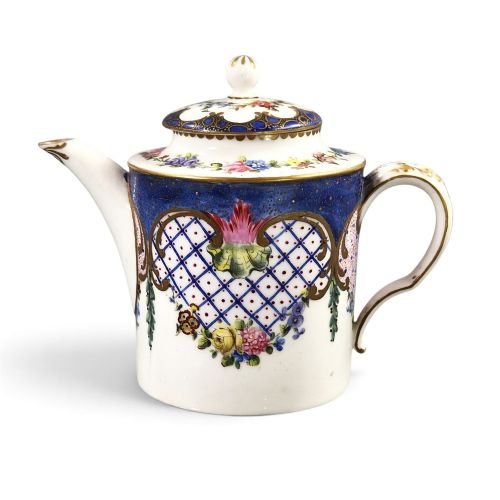
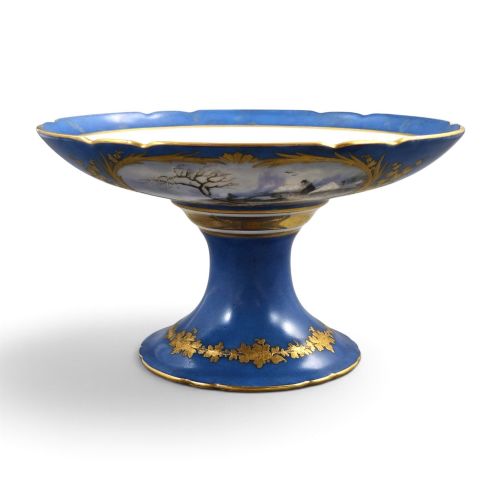
Ground colours define the aesthetic. Bleu céleste and rose Pompadour often cover large areas of the surface.
Central reserve panels usually feature finely painted scenes. You will often see landscapes, botanical studies or mythological subjects.
Interlaced factory marks painted on the base denote the royal connection, often enclosing a date letter.
Throwing and moulding happened in separate workshops. Complex vases required multiple cast sections joined with slip before firing.
Firing soft paste carried high risks. Kiln failures were common because the clay tends to slump under heat.
Gilders used agate tools to burnish the matte fired gold into a bright, reflective finish.
"Careful daily records survive. Archives still hold the names of the specific painters and gilders who worked on individual items."
"Soft-paste items actually cut like glass when engraved. This allowed for very precise finishing on mounted pieces."
"Many shapes were designed specifically to show off the new ground colours developed by the factory chemists."
Based on almost 25 years of Sellingantiques UK antique market data, Antique Sevres appeared 1555 times (out of 1,100,000 antiques) which gives it a rarity score of 73/100.
This score measures scarcity within the Sellingantiques archive only and is not a survey of the entire antiques market, so these statistics may not be indicative of the general availability of Antique Sevres elsewhere.
Dust with a soft, dry brush. If the piece needs washing, use lukewarm water and a mild soap.
Never submerge items with metal mounts. Avoid rubbing the fragile gilded edges.
Chocolate cups usually have straight, cylindrical sides. They often feature a single handle and sit in a deep saucer with a raised gallery to stop the cup sliding.
Tea cups tend to have a wider, flared bowl to help the liquid cool. The straight sides of the chocolate cup were designed to keep the thick drink warm for longer.
Biscuit refers to porcelain that has been fired once but left unglazed. The resulting matte white surface looks very much like carved marble.
The factory favoured this finish for sculptural groups and table ornaments. Without a reflective glaze, the fine details of the modelling remain sharp and distinct.
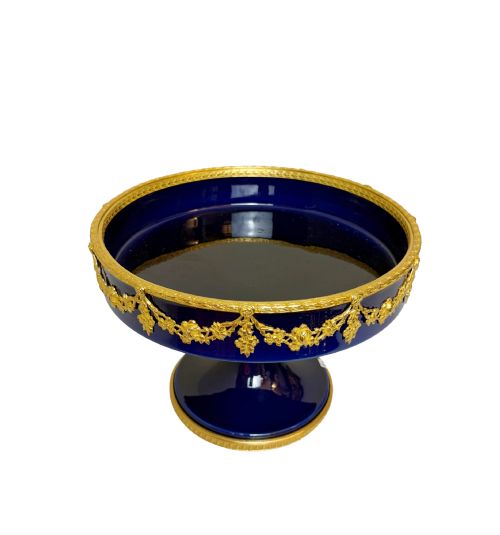
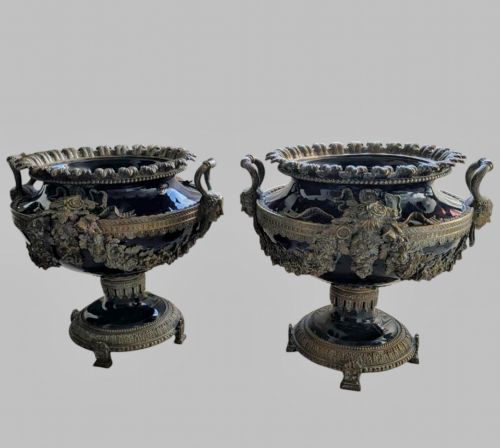
Many large ornamental pieces were designed to be bolted to gilded bronze bases or plinths. The factory drilled these holes before firing to ensure a clean passage for the metal fittings.
Complex vases were sometimes cast in multiple sections. A central metal rod would pass through these holes, holding the cast sections together tightly.
Later owners occasionally repurposed them, but the original intent was structural stability.
Please note: This Antique Sevres guide and its associated pricing data are provided for general informational purposes only. It does not constitute formal financial, investment, or appraisal advice and should not be relied upon as the sole basis for any commercial activity, purchasing, or sales decisions. Sellingantiques.co.uk accepts no liability for any actions taken in reliance on this information. Always consult with a qualified professional or independent appraiser.
